Cycle News Archives
COLUMN
Foreshadowing the Championship
By Kent Taylor
Foreshadowing is a powerful tool for a writer. Used properly, it is like a savory seasoning, enticing the reader to pause for just a moment to wonder, “Why did she say that?” or “Why did the old man sneer?” or “Why is there a blood-stained chainsaw in the hall closet?” Cycle News masterfully foreshadowed the Grand Prix motocross duel of the decade when they tested both the Husqvarna 400 CR and the Suzuki TM400K in the April 2, 1974, issue.
Ownership of a Husqvarna motorcycle in the 1970s was less a matter of acquisition and more like a rite of passage. When you have exhausted the limits of your inferior motorcycle, when your level of skill has exceeded the capabilities of your ride, and when, like young Caine, you have successfully swiped the pebble from Master Kan’s hand, you are ready to step into the light. The curtain is pulled back, and the masters—Heikki Mikkola, Bengt Aberg and Rolf Tibblin—will grant you admission into the secret Swedish society.
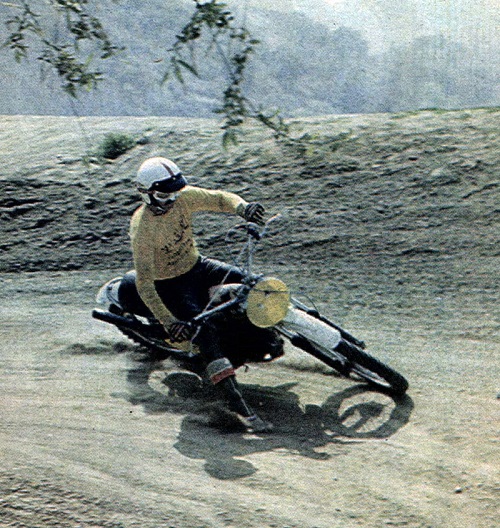
“It is a very demanding, serious racer,” wrote CN, “that to be ridden successfully at all requires that you ride it correctly—in the Swedish manner of motocross. It was, and to a lesser extent, still is an angular, extremely precise motorcycle. There is no room for slop built into it, and sloppy riders didn’t find it very tolerant. This will, in turn, make them unhappy.”
In the eyes of the test crew, the new Husky 400 for 1974 seemed to be a little less rigid and more accepting of dirt-biking plebeians. This Husqvarna was lighter, had a broader powerband, and, according to the test riders, had excellent brakes. Most Husqvarna owners lament the braking power of these bikes, opining that actually applying the brake levers is only slightly more effective than just wishing that the bike would slow down, but we will take the crew at their word and accept the use of the word “excellent.” Whatever it did, the ’74 version of the machine seemed to do it better than before, and the crew was impressed with the changes.
There is perhaps no motorcycle that has been subjected to more slanderous comments and nasty putdowns than the Suzuki TM400. The bike, with its wildly unpredictable powerband, the motorcycle so unmanageable and ill-mannered that its creator christened it the “Cyclone.” One magazine editor after another had labeled it as one of the worst machines ever built, infamy that has stayed with the bike decades after it was eliminated from Suzuki’s lineup.
Like the Husky, the 1974 version of the Cyclone apparently received some notable improvements over the previous models, though the text isn’t very forthcoming with what those changes entailed. “The front forks,” wrote CN, “seem to have more usable, progressive travel than previous models, and with the right weight oil and spring rate, were completely acceptable. The rear shocks have dual springs of different progressions.”
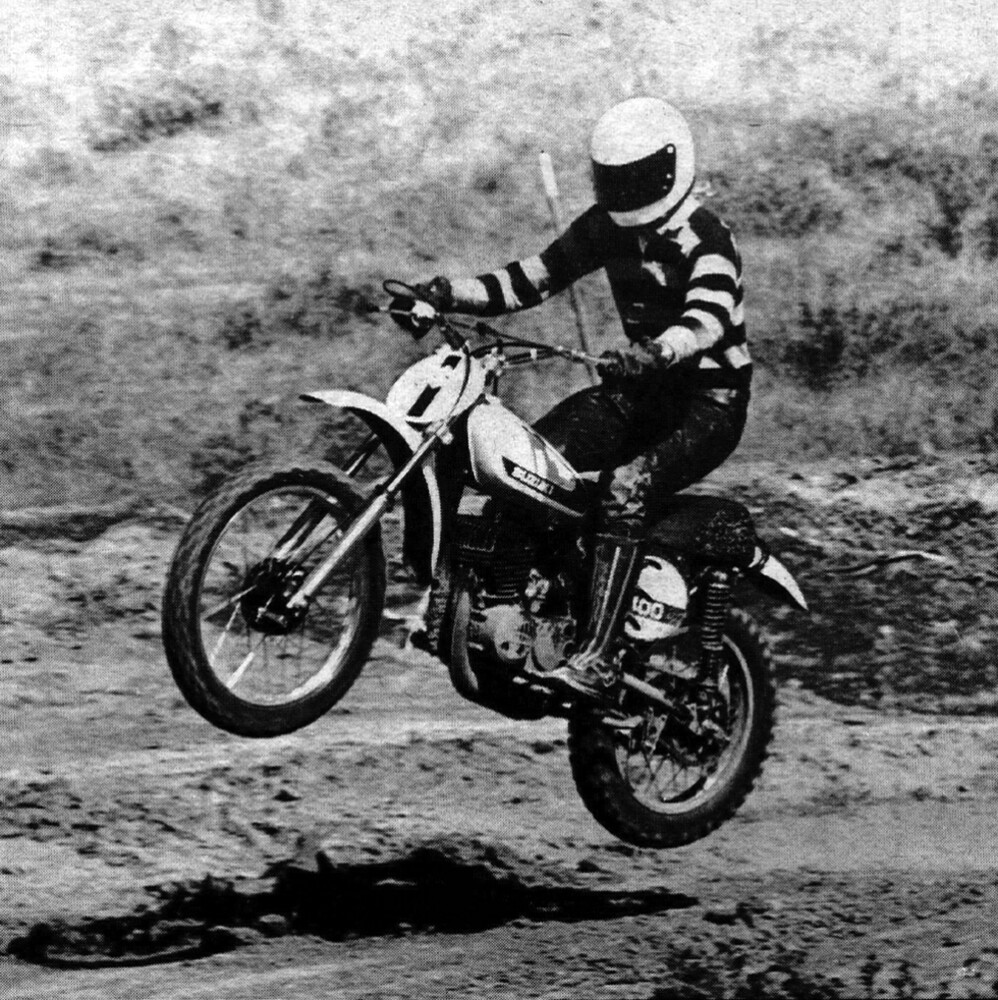
The Suzuki had plenty of power, with the staff calling it the most powerful open class motocrosser on the market. The problem was that it was the wrong kind of power. In a straight line, the TM400 was unbeatable, but motocross wasn’t quarter-mile racing, and this is where the rubber didn’t meet the road. Fast as Secretariat, but pawing the air like a Royal Lipizzan stallion, the Cyclone was a brute to ride.
“It’s neat to cross stutter bumps and ripple with the front wheel floating,” wrote CN. “The works Suzuki riders do it all the time. But it’s hard to turn a bike with the front wheel off the ground and do an efficient job of it.”
Cornering with the Husky was also a difficult task, but for different reasons. “The Husky demands sharp, cut-and-shoot turns to get around quickly. It won’t slide well because sliding is not the fastest way to get around a real motocross course. The 400 Husky takes corners in straight lines. It defines squaring off the turns. The Swedes want you to ride that way.”
The staff did not pit the two machines against one another in any sort of comparison test, though it is pretty clear that it wouldn’t have been much of a competition. The Suzuki, according to the crew, needed to drop about 30 pounds, add a flywheel, and swap out the flexi-flyer swinging arm for a real unit. The Husky could have benefited from meatier footpegs, but other than that it was an out-of-the-box racer.
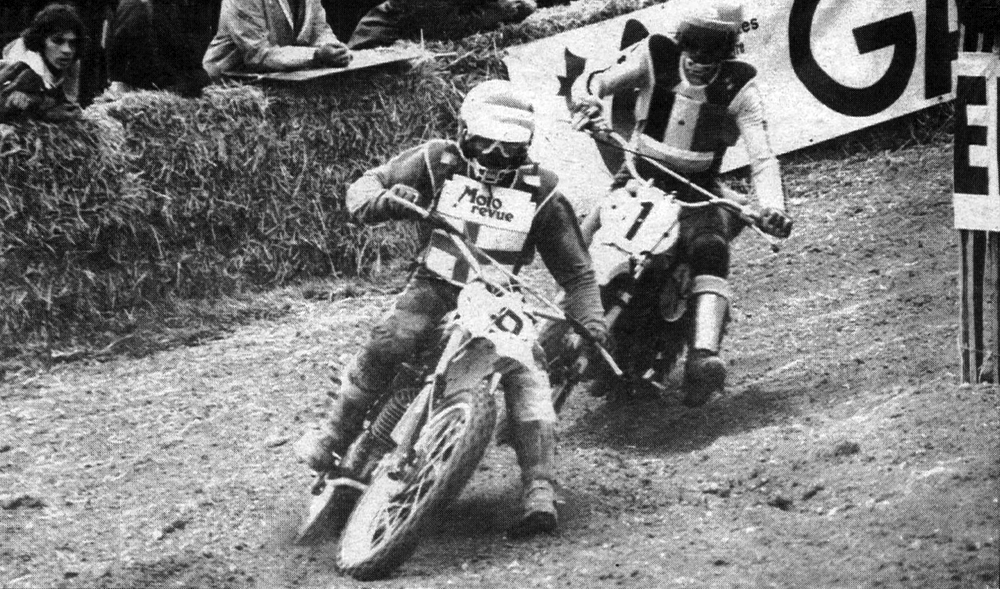
In the real world of 1974, there was an actual Suzuki vs. Husqvarna comparison. A few weeks after this issue was published, the battle for the 500cc World Championship began in Sittendorf, Austria. Husqvarna’s Heikki Mikkola would win both motos that day, while Roger DeCoster’s Suzuki cracked a cylinder in the first moto and then suffered a flat tire in moto two. Mikkola would go on to defeat DeCoster for the World Championship, with the title being decided at the final race of the season. Husky defeats Suzuki! A tip of the writer’s quill to the Cycle News staff for their exceptional, however unintentional, use of the element of foreshadowing. Take the win!CN
Click here to read the Archives Column in the Cycle News Digital Edition Magazine.
Subscribe to more than six decades of Cycle News Archive issues