Cycle News Archives
COLUMN
A Mechanic’s Mechanic
By Kent Taylor
Poor Rick Jones. He had no choice. He grew up in the magical motorcycle land of Southern California, the son of parents who were both auto racers. They also owned a car dealership on Sunset Boulevard called Italiano Motors, where little Rick got to hang around with racing legend Ken Miles, the same Ken Miles who drove a Ford GT Mk II to a famous shared victory at the 1966 24 Hours of Le Mans. Either by nature or by nurture, Rick Jones was destined to become not only a pretty good racer in his own right but also a mechanic/engineer who would work with some of the greatest racers in the early days of motocross in America.
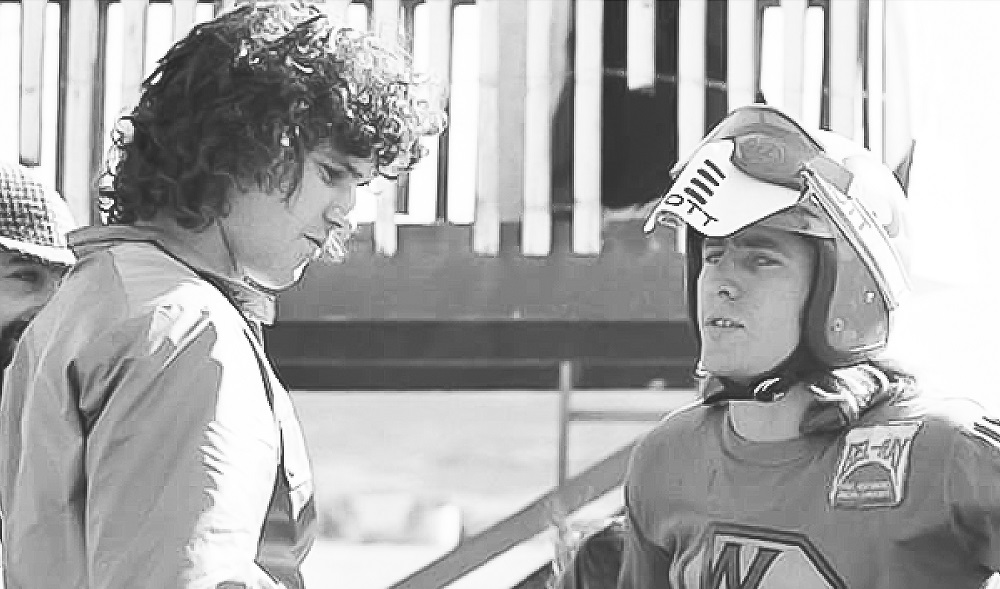
“Ken Miles was actually the service manager at my dad’s car lot,” Jones recalls today. “I used to go back into the shop and hang out with him. He was a fun guy who didn’t just shoo me off. He had a go-kart with a McCulloch two-stroke chainsaw engine, and he would let me drive it. I was 9 or 10 years old, and he and my dad would set up cones, have me drive around, and then stop me to tell me what I was doing right or wrong.”
Tragically, Jones lost his father at age 12. One year later, Miles was killed in a testing accident at Riverside Raceway. Motorcycle-riding neighbors began taking young Rick to the desert on weekends, letting him ride their Honda 55 (with the step-through frame). He eventually got his own motorcycle, a Yamaha 80, and then graduated to a Hodaka. Many a great racer cut their teeth on the chrome-tanked little bikes from Oregon, and soon he was racing motocross on his Hodaka, quickly realizing that these little bikes were meant for fun, not serious competition.
“That was when I decided to start modifying it. I put different forks and shocks on it, and I was always tinkering with it, taking the engine apart and putting it back together.”
The Hodaka was sold for a CZ, the CZ was moved along for a Bultaco. His wrenching knowledge so impressed the dealer, Steve’s Bultaco, that he was soon working full-time as a mechanic at the shop.
Even though he would make a name for himself as a mechanic, Rick Jones knew the fast line around the racetrack. He would win his class at the famous Hopetown Grand Prix in 1972, using his smarts to get to the front of the pack.
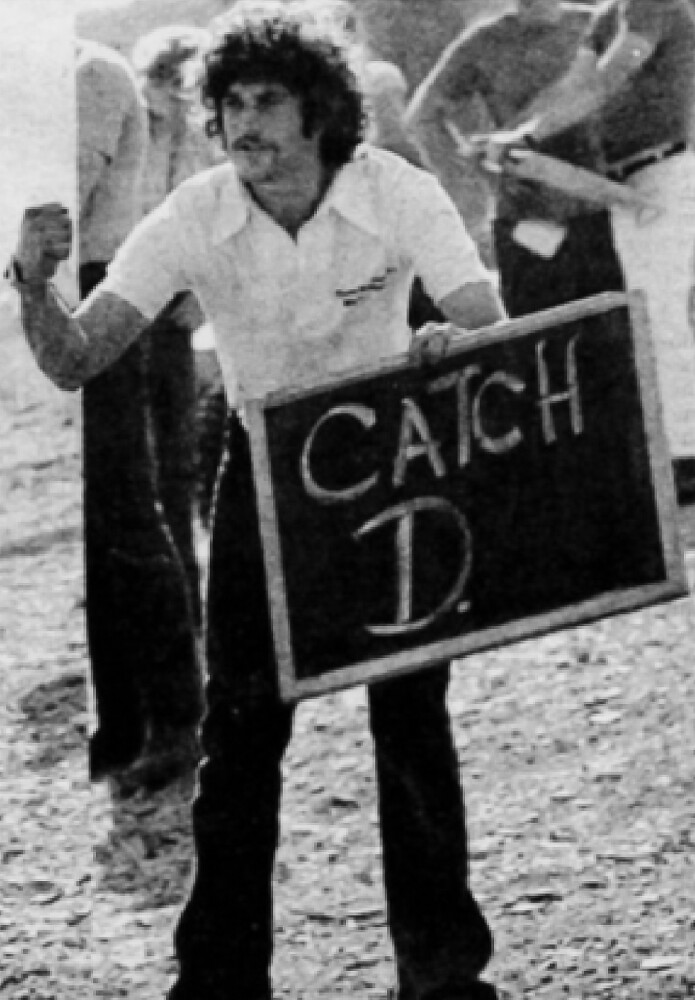
“Hopetown was famous for its huge mudhole,” he remembers. “Everyone would ride right through the middle and get stuck. Just a bunch of dummies! I just found a line to the outside and rode right around the mud.”
Unfortunately, Rick’s promising racing career would come to an end not long after, when he was badly injured in a head-on crash with another rider while trail riding.
“Back then [1972], there was no sports medicine, so doctors didn’t really know what to do for me. I had a serious knee injury, and it just was never really right after that.
“Well, all my friends were starting to travel, which was new to us. In the beginning, we could just stay busy racing in Southern California, but now there were races going on around the country. And I thought, ‘Well, this kind of sucks,’ but then I had an opportunity to go to work for Bryar Holcomb and the Bultaco team. We traveled for the 1973 Trans-AMA series, and I was given $63 a week per diem. And that was it! But we had a lot of fun.”
Jones credits his father for helping him develop a discerning eye for all things mechanical.
“There were a lot of bikes that were pretty crappy, bad cables and stuff. But my bikes always worked like new.”
Jones’ Bultacos were among the fastest bikes on the track. Team Honda, new to American MX, recognized his skills and offered him a spot on their squad in 1974. It was a massive effort; at a time when most factories were operating with two or three racers, Team Honda fielded eight riders, including Marty Smith, Rex Staten, Billy Grossi and Rich Eierstedt, who would be Jones’ first teammate. He remembers Eierstedt as “a smooth, really fast rider. And he had a great sense of humor.”
“I had a great relationship with [Team Honda mechanic] Roy Turner. Roy and I were always trying to outdo each other, but we always shared our ideas, too. It didn’t have to be my idea or his idea, because neither one of us had an ego problem.
“And sometimes, we would work with the mechanics from the other teams. We would get together with them and tear down the bikes and see what was inside. Yamahas and Suzukis, all of them. I’m not sure the factories would have liked it if they had known about this.”
Jones watched as the sport began to evolve, and perhaps not for the better. Workshop rules and regulations at Honda began to take on a greater importance than Jones wanted, so he moved on, first to Maico and Gaylon Mosier and then to Team Kawasaki, where he would turn wrenches for Gary Semics, Steve Stackable and Tommy Croft. In 1982, he worked with Steve Stasiefski, Brad Lackey’s mechanic during the season in which Lackey became America’s first World Motocross Champion.
“Steve called me and said they needed help. The bike was slow, and Suzuki wouldn’t let them do anything outside of the factory. He said, ‘I can’t pay you, and you can’t tell anyone.’ But he asked me to port the cylinder on Brad’s bike. I did, and Brad wound up being the world champion.”
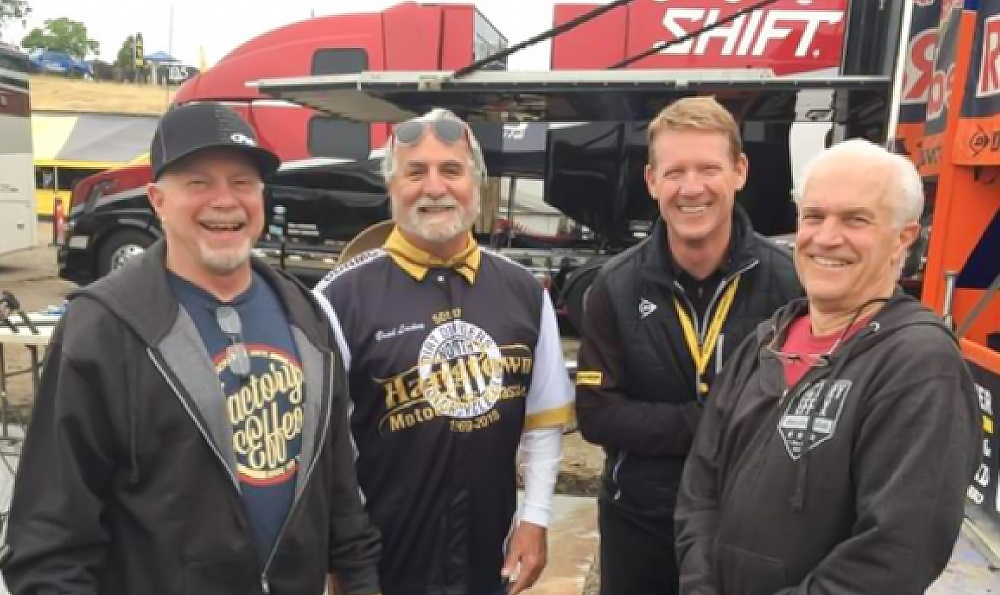
Jones would leave motocross in the early ’80s and begin another career in drag racing, working for Pat Austin, who won four NHRA Top Alcohol Funny Car Championships between 1987 and 1991. Today, he works in home remodeling, reuniting once a year with his racing buddies from the ’70s at the Hangtown AMA National. He just shakes his head at what he sees in the pits today.
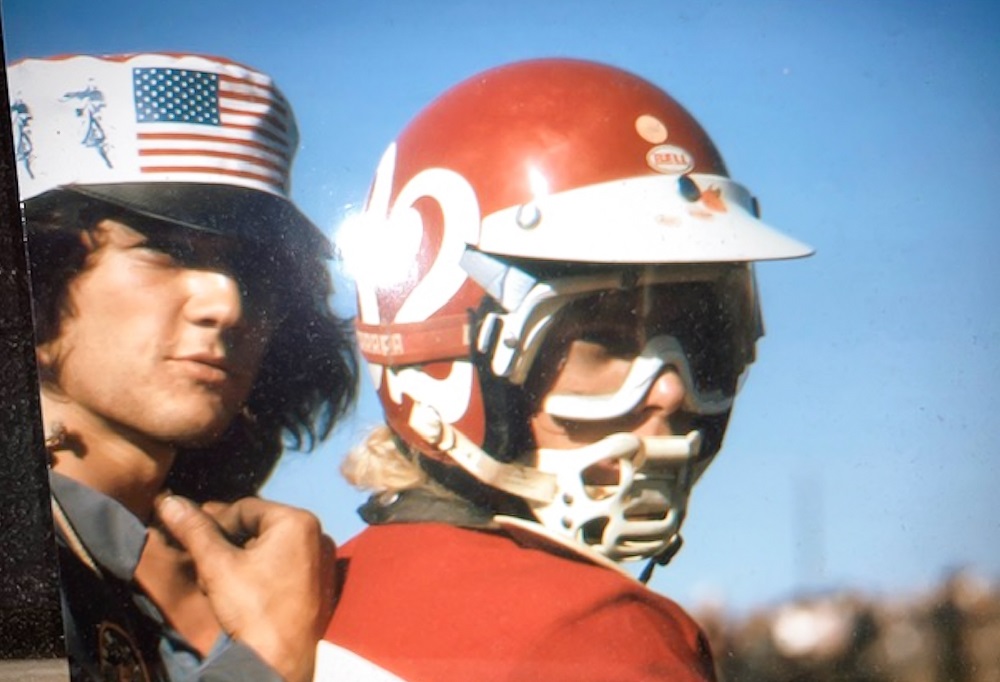
“With today’s teams, I see a bunch of guys who aren’t even allowed to work on the bikes. The engines are rebuilt back at a shop…forks, too. I just see these guys power-washing the bikes.”
“In my day, I sometimes wouldn’t have the right jet in my toolbox, so I would change to a spark plug with a different heat range. We played with the tapering of the needles and were always tinkering with the jetting and the suspension. Roy Turner and I even had to make our own gaskets for the works Hondas, the fire-engine red bikes. We used gasket paper and a ball-peen hammer.”
“I know guys around where I live, they can’t even change a tire,” Jones laments. “They take it to the shop. What? What’s wrong with you?!”
Just a bunch of dummies!CN
Click here to read the Archives Column in the Cycle News Digital Edition Magazine.
Subscribe to six decades of Cycle News Archive issues