Rennie teams up with Lightning Motorcycles to take on one of the most revered racing events in the world, the Bonneville Motorcycle Speed Trials.
By Rennie Scaysbrook | Photography by RS and Scooter Grubb
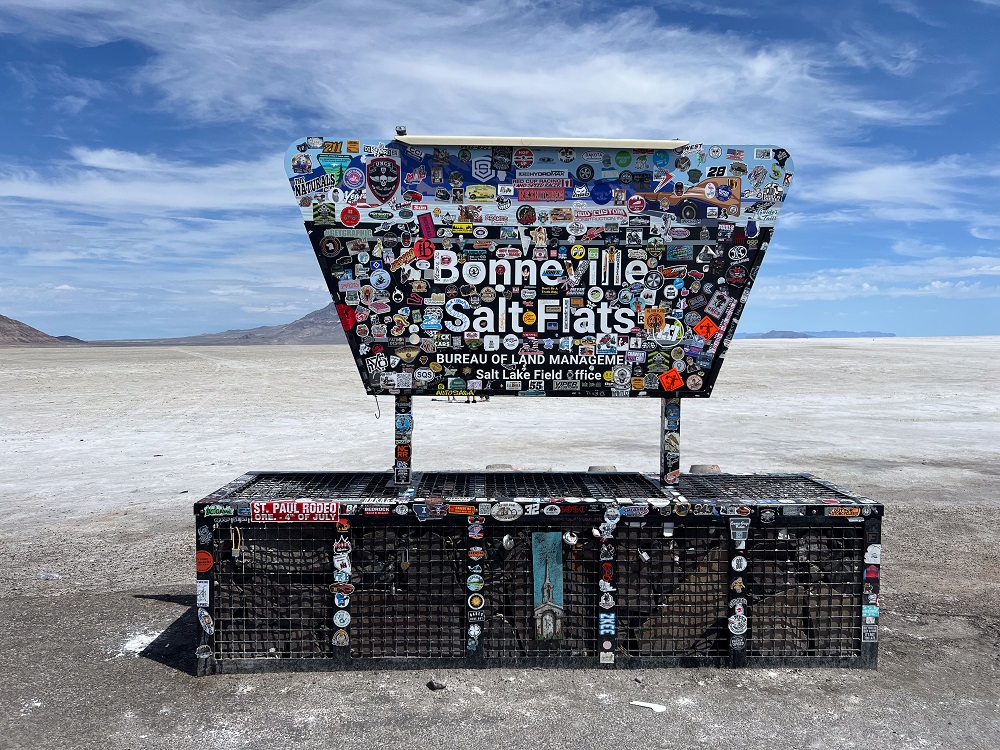
The white seems to go on forever.
In every direction, an endless landscape of salt gives Bonneville a look that is both beautiful and a little haunting at sunrise.
Bonneville Salt Flats are the remnants of ancient Lake Bonneville, which covered much of western Utah more than 15,000 years ago. As the lake evaporated, it left behind mineral-rich sediments.
Over thousands of years, groundwater dissolved salts from these deposits and carried them toward the surface. During the hot, dry summer months, the water evaporates, leaving the minerals behind to form a hard, white crust of interlocking salt crystals. Winter and spring rains then dissolve and redistribute the salt, creating a continual cycle of flooding, evaporation and recrystallization that helps maintain Bonneville’s vast, remarkably flat surface.
Across the world, Bonneville is known as the place you come to if you want to go really, really, fast. It’s where salty speed dreams either come true or shatter, sometimes fatally.
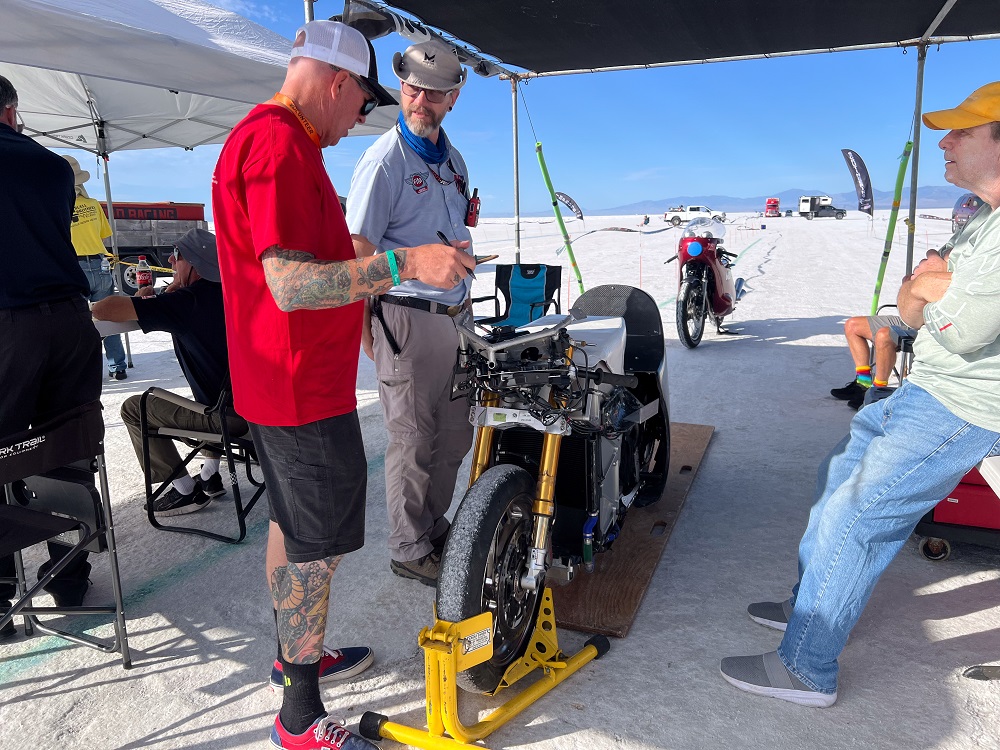
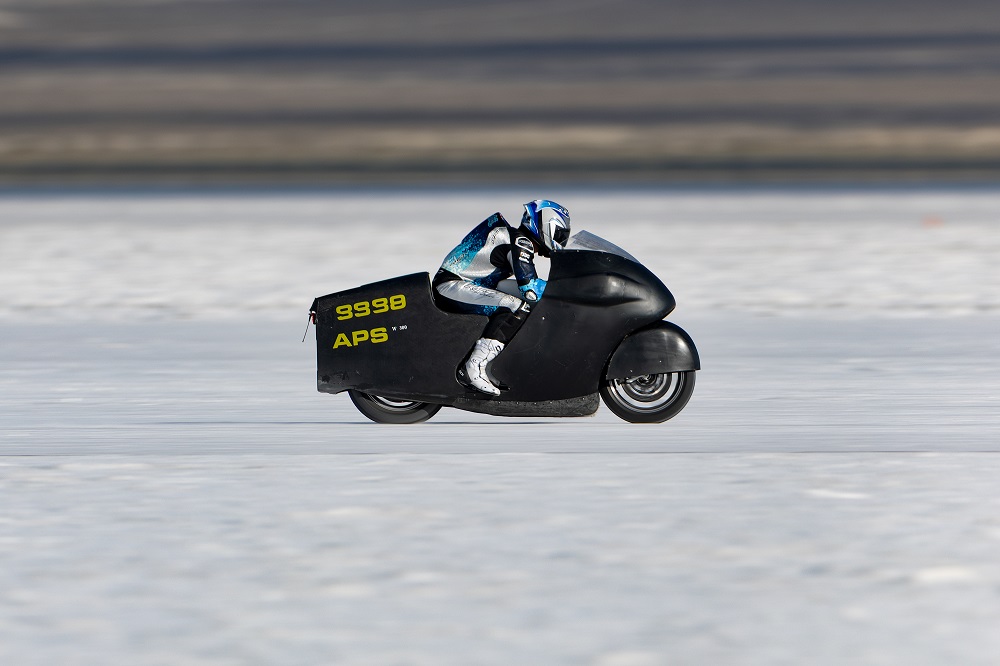
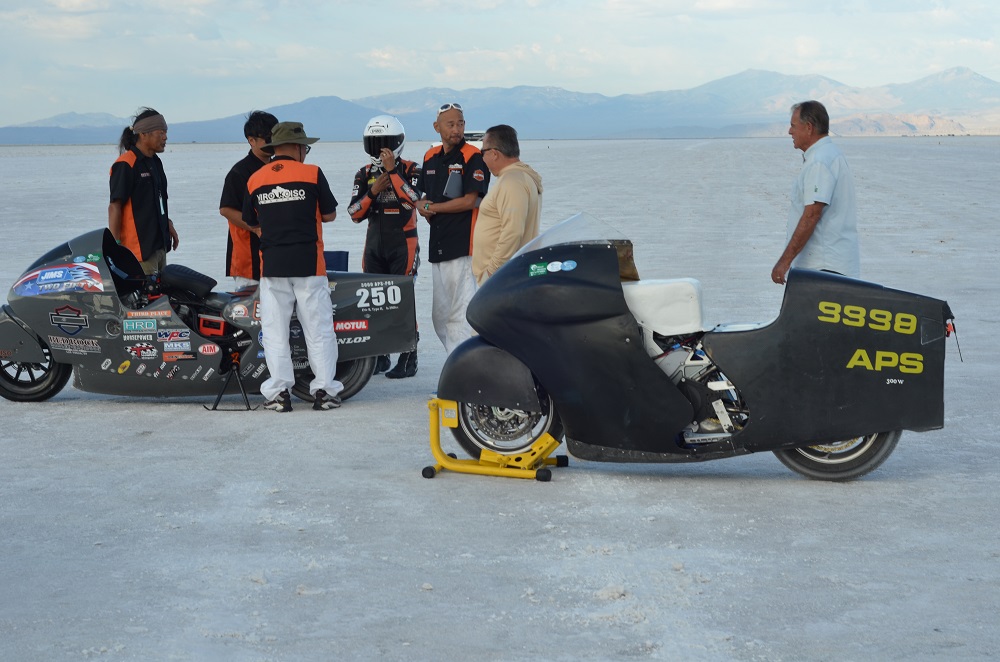
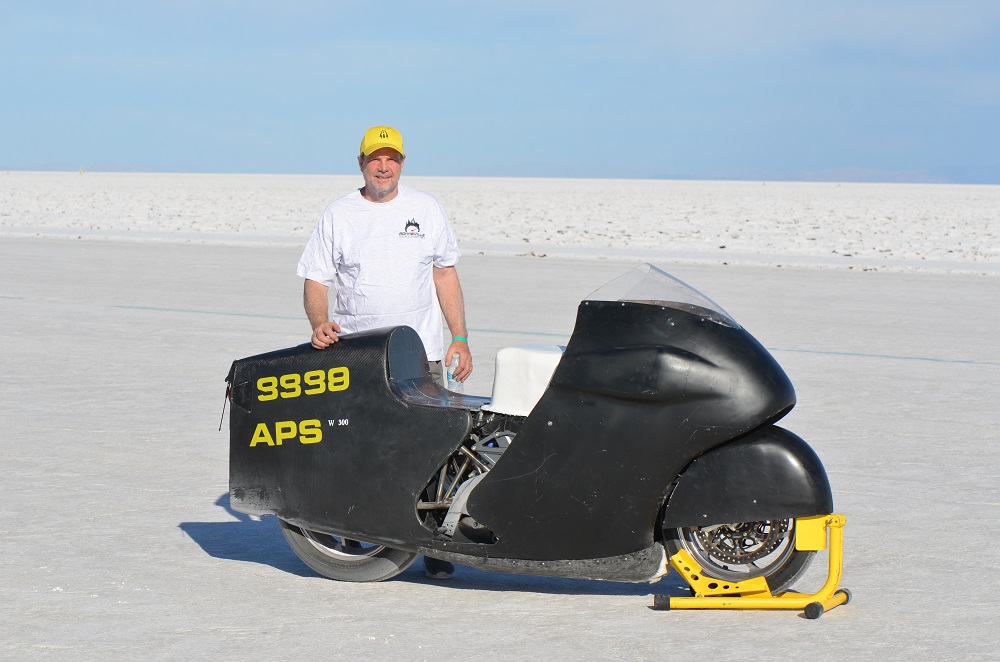
It’s not a place where you’ll see huge grandstands, electronically controlled pit access passes, or multi-million-dollar prototypes built by the world’s leading manufacturers. However, you will see teams of grafting engineers, riders, officials and an army of volunteers, all there to see the odd record being broken. Bikes range from 50cc two-stroke dragsters to the full-length BUB streamliner, and, if you knew where to look, you’d see an all-black, all-silent, partially streamlined electric prototype that had the potential to be faster than most of them.
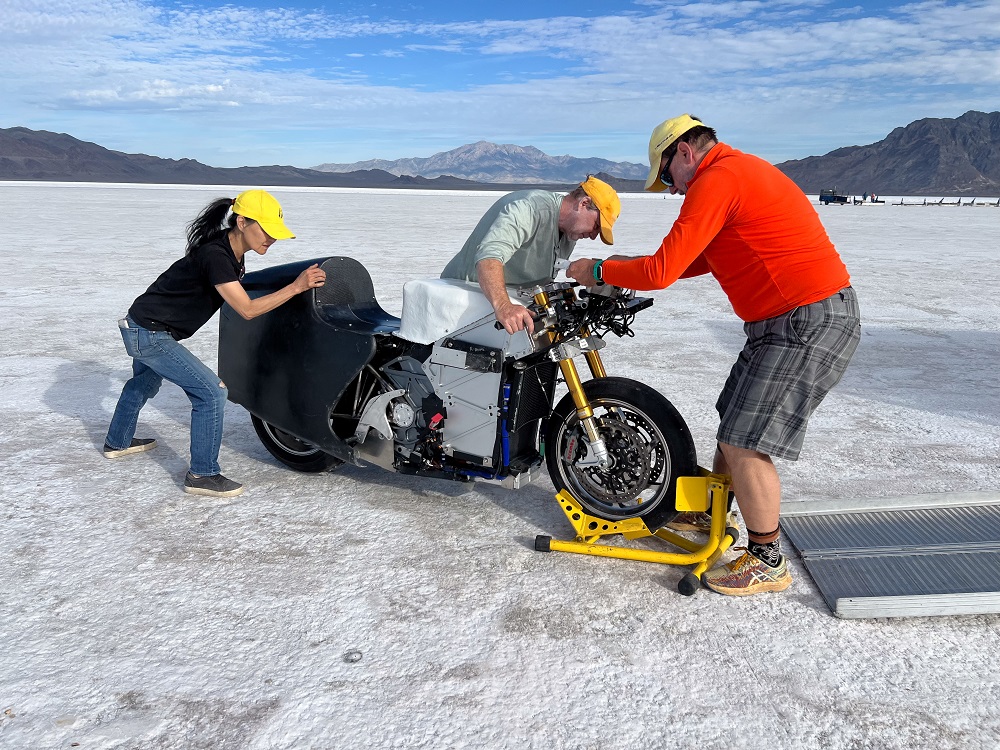
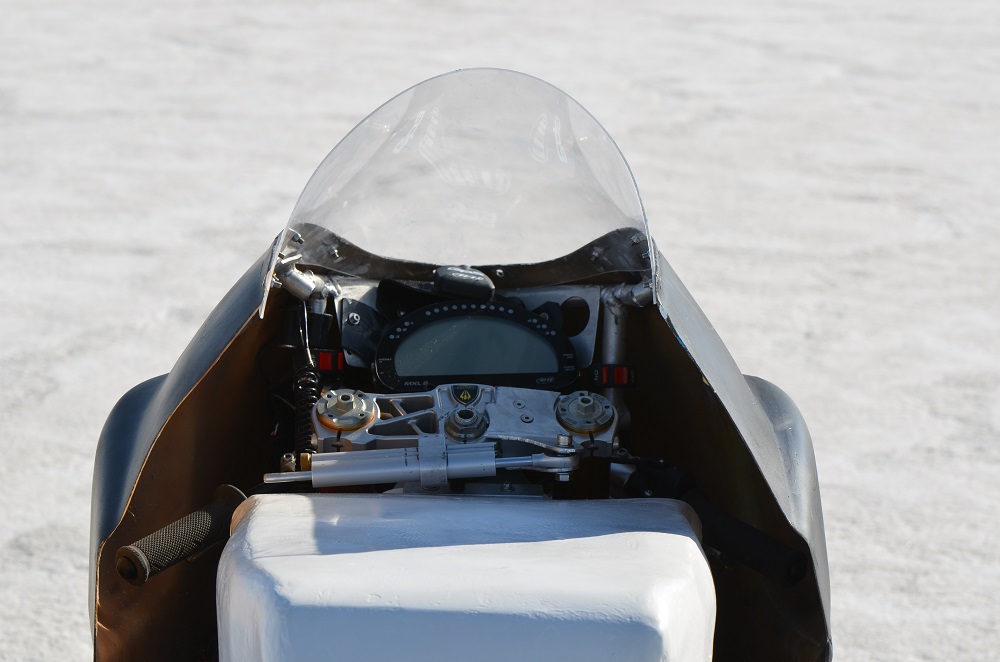
This is the Lightning Motorcycles WTF, a twin-motor, single-battery-powered electric racer that is the brainchild of Lightning’s CEO Richard Hatfield. The name is an interesting story in itself. Lightning’s most famous motorcycle, the LS-218, got its name from doing 218 mph at the Bonneville Speed Trials in 2011. It later went on to become the only electric motorcycle to take the outright victory at the Pikes Peak International Hill Climb in 2013 in the hands of the late Carlin Dunne. It was the first electric motorcycle to win the overall motorcycle category and formed the basis for the WTF.
The WTF moniker partly comes from a time during one of the many dyno runs Richard and the team carried out, when the racer had so much power that it would pull wheelies on the dyno at 170 mph, even when strapped down hard. It so worried the dyno operator, he yelled out, “What The F***!” I’ll leave you to fill in the asterisks.
In reality, WTF also stands for Richard building the World’s True Fastest (WTF) motorcycle. Both monikers are true.
That’s because the WTF can boast upwards of 600 (and no, that’s not a typo) horsepower at full power. It has five levels of power, starting at 200 horsepower and going up to 300, 400, 500 and 600. Now, 600 horsepower may sound a lot—and it unquestionably is—but it’s useless on the salt. You can only use as much horsepower as the tire can handle without spinning, because if you’re spinning, you’re not driving, and you’re not going forward.
The WTF thus had a bit of a legacy to live up to as we approached the salt for the first time. We had a week to attempt to break the AMA record of 203.361 mph (and then push it as far as we could) in the 300 kg APS-W class, but getting to that point would require a few teething issues to be resolved first.
I had ridden the WTF in fully unfaired form earlier in the year, clocking out at 175 mph before we ran out of runway. In that run, it was surprising how stable and sure-footed the WTF seemed. With a lot of weight in the center of the chassis thanks to the massive battery and twin-motor setup, the WTF was like an arrow once it was pointed in the right direction. With the ultra-slippery bodywork fitted, I felt we’d easily nail the record, then we’d push it even further to see where we could take it.
The reality of the salt was somewhat different.
I’d never ridden on the salt before, so this was somewhat a baptism by fire for me. After getting the extensive bodywork fitted and the screen cut down so I could fit behind it, I was due to run a series of passes to show the BMST officials I knew what I was doing.
One run of 125 mph was done, then I was due to run another of 150 and 175 mph. Until I wasn’t. I was told by the officials I was good to go, so with Richard’s blessing and the notorious Bonneville wind taking some time off, it was straight to 184 mph for the first “real” pass.
Riding on salt is a little like riding on compressed ball bearings. You’re never truly letting the rear tire grip—it’s constantly skating on the precipice of transmitting all that torque while keeping you in control. It’s a strange feeling, a cross between sand racing and road racing, but that 184-mph pass was so smooth I falsely thought, “This is going to be easy… .”
There was reason for optimism. The WTF tracked straight and true, even if the pilot was firmly in denial about what he was doing, and we were still on the lowest power setting. The 204-mph marker would be blown apart, no worries. This indeed would be easy.
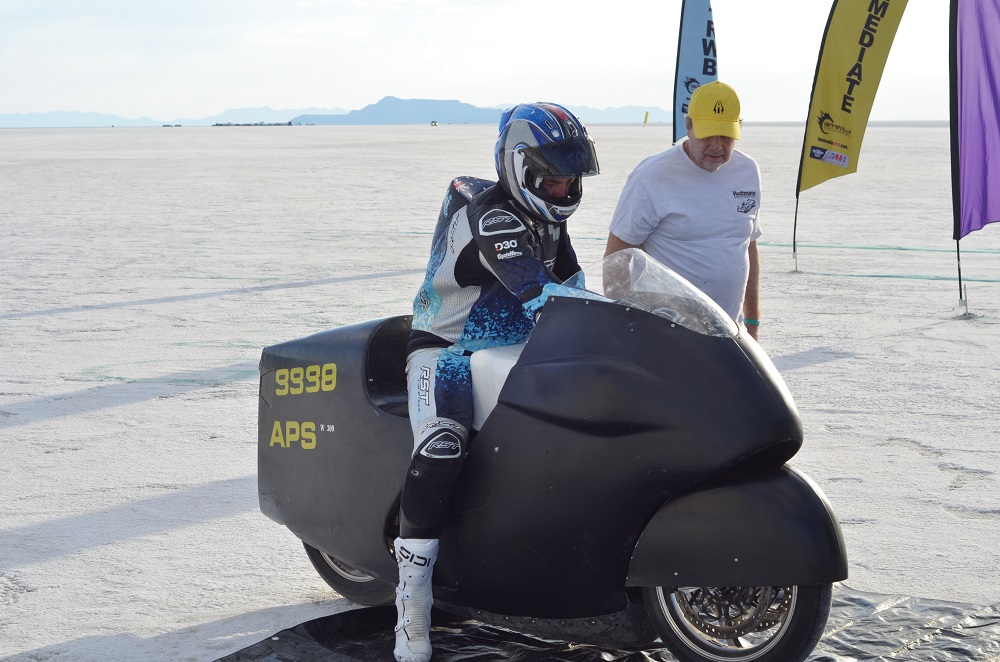
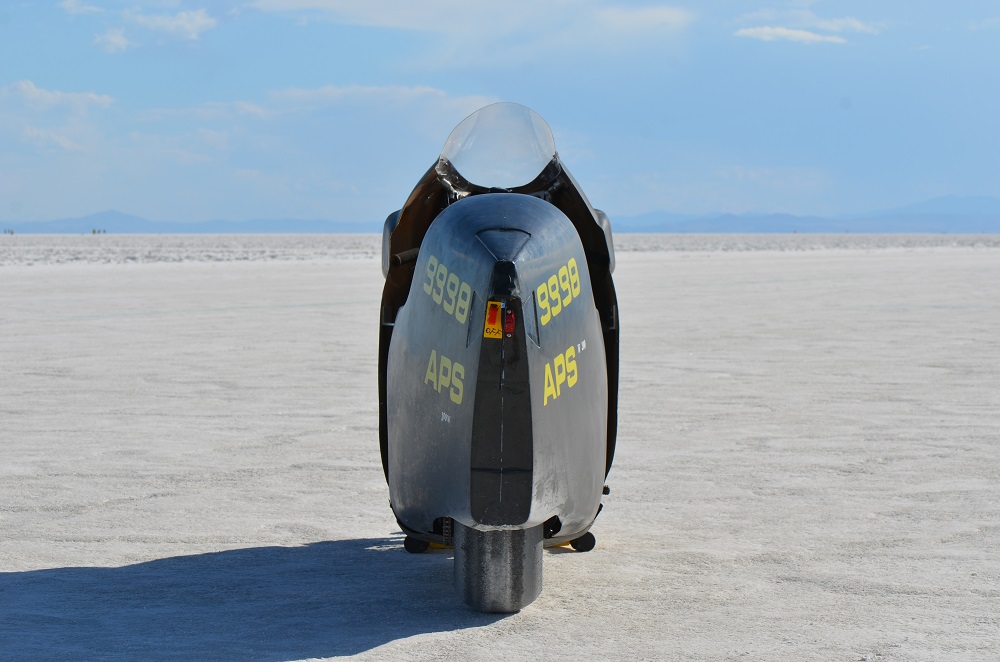
But strange things happen when you start going really fast. Richard had fitted a new aero fairing to the WTF that had previously gone 297.970 mph at the Salar de Uyuni salt flats in Bolivia in the hands of the legendary Ralph Hudson, but just because that fairing shape had achieved that speed didn’t mean it would do it for me.
With the 184-mph run in the books, I felt more than confident we would crack at least 200 mph on our next run and thus have a shot at the record. To get a record, you need to carry your desired speed over a timed mile on the 90-foot-wide salt track. You have between two to three miles to get up to your velocity, hold it there, bring yourself to a stop, and do it again in the reverse direction after your attempt has been ratified by the officials.
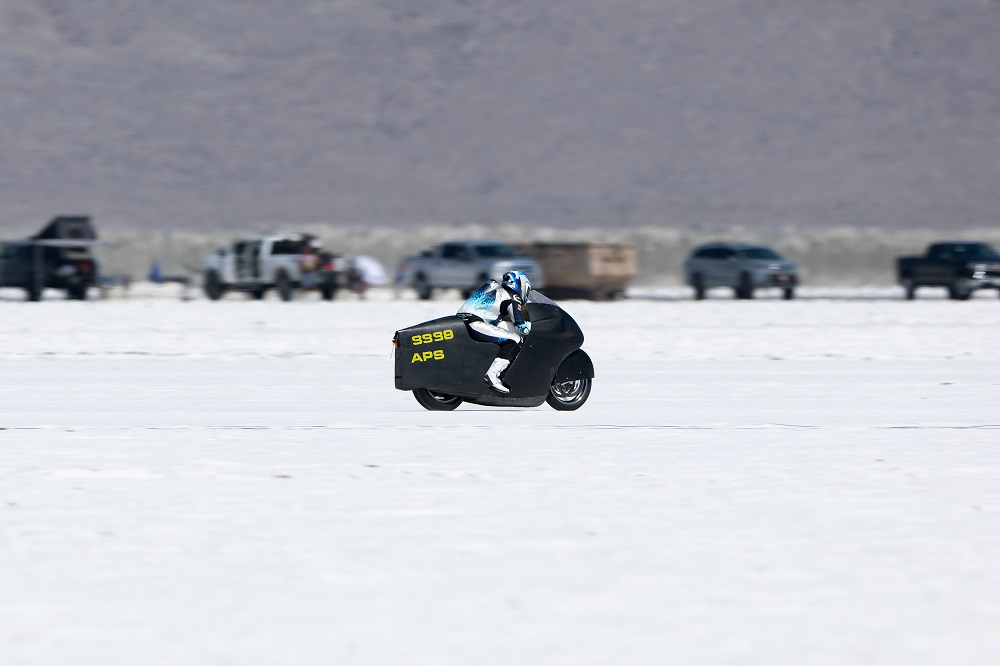
We were starting from mile zero, giving us the full three miles to get up to speed. Most sportbike riders know the feeling of going fast, but I bet most don’t know what it’s like to hold a potentially 600-horsepower motorcycle wide open for four whole miles before beginning to back off. At 200 mph, you’re covering a quarter mile every 4.5 seconds. Those red markers on the side of the track begin to blur in your peripheral vision as you try to keep the black bullet pointed in a straight line.
Remember when I said strange things happen while going fast? Well, that’s down to the aerodynamics of the fairing, which caused some chronic instability when the speeds pushed north of 190 mph.
Richard and his crew had modified the fairing for me to get behind it at speed, but at 6-foot-1, I’m on the taller side with broad shoulders, and once we’d cut the screen back and widened the side of the fairing, it set off something in the black art of high-speed aero.
A wobble would begin around 188 mph. Then by the time I was at 195 mph, the WTF was shimmying its way down the timed mile. It wasn’t a tank-slapper, but the fairing was flexing at this speed and causing a concerning wobble that, if I didn’t bring it back under control, could spell disaster. Like, serious disaster.
Strangely, though, the wobble wasn’t scary. I’ve had tank-slappers that would scare Mick Doohan, but this was almost serene, like being stuck in a boat as it was washed through the waves. Each time I brought it back under control, and each time over the next couple of days, we couldn’t go any faster. Frustration set in for everyone, but Richard managed to keep his cool better than I did.
In all, we made six attempts to set a new record but couldn’t overcome the laws of physics. We even tried to run the bike free of bodywork on the final morning, but the WTF struck a technical problem at 130 mph and wouldn’t go any faster.
It turned out to be a disappointing end for a week that promised so much. Official timing recorded a best measured mile of 183.167 mph and a best measured kilometer of 184.311 mph, while Lightning’s onboard data indicated a peak speed of 199.98 mph. We had reached the doorstep of 200 mph, but the instability prevented us from sustaining that speed through the measured mile.
Salt racing is unlike anything I’ve done before. The level of patience required will test even the most zen of people, but there’s a strange charm to it. The people involved are lovely in that all they care about is them going fast, you going fast, and everyone coming home safely. There is zero ego in those pits, which is very refreshing.
This is an unfinished challenge, mark my words. The Salty Speed Dreams aren’t over yet.CN
Five Minutes with Richard Hatfield
We sit down with Lightning Motorcycles CEO Richard Hatfield to find out a little more about the company.
Give us a brief overview of Lightning Motorcycles and what led us to this point.
Lightning is an advanced electric-vehicle technology company best known for its high-performance electric motorcycles. We use racing as an accelerated engineering and validation environment for our battery, powertrain, vehicle control and thermal management.
It really started in the early 1990s—maybe even 1989—when I was invited to race an electric car at an event in Phoenix. At the time, I was racing open-wheel cars, while the other guys involved were electric-vehicle engineers. They built the car, I got involved with it, and I became really interested in the technology.
Through that process, I thought an electric motorcycle would be a really good application because motorcycles are smaller. The penalties you pay for the lower energy density of batteries compared with gasoline are much less significant because you need fewer batteries to make the vehicle perform at the same level.
How much has the technology changed since you started?
Incredibly. The first bike we built was around 2005 or 2006 and used some of the earliest lithium batteries you could get. We called it the E1. We basically took a Yamaha YZF-R1 track bike that a friend of mine had, bought some very early lithium batteries, an AC induction motor and an industrial drive, and put it all together.
It made about 65 horsepower and 64 pound-feet of torque. For what it was, and where electric motorcycles were at that time, I could see the promise in it. I could see what it could become.
The next bike was a much bigger step. We used the motor from the GM EV1 electric car. In stock form, it was about 140 horsepower. The CTO for Tesla, which was just starting at the time, provided that motor because they were doing tests with it and the drive system for the first Tesla Roadsters.
We built a bike around it and brought it to Bonneville, where it ran 176 mph on its first run and broke a record that had stood for 30 years. Mike Corbin had set that record three decades earlier. We then road raced the bike in one of the first FIM/AMA electric road race series, with Michael Barnes riding.
At that point, we were getting 160 to 170 horsepower out of it. We had better batteries, and it was the first bike that was getting close to conventional motorcycle performance and handling. It had good forks, a good shock, a sturdy chassis and was pretty robust. It was heavy, but again, it showed promise.
After racing it for a year, winning the North American Championship and setting the speed record, we said, “Okay, what’s next?” This was 2010. We had run it in 2009 and 2010, and over that winter we started working on the LS-218.
So, the LS-218 basically forms the genesis of this bike we’re racing now?
Yes. The basic design of this bike comes from that. The LS-218 was named because we brought it to Bonneville, and it ran 218 mph at the end of the measured mile. We took it to Pikes Peak and won with Carlin Dunne, raced it in the FIM road racing series, and were invited by the FIM to bring it to Le Mans.
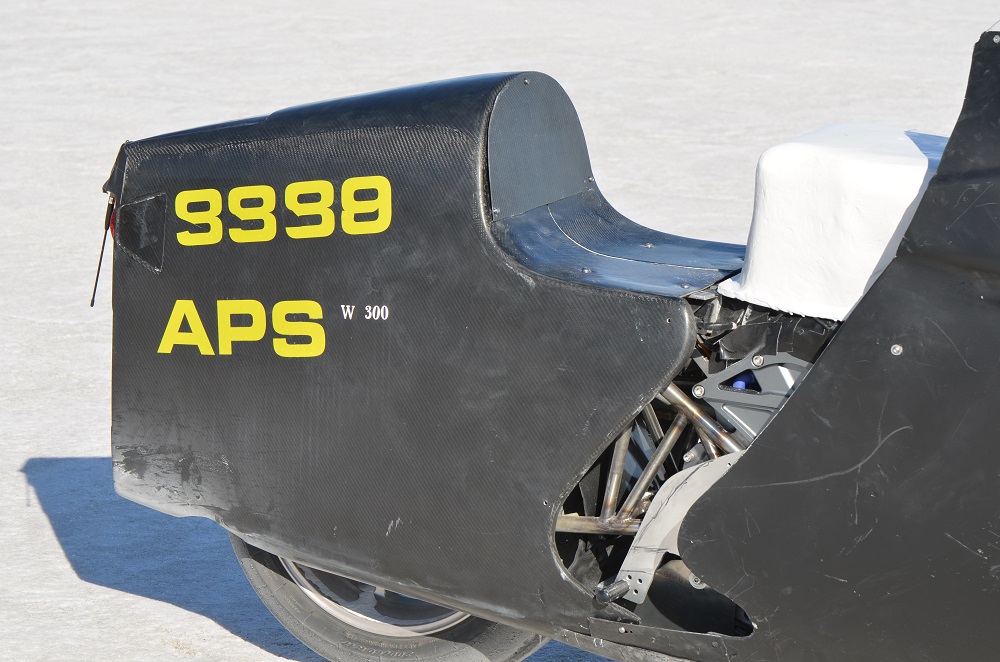
The idea was to use the battery pack as the main stressed member of the chassis. The fork mounts to the front of the battery pack, the motor mounts to the back, the swingarm mounts to the motor, and the rear shock mounts to the motor/subframe assembly.
Each element of the bike is a stressed member while also serving another function. That allowed us to get the weight much lower than other electric bikes that had anywhere near that level of performance.
Explain the nuts and bolts of this bike. How does it all work in terms that normal people can understand?
The motor technology continued to develop, and the battery technology continued to develop, so that became the basis of this bike.
The new bike uses axial-flux motors, like those used in Koenigsegg hybrid supercars. An axial-flux motor is the most advanced type of motor in terms of efficiency and power density.
We found two basic designs that could work in the motorcycle within a similar footprint to our LS-218 motor, so we sandwiched them together. We have two motors on a common shaft. Each motor can handle almost 490 amps at 800 volts, and this battery pack is 750 volts.
So, it’s one battery and two motors?
Yes. One battery pack feeds the two motors. We have five power stages and our vehicle-control unit, so much of the work is focused on making the bike more rideable and usable.
At Level 1, on our Dynojet dyno, it makes 214 horsepower at the rear wheel. Each level above that adds about 100 pound-feet of torque.
We have more than 900 amps at 750 volts available with the drive system. If you do that math, it gives you around 675,000 watts of potential power. We’re limited by a variety of factors on the bike, but from what we can see, the potential is over 500 horsepower.
But you can’t find a dyno that will handle it at that level?
Even the 400-horsepower dyno pull we did was difficult. The tire was spinning; we had to strap the bike down really hard, and it was pretty violent. We were sitting there watching the whole thing the entire time, being a little worried.
Is this a bike you could put on the street and run as a production motorcycle?
We are going to do that, yes. We’ve already ridden this one on the street quite a bit. We haven’t weighed it yet, but it’s something like 500 pounds, so around Suzuki Hayabusa range.
The weight is high up in the chassis, and that has always been a problem with electric bikes. It feels awkward at low speeds and when you’re moving it around because the weight is high. But when you’re going into a corner, having that weight higher means you need less lean angle for the same cornering force, so it can work better in some ways.
But the more weight we can take out, the better. There are constantly new battery technologies being proposed that are lighter and more powerful.
That’s another reason we do things like Pikes Peak and Bonneville. It gets the word out, and there are people working on the next generation of batteries. A lot of them have approached us with new technology, and we can test it quickly, find out where the outer limits are and introduce it into production relatively quickly.
We’ve got bikes with batteries that will charge from 20 to 80 percent in just over 10 minutes. Those batteries also have very high energy density. In an LS-218, you can get 200 miles of freeway range at the speed limit.
Where are the batteries and motors made?
We build the battery packs in San Jose and at our shop in Hollister, but the cells are made all over the world. We get cells from Korea, China and Taiwan.
We machine all the motor housings, but we have a domestic company that stamps the laminations and does the windings for us. So, it’s partially overseas-made and partially American-made and assembled here in America. But really, that’s kind of how all American motorcycles are these days.CN
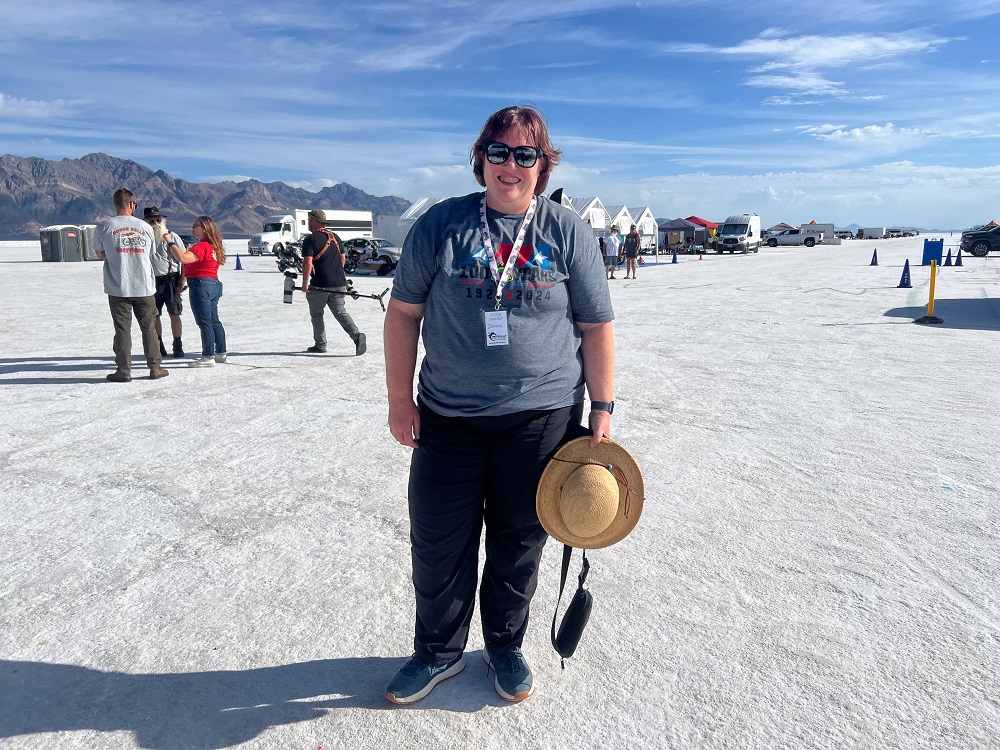
Five Minutes With Delvene Reber
Please give us a brief overview of the event.
The event is the Bonneville Motorcycle Speed Trials. We’re sanctioned by both the FIM and AMA, so competitors can set FIM world records and AMA national records. We’re also an AMA Grand Championship event, meaning anyone who sets an AMA national record here receives a number one plate at the end of the year.
That’s what makes this different from most forms of racing. In a championship, you have a series and the person who scores the most points becomes champion. Here, if you set a record, you’ve gone faster than anyone before you. You don’t have to be the best on a particular weekend—you have to be the best ever. It’s a little like climbing to the top of a mountain that keeps getting higher.
We’re also set up to establish records in the traditional manner. For an FIM record, competitors must make a return run within two hours, on the same calendar day, and in the opposite direction. For AMA, they have to run in the opposite direction as long as it’s within 24 hours of the first run.
How long have you been involved in land-speed racing?
Twenty-two years. I actually got my start at a DLRA event in Australia, racing my dad’s roadster. I was born and bred in Australia, and my parents and all my family are still there.
My dad is a hot-rod builder and racer, so I went out to a DLRA event and wouldn’t shut up about it. That’s where I met my husband. They were there with their streamliner, looking to go really fast.
After that event, I emigrated to the United States and started working for Denis Manning, owner of the BUB streamliner. Denis had always wanted to run a motorcycle-only event. At Speed Week, motorcycles aren’t always treated as kindly as the cars, and you don’t necessarily want to be running behind a big truck and dealing with the conditions that can create. He wanted an event specifically for motorcycles and wanted to bring world and national records back to Bonneville.
We brought AMA sanctioning back in 2004. Denis was the owner of the event, then called the BUB Motorcycle Speed Trials, but I became the event manager. He realized I was good at organizing, as I’m a substitute teacher when not running this event.
Denis’ role was paying for the event and securing sponsors, but at the end of the day he was a racer. Once we got out here, I was in charge of everything, and he would go racing.
For all intents and purposes, we co-founded the event, and I’ve been running it since its inception in 2004. Denis retired, so to speak, and I took ownership in 2014.
So this is your event?
This is my event. I’m the sole owner and operator, and I’m the first—and, as far as I know, still the only—female promoter in the 100-year history of land-speed racing. Nobody makes a profit in racing, but I’ve managed to get a small one going. But yes, I’ve been running it on my own since 2014.
How’s the health of the sport? Is it growing?
It ebbs and flows. Our biggest issue isn’t necessarily the health of the sport—it’s the condition of the salt.
We’ve seen the salt crust diminish, and there are a lot of efforts underway to save it. There are conversations involving the mining company because there is mining out here, and it’s a complicated situation with many different elements.
I think the reduction in land-speed racing has been tied directly to deteriorating salt conditions. Years ago, it could rain during an event, the salt would dry overnight, and we’d race again the next day. Today, it doesn’t hold up in the same way.
This year is pretty good—probably the best salt we’ve seen in about a decade. But we haven’t seen an absolute land-speed record broken here for a long time. We’ve had plenty of 200-mph-plus runs, but not those really big speeds. The last outright record was, I believe, when Ack Attack set its mark in 2010.
We’ve also had weather problems. We canceled because of Covid, then had other rainouts. One year there was more than six inches of water on the salt. I flew over it in the tiniest plane imaginable and couldn’t find a dry spot. When we walked out there, we found six to 10 inches of water in places. Large plates of salt had lifted and were almost floating around. It was crazy.
In 2023, we were rained out again by a storm system associated with the hurricane that came off the California coast. We were all driving out here, and it rained the entire way.
Last year was one of our smallest events for participation in a long time, partly because of the weather and the economy. This year we’re up considerably.
I think one of our strengths is the family atmosphere. That’s motorcycles in general. Somebody might need a sprocket, and the person they’re competing against says, “I’ve got a spare.” You’re in the middle of nowhere, so a community develops around it. That’s something I’ve tried to build. This is a race for racers.
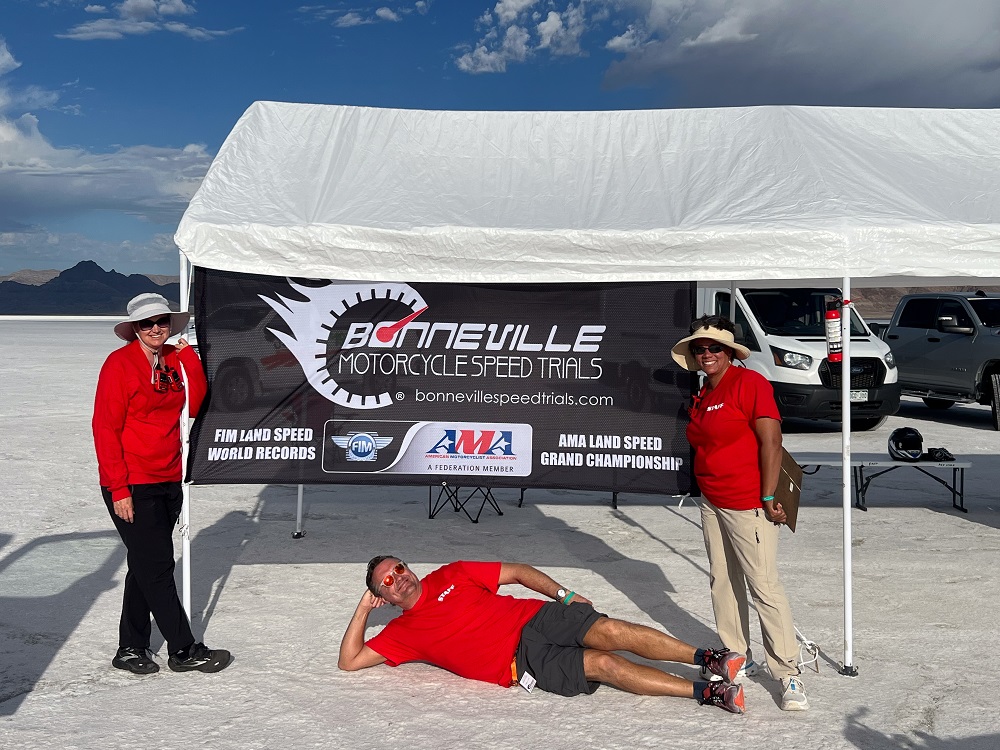
When do you start preparing for the event, and what’s involved?
We usually get here on the Sunday before racing. My husband and I arrive first and try to locate the course, with the rest of the crew coming in Monday.
Normally, we run two parallel courses because FIM records require runs in opposite directions. We would have a seven-and-a-half-mile international course and a five-and-three-quarter-mile basic course. This year, because of our numbers, we could justify using one track.
Preparing it involves using large drags—essentially I-beam structures pulled behind trucks—to level the salt. We don’t cut it as much as we once did because the crust isn’t as thick. We’ve also developed a roller that pushes the salt back together rather than cutting it.
We like an event to be followed by a little rain because moisture helps the salt crystals bond together and rebuild the crust. We call it salt growth. Usually, we’ll have three or four trucks pulling the drags at five to 10 mph for approximately seven miles.
Our track used to be 120 feet wide. It’s now 90 feet, which reduces preparation time. Years ago, we had enough salt for an 11-mile course. Now, every year is different. You have to find the best section of salt, make sure there’s enough length, place the timed mile correctly, and work out where the pits can go. I’ve never seen the same salt twice.
We have about 50 volunteers this year, which is fantastic. Normally, we’re always looking for people. But racers are great. Somebody with a broken motorcycle might say, “I’ll come and help,” or someone who has already set their record might volunteer for the rest of the week.
The days are long and the work is hard, but we get a lot of repeat volunteers. Some come to see what the event is about and end up preparing a motorcycle to race the following year. Others come as racers and then become volunteers. Those people often understand both sides best. They know what it takes to race, but they also discover what it takes to make the whole thing happen.CN
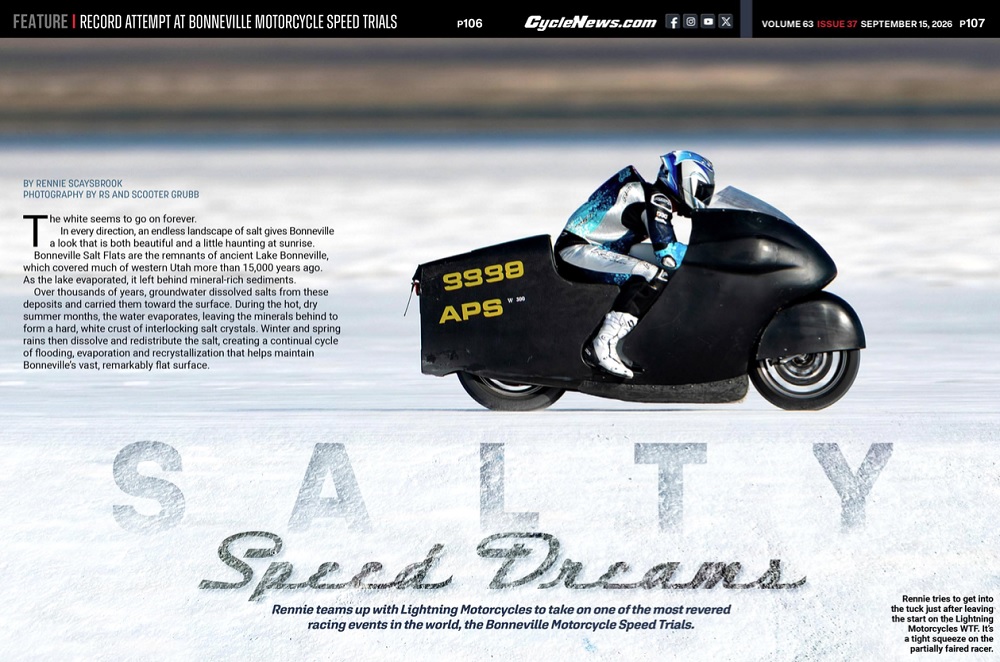
Click here to read the Salty Speed Dreams in the Cycle News Digital Edition Magazine.