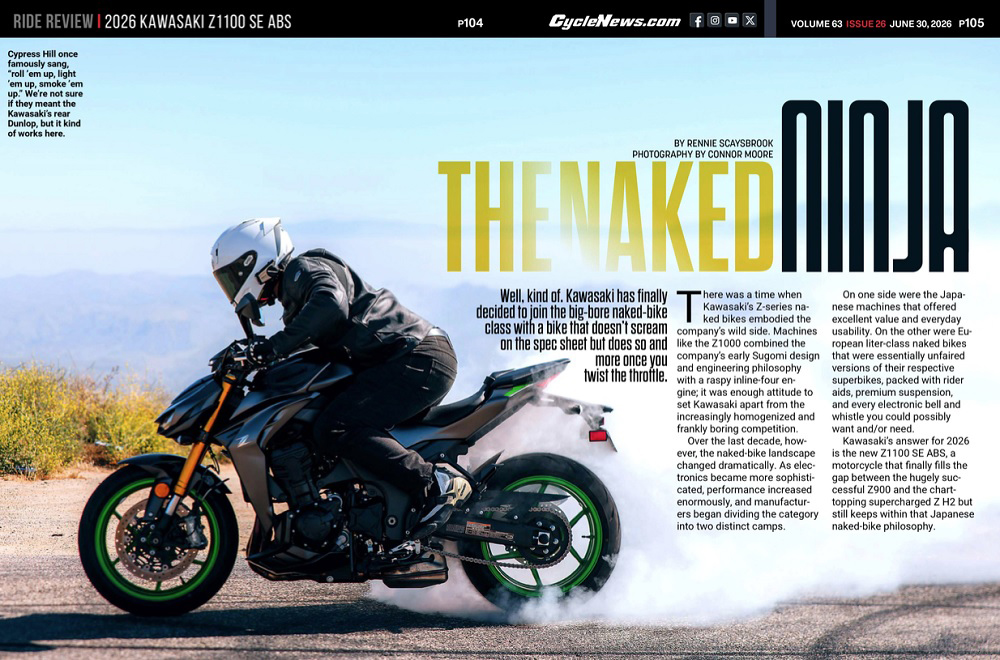
There was a time when Kawasaki’s Z-series naked bikes embodied the company’s wild side. Machines like the Z1000 combined the company’s early Sugomi design and engineering philosophy with a raspy inline-four engine; it was enough attitude to set Kawasaki apart from the increasingly homogenized and frankly boring competition.
Over the last decade, however, the naked-bike landscape changed dramatically. As electronics became more sophisticated, performance increased enormously, and manufacturers began dividing the category into two distinct camps.
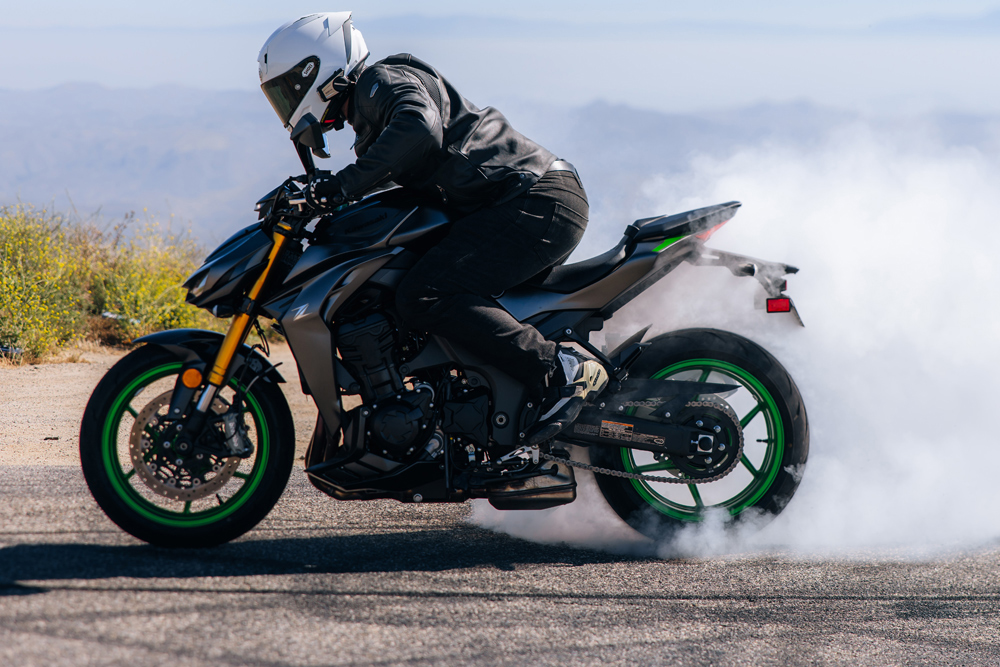
Photography by Connor Moore
On one side were the Japanese machines that offered excellent value and everyday usability. On the other were European liter-class naked bikes that were essentially unfaired versions of their respective superbikes, packed with rider aids, premium suspension, and every electronic bell and whistle you could possibly want and/or need.
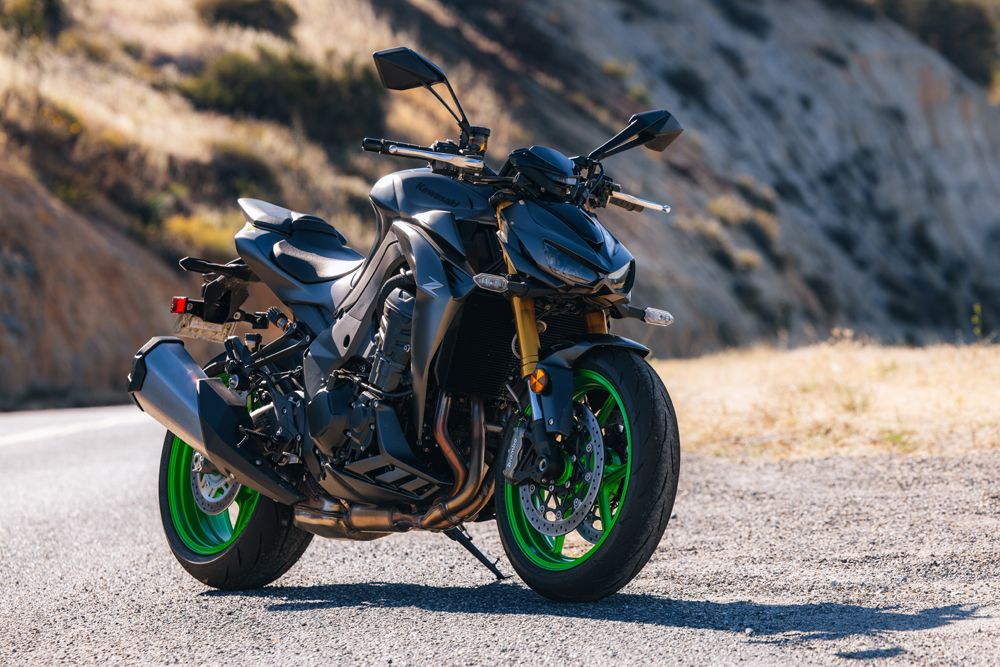
Kawasaki’s answer for 2026 is the new Z1100 SE ABS, a motorcycle that finally fills the gap between the hugely successful Z900 and the chart-topping supercharged Z H2 but still keeps within that Japanese naked-bike philosophy.
The Z1100 SE ABS gives Kawasaki a true flagship naturally aspirated naked bike capable of competing with the likes of the Honda CB1000 Hornet SP, Suzuki GSX-S1000 and Yamaha MT-10. The BMW S 1000 R, Triumph Speed Triple 1200 and Ducati Streetfighter V4 are still in that upper hyper-naked category.
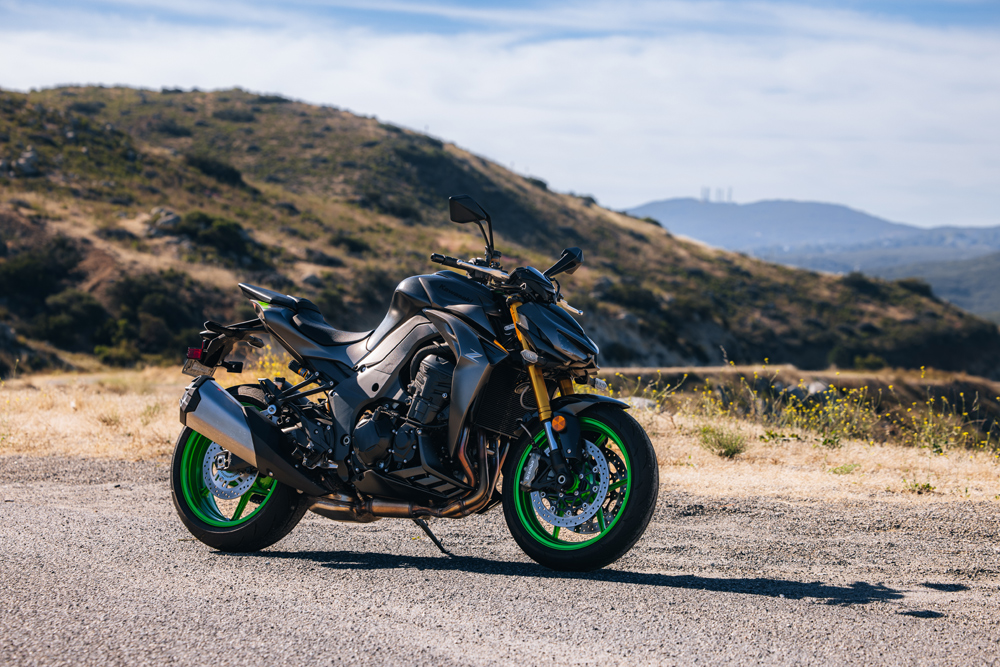
Built around Kawasaki’s enlarged inline-four platform, the Z1100 SE ABS arrives with more displacement and torque, as well as an upgraded electronics and chassis package. At an MSRP of $14,999 in the United States, Kawasaki is clearly taking aim at riders who want liter-bike performance without stepping into the $20,000-plus hyper-naked category.
There’s No Replacement for Displacement | 2026 Kawasaki Z1100 SE ABS Review
The biggest story of the new Z1100 is the engine.
Kawasaki has increased displacement to 1099cc, creating an inline-four that produces a claimed 134 horsepower at 9000 rpm and 83.3 lb-ft of torque at 7600 rpm. Those figures won’t win any dyno shootouts against the MT-10 or BMW S 1000 R, but that misses the point of what Kawasaki has built here.
The Z1100 isn’t designed to be a stripped-down, enlarged ZX-10RR. Instead, Kawasaki has focused on building a broad, usable powerband that delivers strong acceleration in the rpm range where street riders spend most of their time in much the same way Norton did with their new Manx R.
From as low as 2000 rpm, the engine pulls with authority, but more importantly, it does so almost effortlessly. There’s hardly a hint of emissions-induced flat spot at 6000 rpm, as the additional displacement over the Z900 creates a noticeably stronger midrange, making the 1100 less dependent on revs and more eager to accelerate in virtually any gear.
The 1099cc four-cylinder encourages lazy riding and is thus an excellent traffic companion. Plenty of times I’d take off from the lights in second gear without even thinking about it, and the 1100 would happily put up with my gearbox insubordination, meeting it with all the low- to midrange torque I’d ever need.
Passing slower traffic is simple, as you’d expect from an engine of this capacity. Sixth gear passes at 70 mph require little more than a twist of the right wrist, making highway merges happen without thinking.
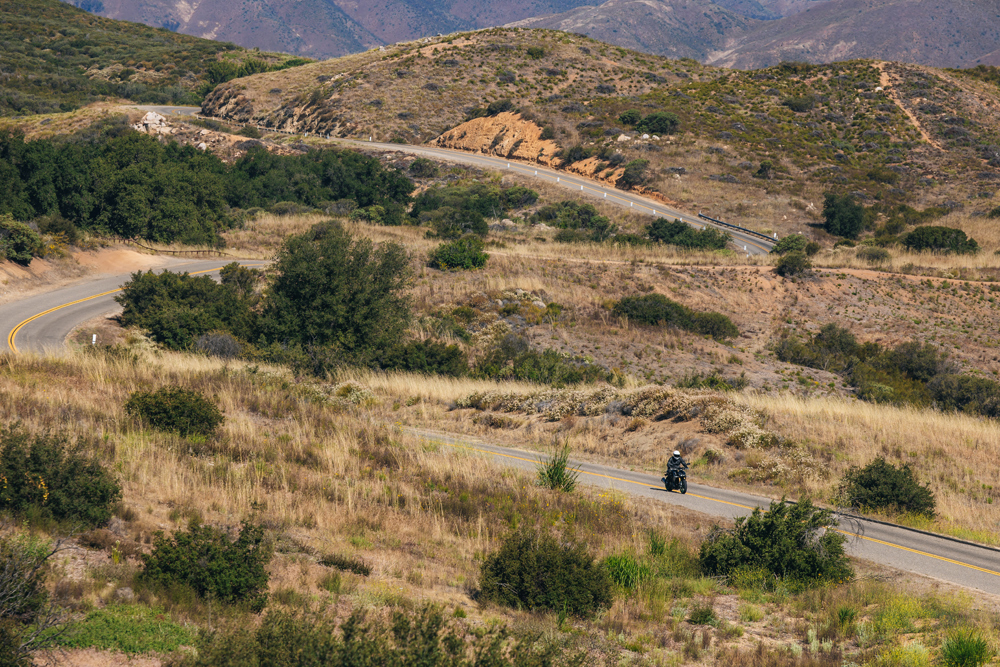
Mountain roads become a game of surfing the torque curve rather than constantly hunting for the perfect gear, because in reality, any of the top three gears will do if you’re riding below 75 mph.
The 1100 motor feels like a more mature version of the 900. In my opinion, Kawasaki builds the best four-cylinder engines on the market, and this is one of their finest yet. There’s enough of a top-end rush to keep more experienced riders entertained, but here it won’t hold a candle to fellow inline-four competitors BMW.
The Kawasaki’s emphasis remains firmly on beefy midrange performance. Kawasaki has clearly prioritized point-and-shoot acceleration and rideability over peak horsepower figures, and the result is a motorcycle that feels faster than its spec sheet might indicate. It’s also way more usable.
The six-speed transmission shifts positively and precisely, while the standard quickshifter allows clutchless upshifts and down cog selection. The assist-and-slip clutch further improves the experience by reducing lever effort and helping maintain chassis stability during aggressive downshifts, but if you’re really using that feature, you might want to try to smooth out your downshifts.
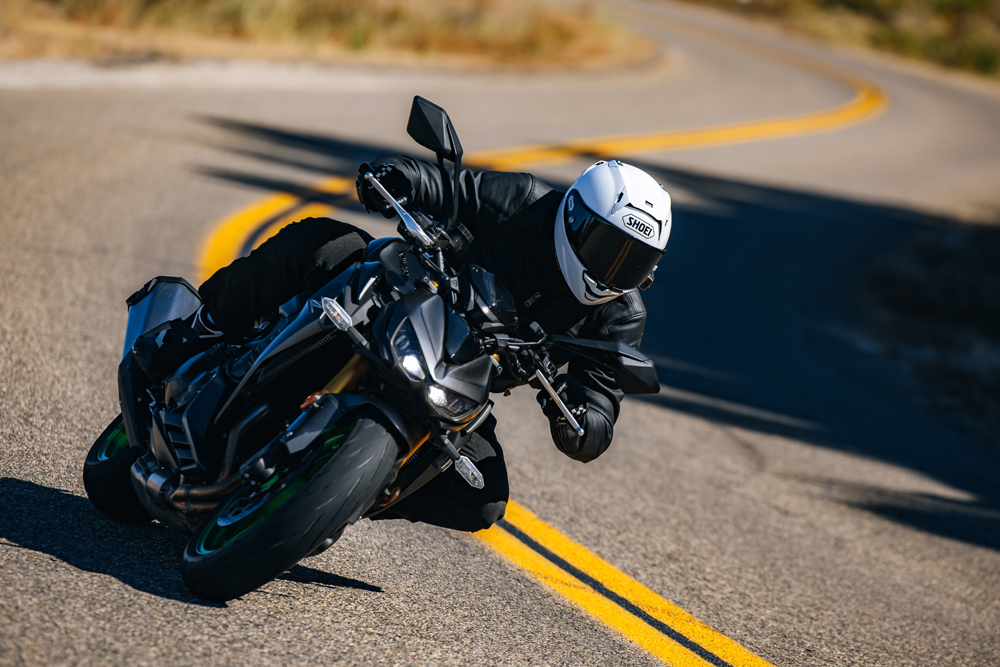
The Kawasaki Bones | 2026 Kawasaki Z1100 SE ABS Review
The 1100 is built around an aluminum twin-tube frame and rides on a 56.7-inch wheelbase, which is the shortest in the class behind the Yamaha MT-10 that comes in 1.4 inches shorter. It’s also the heaviest of all the 1000cc+ naked bikes (not including the Z H2) at a claimed wet curb weight of 487 pounds.
Despite that, the 1100 feels well-proportioned when you’re riding. Compared to the Z900, which feels overly cramped and isn’t much fun to ride if you’re north of 6-foot-1 like me, the 1100 has a more relaxed rider triangle with more room from the 32.1-inch-tall seat to the footpegs, allowing more blood flow down your legs and letting you ride further for longer.
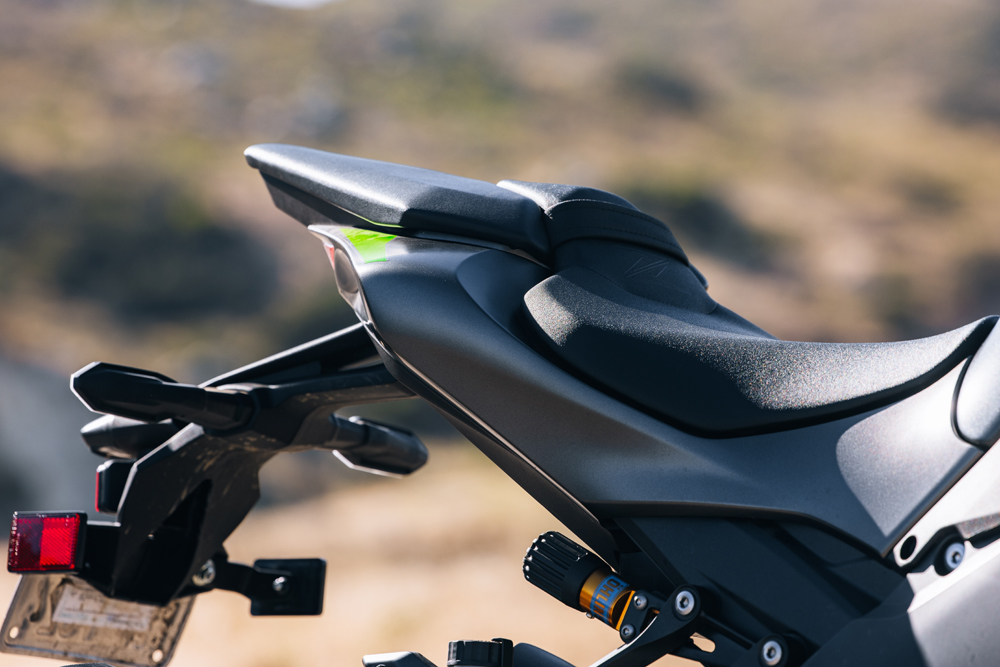
However, Kawasaki needs to look at different seat padding, as the seat gets pretty hard over a 45-minute ride. More than once, I was riding by standing on the ’pegs to get my ass to wake up during some of the longer test runs, so this is something that needs looking at by the Kawasaki engineers.
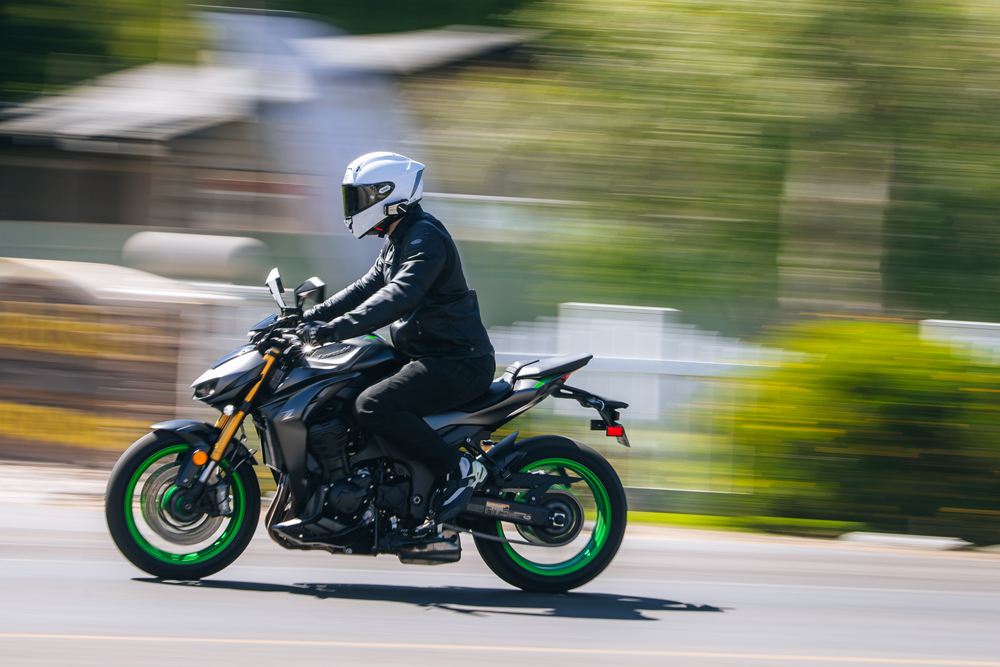
The 1100’s steering is neutral and predictable but isn’t the fastest out there. It can take a bit of effort to get it settled into the type of corner you’d encounter on tight canyon roads, but conversely, it has plenty of stability for flowing high-speed riding.
Kawasaki has resisted the temptation to chase extreme geometry numbers but has instead chosen a balanced package that works well in most environments, especially the regular day-to-day scenarios you’d likely find yourself in.
Yet, it is pleasing to see how planted the 1100 is at speed. High-speed sweepers reveal a level of chassis composure that inspires rider confidence, while rough pavement doesn’t seem to upset the chassis as much as you’d imagine.
A major reason for that composure is the suspension package, which, surprisingly, hasn’t changed much since the 900 SE ABS.
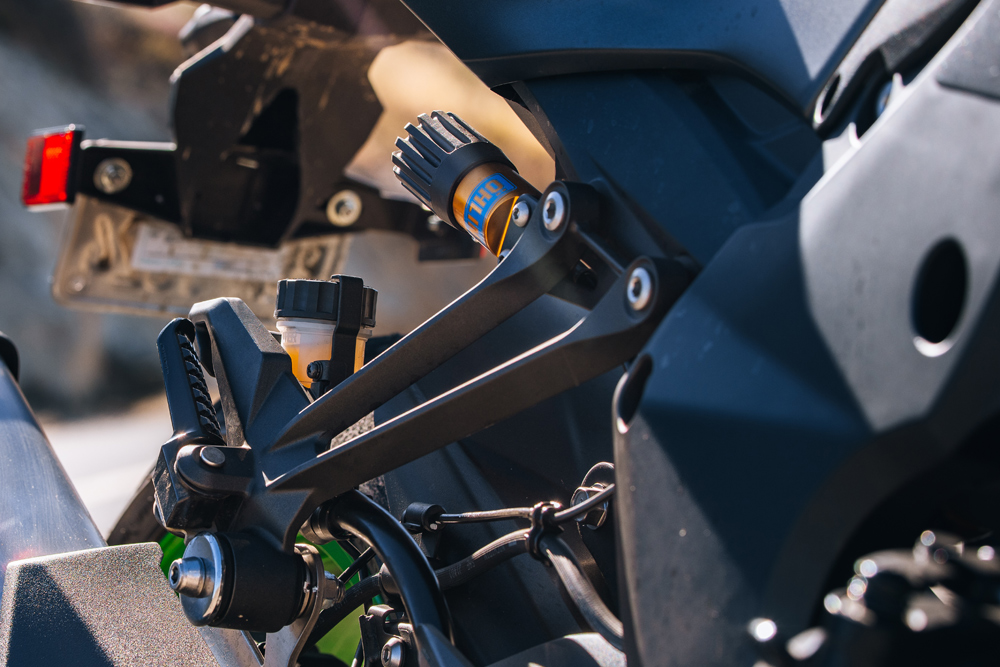
Up front, Kawasaki fits a KYB fully adjustable 41mm inverted fork, while at the rear sits an Öhlins S46 shock featuring rebound damping adjustment and a remote preload adjuster. Although on paper this is the same as the Z900 SE ABS, there have been subtle tweaks to the damping on both the fork and shock for the 1100, so they are different units—they even have different part numbers.
The suspension strikes an excellent balance between comfort and control. On smooth pavement, the 1100 feels taut and precise. On rougher roads, the suspension absorbs imperfections without transmitting excessive harshness up the rider’s behind.
The Öhlins shock is impressive, but that’s not really a surprise. Once the preload is set for your weight, the Öhlins keeps the rear of the 1100 stable when you get hard on the gas out of slower-speed corners while maintaining composure as the velocity increases. Mid-corner bumps that might unsettle lesser-spec suspensions are dispatched with little drama.
Braking duties are handled by the same dual 300mm front discs, gripped by radial-mount Brembo M4.32 monobloc calipers, fitted to the Z900 SE ABS, with steel-braided brake lines. A single-piston caliper grips a 250mm at the rear.
Sadly, the braking performance isn’t exactly what buyers expect from a premium package. The initial bite is strong but a little abrupt, even though there is plenty of power available for aggressive riding, but the feel at the lever is a little wooden. This is mainly down to the lower-spec master cylinder Kawasaki fitted. The Z1100 also runs the smallest front brake discs of any 1000cc+ sports naked bike you can buy today, which is part of the reduced braking capability you’ll feel if you take one for a high-speed spin. This being the case, general cruising around town shouldn’t present any major braking issues.
Brains… Brains! | 2026 Kawasaki Z1100 SE ABS Review
For quite some time, Kawasaki’s naked bikes lagged behind some rivals in terms of electronic sophistication. The Z1100 aims to change that, but it’s still not up to the super-naked category’s specs.
The Z1100 SE receives a six-axis IMU-equipped electronics suite that includes Kawasaki Cornering Management Function (KCMF), Kawasaki Traction Control (KTRC), Kawasaki Intelligent anti-lock Brake System (KIBS) and cornering ABS, selectable power modes, integrated riding modes, cruise control and that up-and-down quickshifter.
Customizable Rider, Sport, Road and Rain modes provide progressively more neutered throttle responses, and like I seem to constantly say these days, Road mode was where I spent most of my time, as it provided the smoothest throttle response for the mainly around-town riding I was doing.
The traction control system is pretty old-school in that it’s on or off, not variable like on a BMW, but it offers enough freedom for hard riding while still providing a safety net when grip levels deteriorate.
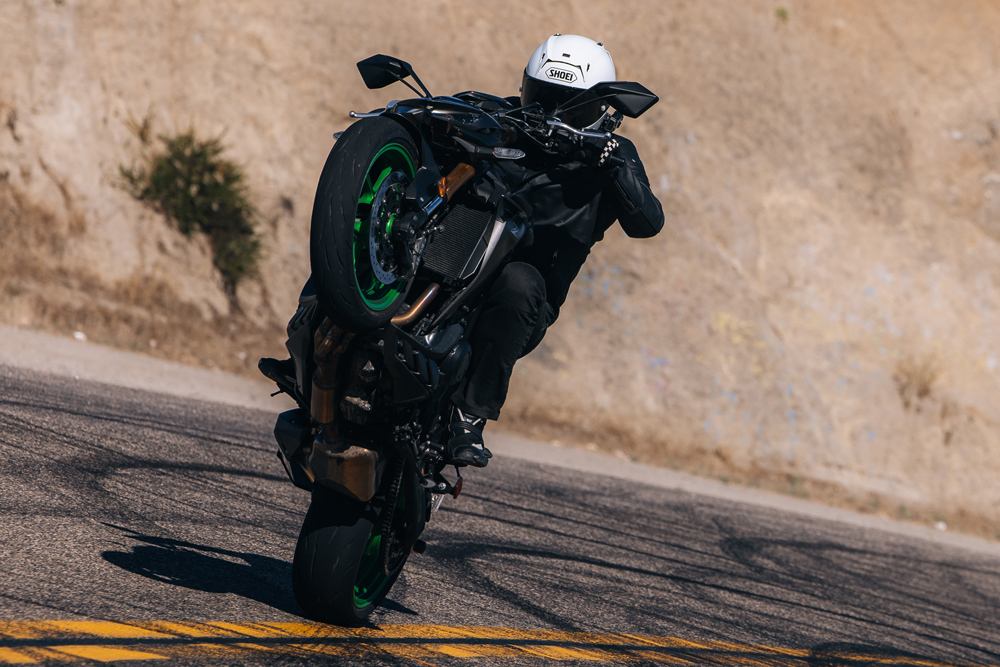
The TC is linked to wheelie control, so if you want to get it up, you’ve got to switch traction control off entirely, which is simple enough to do via the left switch block.
Cruise control comes standard but won’t operate above 78 mph, which can be a little frustrating on California’s freeways where it seems everyone else is cruising at 85 mph. Still, long freeway sections are significantly less fatiguing thanks to the system, which is something every sporty motorcycle should have. At least it’s included in the MSRP.
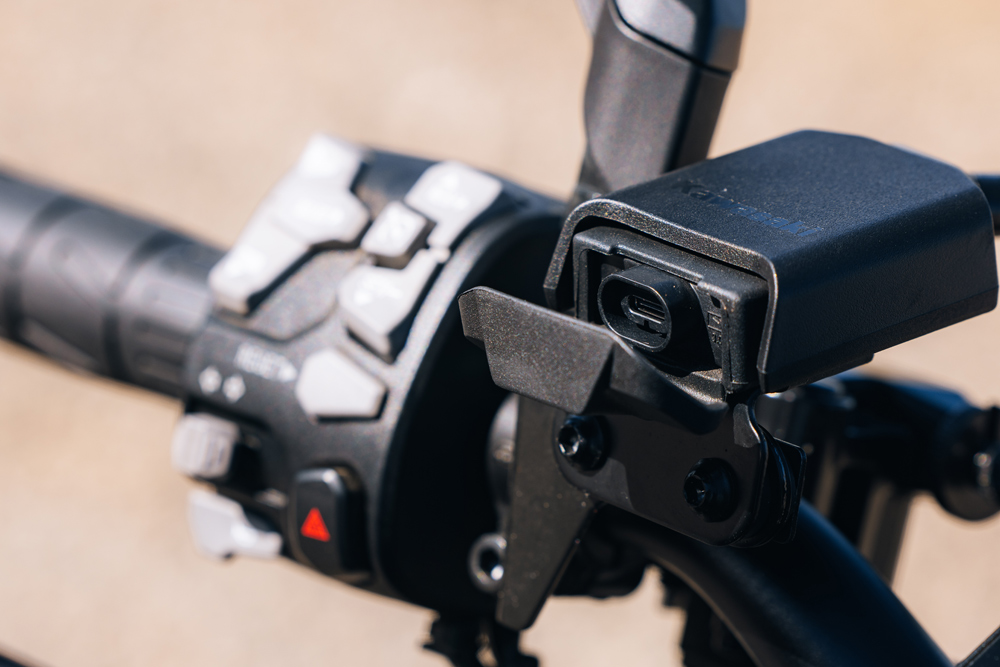
A relatively small five-inch TFT display provides access to the various settings and allows you to pair your phone to use Kawasaki’s Rideology app. This gives you access to turn-by-turn navigation, ride information and vehicle data, and you also get a USB-C charging port that is possibly the ugliest yet most practical thing on the 1100.
At $14,999, the Z1100 SE ABS isn’t cheap (especially when compared to the $10,999 Honda CB1000 Hornet ABS and the $11,909 Suzuki GSX-S1000, although it’s literally half the price of the Ducati), but the specification sheet, premium components and overall refinement help justify the price somewhat.
More importantly, it fills a long-vacant space in Kawasaki’s lineup and gives riders a good alternative to the established leaders in the 1000cc naked-bike category.
This marks the first time in eons that we’ve had a full house of Japanese big-bore naked bikes. The 1100 arrives at the most competitive time ever in the segment, but with an MSRP that’s on the higher end of the Japanese market, and with the most weight and least horsepower, it might be a harder sell than Kawasaki hopes.
Regardless, the ride is a good one thanks to that beautiful inline four-cylinder motor, and it’s great to see Kawasaki back and fighting in the Japanese big-bore naked-bike fight.CN
2026 Kawasaki Z1100 SE ABS Specifications
| MSRP | $14,999 |
| Engine | Inline 4-cylinder |
| Valvetrain | DOHC 16-valve |
| Cooling System | Liquid |
| Displacement | 1099cc |
| Bore x Stroke | 77.0 x 59.0mm |
| Compression Ratio | 11.8:1 |
| Fuel System | DFI fuel injection with 38mm electronic throttle bodies |
| Horsepower (claimed) | 134 hp @ 9000 rpm |
| Torque (claimed) | 83.3 lb-ft @ 7600 rpm |
| Transmission | 6-speed |
| Final Drive | Chain |
| Clutch | Assist and slipper clutch |
| Frame | Aluminum twin-tube |
| Front Suspension | 41mm Showa SFF-BP inverted fork, fully adjustable |
| Rear Suspension | Öhlins S46 gas-charged shock with remote preload adjuster |
| Front-Wheel Travel | 4.7 in. |
| Rear-Wheel Travel | 5.4 in. |
| Rake | 24.5° |
| Trail | 4.0 in. |
| Wheelbase | 56.7 in. |
| Front Brake | Dual 300mm semi-floating discs, Brembo M4.32 radial-mount monobloc four-piston calipers, KIBS cornering ABS |
| Rear Brake | Single 250mm disc, single-piston caliper, ABS |
| Front Tire | Dunlop Sportmax Q5A 120/70ZR17 |
| Rear Tire | Dunlop Sportmax Q5A 190/50ZR17 |
| Seat Height | 32.1 in. |
| Fuel Capacity | 4.5 gal. |
| Wheelbase | 56.7 in. |
| Weight (curb, claimed) | 487.3 lbs. |
Click here to read the 2026 Kawasaki Z1100 SE ABS Review in the Cycle News Digital Edition Magazine.