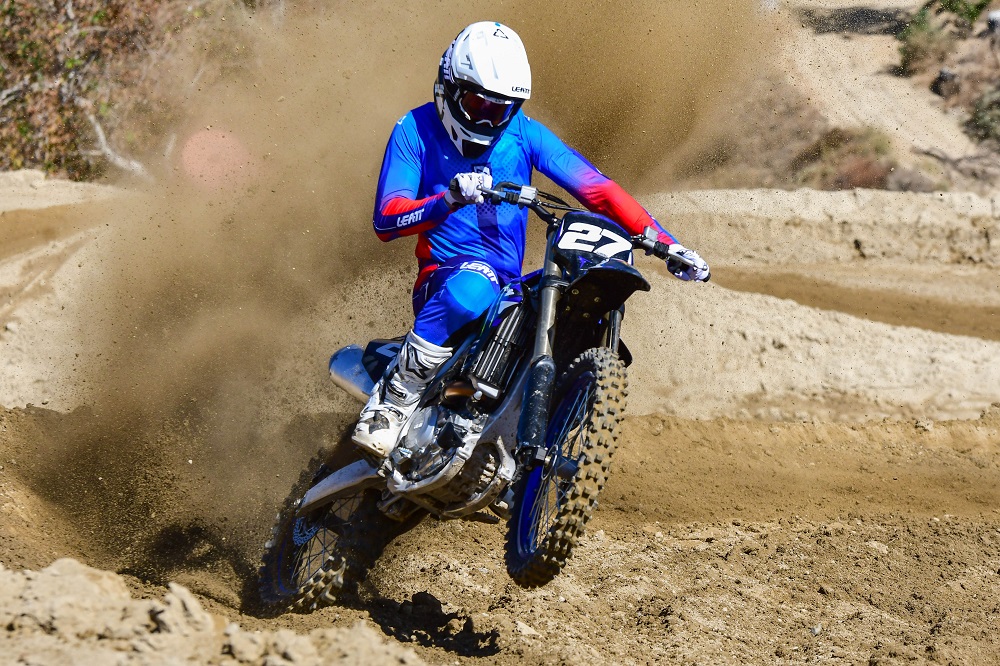
The Yamaha YZ450F returns for 2027 as one of the top dogs in the 450 class. After a major update in 2026 to meet the impending AMA sound regulations, the 2027 model sees minimal changes. Nevertheless, we unwrapped the new Monster Energy Edition YZ450F for a first-ride shakedown at Glen Helen Raceway.
Photos by Justin Lee
Yamaha is staying ahead of the curve with the new AMA sound rules, after the YZ450F underwent significant changes for the 2026 model year. The ’26 received an added duct in the airbox, resonators in the air intake and header pipe, a longer exhaust muffler, and updates to the intake ports. These combined changes helped make the bike compliant with the new 109-decibel sound rule for AMA Pro Racing. While other manufacturers are scrambling to meet these rules this year, Yamaha was first to the line.
The changes for the 2027 model year are minor. A new rear brake disc assembly saves nearly half a pound and uses the same disc as the YZ250F. The Nissin hydraulic clutch gets a larger hose for better modulation, and the Power Tuner app gets a new “ECU lock function” to prevent theft. The Monster Energy Edition livery also returns, replacing the white-and-red kit offered for Yamaha’s 70th anniversary. The black-and-blue Monster Energy Edition is $200 more than the standard blue model.
When the YZ450F was redesigned in 2023, it lost some of its trademark stability but gained agility in tight turns. Then, in 2026, a new frame helped split the difference between the two generations. An aluminum bilateral-beam frame and revised engine mounts were introduced to give the chassis a more settled feel at speed without taking away its newfound ability to turn. For 2027, the frame remains the same, and Yamaha focused instead on suspension, braking and clutch feel.
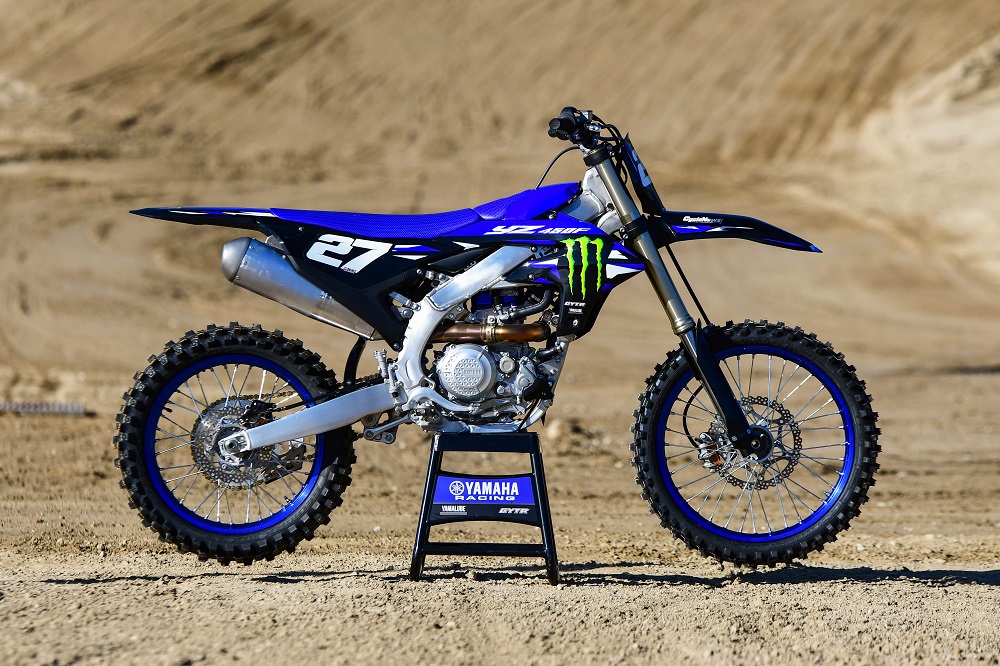
Up front, the KYB SSS fork receives softer valving along with an additional 15cc of oil. Adding oil reduces the air space inside the fork and increases resistance as it moves farther through the stroke. The idea is to improve comfort early in the travel while maintaining bottoming resistance on bigger hits. The KYB shock also gets revised damping settings. Both the front and rear suspension have finger adjusters that require no tools to make changes.
The engine itself carries over largely unchanged from 2026. Yamaha sticks with its 450cc liquid-cooled four-stroke, reverse-cylinder-head layout, five-speed transmission and hydraulic clutch, which was introduced last year. The airbox, throttle body, ECU settings and exhaust system were all heavily updated in 2026 to meet the 109-decibel sound rules, and those changes carry over to 2027.
The hydraulic clutch, which debuted in 2026, also receives a small update for 2027, with a larger hose intended to improve modulation at the lever. We felt the clutch action was smooth and consistent, and it feels exactly like what you’d expect from a modern-day hydraulic system. We had no issues shifting gears or feathering the clutch through rough corners. The clutch was never a complaint of ours on last year’s bike, and most riders are unlikely to notice the change.
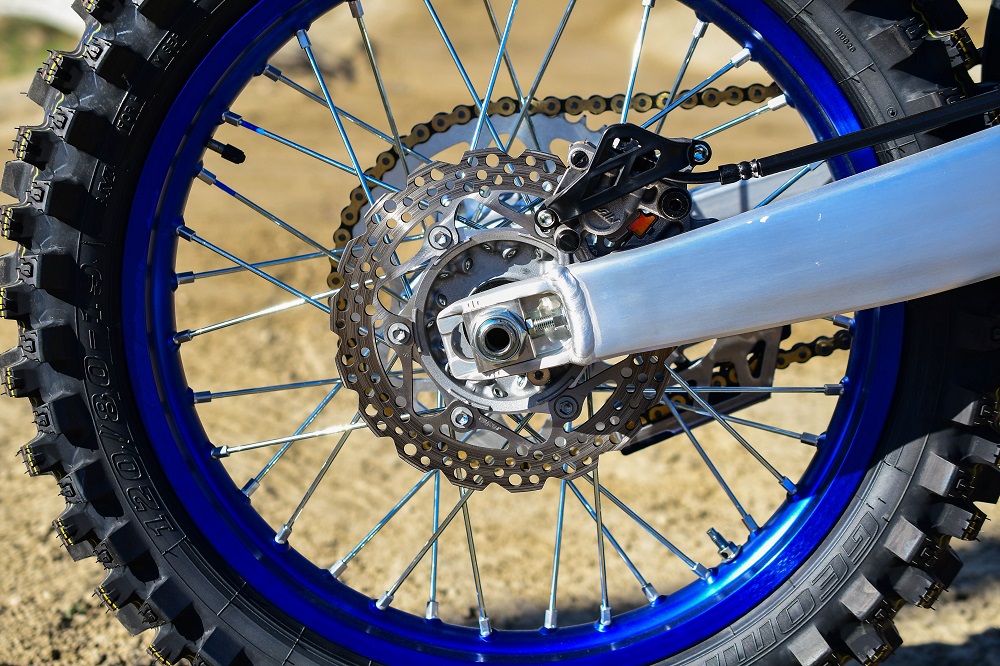
The rear brake is the last area Yamaha addressed. The new rotor drops from 240mm to 220mm, with revised caliper and master-cylinder piston sizes to suit the smaller disc. Yamaha says the assembly saves roughly 180 grams, or just under half a pound. The smaller disc matches the YZ250F’s 220mm rear rotor, and the piston changes are intended to maintain the same usable feel at the pedal. Yamaha says its in-house test riders couldn’t make a clear distinction in performance between the two sizes, so it opted for the lighter one.
At Glen Helen, we felt the fork was still on the harsh side through braking bumps and sharp impacts. We started by softening the compression, which helped slightly but didn’t completely eliminate the feeling. From there, our tech went in two clicks on the rebound to slow the fork down and allow it to soak up the bumps. This gave us the best feel as the day progressed, and the bumps only got worse. Finding the perfect setting might take some time with the added fork oil, but KYB SSS components do seem to offer the most comfort straight out of the box.
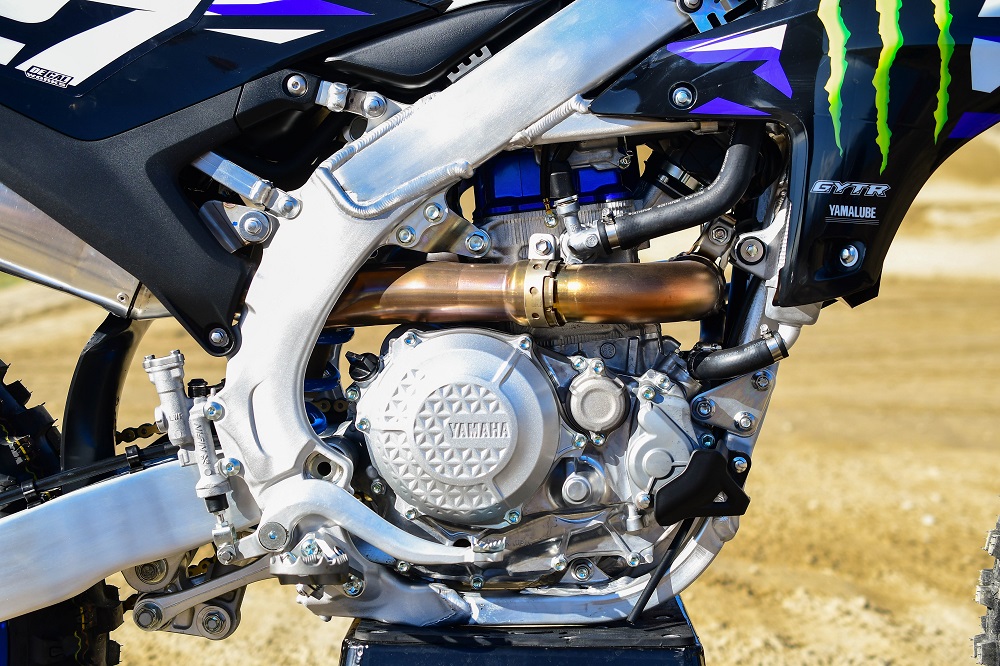
Stability hasn’t been a strong suit of the newer-generation (2023-2025) YZ450Fs, but the new frame in 2026 helped turn that around. The 2027 model shares this updated frame with its more pronounced lower down tube. The Yamaha felt controlled and composed, even on the steep hills and high-speed straights of Glen Helen. The front end tracked well in the faster sections, and we didn’t get the same nervous feeling that stood out on the pre-2026 models. Even with a light front-end feel, the bike seems to stay planted no matter the conditions.
Yamaha’s Power Tuner app allows riders to adjust fueling and ignition timing, while the traction-control settings offer another way to manage power delivery. These settings can be useful as the track develops and traction conditions change. We felt that a more controlled map made the motorcycle easier to ride without taking away its hard-hitting acceleration. It was still extremely quick out of corners and up Glen Helen’s hills. While we don’t advise relying solely on the electronics, they do provide a feeling of security when pushing the bike to its limits.
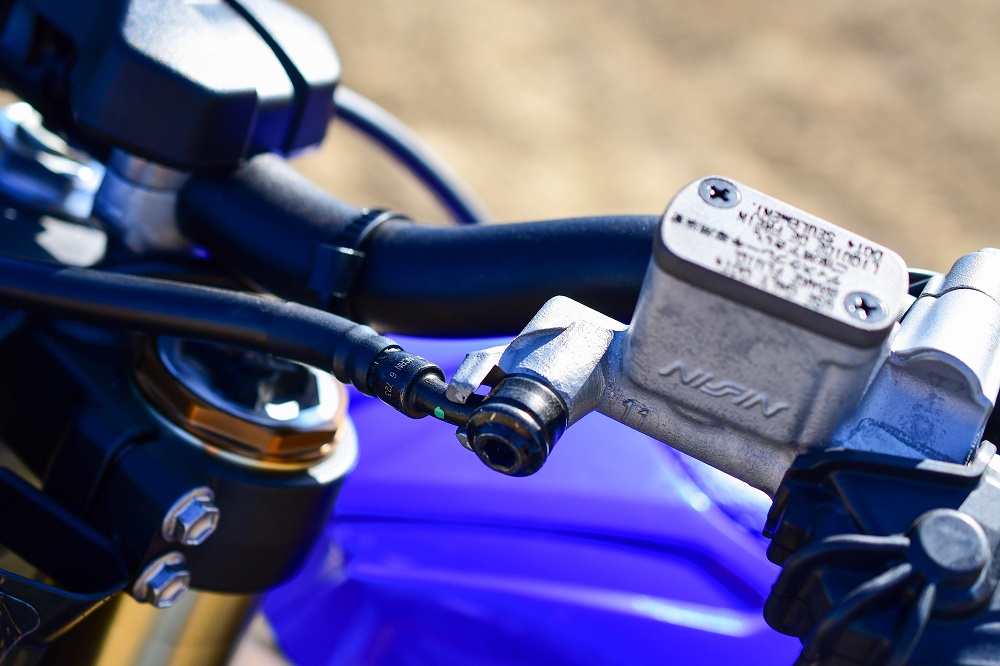
The app came in handy later in the day as we dialed in our setup. The “Tomita Special” map added traction control and smoothed out the hit off the bottom end. In turn, it made the bike’s power feel more linear and controlled in the sweet spot of the rpm range. Furthermore, the more controlled engine settled the entire chassis and improved our feel for the rear end.
After our first ride, we like the direction Yamaha has taken with the 2027 YZ450F. It remains a very powerful and capable motorcycle, and we continue to like the updated chassis introduced in 2026. It feels more planted and controlled than the 2023–2025 models, and the changes for 2027, while small, tell us that the bLU cRU shows no signs of slowing down development. This test day provided good feedback, but we want to spend more time adjusting settings and taking the Yamaha to other tracks with varying conditions. Only more seat time will give us a clear understanding of where the 2027 YZ450F stands among its competition in the 450 class.CN
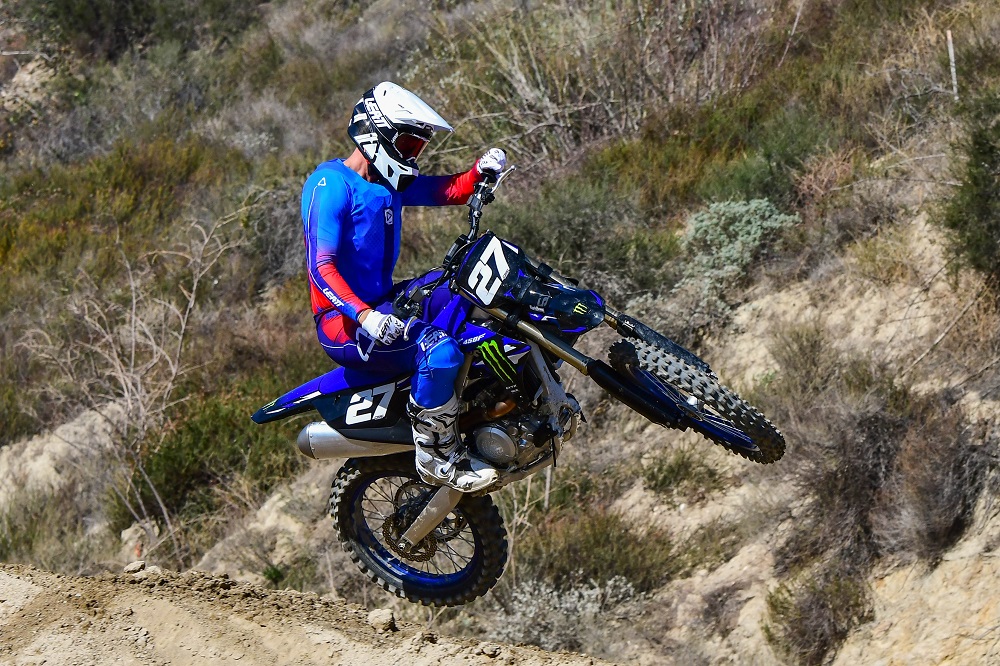
VIDEO | 2027 Yamaha YZ450F First Ride

2027 Yamaha YZ450F Specifications
| MSRP | $10,299 |
| Engine Type | 4-stroke, single-cylinder |
| Cooling System | Liquid |
| Valvetrain | DOHC, 4-valves |
| Displacement | 450cc |
| Bore x Stroke | 97 × 60.8mm |
| Starting System | Electric |
| Compression | 13.0:1 |
| Fueling | Mikuni fuel injection, 44mm |
| Transmission | 5-speed |
| Clutch | Nissin, hydraulic |
| Frame | Aluminum |
| Front Suspension | KYB SSS coil-spring fork, fully adjustable |
| Rear Suspension | KYB shock with linkage, fully adjustable |
| Front-Wheel Travel | 12.2 in. |
| Rear-Wheel Travel | 11.6 in. |
| Front Wheel | 21 in. |
| Rear Wheel | 19 in. |
| Front Tire | 80/100-21 Dunlop Geomax MX33F |
| Rear Tire | 120/80-19 Dunlop Geomax MX33 |
| Front Brake | Hydraulic disc, 270mm |
| Rear Brake | Hydraulic disc, 220mm |
| Wheelbase | 58.1 in. |
| Seat Height | 38 in. |
| Fuel Capacity | 1.6 gal. |
| Weight (wet, claimed) | 243 lbs. |
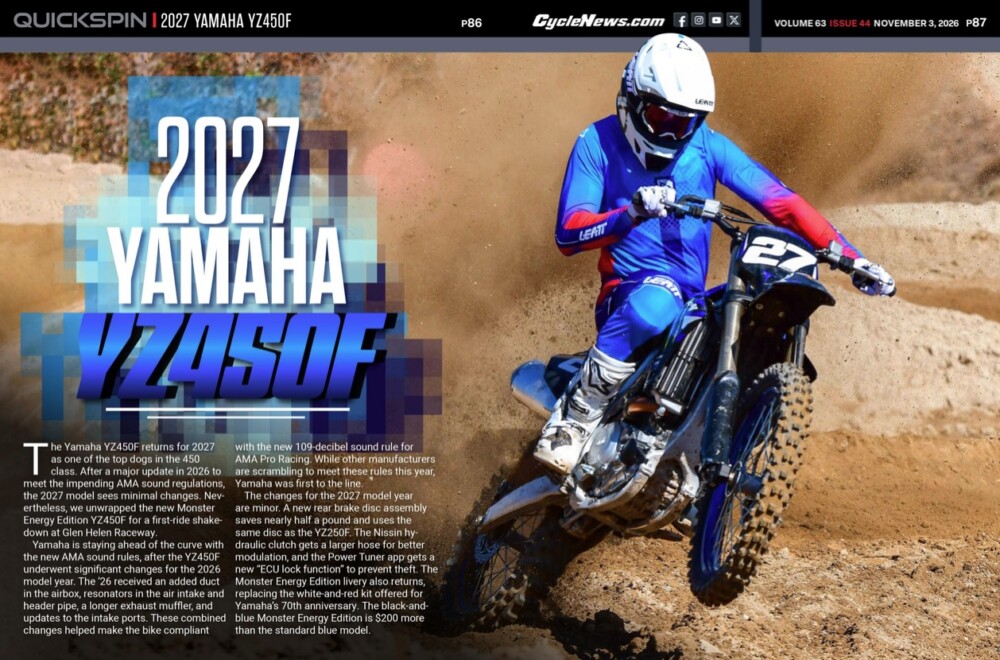
Click here to read the 2027 Yamaha YZ450F Review in the Cycle News Digital Edition Magazine.