Cycle News Archives
COLUMN
“Motocross Saved My Life”
By Kent Taylor
Many authors have taken a swipe at trying to explain why we ride motorcycles, with most all of them succeeding only in making us roll our eyes, shake our heads and sigh. As the saying goes, if we have to explain it, you won’t understand.
If, however, that author was one of motocross’s pioneers, telling us that riding a motocross bike not only provided an adrenaline rush, but that it actually kept her alive, well, now you have our attention.
“Motocross,” says Johanna Stenersen, “saved my life.”
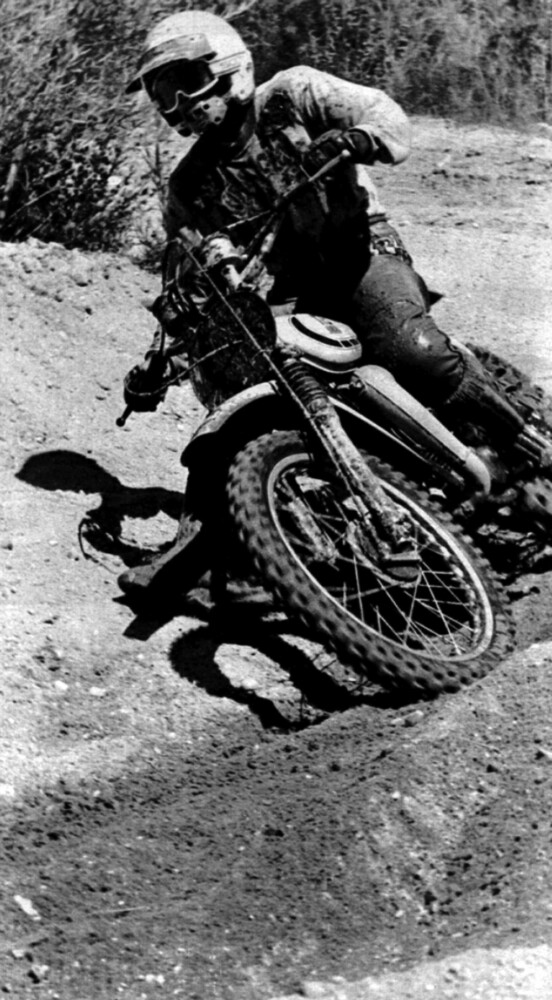
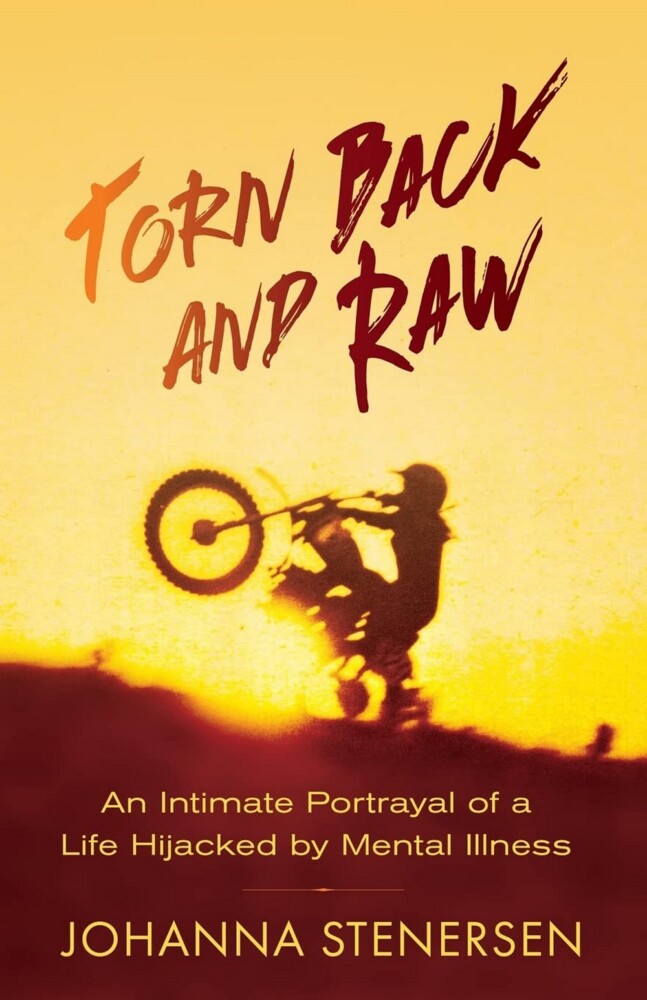
The title of her book is Torn Back and Raw: An Intimate Portrayal of a Life Hijacked by Mental Illness. The author’s name is likely not recognizable to most motocross fans today, but Stenersen was one of the top women’s MXers in the early days of the sport, which sadly isn’t well represented in racing’s history books. Women’s motocross has been in and out of the spotlight many times since its inception. Support from the manufacturers, distributors and corporate sponsors has helped the men’s side grow fat and happy, while women’s MX has, at best, nibbled on some crumbs along the way. In the early ’70s, the top competitors were Sue Fish, who would go on to compete against the men in the AMA Nationals, and Johanna Stenersen, a strong kid who was already in the gym, pumping iron to get even stronger. She had one goal: beat Sue Fish.
“It was a two-person race. That was it. Sue and I would lap the entire field of women at every race. Nobody could compete with us.”
“I started riding when I was 11 years old,” Stenersen recalls. “My brother Don, who was two years older than me, taught me how to ride on his Honda 55. We lived near San Clemente [California], and at that time, there was a lot of undeveloped land nearby, so it was easy to find places to ride. It was like a playground. I moved on to a Hodaka Ace and started racing in the Powder Puff class when I was 13.
“Riding motorcycles was a great outlet for me. We grew up in a highly dysfunctional home, and this was a way out for us. My brother was also a racer, but it was easier for me to get trophies, so that created some sibling rivalry.”
Stenersen would also occasionally compete against the boys. As many women racers learned, boys don’t like being beaten by girls. “Those poor, little, fragile egos,” she remembers. “Young boys filled with testosterone. If you had a ponytail, which I did, you were a target. They wanted to take you out and I don’t mean on a date! But I was strong and I had a tough chick persona, so I never really had any problems.”
Stenersen won the District 37 number one plate and then moved on to the Expert class. At that time, the Women’s Championship was a one-day event, held at Carlsbad. In 1975, she won the first 125cc moto at the championship race but suffered a flat tire in moto two. She decided she needed support to maximize her talents, so she went straight to the top.
“In 1976, I went to Yamaha International and told them I was the best female racer out there and if they would just give me a bike, I would prove it to them. So, they gave me a 125 and a 250. I was able to get parts through DG Performance.” With Yamaha’s support, she returned to the National Championship event, again winning a 125cc moto, but eventually finishing second overall to Fish. Soon after, Sue Fish took her game to the AMA Nationals, pursuing her goal of qualifying for a National against the fastest men in America.
“I took racing very seriously, but doing something like that wasn’t even on my radar,” Stenersen says. “There were 40 riders on the gate and all of those guys were fast. It was very intimidating for me.”
“I wanted to win, but we still had fun. We would camp out the night before some of the races. We called ourselves ‘Team Reeb,’ which was just beer spelled backward. We partied and did a lot of silly things!”
When her motocross career ended a couple of years later, Stenersen, like many retired racers, learned that finding fulfillment in everyday life would be a challenge. With no racing to absorb her skills and energies, the puzzling darkness that she knew as a child now manifested as demons in the young woman.
“The trauma that I experienced as a child, things like neglect, abuse and abandonment began to come out of me in things like ADD, OCD and other mental illnesses.”
She worked in everything from massage therapy to landscaping. “I was performance-oriented and a hard worker, but I couldn’t keep a job. If I got triggered, I generally didn’t have a filter, and I got fired a lot. I had potential. I just didn’t know how to get there. When you have a nervous system that is in fight-or-flight all of the time, it’s exhausting. I had big, big anger issues, just from not getting my needs met as a kid. And I didn’t understand that. Back then, talk therapy really didn’t know what to do with someone like me.
“Today, I understand. I have language for the things that I was experiencing. Life is too short not to be truthful, and I honestly didn’t think I would even still be around at this age.”
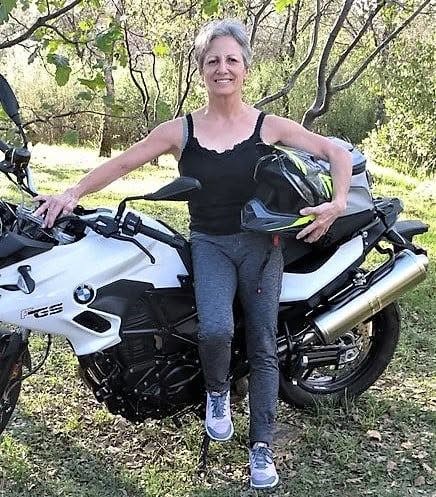
Still around and retired at 69, Stenersen is getting ready to see the USA from her new home, an RV. She hopes to spend her days sightseeing and hiking in the national parks across the country. There will also be some mountain biking, which is about as close to motocross as she can get these days. A good way to battle any inner demon.
“It [motocross] was thrilling,” Stenersen says. “God, it was just so much fun. A wonderful outlet. And it absolutely saved my life.”CN
Click here to read the Archives Column in the Cycle News Digital Edition Magazine.
Subscribe to more than six decades of Cycle News Archive issues