Suzuki’s flagship GSX-R returns with more power, more electronics and more race-derived hardware. But does the new GSX-R1000RS still make sense as a street bike in an increasingly exotic superbike world?
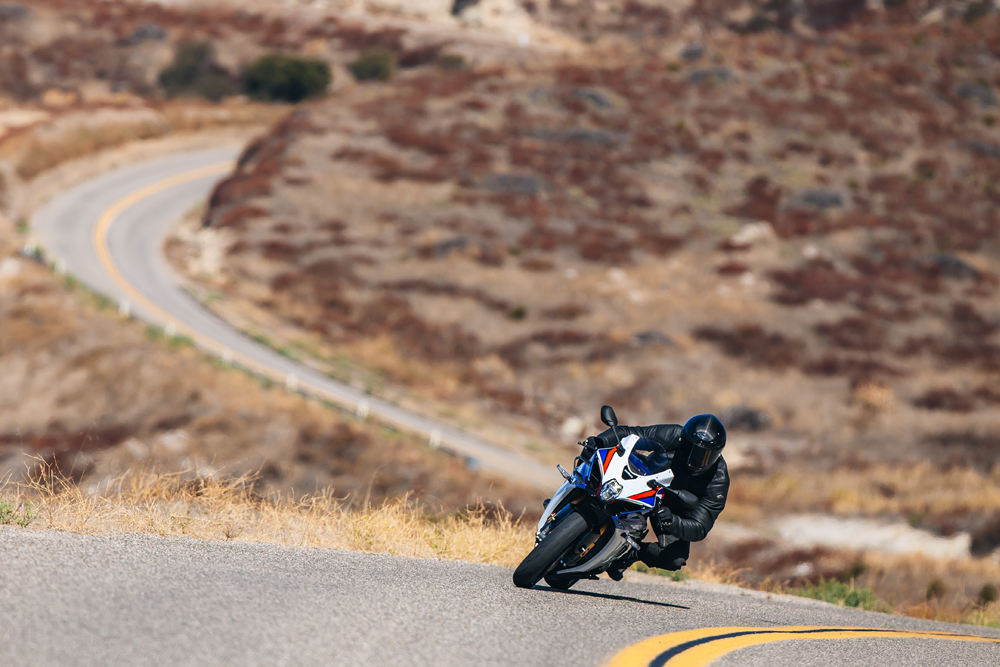
Photography by Connor Moore
There was a time when the Suzuki GSX-R1000 was the default answer to a very simple question: What superbike should I buy?
It had the power, the handling, the reliability and, perhaps more importantly, it had a personality every sportbike bro was after. The GSX-R was never the most complicated motorcycle in the class, nor the one dripping with the most expensive hardware, but it possessed an ability to make very serious performance feel remarkably straightforward.
The superbike world has changed considerably since those halcyon days when the GSX-R was the first sportbike name on everyone’s lips. Today’s liter bikes have wings, semi-active suspension, and electronic control packages sophisticated enough to keep a computer engineer entertained for weeks. Power outputs have climbed to numbers that were once the exclusive domain of factory race bikes not so long ago.
And Suzuki? Suzuki has officially returned to the fight.
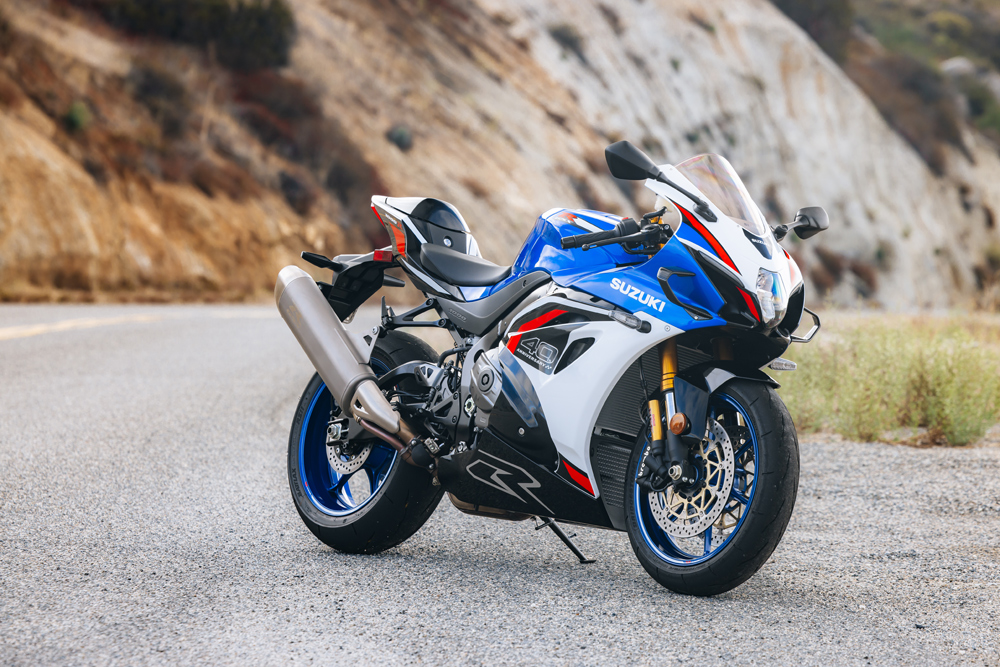
The 2027 GSX-R1000RS is the sharpest version of the new-generation, three-model GSX-R1000 range, combining a heavily revised inline-four with Showa Balance Free forks, Brembo Monobloc brakes, carbon-fiber winglets and Suzuki’s latest electronics package.
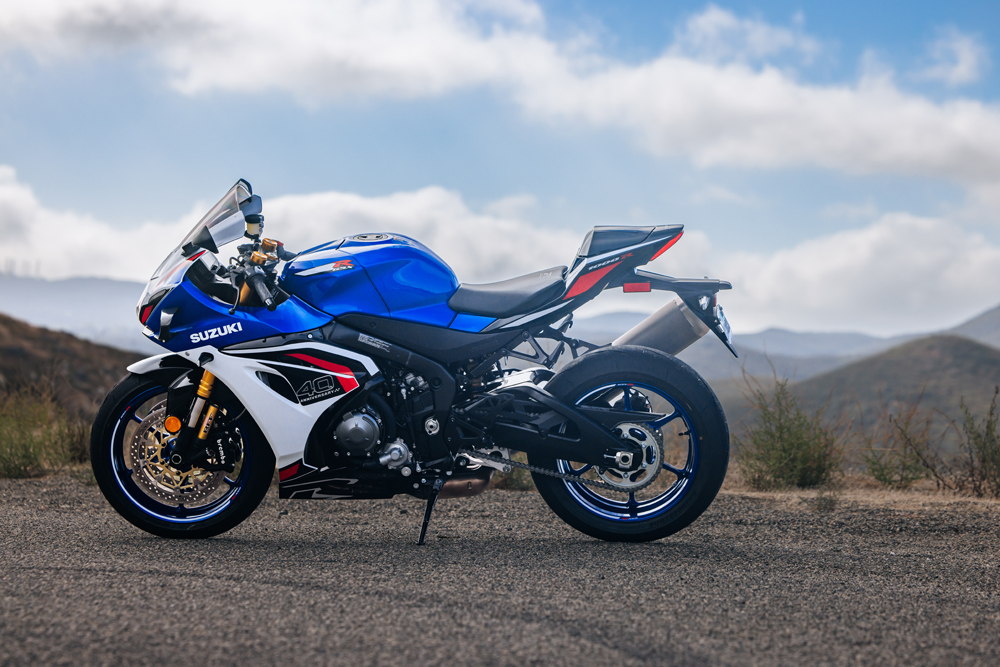
It is also the flagship of the company’s 40th Anniversary Edition GSX-R lineup, arriving in appropriately nostalgic Pearl Vigor Blue/Pearl Tech White or Candy Daring Red/Pearl Tech White color schemes.
At $18,639, before Suzuki’s $750 destination charge, it is on the pricier side by historical GSX-R standards, but the RS is still positioned as a comparatively straightforward alternative to some of the increasingly exotic machines at the sharp end of the superbike market, such as the BMW M 1000 RR and Ducati Panigale V4 S, both of which cost considerably more than the GSX-R.
The question is whether straightforward is enough anymore.
The New Engine | 2027 Suzuki GSX-R1000RS Review
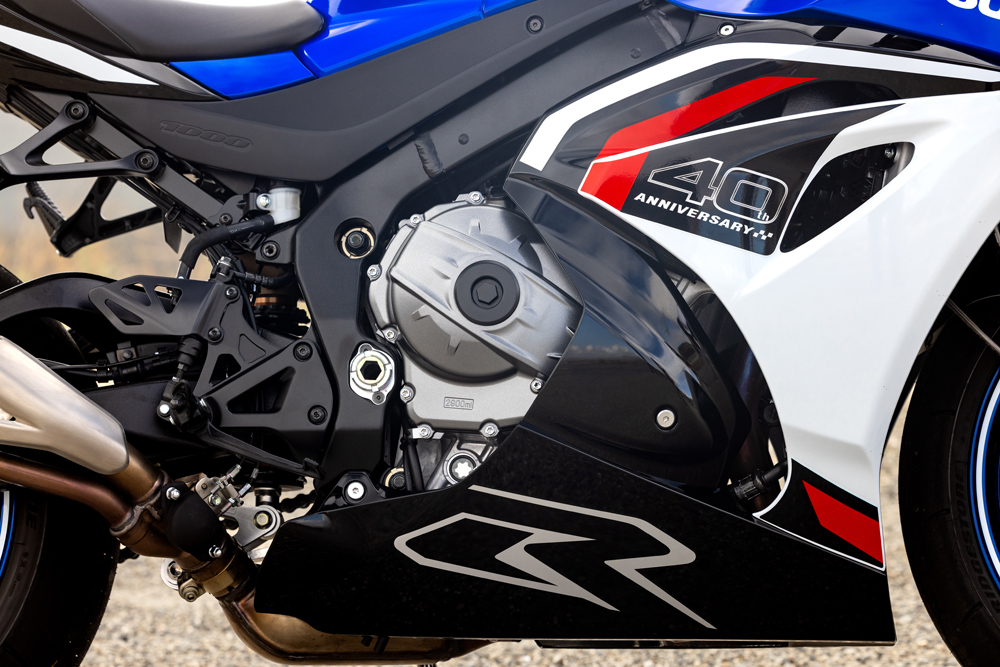
At the heart of the RS is the familiar 999cc, liquid-cooled, DOHC inline-four, but calling it unchanged would be doing Suzuki a disservice. Suzuki has comprehensively revised the engine for 2027, targeting stronger output while retaining the broad, usable torque that has always been one of the GSX-R’s defining characteristics.
The crankcases are new, as is the crankshaft, which features larger-diameter journals to support the higher-power output. The new cylinder head features revised intake and exhaust ports, and the combustion chamber and head gasket have also been redesigned. Cam timing has been revised, with less overlap helping Suzuki meet current emissions requirements without abandoning the engine’s high-rpm personality.
The compression ratio rises from 13.2:1 to 13.8:1, aided by revised piston crowns that accommodate larger valves. Suzuki has also updated its Suzuki Top Feed Injectors, switching from 10-hole to eight-hole injectors but bumping up injector pressure, while retaining the system’s four secondary injectors that spray fuel directly into the intake funnels from the top of the airbox.
Perhaps the most important part of the package remains Suzuki Racing Variable Valve Timing. The mechanically actuated SR-VVT system uses a centrifugal mechanism on the intake camshaft sprocket to alter valve timing at high rpm, helping the engine retain its low- and midrange flexibility while delivering the hard-charging top-end expected of a GSX-R.
The result on the road is an engine that feels distinctly old-school. Roll the throttle open at low rpm and there is useful acceleration, but the drive hits a big dip when the revs reach around 5500 rpm. This is most likely due to crappy fueling because of Euro 5+ emissions regulations, but once you’re clear of 6500 rpm, drive is restored and the engine really starts to show its teeth.
As the revs build north to 7000-8000 rpm, the GSX-R begins to feel increasingly urgent. The transition is progressive rather than a dramatic step in power, but the acceleration gathers momentum with every additional thousand rpm.
Suzuki says the revised engine produces torque in a more linear fashion and is the most powerful and hardest-accelerating engine in GSX-R history. That may be true, but the erratic low- to mid-range fueling is a bit of a concern. I’d really, really love to have a go on a ’27 GSX-R when a pipe and tune have been thrown at it, as I know there’s a ton of performance hiding behind that emissions paywall.
If you’re just cruising from traffic light to traffic light, the GSX-R’s engine remains a smooth operator. The GSX-R’s throttle connection is direct, but it is not nervous. You can feed the power in without constantly feeling as though the electronics are waiting to rescue you from your right wrist.
Then there is the noise. Modern emissions regulations have unquestionably changed the soundtrack of production superbikes, but the GSX-R still delivers the familiar mechanical snarl and that trademark induction roar that make a big-bore inline-four so addictive.
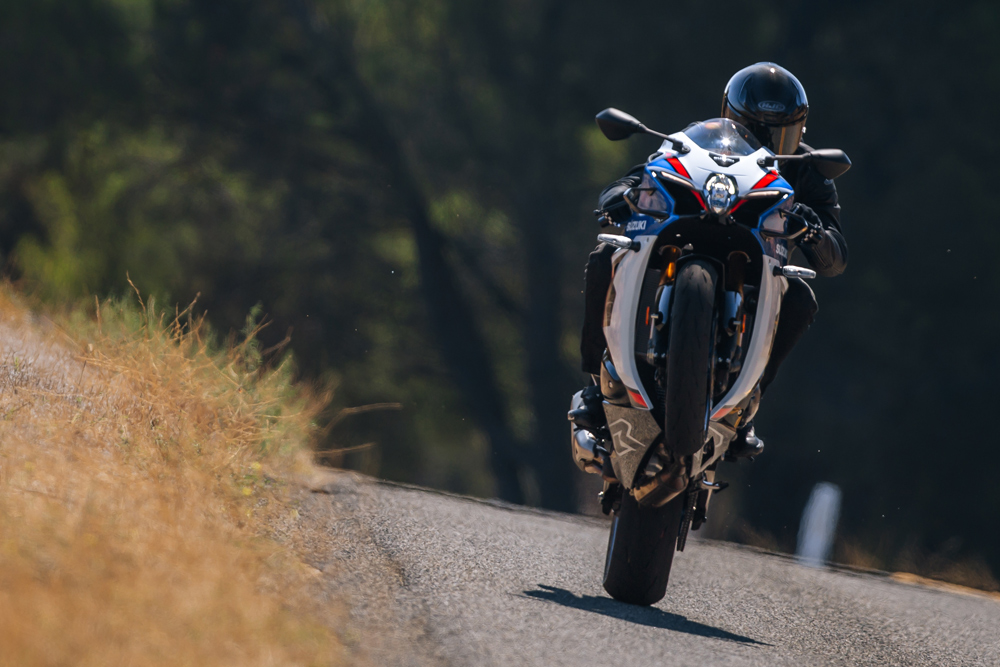
Suzuki’s revised 4-2-1 exhaust system places the collector closer to the engine for better mass centralization, while the smaller titanium muffler is substantially more compact (although much longer) than before. The result is purposeful without being obnoxious.
The six-speed gearbox remains cassette-style, another reminder of the GSX-R’s racing heritage, and is paired with Suzuki’s Clutch Assist System. The clutch provides slipper functionality on aggressive downshifts while increasing plate pressure under acceleration. The up-and-down quickshifter is standard and works well enough that the clutch lever becomes largely unnecessary once rolling.
GSX-R gearboxes have always been known for smooth shifts, and the ’27 is no different. Upshifts are crisp, while downshifts are smooth and controlled when matched with the ECU’s auto-blip. Around town, the gearbox doesn’t demand the precision it might on a racetrack, which is another small but important point in the GSX-R’s favor as a road sportbike.
The Street Superbike | 2027 Suzuki GSX-R1000RS Review
The RS shares the same aluminum twin-spar frame architecture as the GSX-R1000 and GSX-R1000R family, but its chassis specification immediately marks it out as the more focused machine. The R’s and the RS’s swingarm pivot is adjustable, letting racers alter the chassis geometry, although Suzuki recommends keeping it in the standard position for street use.
More significant for road-testing purposes is the suspension.
The front features gold-anodized Showa Balance Free Front Forks, while the rear uses a Showa BFRC-lite shock. Both are premium pieces developed with racetrack performance in mind, designed to improve damping consistency and feedback by controlling damping forces outside the main spring chamber and shock body.
The RS has the firmness you would expect from a superbike wearing this level of hardware, but it avoids the wooden, overly damped sensation that can make some track-focused motorcycles a chore on imperfect pavement.
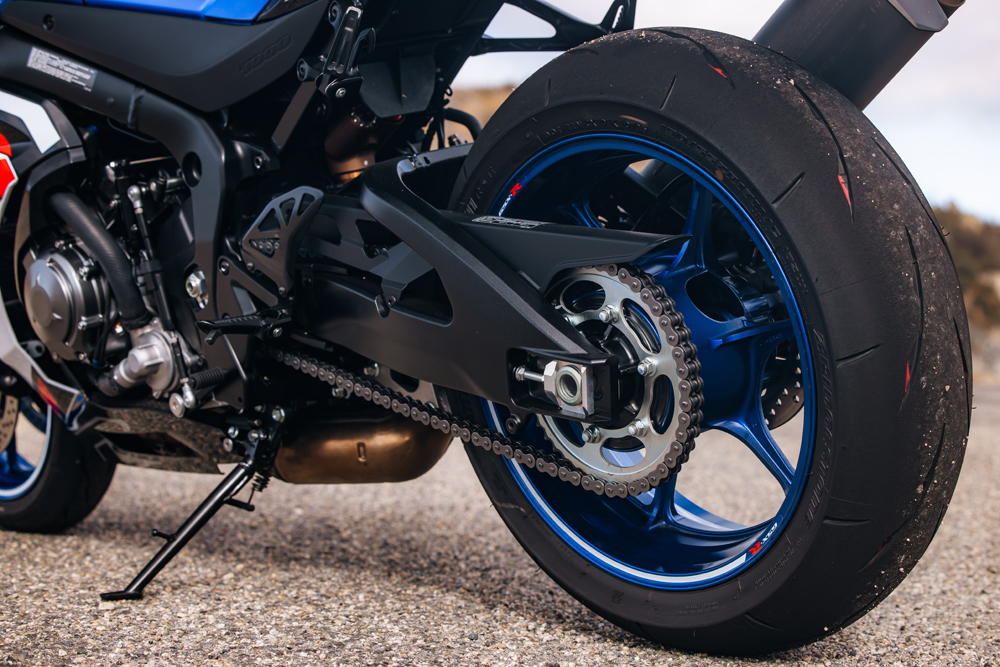
The fork communicates an impressive amount of information about what the tire is doing without sending every small imperfection directly through the handlebars, letting you push corner entries hard, especially under power.
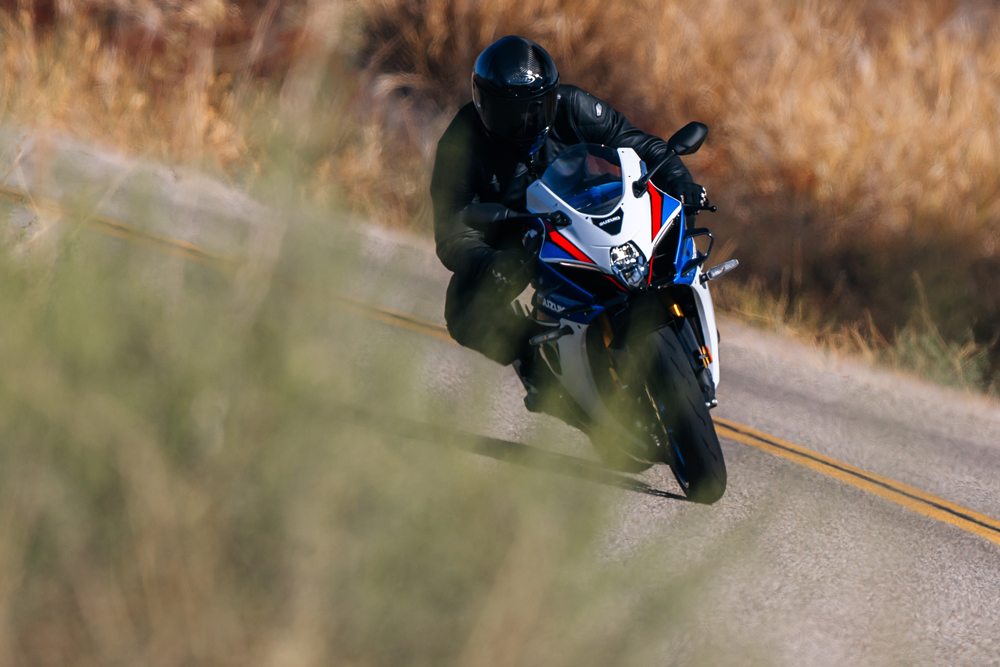
The chassis feels wonderfully planted in that good old familiar GSX-R way. Turn-in is accurate without nervousness, and once the GSX-R is on its side, it holds a line with the kind of confidence that encourages you to keep adding corner speed.
The Bridgestone Racing Street RS11 tires deserve some credit here. The 120/70ZR17 front and 190/55ZR17 rear combination provides plenty of grip and a reassuringly direct connection to the road, although their trackday focus means they are at their best once you’ve worked some temperature into them.
At 448 pounds with a full 4.2-gallon tank, the GSX-R1000RS is not featherweight territory, but Suzuki has done an admirable job disguising its mass. The bike changes direction easier than the number suggests, and its front to rear balance is one of the chassis’ greatest strengths.
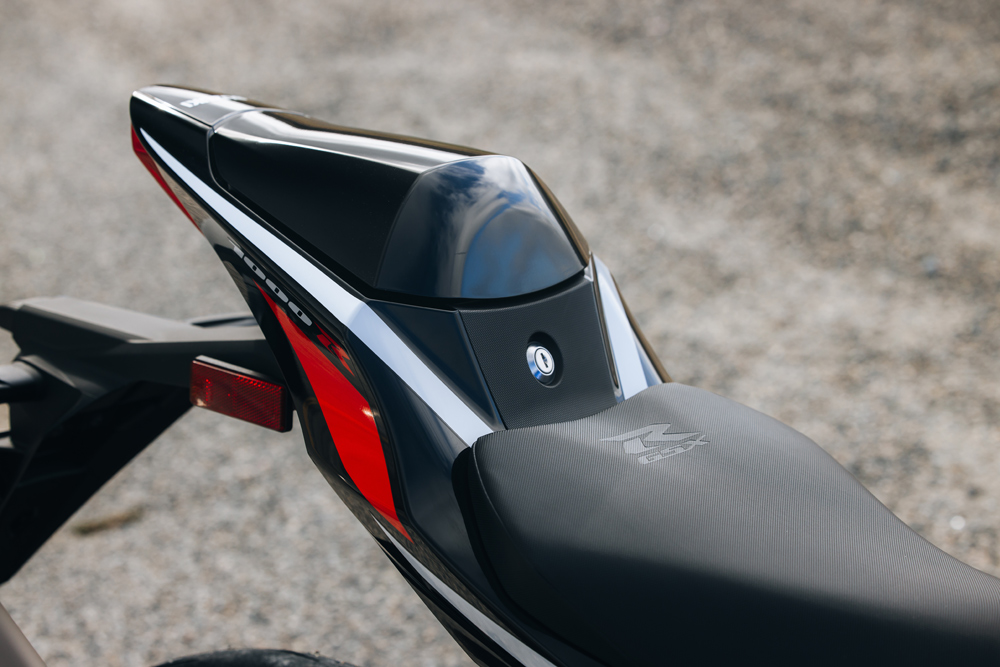
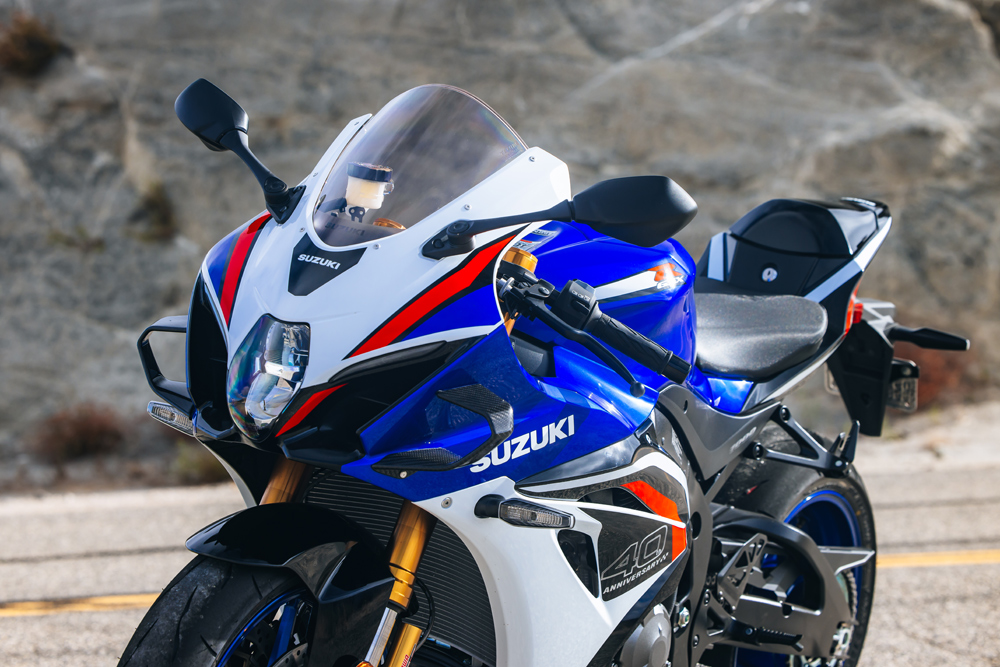
The carbon-fiber winglets mounted on either side of the front fairing are another nod toward the current superbike arms race—although I seriously doubt they actually do anything of note on the street. They are, however, neatly integrated into the bodywork and contribute to the RS’s more aggressive appearance (if you get the GSX-R1000R or the base GSX-R1000, you can buy the winglets separately if you want. Personally, I think it looks better without them).
The riding position is predictably committed.
The 32.5-inch seat is reasonably low, and the relationship between the seat, clip-ons and footrests is more accommodating than some current superbikes, but this still isn’t a machine designed for touring while admiring the scenery.
Put in a long freeway stint and the pressure on your wrists, knees and, in my case, neck, reminds you exactly what kind of motorcycle you chose. I’m past the point of doing tours on a superbike, and the GSX-R has absolutely confirmed this.
On a proper scratcher’s road, however, the ergonomics make considerably more sense. With weight supported by the wind at speed, the cockpit feels natural, and the narrow tank gives your legs a good connection to the motorcycle.
The Brembo Monobloc four-piston front calipers are fed through stainless-steel brake lines and deliver the solid stopping performance, even if they are now several generations old. The initial bite lacks a touch of deft feel, but there is enough progression at the lever to make them easy to use on the street. Plus, you get span-adjustable levers so you can dial in the feel you want.
Electronics of the New Age? | 2027 Suzuki GSX-R1000RS Review
For 2027, Suzuki has fitted a new Bosch six-axis IMU, which is the foundation for the updated Motion Track ABS and a collection of rider aids working together under what Suzuki calls Smart TLR Control.
The system incorporates traction control, wheelie control and Roll Torque Control. The latter uses information including lean angle and speed to calculate an appropriate level of power output permitted through a corner, working alongside the traction-control system to improve stability.
It sounds complicated, but from the rider’s perspective, it doesn’t feel that way.
The best electronic rider aids are the ones you rarely notice, and the GSX-R generally gets this right. Lift Limiter (wheelie control) helps control wheelies under hard acceleration, while the revised launch-control calibration is there for riders who intend to use the RS for its trackday or competition purposes. The quickshifter, meanwhile, is the electronic feature most owners use every day.
The Motion Track ABS can also account for the GSX-R’s attitude and lean angle. Under heavy braking, the system can reduce front-brake pressure if the rear wheel begins lifting, while its lean-sensitive functionality helps optimize braking force when the motorcycle is not upright.
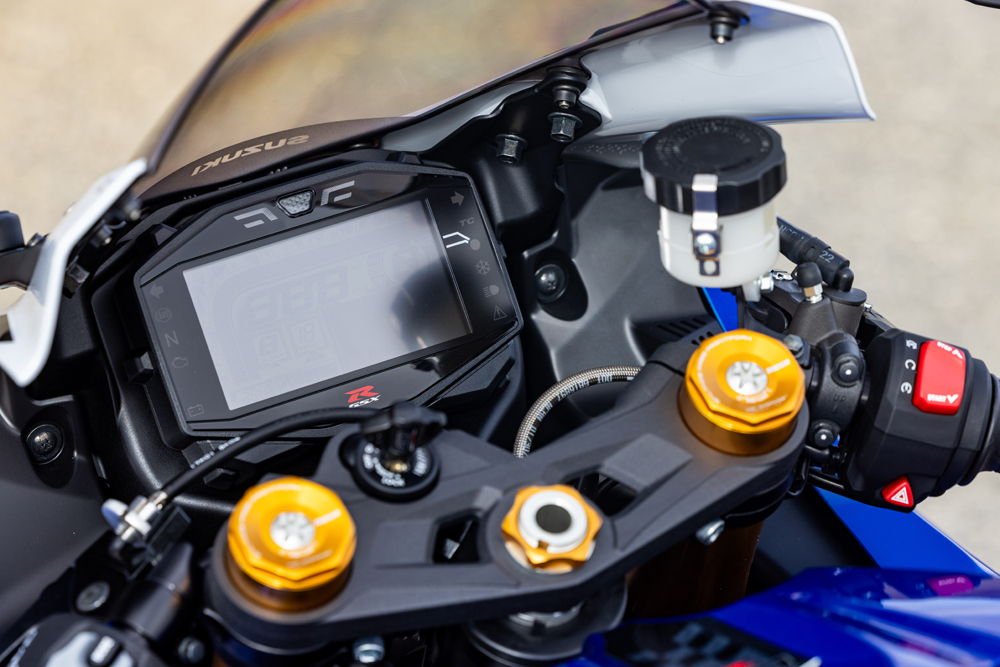
Then there’s the LCD instrument panel, and frankly, it is the GSX-R1000RS’s biggest disappointment.
In an era when even learner motorcycles have crisp, full-color TFT displays, Suzuki’s black-and-white LCD looks positively prehistoric. The information itself is comprehensive enough, but the presentation is cluttered, uninspiring and difficult to read at a glance, particularly in changing light when you’ve got the sun in front of you.
It feels like a component carried over from another generation rather than something belonging on a flagship superbike costing nearly $20,000. Suzuki may argue that the simplicity suits the GSX-R’s no-nonsense character, but there is a difference between uncomplicated and outdated. The rest of the motorcycle has moved forward significantly; unfortunately, one look at the dash suggests Suzuki forgot to bring the instruments along for the ride. Sorry, just facts…
The Verdict | 2027 Suzuki GSX-R1000RS Review
Suzuki hasn’t attempted to reinvent the superbike segment with the 2027 GSX-R1000RS. Instead, it has updated a familiar formula with a stronger engine, higher-specification chassis components, and expanded electronics (despite the dash). The basic GSX-R layout, however, remains largely familiar.
Faster, lighter and more technologically complex superbikes are available, but the GSX-R takes a straightforward approach. Its performance is substantial, although the power delivery, chassis and electronics remain manageable on the road.
That said, the usual liter bike compromises remain—it generates heat in traffic, the riding position can become demanding, and exploiting its full performance on public roads is downright unrealistic.
Despite this, the GSX-R1000RS remains effective and engaging. It may not represent a radical departure from the established GSX-R formula, but Suzuki has updated the package without fundamentally changing its character.CN
VIDEO | 2027 Suzuki GSX-R1000RS First Ride

2027 Suzuki GSX-R1000RS Specifications
| MSRP | $18,639 |
| Engine | Liquid-cooled, 4-cylinder, 4-stroke |
| Valvetrain | 8-valve, DOHC |
| Displacement | 999.8cc |
| Bore x Stroke | 76.0mm x 55.1mm |
| Compression Ratio | 13.8:1 |
| Transmission | Six-speed |
| Horsepower (claimed) | 192 hp at 13,200 rpm |
| Torque (claimed) | 81 lb-ft at 11,000 rpm |
| Fuel System | Dual injectors per cylinder, ride-by-wire |
| Clutch | SCAS (Suzuki Clutch Assist System) slipper clutch |
| Frame | Twin-spar aluminum |
| Front Suspension | Showa Balance Free Front (BFF) inverted telescopic fork, coil spring, oil-damped |
| Rear Suspension | Showa Balance Free Rear Cushion (BFRC-lite) monoshock, link type, coil spring, oil-damped |
| Front Brake | Twin 320mm discs, Brembo monobloc radial calipers |
| Rear Brake | Single 220mm disc |
| Wheels, Front/Rear | Cast alloy, 17 x 3.5 in. / 17 x 6.0 in. |
| Front Tire | Bridgestone Racing Street RS11, 120/70-17 in. |
| Rear Tire | Bridgestone Racing Street RS11, 190/55-17 in. |
| Rake | 23.3° |
| Trail | 3.7 in. |
| Wheelbase | 55.9 in. |
| Ground Clearance | 5.1 in. |
| Seat Height | 32.5 in. |
| Fuel Capacity | 4.2 gal. |
| Wet Weight (claimed) | 448 lbs. |
Click here to read the 2027 Suzuki GSX-R1000RS Review in the Cycle News Digital Edition Magazine.