Modern production motorcycles are so good at pretty much everything these days and have long since taken over the road-racing landscape. Indeed, it’s a hard sell to convince someone to drop what can amount to three times the money they would on a Yamaha YZF-R9 for a purpose-built track bike, especially in today’s economy.
That is until you ride a Krämer.
Photography by Sebas Romero
The philosophy of Krämer Motorcycles stems from a bygone era, an era when any rider who wanted to (and with the available funds) could test their skills on the prototype GP bikes of the day.
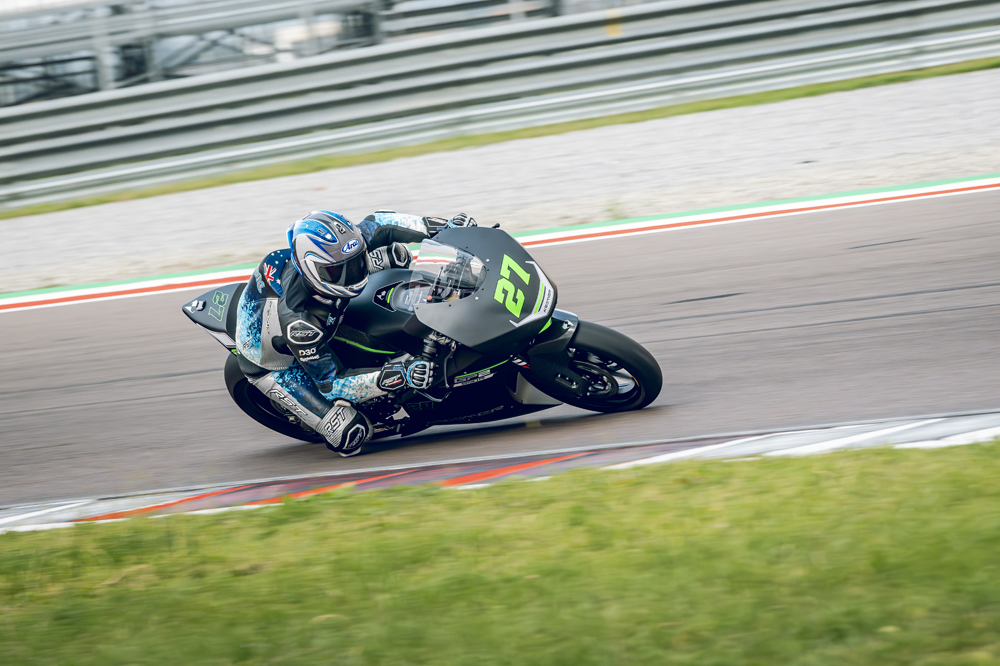
Production motorcycles must be good at many things. A Krämer needs to be good at just one—pure racetrack performance. I’ve ridden and raced pretty much every iteration of Krämer over the years, so to get the chance to sample the new $47,990 MSRP GP2-990R at the Italian WorldSBK venue of Cremona, a couple of hours’ drive southeast of Milan, is quite the honor.
The new 990R is an evolution of the 890R/890RR that’s been around for the last three years or so, with the latter RR machine being the one everyone wants, with the hotted-up engine that includes race cams, pistons, conrods, cylinder head and the like.
KTM is and has always been the powerplant supplier to Krämer, so when the 990 Duke came out last year, the bespoke manufacturer located in Munich was first on the list to get it in one of their race chassis.
This new 990R runs the engine you’ll get in a KTM Duke 990 R: a parallel-twin pumping out a claimed 135 horsepower at 10,000 rpm and 77 lb-ft of torque at 7000 rpm. Those numbers are crankshaft-measured, so in reality you’re looking somewhere around 120 horsepower and 70 lb-ft at the tire. Don’t laugh at those numbers; they are more than plenty for the job at hand.
The engine, however, is not the main attraction.
The great Colin Chapman of Lotus Formula One fame was famous for many things, but one of his legendary one-liners was, “Simplify, then add lightness.” Chapman rightly believed an increase in horsepower only benefited the machine in a straight line; taking weight away made it easier for the driver to brake later, be faster in the midcorner, and have less weight to move when the throttle was reapplied on corner exits.
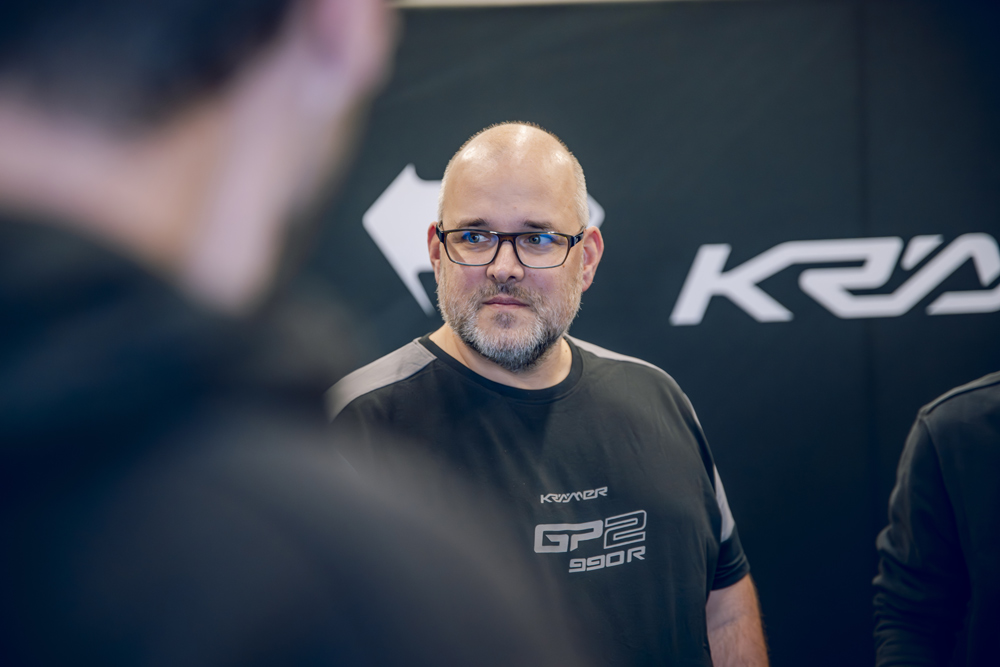
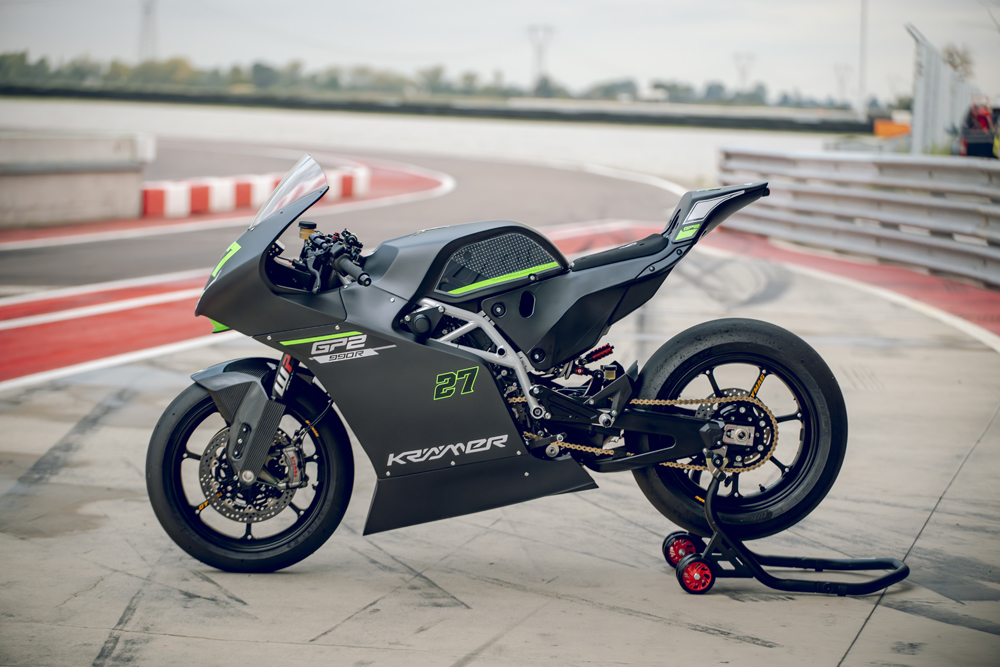
Markus Krämer’s company follows the same thinking. Using a chromoly (25CrMo4) steel-trellis frame, curb weight is a claimed 313 pounds before 4.2 gallons of gas is drained into the tank/seat. We didn’t get a fully wet, ready-to-race weight of the GP2-990R, but expect somewhere around the 335- to 340-pound mark—significantly lighter than the minimum weight limit for the MotoAmerica Supersport generic class baseline of 354.9 pounds. For reference, a 2026 KTM 990 Duke R has a claimed wet weight of 394.6 pounds.
Oddly, Krämer doesn’t provide a seat-height measurement for the GP2-990R, but whatever it is, you can adjust it by up to 10mm via the eccentric bolt located at the front of the seat unit. When you first hop on, the 990R is tall, skinny and purposeful. As you’re sitting on the gas tank in much the same fashion you would on a WorldSBK machine, the space between you and the seat that normally houses the fuel is just the airbox cover. This thin piece of avio fiber, made from a composite material of high-density synthetic avio cloth and epoxy resin and reinforced with carbon fiber, doesn’t give the same feeling of solidity a regular gas tank would. It can thus be a little hard to grip in corners and under braking, as it’s so narrow at the trailing end, a little like a Ducati 996 tank.
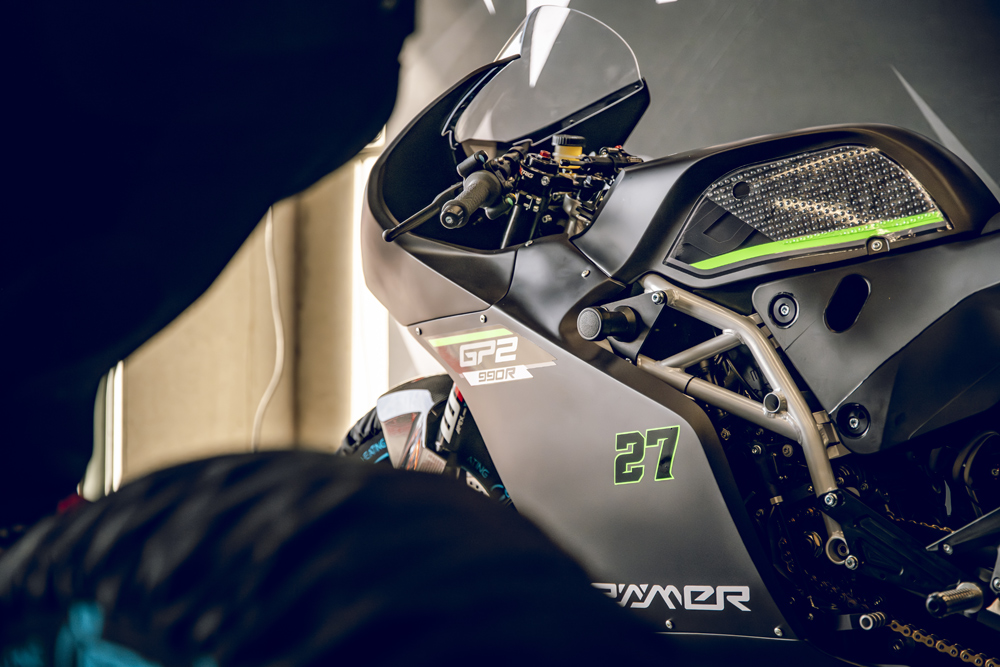
There are a couple of fixes for this. Either buy some of those stick-on tank support mounts (which look tacky on such an expensive machine) or Krämer will craft an airbox cover to your exact requirements, tailoring the ride position as perfectly as they can.
Electronics come in the form of the Mectronik MKE8 ECU with a ride-by-wire throttle and a six-axis Inertial Measurement Unit (IMU), with access to the goodies coming via laptop or the AiM MXS 1.3 Race GPS/datalogger dash.
You’ve got nine levels plus off for traction control, on/off wheelie control, adjustable engine braking and throttle maps, and a pitlane speed limiter. Importantly, you can get into each individual level and change where it intervenes. So, say level-1 TC is not enough but level 0 is too much, you can change where in the rev range the -1 TC chimes in and how hard it does so, allowing you to meter the amount of slip with a given rpm. It sounds complicated, but once you’ve seen the guys in action making the adjustments on the laptop, it’s quite easy to understand.
The point is that the electronics feed into the rest of the bike. Yes, this is a razor-sharp track tool designed for a specific purpose, but it’s not much good having all this stuff on the bike if it’s not easy to understand and use.
Once underway, the “simplify, then add lightness” design philosophy shines through. Having spent a good deal of time on the GP2-890RR, the feel at the bars with the 990R is remarkably similar. Many parts carry over between the two models: the main chassis, swingarm, WP Apex Pro 7543 fork and WP Apex Pro 7746 shock are identical, as are the dual 290mm fully floating brake rotors, Brembo Stylema calipers and the 19mm Brembo RCS Corsa Corta master cylinder.
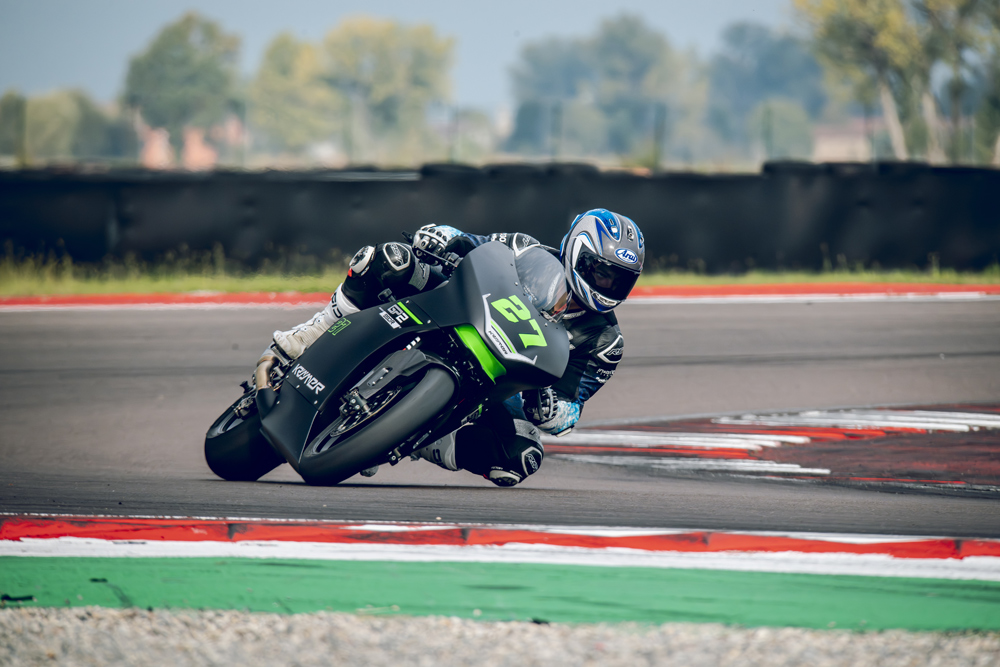
If you’ve never ridden a track bike with a ready-to-race weight under 350 pounds, it can feel a little unnerving at times. The lack of weight means the 990R turns with such speed, such immediacy, you feel transported to your childhood dreams of Grand Prix glory as you slice your way through traffic with an almost royal level of disregard.
Changing lines midcorner is as simple as looking where you want to go and giving a slight tug on the bars, and you’re there as the forged aluminum Dymag UP7X wheels, shod with Metzeler TD slicks, obey your every command.
The lightness is one thing, but it’s how the whole package comes together that’s truly impressive. Krämer’s close association with WP means they get their own fork shim stack, and the feel at the handlebar is sublime. The GP2-990R maintains the excellent composure under brakes the 890RR was famous for, and the fork’s transmission of information means you know exactly where the limit of the tire is at all times (unless you really screw up badly).
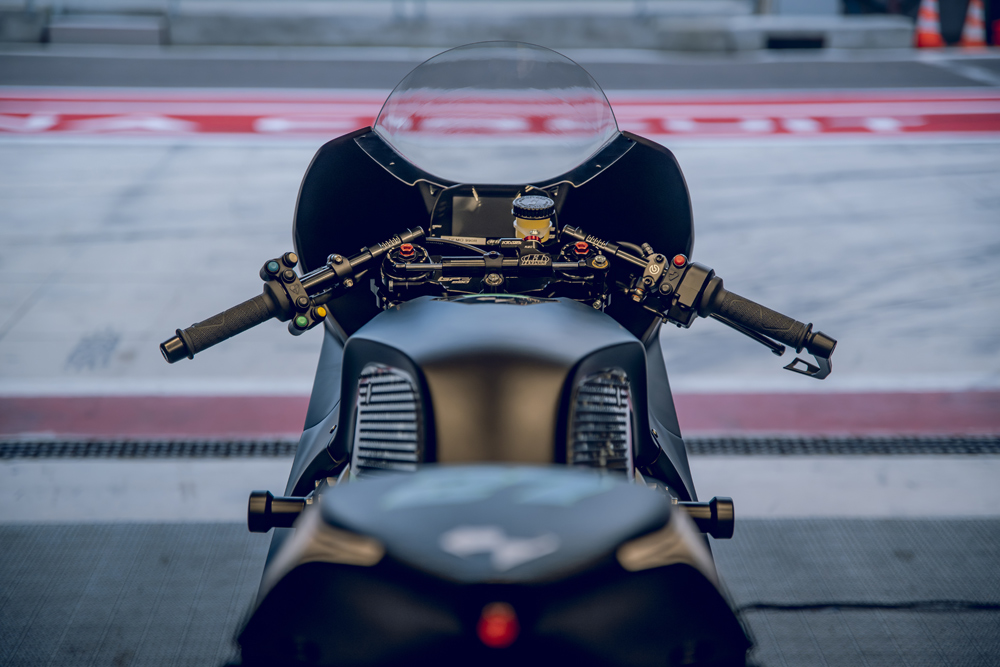
Transfer that confidence to the other side of the corner while you’re bleeding in the power, and once you’ve sorted your rear shock’s preload, the Krämer will track straight and true and give you full access to the claimed 135 horsepower.
Given the fact that this is KTM’s largest parallel-twin cylinder motor, you’ve got an abundance of torque at your disposal, and this, combined with the chassis’ turn of speed and willingness to change lines if you mess it up, enables you to rip up the inside of riders on corner exits in a way a four-cylinder engine could only dream of.
Power delivery isn’t perfect, as you can still get the chassis slightly upset from a closed throttle if you’re not smooth with the application, but once underway, there’s more than enough go for a stop/start track like Cremona.
It pays to shift about 500 rpm or so before peak claimed power at 10,000 rpm to keep the engine driving and not smash into the hard-cut rev-limiter. In the twisty sections of Cremona, short shifting to keep the power around the 6000-9000 rpm range is just so much fun as you let the motor do the work and rip you from corner to corner, the bark from the GP-style RP Tuning exhaust, custom-made for the 990R by the company in Czechia, a perfect audible companion to the occasion.
Gearshifts under power have been vastly improved over the last five years with the larger-capacity Krämers, but it’s still a case of get your shift done quickly and get your foot out of the way—don’t preload the race-pattern six-speed with your foot, or you’ll be met with a hard cut of the ignition that’ll send your head flying into the screen.
You’re still running the standard gearbox with this base model 990R, so it’s important not to be too violent with your shifts. Soon (I’m not sure when), the big dog 990RR will come to market, complete with all the engine mods that made the 890RR so potent and, of course, a race-spec gearbox.
Krämer has always had this, but they are now putting more effort into their Krämer Custom Program, which allows customers to customize paintwork, graphic design, ergonomics, suspension, geometry, electronics and all other manner of technical specification to their exact needs, much in the same way Ducati has done recently with the Panigale V4 platform.
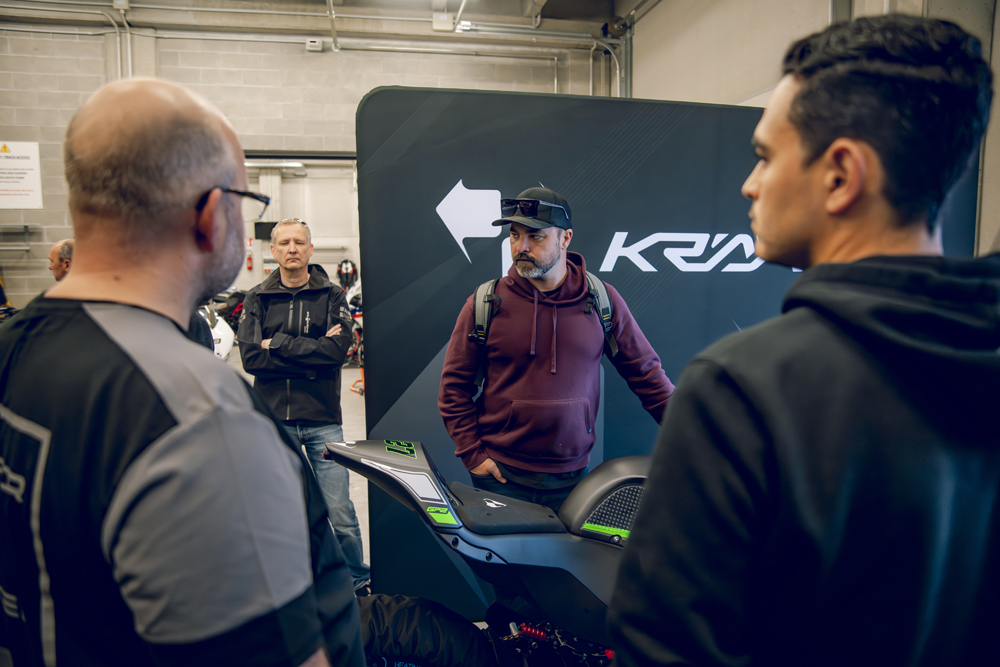
That gives the GP2-990R customer a path to become a GP2-990RR customer over time, adding select pieces of engine hardware as time and budget permit.
Doing this allows the Krämer customer to set themselves apart from a regular track-bike rider, as the machine doesn’t age out anywhere near as fast. You don’t race a Krämer (at least, not in America) like you do a Yamaha YZF-R9, because you are only eligible for very specific classes. AHRMA is one of the biggest organizations that welcome Krämers in America, and there are various classes at selected club racing organizations across the country where the Krämer will be welcome, but you’re buying a very bespoke piece of equipment in a GP2-990R. Many club racing organizations run to MotoAmerica rules, and if they do, the 990R won’t be eligible for the big payday races, but there’ll likely be a “run what you brung” class or the like that lets you get out on track.
These facts aside, I don’t need to convince you that you want a Krämer GP2-990R. You probably already made your mind up before you started reading this article. Yes, it is very expensive, but it costs less than kitting out a Ducati Panigale V4 R, and you’ll go through far fewer tires in the process, and five seasons of ownership will see this bike effectively pay for itself.
A GP2-990R is like buying a Grand Prix bike for the everyday man or woman, one that requires half the maintenance work but gives all the jollies and more. You can have a 200-horsepower fire-breather and hang on for dear life. Or you could “simplify, then add lightness” and get the absolute maximum out of your ride experience. I know where I’d go. CN
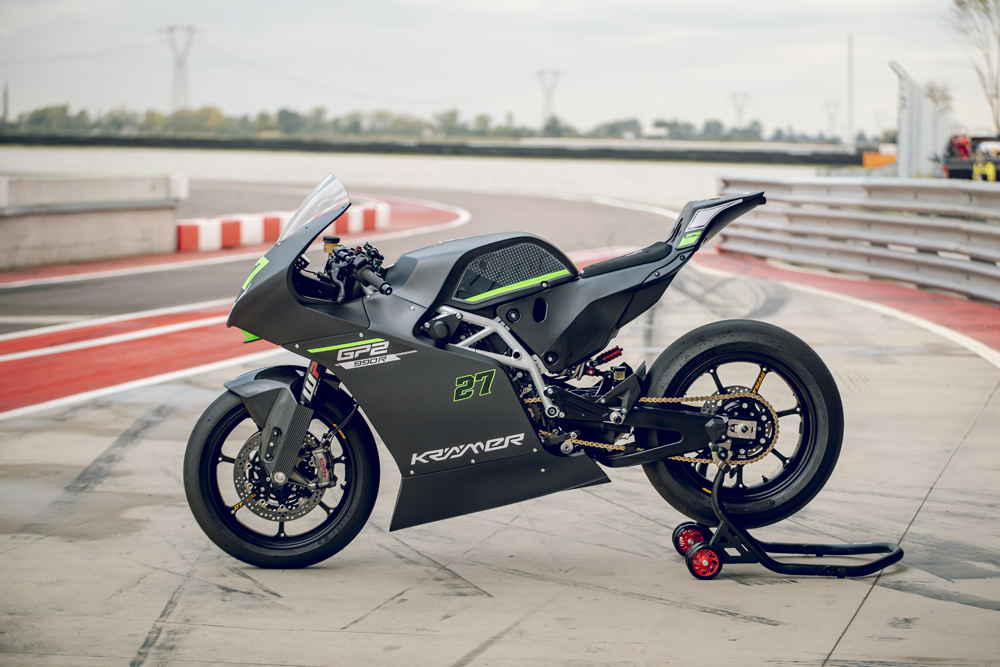
2027 Krämer GP2-990R Specifications
| MSRP | $47,990 |
| Engine | Parallel-twin, 4-stroke |
| Valvetrain | 8-valve, DOHC |
| Displacement | 947cc |
| Bore x Stroke | 92.5 x 70.4mm |
| Fuel Injection | Bosch EFI, 46mm Dell’Orto elliptical throttle bodies, ride-by-wire throttle |
| Electronics | Mectronik MKE8 ECU w/ ride-by-wire throttle and Inertial Measurement Unit (IMU), adjustable traction control (9 levels + off), adjustable wheelie control (on + off), pitlane speed limiter, adjustable engine braking and throttle maps |
| Compression Ratio | 13.5:1 |
| Exhaust | RP Tuning, GP Pipe, two-into-one, 107-dB rated |
| Transmission | 6-speed, up/down Domino Racing quickshifter |
| Clutch | PASC (Power Assisted Slipper Clutch), cable-operated |
| Chassis | Chromoly (25CrMo4) steel-trellis frame, powder-coated |
| Front Suspension | WP Apex Pro 7543, closed-cartridge, fully adjustable, split-function damping w/ Krämer shim stack |
| Rear Suspension | WP Apex Pro 7746, fully adjustable, high- and low-speed compression damping adjustment, remote preload adjustment, ride-height adjustment w/ progressive linkage |
| Front-Wheel Travel | 4.7 in. |
| Rear-Wheel Travel | 5.5 in. |
| Front Brake | Dual 290mm full-floating rotors w/ Brembo Stylema monobloc 4-piston calipers, 19mm Brembo RCS Corsa Corta master cylinder |
| Rear Brake | Single 230mm full-floating rotor, Brembo P2 single-piston caliper |
| Front Wheel | Forged aluminum Dymag UP7X 3.5 x 17 in. |
| Rear Wheel | Forged aluminum Dymag UP7X 6 x 17 in. |
| Wheelbase | N/A |
| Seat Height | N/A |
| Fuel Capacity | 4.2 gal. |
| Weight (curb, claimed, no fuel) | 313 lbs. |
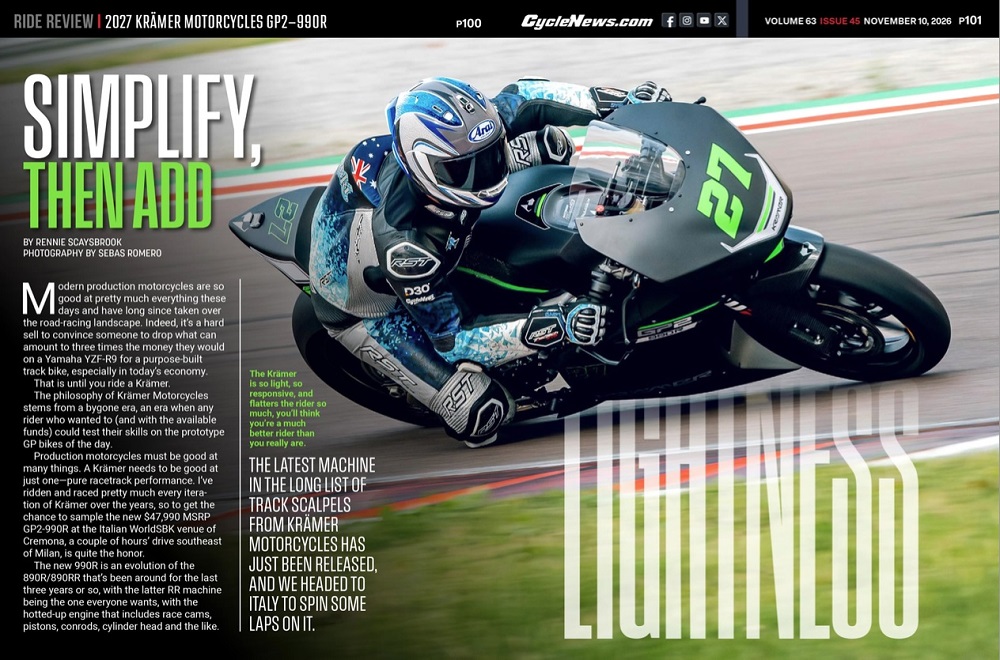
Click here to read the 2027 Krämer Motorcycles GP2-990R review in the Cycle News Digital Edition Magazine.