Cycle News Archives
COLUMN
From Mexico With Love
By Kent Taylor
It’s the break between Halloween and Thanksgiving, a perfect time to recognize some scary motorcycles and then be grateful that we didn’t buy them: the Ducati Indiana, the Cannondale MX400 or perhaps the Cooper 250 Enduro, a south-of-the-border two-wheeler that lived a life muy interesante!
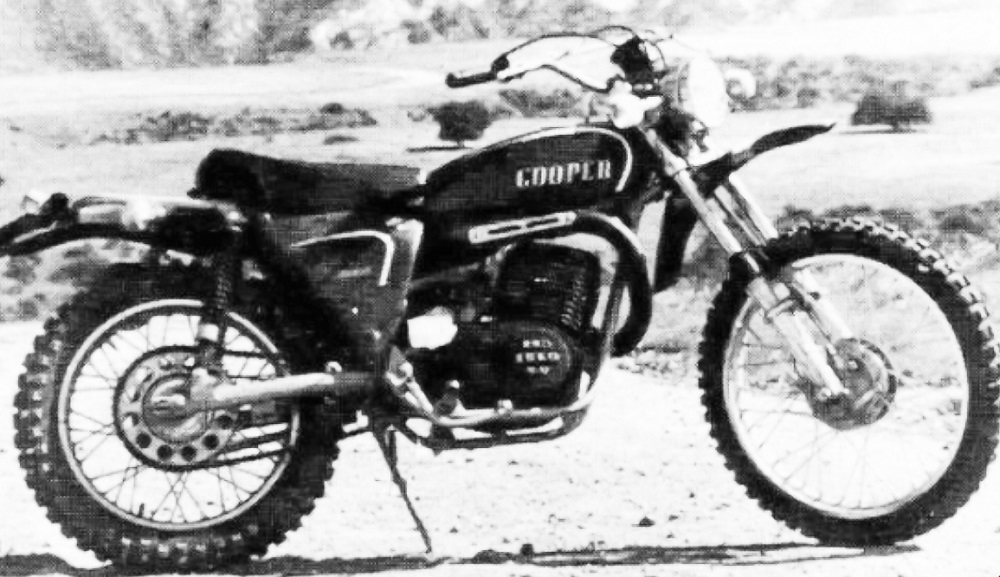
¡Perdóneme, señor! There was nothing scary about the Cooper 250, an angry reader noted to the Cycle News team way back in 1974. The unnamed Cooper apologist loved his machine, which he rode in local enduros and “always did well.” He was sick and tired of folks dissing his bike, and his affection for the machine prompted the staff to get their hands on a Cooper, which they then tested in the March 26, 1974 issue.
The terms “dual sport” and “adventure bike” had not yet been coined, so such motorcycles were puzzlingly named “enduros” in the early ’70s. Most of these bikes, like the Suzuki TS and Yamaha DT models, weren’t really enduro-ready, and the CN crew noted that the “Penton 250…Jawa 250 and MZ are all super quick [and] handle well…but won’t pass on the streets in most states.” The Cooper, it seems, was both a solid enduro competitor and a motorcycle that could be ridden on the streets.
In the dirt, the staff found the Cooper was fit for battle. “Compared to almost every other bike,” wrote CN, “both two- and four-stroke…the Cooper had more speed and acceleration. It’s fairly light for an unstripped (lights, speedo, etc., still in place) enduro machine and the lack of weight helps it move out.” It handled much like the company’s motocross model, which was no surprise, as it appeared to be the same motorcycle, with only a battery, turn signals and a silencer/spark arrestor added to make it street legal.
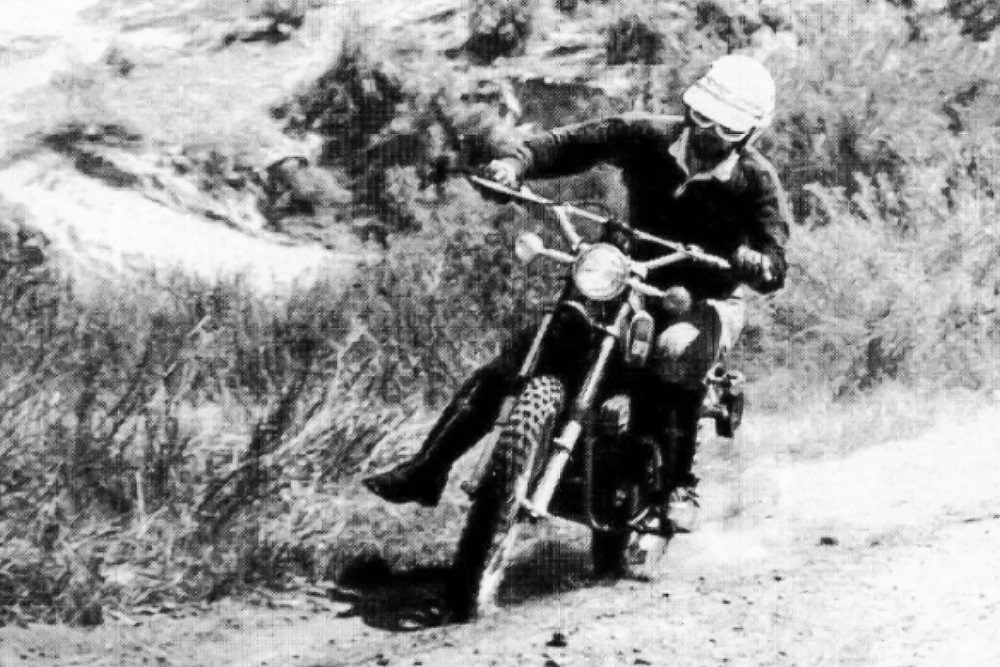
“The handling reflects all of the things said about its motocross cousin: excellent through the corners…good straight-line stability. It was hard to get into any situation where the Cooper enduro would do you in.” The Betor forks and Boge shocks were good, as were the brakes, though they “went away when wet and took a fairly long time to dry out.” The clutch was also finicky when the engine was warm, but the correct adjustment fixed it.
American Frank Cooper conceived the Cooper, and he had been involved in distributing Maico in the U.S. He contracted with the Moto Islo moped manufacturer in Saltillo, Mexico, to build his motorcycles. Cooper borrowed technology from Sachs and Yamaha and even enlisted Malcolm Smith’s help with the engine design. These were good names in the motorcycle industry, and on paper, that should have been enough for Frank to sell a bunch of motorcycles in the early ’70s.
Few things are harder than starting a new motorcycle company, especially in North America. And though Frank had a fine first effort, later models began to have quality-control issues. In a story for another day, Cooper eventually became motorcycles called Ammex, an effort spearheaded by three-time National MX champ Gary Jones. And then it was no more.
But no motorcycle is ever fully dead, as long as wingnuts like Iowa racer Jack Randleman own a fine example of a Cooper MX bike.
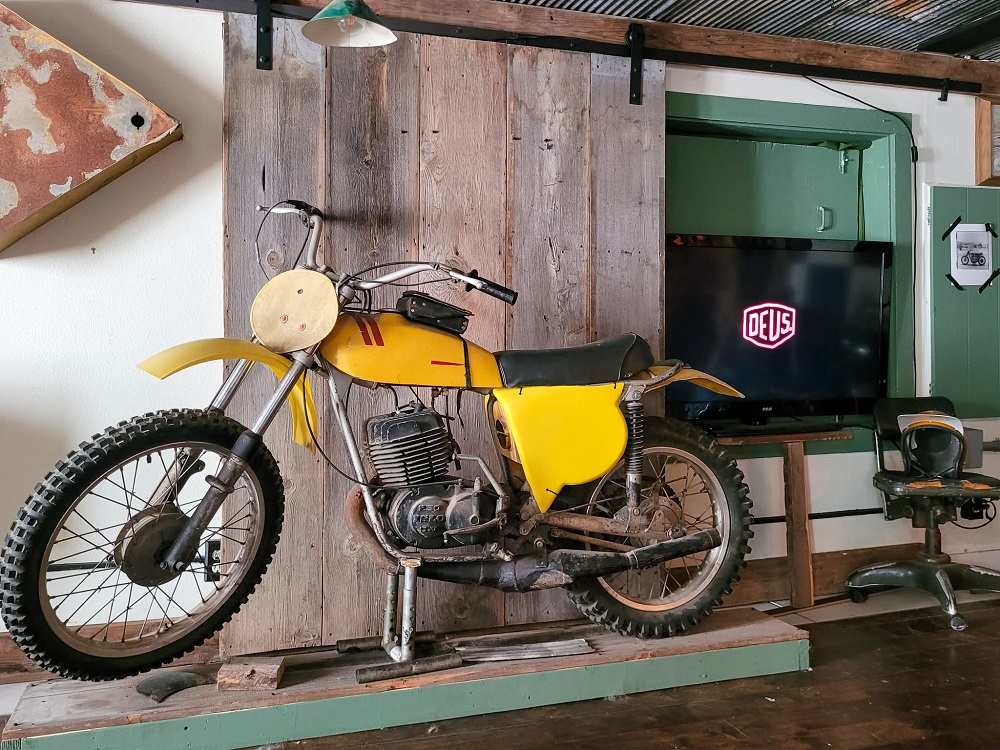
“It was really a basket case, more of a parts bike,” Randleman says. “But it had the original fiberglass number plates, and I think those are probably the rarest and hardest parts to find. I got my fenders from a friend I made in Mexico. We used Google Translate for months, and ultimately, I traded a bunch of parts he couldn’t get for his Honda projects, and he sent me the fenders.
“I have no clue why I started my obsession with the Cooper. I love the story, the concept of a bike made in North America to compete against the European bikes, where you could get parts/repairs much faster. It’s interesting that even back then there was this ‘Made in Mexico’ mentality. I like that it’s a rather rare bike but pretty much worthless to collectors.”
Nuts to the collectors! Frank didn’t build his motorcycle for them anyway. He built his bike to ride and marketed it as something truly different. A dirt bike you could ride on the street, even if you had to mix the oil and gasoline, was something to be thankful for.
Viva Frank Cooper!CN
Click here to read the Archives Column in the Cycle News Digital Edition Magazine.
Subscribe to more than six decades of Cycle News Archive issues