Cycle News Archives
COLUMN
Enduro In Hell
Hawaii is known for many things, but motorcycle racing isn’t really one of them. But the Hawaiian Islands have held several significant, and I’d say historic, motorcycle races over the years. Unfortunately, as far as I can tell, most of them have vanished. A few that come to my mind are the Aloha Supercross, which the California-based racing organization CMC hosted a few times in the ’80s, with headliners including Brian Myerscough, Jim Holley, Ron Turner and local stars John DeSoto and Phil Oveland. The Aloha Supercross ran its course quickly, unfortunately.
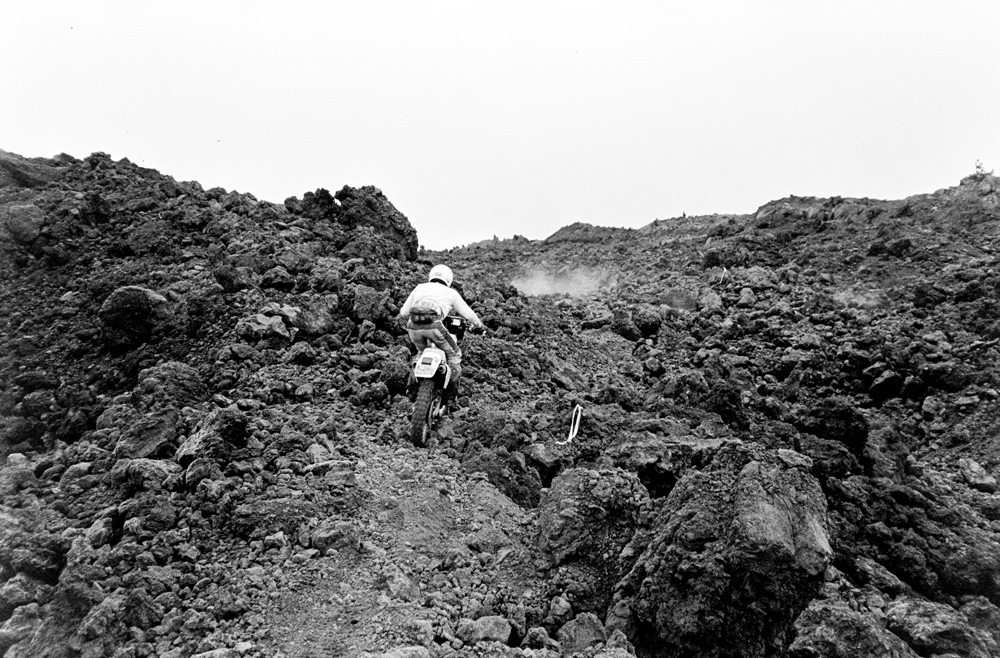
There was the Kauai Hare & Hound, so gnarly that most racers came armed with trials bikes, not a Beta RR 480. It was a true last-man-standing kind of race.
The good news is there has been a resurgence of racing in Hawaii lately, with the state now hosting a round of the AMA National Hard Enduro Championship, but we’ll see how long that lasts.
Perhaps the state’s most famous and enduring race was the Mauna Kea 200 Enduro, hosted by the Rock Island Riders. The first race, held in 1976, was called the Bicentennial 200. The race grew year after year until it swelled to about 90 or so entries, which is big for Hawaii. Malcolm Smith was a regular, though the race ran pretty much under the radar for many years.
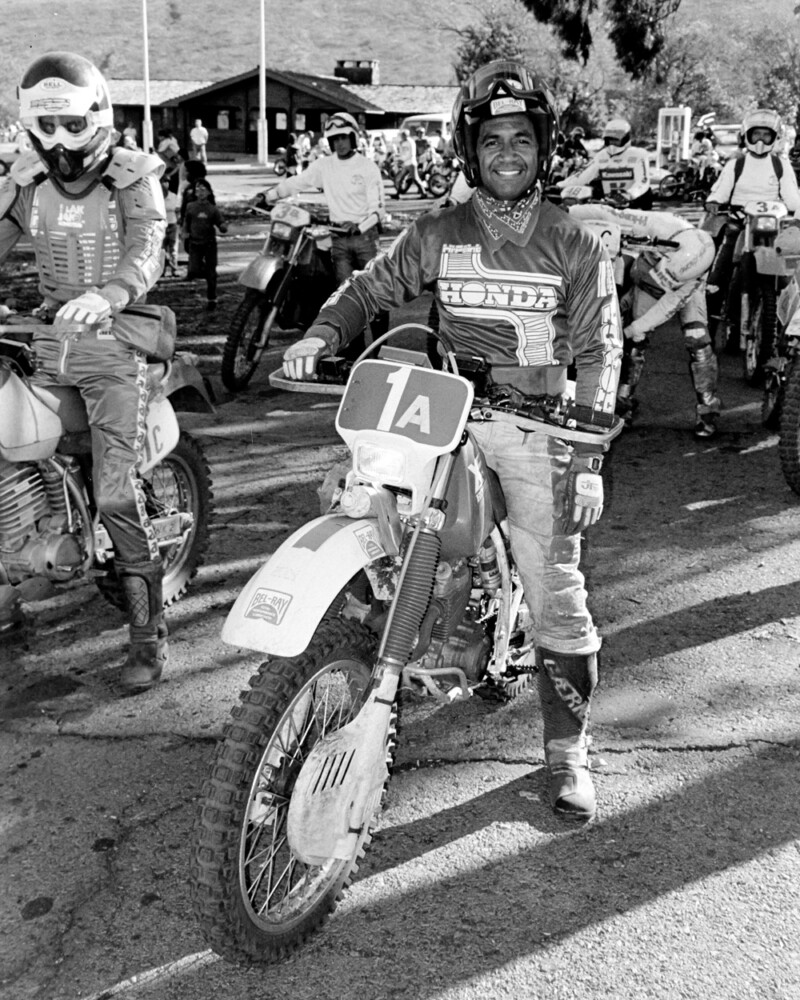
I also have a close fondness for the race, which I’ll explain here. Yes, I think I’m old enough to be part of this column. Let me explain.
When I became a staff member of Cycle News in the early 1980s, it didn’t take me long to scam my way into my first real perk, so to speak, and that was competing in the Mauna Kea 200 in 1985. (See, that’s old enough to where I can be included in Archives, don’t you think?) I didn’t set out to race it at first; heck, I didn’t even know about it, but when the opportunity presented itself, I ran with it.
Like most adventures, this one started with a phone call from a marketing person at a radio station in Hawaii who was looking for ways to promote the race, so he decided to contact Cycle News in California. Lucky for me, our receptionist transferred his call to me. He pitched the idea of me coming to the Island and racing it. That wasn’t a hard sell, especially when he said the radio station would cover my expenses, like travel, accommodations and entry for the race. But what about a motorcycle? “No problem,” he said, “I’ll handle that. The radio station will take care of everything.” Wow. I’d even be interviewed on the radio. All this was pretty damn exciting for a barely 20-year-old single guy who was up for anything, especially when motorcycles are involved. I said, “Book the tickets!”
Now, I had to convince my editor, Dale Brown, to let me go. I guess I should have done that first. Luckily, he was a super-cool guy and completely understood the opportunity, so off I went.
The Mauna Kea 200 was a two-day timekeeping-style (old school) enduro that started outside the lobby of one of the main hotels in Hilo, the Big Island’s capital. (It was actually a fake start for show; the real start took place down the road.) The first day was spent mostly in the jungles, and the next riding up, around and over the enduro’s namesake, the Mauna Kea volcano.
My ride turned out to be a clapped-out Kawasaki KDX200 (the red one), but I didn’t care; after all, it was a KDX200, it was a motorcycle, and I was in Hawaii. It was loaned to me by the local ganja farmer; I’ll call him Cheech. His bike had some serious jungle time on it, but what quickly caught my attention and scared me a little bit was the massive, welded-on, cage-like exhaust-pipe header guard, which turned out to be common among hardcore Hawaiian off-roaders, and which Cheech had rigged to the bike. I would soon find out why they did that. He had also welded steel-piping hand guards directly to the handlebars. I would soon find out why, too.
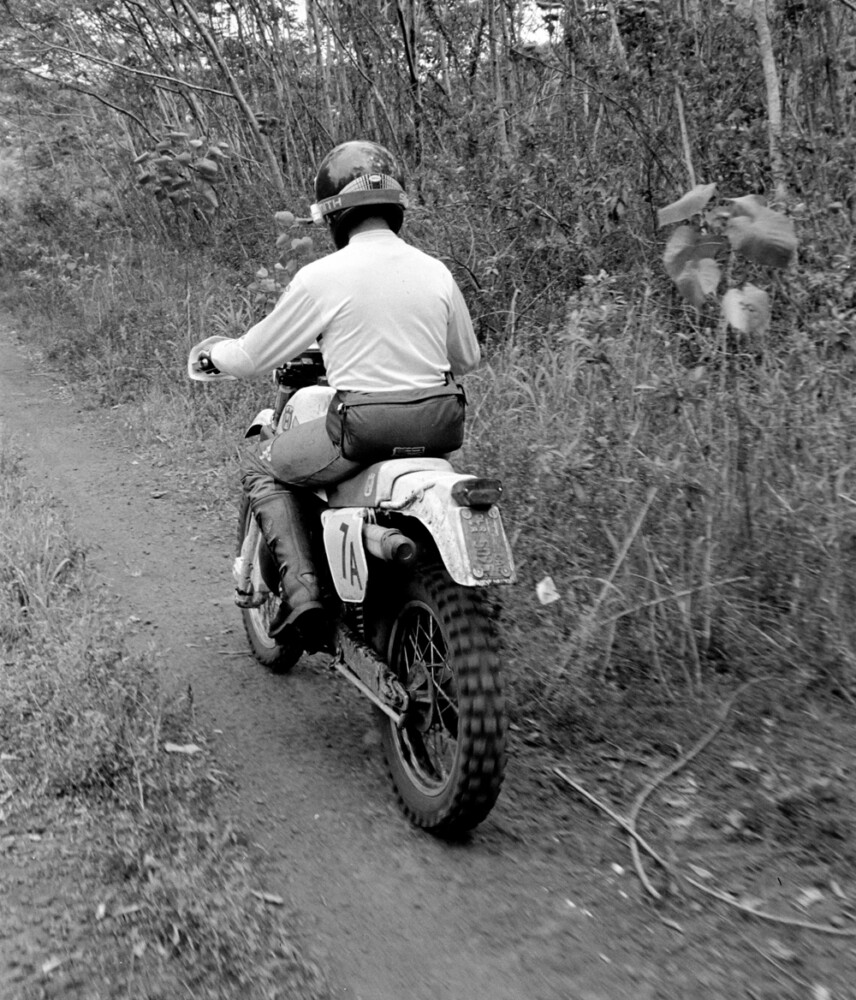
The day before the enduro, I went riding with some of the locals for a bit of a shake-out and quickly found out I was in way over my head. I was a decent rider back in the day and quickly realized that the trails in Hawaii were essentially all black-diamond stuff, and my off-road skills and stamina were going to be put to the test big time. My visions of riding in paradise had suddenly switched to riding in hell.
To make a long story short, I made it through the first day of endless miles of muddy single-track trails covered with wet roots, giant wet logs (ah, the pipe guard), and vines that would reach out and try to rip your legs off the footpegs, all the while engulfed in the deep rainforest, where the hot, stagnant air is replaced by 100 percent humidity. You also had to contend with rocky lava flows with steam still rising up through the ground. That day ended at the base of Mauna Kea. I was gassed. I leaned Cheech’s bike up against a tree, and I lay down on the ground next to it and passed out.
When I came to, I started to think about the next day. I was in no shape to ride another foot, let alone over the tallest volcano in the world. Luckily, fate, aka Cheech, intervened. While inspecting the damage I’d inflicted to his KDX, he noticed a large crack in the intake manifold boot, which had probably digested who knows how much gunk. Even if it hadn’t, he didn’t want to take any chances and said he’d rather I not ride the bike anymore. Oh, darn.
Yeah, after a good night’s sleep, I was disappointed the next morning to watch everyone suit up and start the loop around Mauna Kea without me. I do not like not finishing races. I might be last, but at least I’ll finish. I can remember only one other race, okay, two, where I didn’t finish with a working motorcycle underneath me. The Mauna Kea, however, was the first. It was the first race that had ever beaten me. Hard. The winner that weekend, by the way, was Honolulu City Councilman John DeSoto.
I returned to race the Mauna Kea 200 three more times and finished each time. I got better, too. The last one, I was in the top five overall before the jungle got me the last 10 or so miles the next day. My throttle arm locked up and I sank down the leaderboard faster than the Titanic. The winner that day was my good friend, former roommate Ron Lawson from Dirt Bike magazine. In his first attempt!
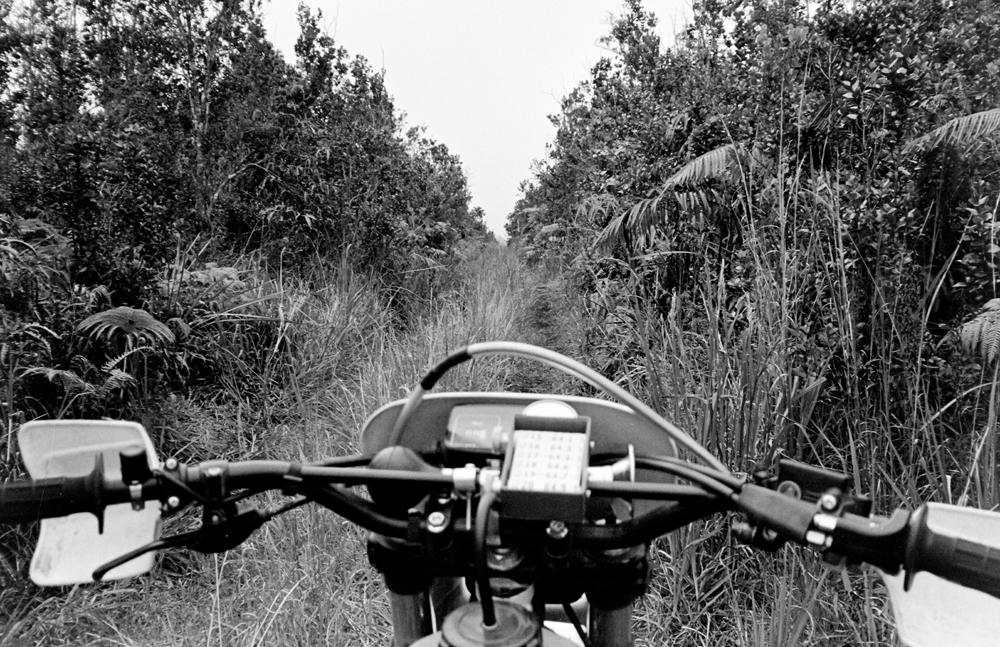
Not long afterward, the race seemed to slip into silence. I stopped hearing about it. I later learned it kind of went into “outlaw” mode for a while. Evidently, the race had become too large and too popular, making it increasingly difficult for the organizers to host. They tried making it a shorter one-day event, but that didn’t save it. Some people say I/Cycle News had something to do with its demise, bringing too much national attention to it and too many of the wrong eyes on it. But environmental issues and land preservation were most likely the real killers, like so many other great races.
The Mauna Kea 200 was definitely one of the greats that few “mainlanders” ever got to race, but those who did, know just how awesome it was. I feel fortunate to be one of them.CN
Click here to read the Archives Column | The Mauna Kea 200 in the Cycle News Digital Edition Magazine.
Subscribe to six decades of Cycle News Archive issues