Suzuki has been building on the momentum of its new parallel-twin platform for a couple of years now, and after the naked GSX-8S, the adventure-leaning V-Strom 800DE, and the sport-oriented GSX-8R, the brand has now reached back into its own heritage to deliver something different.
Photography by Ryan Nitzen
The GSX-8TT is as much about character as it is about capability, drawing clear lines back to machines like the GS1000S that Wes Cooley terrorized superbike grids on in the 1970s while carrying forward the mechanical DNA it shares with the GSX-8R/8S/DE. That link is more than superficial; the TT borrows heavily from the R’s hardware, but it channels it in a very retro way.
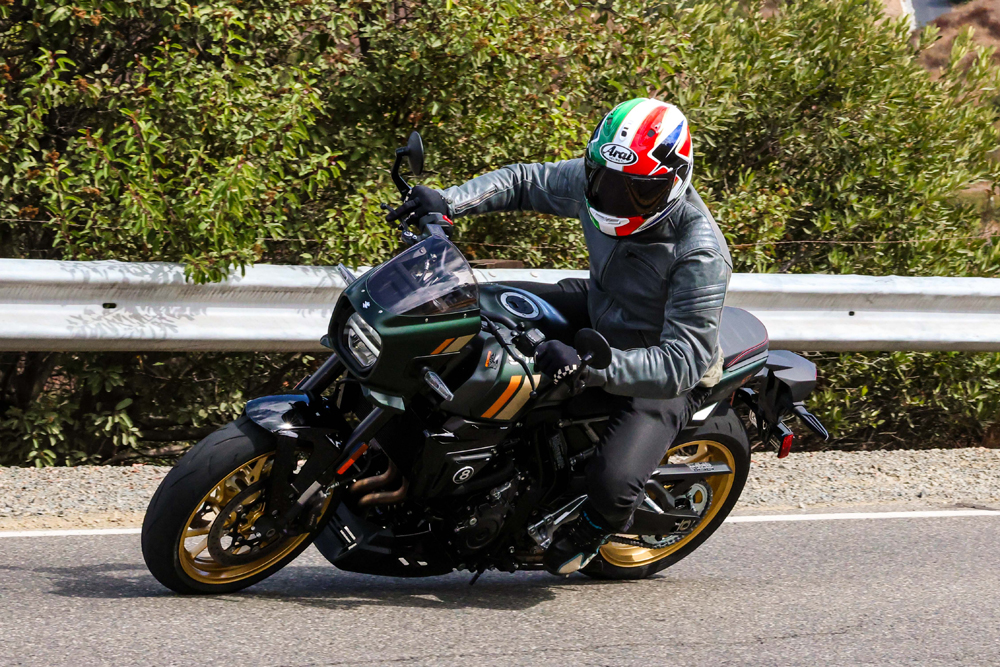
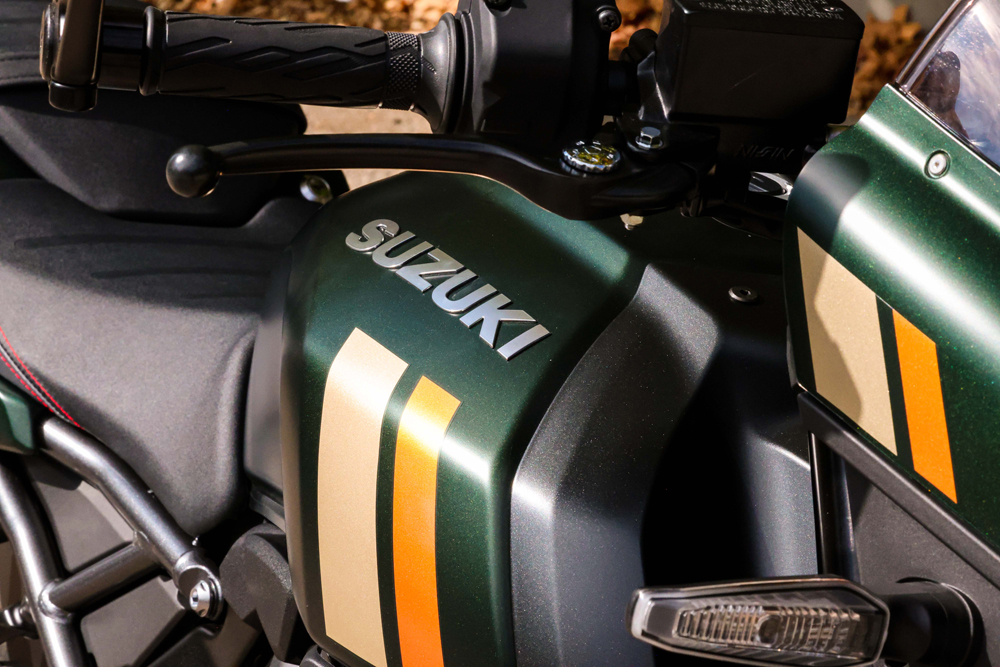
You just need to look at the TT to see where Suzuki is aiming. The small bikini fairing with the signature round headlight, tiny belly pan, funky ’70s-style tank stripes, and the gold wheels (at least on my test bike) are all ripped straight from the glory days of superbike racing.
The ride position is similar to the GSX-8S, with the single-piece handlebar providing a fairly relaxed stance, although the seat is (thankfully) a little wider. The seat itself comes with some funky stitching to give it a more premium feel, and the reshaped gas tank is wider with a handy 0.6 of a gallon more room for the go juice.
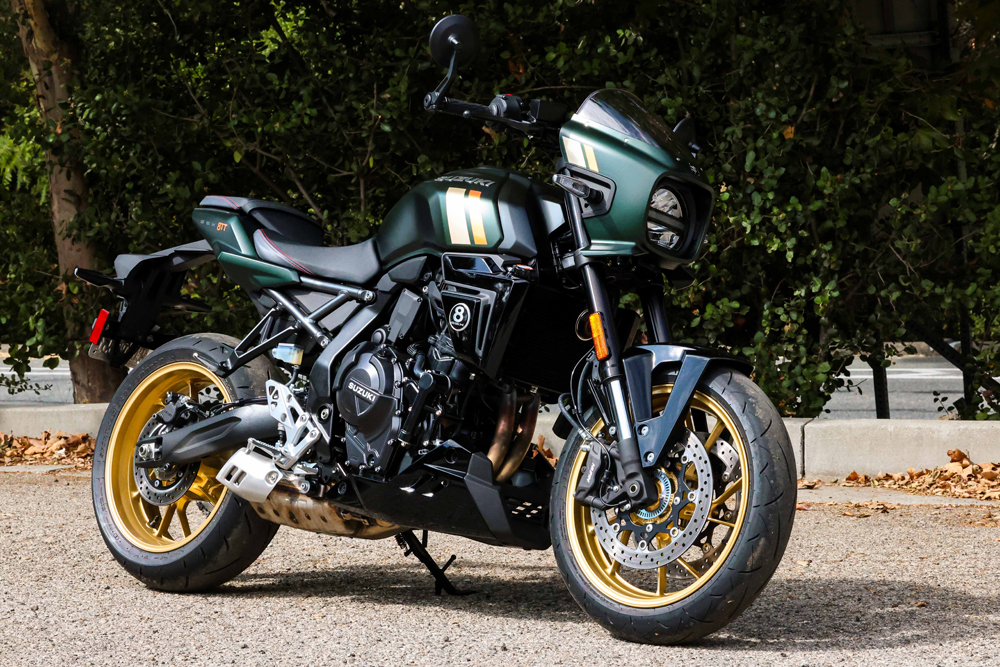
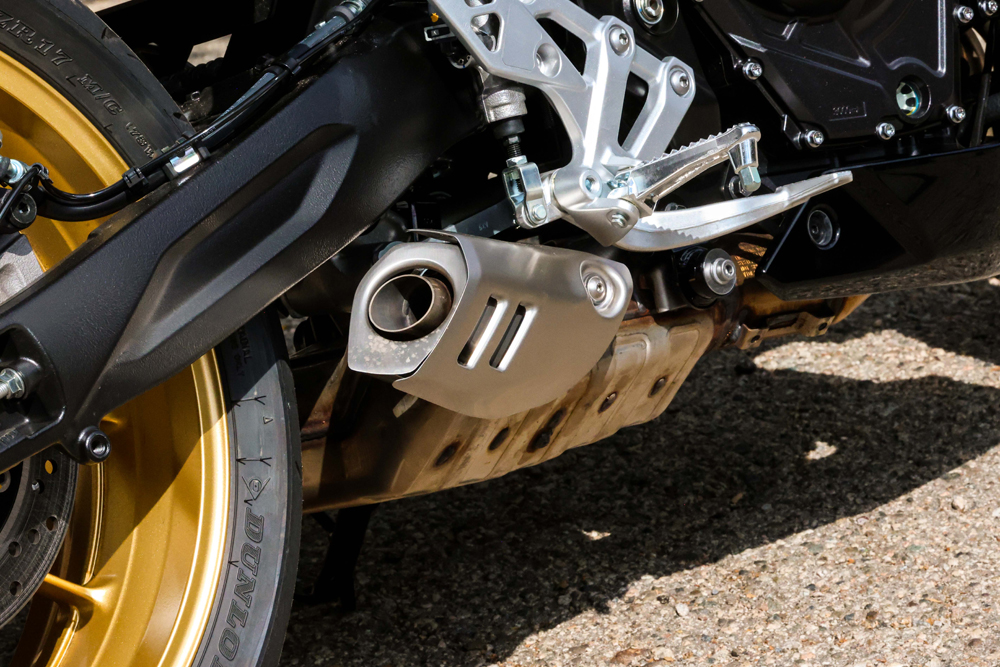
Thumb the starter, and the 776cc parallel-twin fires up with the same muted thrum as it does in the GSX-8R. A 270-degree crank gives it a character not unlike that of a V-twin. The sound is, unfortunately, rather boring, which is a shame given its performance spectrum. An aftermarket muffler is a must to give the twin a little noise.
Despite this auditory disappointment, Suzuki has done well with this engine, which makes just over a claimed 81 horsepower and about 58 lb-ft of torque, enough to keep experienced riders entertained while still being approachable for those moving up from smaller machines. It’s a peppy little thing. Despite a slight emissions-induced flat spot below 3000 rpm, the twin produces punchy acceleration through the first two-thirds of the rev range, but top-end performance is lacking a little despite its willingness to get there.
The engine is more focused on midrange/mid-rev performance, providing enough thrills to keep you engaged but not enough to blow the doors off, as seen in something like a Yamaha MT-09, for example. That balance of performance is exactly what makes it work so well in this retro-styled frame. The TT is lively without being frantic, and smooth without being sterile.
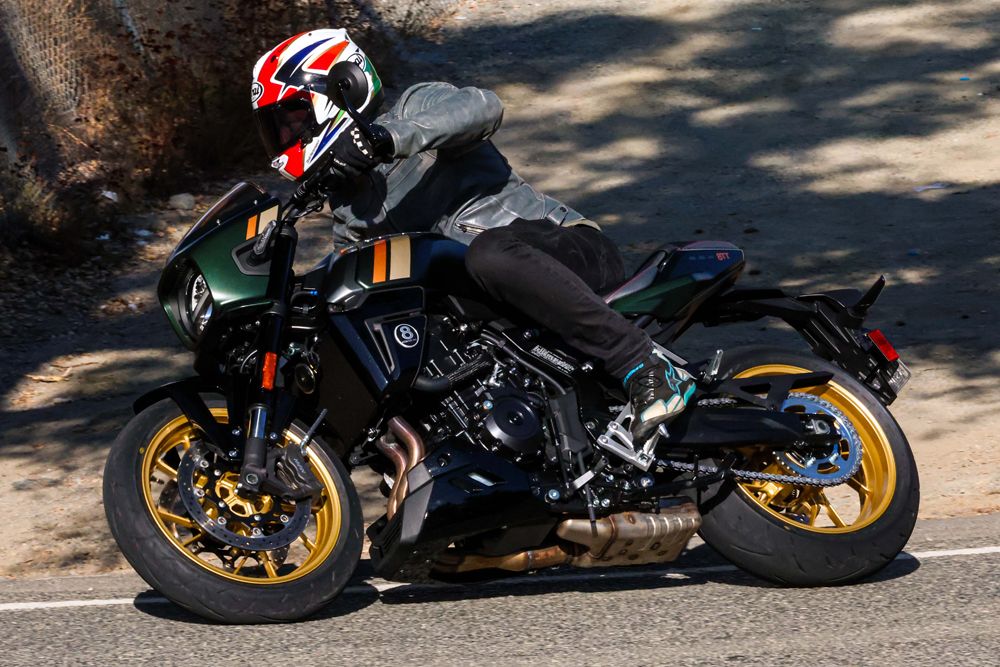
That being said, the TT will gladly get jiggy with it when the corners come into view. The TT shares almost all of its hardware with the sportier 8R, including the steel frame, the swingarm and the suspension package. Although the KYB forks are nonadjustable, they’re well-damped and controlled, if a little on the soft side.
The TT tips into corners willingly, holds a line without fuss, and gives just enough feedback through the front to keep you confident. The rear shock is preload-adjustable (the same as on the 8R) and it’s comfortable and composed for the most part. Up the pace somewhat and you’ll be cranking up the preload, and here, a little rebound damping wouldn’t go astray, either. You’ve got to be smooth on the TT. It’s not a bike that likes a wrestling match.
Instead, it feels easygoing yet sure-footed, and that makes for a satisfying partner on twisty roads as well as when you’re threading through city streets. The 17-inch wheels wear familiar 120- and 180-section tires, which provide plenty of grip for road riding and don’t make the bike feel heavy in transitions.
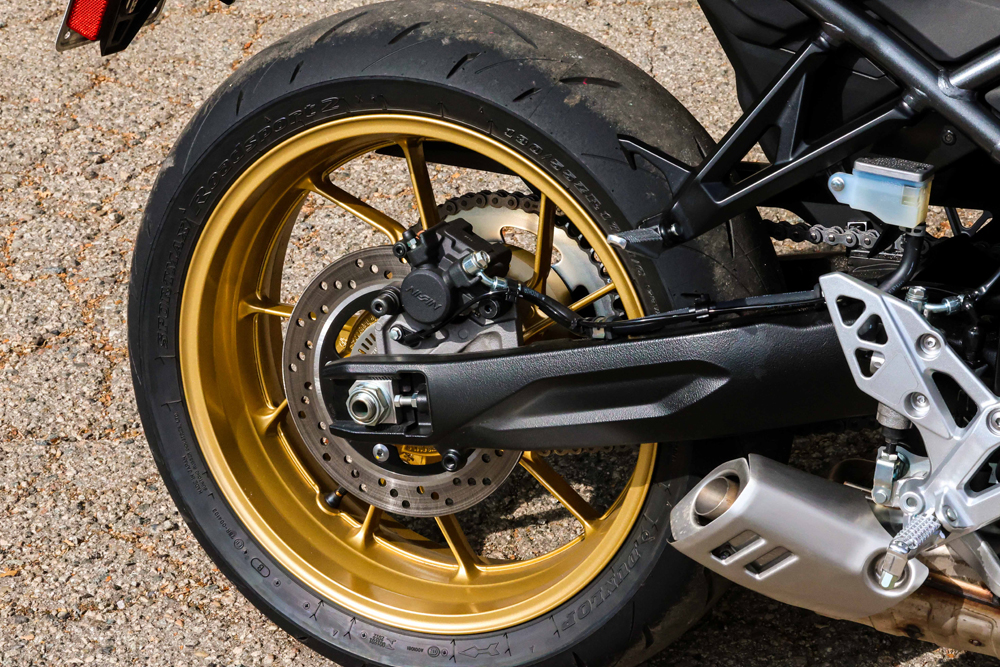
Braking performance is good, not great. Twin 310 mm discs up front with radial-mount Nissin calipers have a decent bite and feel at the lever, and although these aren’t track-spec Brembos, they’re more than enough for most of the kind of riding the TT and you will get into.
ABS is standard, and Suzuki’s rider-aids suite carries over here as well, with traction control and selectable ride modes accessible through the same TFT display as the 8S and 8R. Suzuki has continued its slimming down of electronics with the same three-level plus Off traction control and three-level (A to C) throttle response levels via the Suzuki Drive Mode Select system, the same as used on many of its bikes, including the GSX-S1000 we tested recently and loved. There’s no six-axis IMU with the TT, so no cornering ABS and TC, but you do get an up-and-down quickshifter that is smooth as silk in its action.

Compared to something like the 8R, where you’re in more of a racer ride position (albeit a relatively relaxed one, given the raised clip-on handlebars), on the TT, you’re more open to the elements, with a little less wind protection but clearly with a touch more style.
At highway speeds, the small fairing takes most of the wind blast out but doesn’t eliminate it entirely, which is something to bear in mind when you’re out doing freeway miles.
However, for the type of riding most buyers will do—weekend rides, commutes and short trips into the twisties—the TT’s ride position and ergonomics feel relaxed and sustainable.
The larger fuel tank also adds range, a practical benefit that reinforces the idea that this bike is made to be lived with daily, not just ridden hard occasionally.
Suzuki is a little late to the retro party, given bikes like Yamaha’s XSR700 or Honda’s CB650R have been around for a while now. But there’s method to the madness, as Suzuki had a few years to get the twin-cylinder platform just right and give the TT some funky clothes as a result.
There are compromises, of course. The lack of suspension adjustability will put off riders who like to fine-tune their setup, and although the retro-inspired fairing looks good, it doesn’t provide much in the way of aerodynamic advantage (we’ve come a long way since the early 1980s, where this bike draws its inspiration from).
Riders who do long motorway stretches will find the wind blast tiring compared with the 8R’s more streamlined fairing, and the TT carries a small weight penalty over the naked GSX-8S, thanks to its additional bodywork and larger gas tank. However, in practice, it’s not something you really feel.
Suzuki could have taken the easy route and simply dressed up the 8R in retro clothing, but it hasn’t. It has created a machine that stands on its own while still being clearly connected to its sibling. That connection to the GSX-8R is important: it means buyers know they’re getting a proven engine and chassis, a package that has already been tested and refined. But it also means they have a choice, between the sharpened focus of the R and the broader, more characterful appeal of the TT.
The GSX-8TT seamlessly bridges the old and new eras, but in a way, Suzuki has almost done too good a job in the TT’s creation. Everything is fine—the ride position, the engine performance, the suspension action, even the limited electronics—but it’s missing that certain pizzazz a bike like the three-cylinder XSR has in spades. Maybe it’s just me not quite gelling with the sound coming from that overly effective muffler, and maybe I should hit up Yoshimura and see if they have an aluminum remedy.
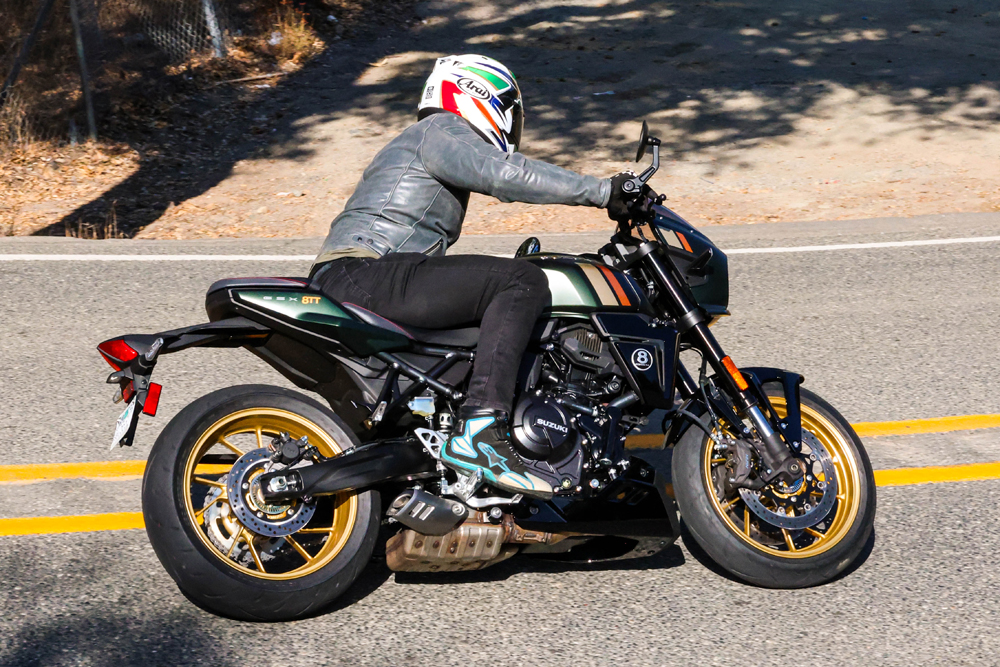
For riders who want a bike that can commute during the week, take them out of the city over weekends, and still turn heads when it’s parked outside a cafe, the GSX-8TT is hard to fault. It won’t outgun supersports on the track or swallow endless highway miles with the ease of a full-faired machine, but that’s not its mission.
The good thing is the TT doesn’t feel like a parts-bin special. Suzuki has created a bike that feels like it belongs in today’s lineup while paying a nice tribute to its past, one I’m sure Mr. Cooley would approve of.CN
VIDEO | 2025 Suzuki GSX-8TT First Ride Review

2026 Suzuki GSX-8TT Specifications
| MSRP | $11,149 |
| Engine | Inline parallel-twin |
| Valvetrain | DOHC, 8-valve |
| Cooling System | Liquid |
| Displacement | 776cc |
| Bore x Stroke | 84.0 x 70mm |
| Fuel Injection | Electronic fuel-injection system, 42mm throttle body |
| Compression Ratio | 12.8:1 |
| Exhaust | 2-1 |
| Transmission | 6-speed |
| Clutch | Wet, multi-plate, slip and assist |
| Electronics | Three Riding Modes, ABS, Traction Control |
| Chassis | Tubular steel |
| Front Suspension | KYB inverted forks, nonadjustable |
| Rear Suspension | KYB monoshock, adjustable preload adjustment |
| Front Brake | Twin 320mm discs, Nissin 4-piston radial monobloc calipers |
| Rear Brake | Single 240mm disc, Nissin single-piston caliper |
| Front Tire | 120/70ZR17M/C (58W) Dunlop Roadsport2 |
| Rear Tire | 180/55ZR17M/C (73W) Dunlop Roadsport2 |
| Rake | 25° |
| Trail | 4.1 in. |
| Wheelbase | 57.7 in. |
| Seat Height | 31.9 in. |
| Fuel Capacity | 4.3 gal. |
| Weight (curb, claimed) | 445 lbs. |
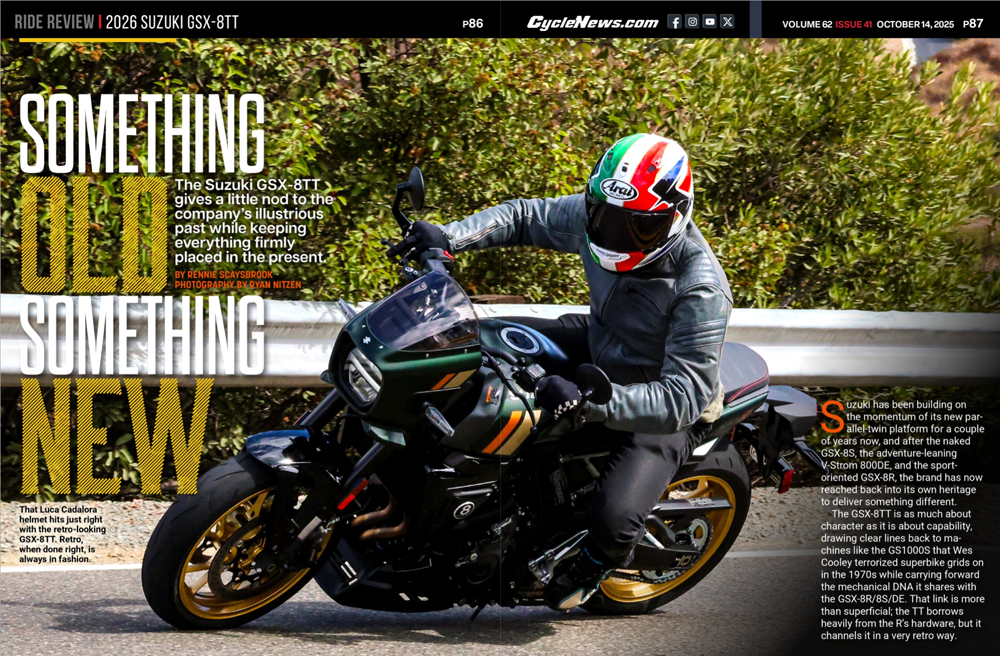
Click here to read the 2026 Suzuki GSX-8TT Review in the Cycle News Digital Edition Magazine.
Click here for more Suzuki motorcycle reviews and news.
Click here for the latest Cycle News Sportbike motorcycle reviews and news.