The battle among the major manufacturers for the hearts and minds of new and less-experienced riders has never been fiercer.
The mid-capacity markets are awash with bikes that offer a level of performance far beyond what was available just a decade or so ago. The build is decent, the tech specs are often remarkable, and the value for money is eye-catching.
By Adam Child
That’s because the major players in Japan, Europe and increasingly China seem to have realized that brand loyalty must be earned the hard way. With competition so intense, entry-level machines need to be more than cheaply made silhouettes of their big-cube siblings. They must deliver a genuine experience—a proper taste, if you like, of the big time. And the latest manifestation of this welcome trend is the BMW F 450 GS.
Okay, it’s produced by TVS Motor in India, not by BMW Motorrad in Germany. It’s powered by a 420cc parallel-twin, not a thumping 1300cc boxer. It makes a modest 48 horsepower, keeping it within European A2 license regulations, which is vital if any manufacturer wants to attract new riders. But it is, in every key respect, a bona fide GS ADV for both road and dirt, though we don’t know how much it’ll cost until it reaches our shores in the final quarter of 2026.
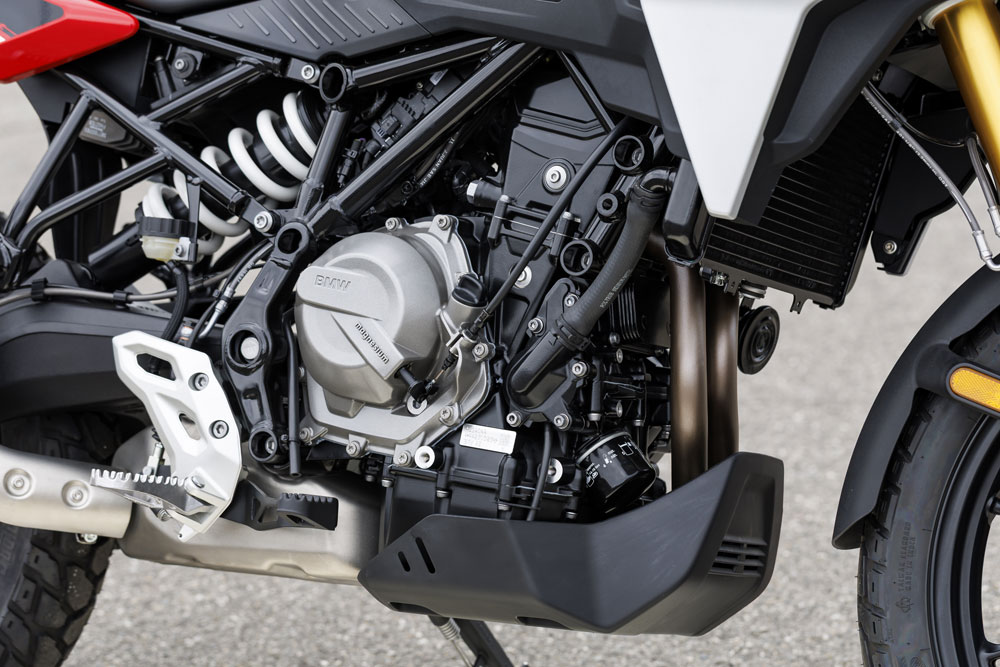
BMW designed the bike from scratch, developing a new four-valve, DOHC parallel-twin with a rarely seen 135-degree crankpin offset. A centrifugal “Easy Ride” clutch that doesn’t require manual activation when starting and stopping is standard on the top-spec model. The engine is used as a stressed member in a new steel-tube frame that’s supported by KYB suspension with seven inches of travel front and rear; wheels are 19-inch diameter front, 17-inch rear; and there’s a dirt-friendly 8.66 inches of ground clearance.
As with the wider GS family, there are enough lean-sensitive rider aids and factory extras to tailor your F 450 into either an asphalt-oriented tourer or a focused dirt-based explorer.
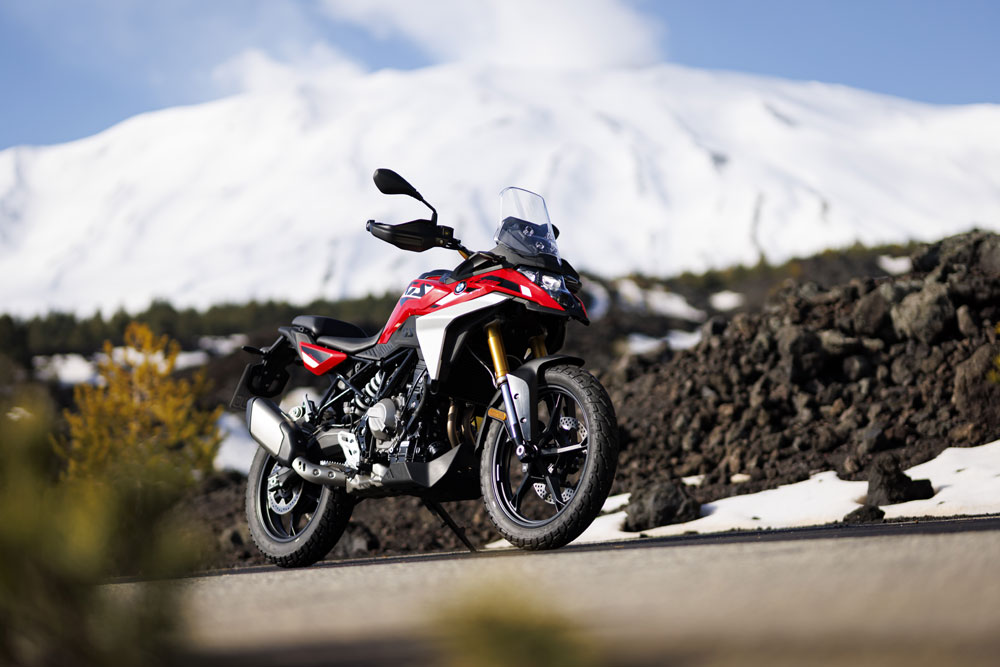
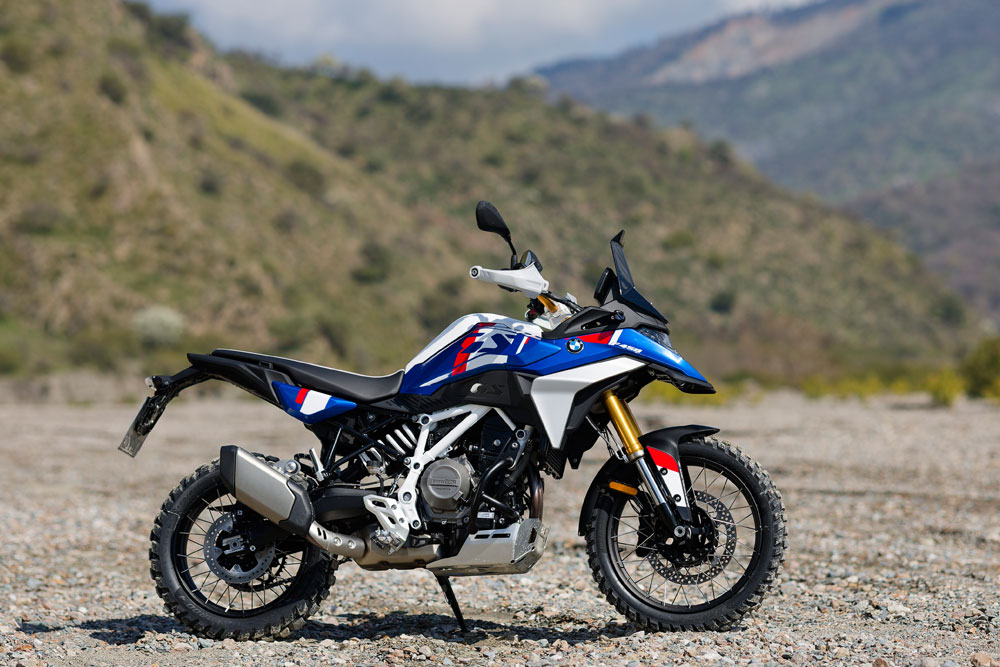
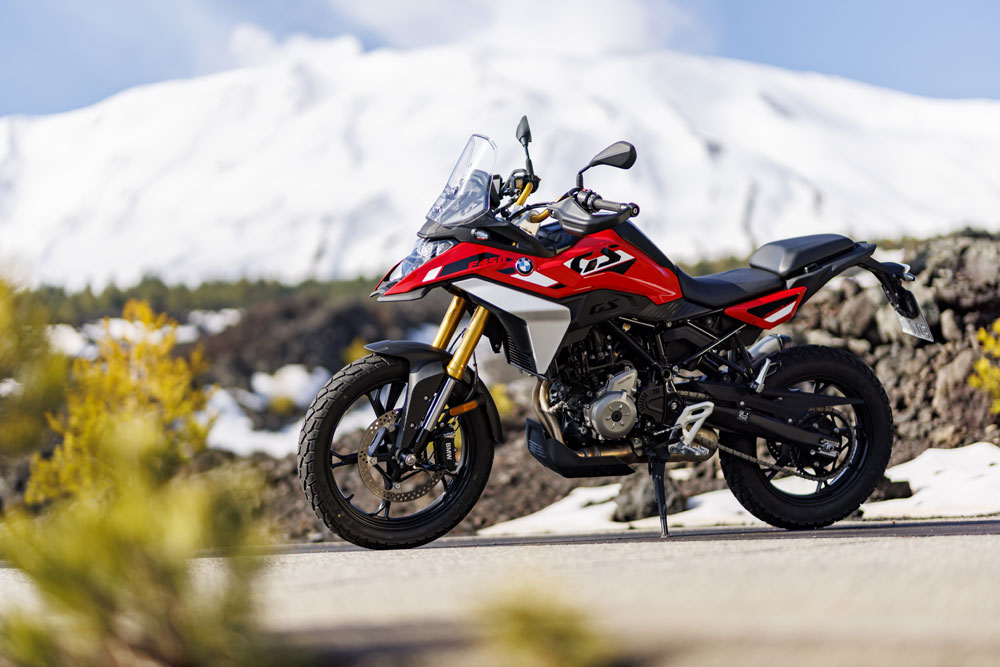
Cycle News was invited to stormy Sicily to test two variants: the Sport (in Racing Red) on the road, and the classy-looking GS Trophy (in Racing Metallic Blue) off-road.
Our road-focused Sport model was equipped with the optional Sport Pack (again, we don’t know the final U.S. prices of the following equipment). The more off-road-oriented Trophy, equipped with the Easy Ride Clutch (ERC) and spoked wheels, looks like a perfectly scaled-down F 900 GS. However, our test machine had a few more extras that do not include those wheels, which are currently out of stock at BMW, so no price or part number has been supplied.
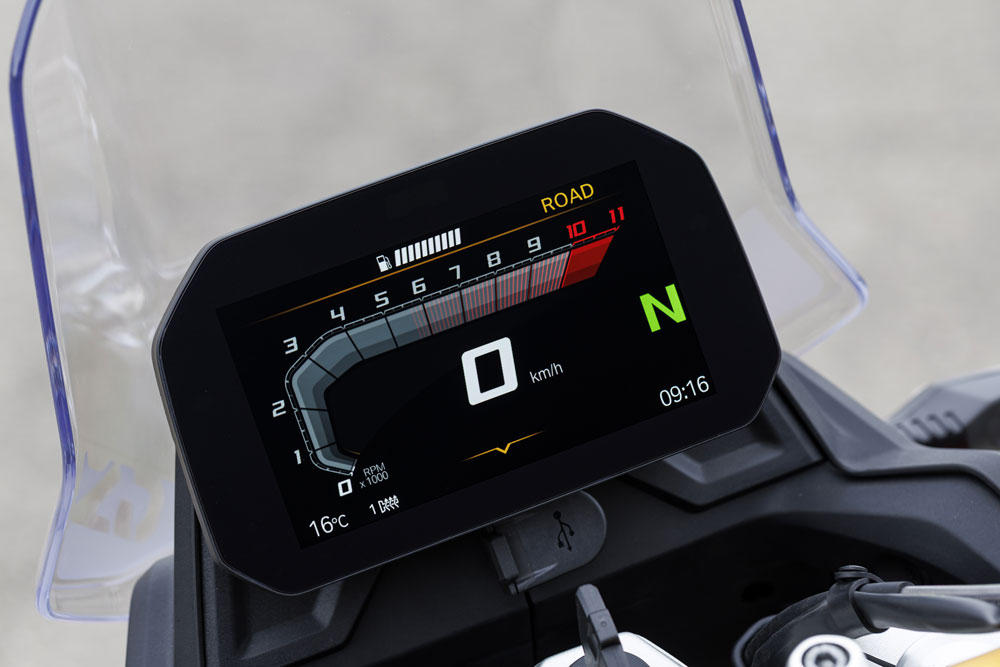
There is much to get your teeth into in terms of spec. The 6.5-inch TFT dash is similar to that of the R 1300 GS and is supported by the same multi-controller navigation wheel and switchgear. Even the same heated grips are fitted as standard. The 450 GS also features multiple riding modes, plus ABS and traction control that, unlike some of the competition, are lean-sensitive. Sprinkle in a little front-wheel lift control and engine drag control, plus a premium feel to the finish and touchpoints, and the price will inevitably start to add up.
The F 450 GS Hits The Dirt | 2027 BMW F 450 GS Review
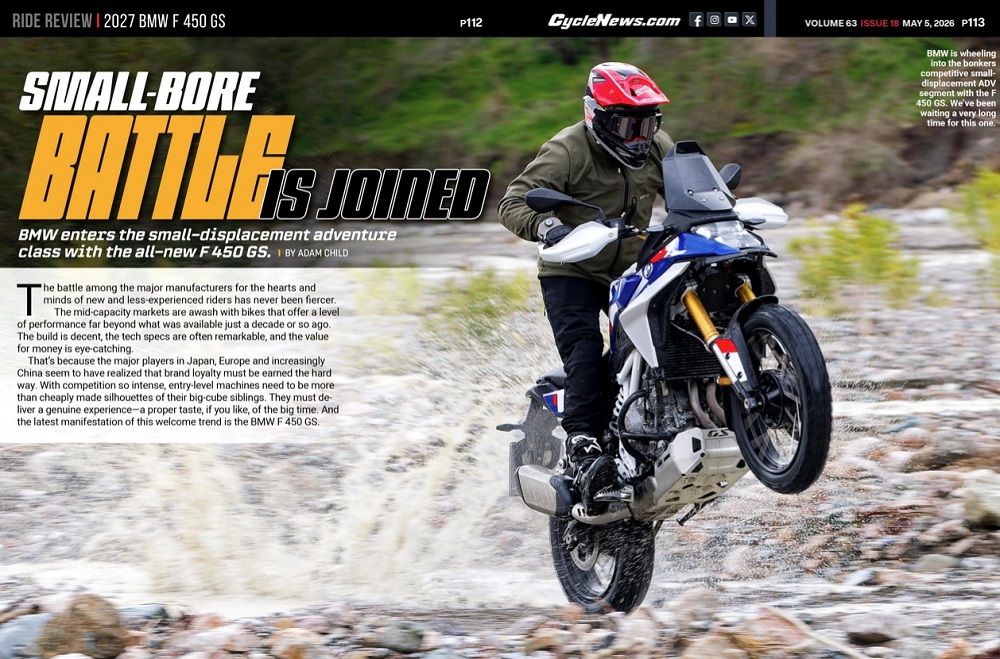
We started the test on dirt aboard the top-spec Trophy model fitted with the Easy Ride Clutch and off-road-biased Metzeler Karoo 4 rubber, and the first job was figuring out how to get moving.
There’s a clutch lever on the left bar, should you want to use it, and a gear selector at your foot, but the ERC lets you stop and start without manually engaging the clutch. Once moving, you can change gear conventionally or with the optional Gear Shift Assist Pro up-and-down quickshifter, just like a Rekluse clutch on many an enduro bike.
It feels alien to prod home in first gear without first pulling in the clutch lever, and then pulling away with the throttle alone, like a maxi scooter. As the revs build slightly, the GS simply starts moving smoothly forward. Once fully underway, you change up and down gears through the gearbox normally, but still don’t need to use the clutch. And when you come to a standstill, there’s again no need to disengage the clutch. If you stop in any gear, the bike will still pull away, but you will get a warning on the dashboard suggesting you backshift if you are in the wrong gear.
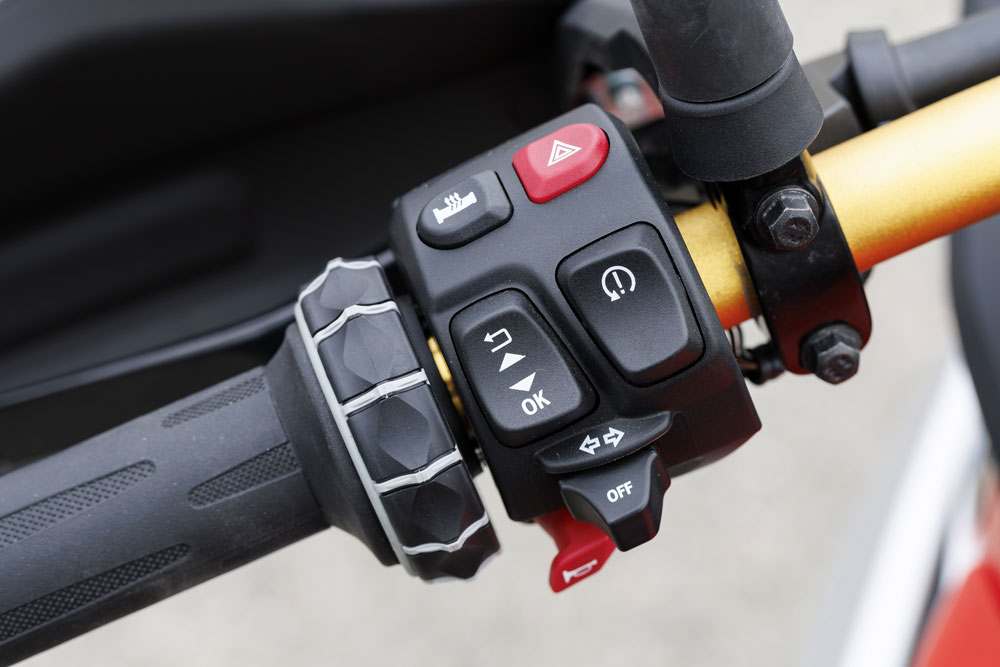
The ERC is a flexible system. You can still dip or slip the clutch for a wheelie or to spin the rear tire off-road. You can pull in the clutch like a normal bike, but if you want to be lazy, the clutch lever is redundant. Crucially for a new rider, it’s impossible to stall.
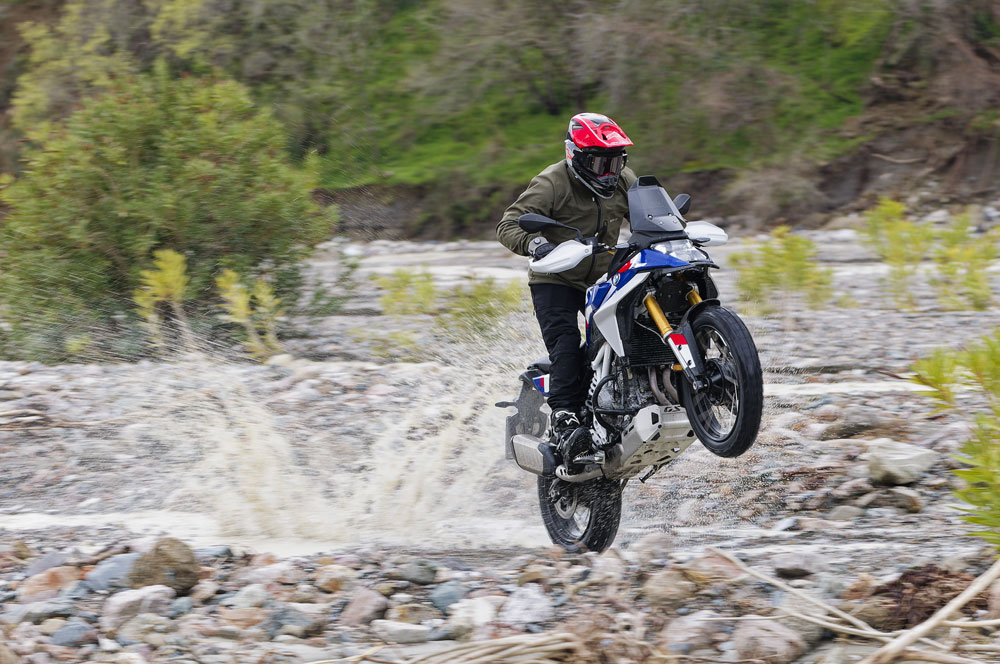
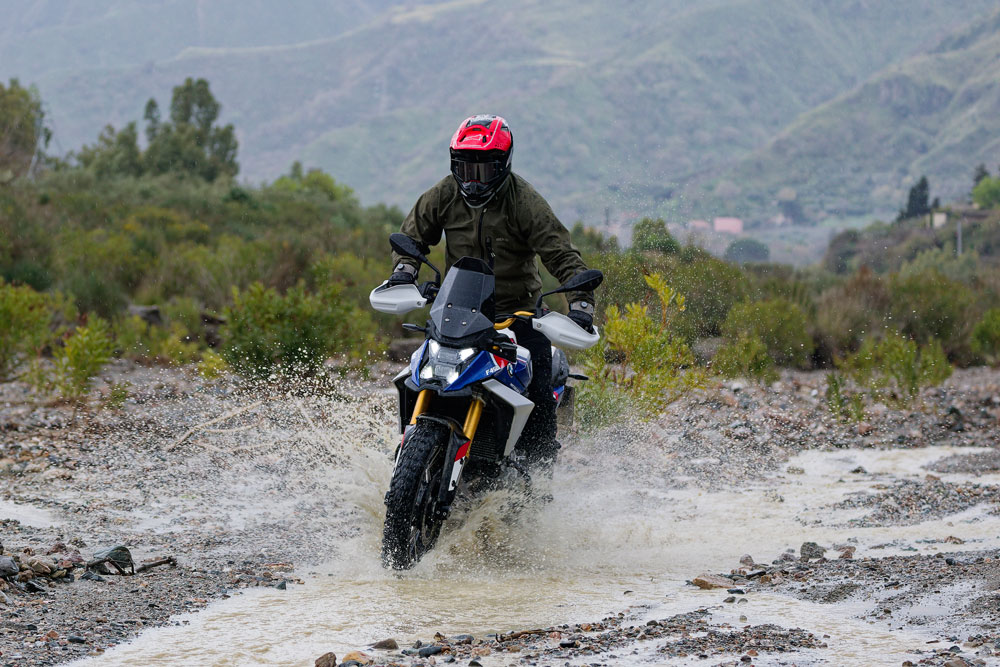
Off-road, it becomes a useful tool as your now less-busy left hand can just concentrate on holding on to the ’bar. You don’t need to feather the clutch; in fact, you don’t even need to be in the correct gear because the system will do all the hard work for you. And when you stop during, say, a river crossing, it’s impossible to stall.
There is a slight disconnect with the rear tire, and you can’t leave the bike in gear on a hill to act as a handbrake because the bike is likely to roll off its sidestand. But for those who feel nervous about riding on dirt, the ERC is a definite plus.
Back on the street, the ERC system makes riding in traffic as relaxed as a maxi scooter. Commuting will be a breeze on the 450. Peak power and torque—48 hp at 8750 rpm and 31.7 lb-ft at 6750 rpm—are capped by European A2 license regulations, but BMW claims that 80 percent of that torque is available from just 3000 rpm, and that’s how it feels.
The parallel-twin has, as previously mentioned, a 135-degree crankpin offset, as BMW says they wanted to do something different to reduce the twin’s inherent vibrations while also adding character, and it drives smoothly enough through its midrange and has enough torque to hoist the front wheel (with some clutch) in the first two gears.
It feels perky and happy to rev, too. With one piston effectively chasing the other, giving a long wait between double bangs, there’s a slightly flat exhaust note but no tangible difference to how it responds at the throttle.
Off-road, the GS took on anything Sicily’s river crossings and dirt trails threw at it. It was always manageable, especially once I’d gotten used to the ERC. Even when large rocks were bouncing off its crash protection, its Metzeler Karoo 4 tires found grip on gravel, mud and everything in between. In enduro terms, 392 pounds isn’t light, but for a road-going adventure bike, it’s comparatively weightless and non-fatiguing to ride. I opted for the optional Enduro Plus riding mode, which disengages most of the rider aids, allowing the rear tire to spin and the rear brake to lock up for fun.
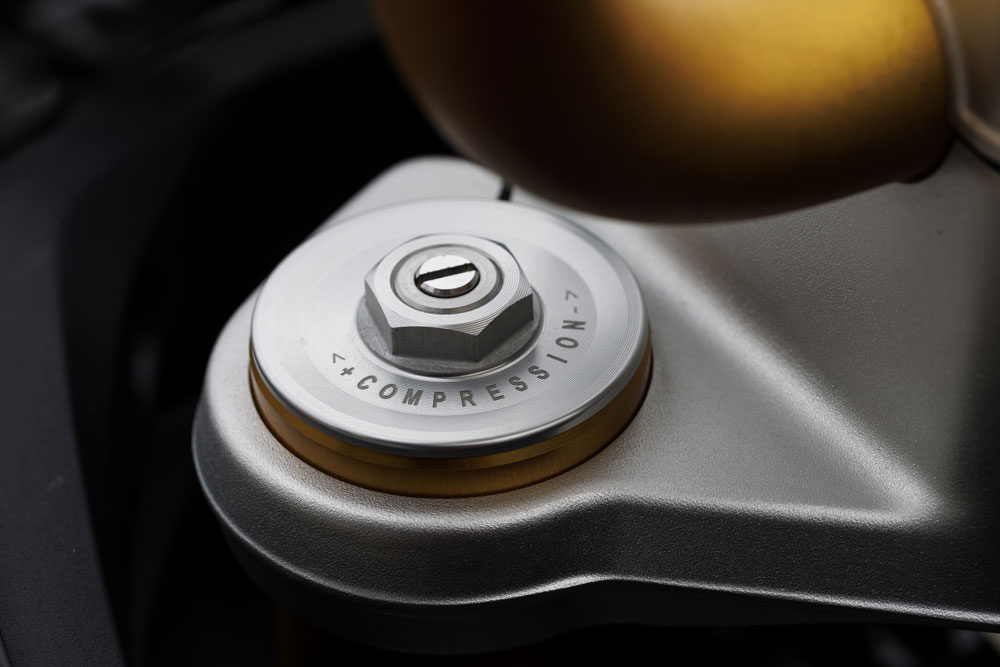
Both brakes have plenty of feel for off-road finessing, especially the rear, which I found myself using a lot. We opted for the Sport suspension, which adds compression and rebound adjustment to the forks. However, the springs still bottomed out when landing off small jumps, and on a longer ride I would have added a little more compression. Optional handlebar risers and the Rally seat helped, but personally I would like the ’bars a fraction higher.
My overall impression is how easy the 450 GS is to ride on dirt. I always felt in charge of proceedings (not always the case for me when pushing off-road), and after a tough morning of riding in appalling weather, I felt up for more. The GS boosts its rider’s confidence and keeps everything fun, which is much of what adventure riding is about.
The F 450 GS Switches To The Tarmac | 2027 BMW F 450 GS Review
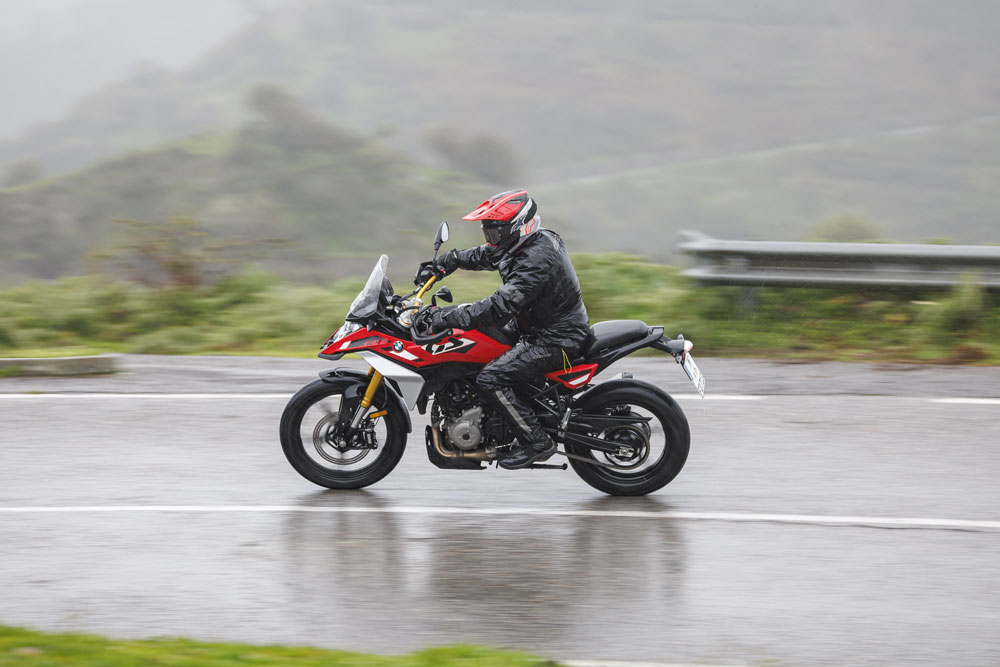
Next up, the road-biased Sport model, fitted with standard Maxxis Maxxplore rubber (also made in India), standard suspension, and no ERC. Predictably, I stalled it straight away by selecting first gear without the clutch, as I was so used to the system on the ERC.
On the road, it feels very GS-like, only smaller and less powerful. On one occasion, I tried to pass in top gear, forgetting I was on a small-capacity bike with just 48 horsepower, not an F 900 GS, but overall, its off-road manageability translates well to the road.
Despite the relatively tall 33.3-inch seat height (-15mm and +20mm seat options are available), I felt at home and unconcerned, even as a short rider. Rain mode took much of the stress out of the wet ride by softening power delivery and adding more rider aids. Eighty mph cruising is easy enough, but the weather didn’t give us long enough in the saddle to determine whether the unusual 135-degree crankpin offset results in less vibration. BMW quotes an average fuel consumption of 62 mpg, while on test the 450 returned 49 mpg even when ridden hard. Realistically, 50 mpg to 58 mpg and around 185 to 220 miles should be easily achievable from the 3.6-gallon tank.
Niggles? Cruise control is not even optional, while the mirrors are only okay. The screen, great off-road, is too low to offer much wind protection at speed. And although the GS’s easy-going, softly setup suspension worked well and the Maxxis tires coped with the standing water, the brakes, so positive on dirt, lacked edge and feel on the road.
Verdict | 2027 BMW F 450 GS Review
The F450 GS will be ideal for this class, especially compared to the KTM 390 Adventure, CFMOTO 450MT and Royal Enfield Himalayan, all similar bikes that will give you change out of $8000. You can’t use the gearbox as a handbrake when parking the GS on a hill. Wind protection is probably on a par with the competition, but not to BMW’s usual high standard. And we still have a few unanswered questions about this test due to the weather.
However, newer riders seeking a genuine taste of the GS experience will not be disappointed with the new F450 GS. With 48 horsepower on tap and a curb weight of 392 pounds, it is perhaps the liveliest bike in the class. The new 420cc motor is easygoing yet has enough fizz to make it a lot of fun on road and dirt alike, and the option of the Easy Ride Clutch takes the BMW a step above the competition and makes it incredibly easy to ride both on and off-road. CN
2027 BMW F 450 GS Specifications
| Engine | Twin-cylinder, inline four-stroke, w/ 135° crankshaft offset |
| Valvetrain | 4 valves per cylinder, overhead camshafts |
| Displacement | 420cc |
| Bore x Stroke | 72.0 x 51.6mm |
| Compression Ratio | 13.0:1 |
| Transmission | 6 speed |
| Horsepower (claimed) | 48 hp @ 8750 rpm |
| Torque (claimed) | 32 lb-ft @ 6750 rpm |
| Fuel System | Fuel injection, throttle-by-wire |
| Clutch | Multiplate clutch in oil bath, slipper clutch, mechanically operated |
| Frame | Steel tube frame with load-bearing engine, steel tube sub-frame |
| Front Suspension | KYB inverted 43mm telescopic fork |
| Rear Suspension | Aluminum twin-sided swingarm, compression and rebound damping adjustable shock absorber including progressive damping |
| Front-Wheel Travel | 7.1 in. |
| Rear-Wheel Travel | 7.1 in. |
| Front Brake | 4-piston monoblock Brembo caliper, 310mm disc, ABS |
| Rear Brake | Single-piston floating ByBre caliper, 240mm disc, ABS |
| Front Wheel | Cast aluminum; 19 x 2.50 in. |
| Rear Wheel | Cast aluminum; 17 x 3.50 in. |
| Front Tire | 100/90-19 in. |
| Rear Tire | 130/80-17 in. |
| Rake | 26.1° |
| Trail | 4.5 in. |
| Wheelbase | 57.7 in. |
| Seat Height | 33.3 in. |
| Fuel Capacity | 3.6 gal. |
| Weight (wet, claimed) | 390 lbs. |
Click here to read the 2027 BMW F 450 GS Review in the Cycle News Digital Edition Magazine.