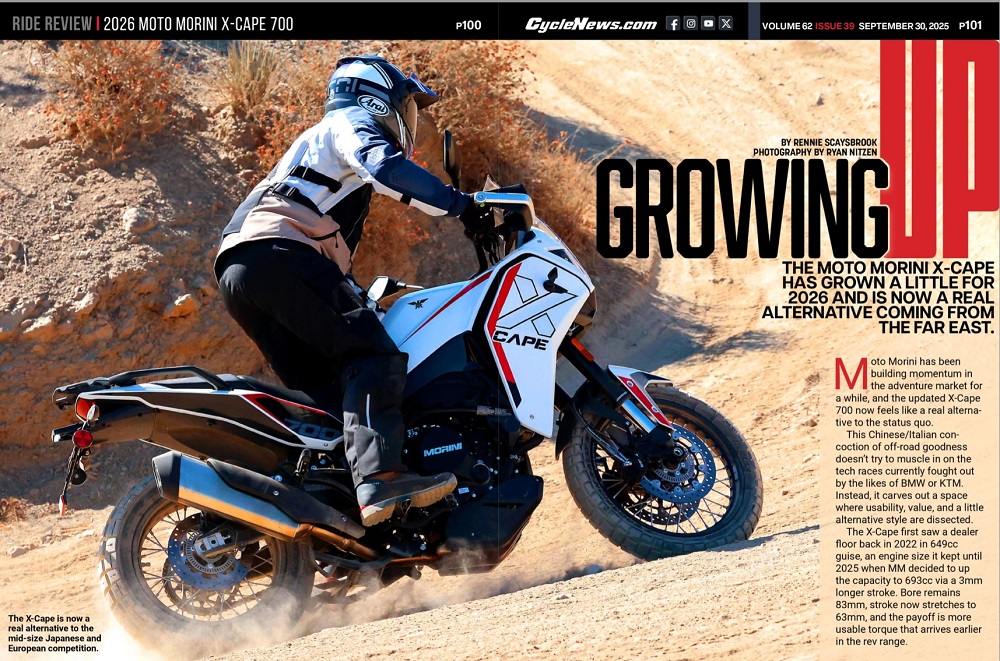
Moto Morini has been building momentum in the adventure market for a while, and the updated X-Cape 700 now feels like a real alternative to the status quo.
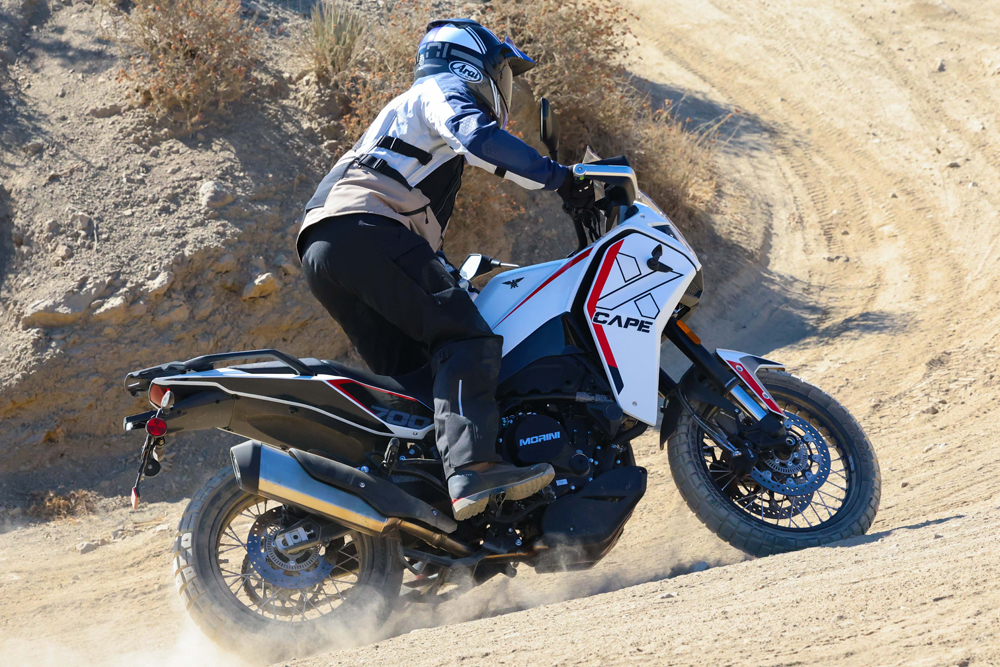
Photography by Ryan Nitzen
This Chinese/Italian concoction of off-road goodness doesn’t try to muscle in on the tech races currently fought out by the likes of BMW or KTM. Instead, it carves out a space where usability, value, and a little alternative style are dissected.
The X-Cape first saw a dealer floor back in 2022 in 649cc guise, an engine size it kept until 2025 when MM decided to up the capacity to 693cc via a 3mm longer stroke. Bore remains 83mm, stroke now stretches to 63mm, and the payoff is more usable torque that arrives earlier in the rev range.
Peak output sits at 70 horsepower at 8500 rpm and 50 lb-ft of torque at 6500 rpm, with a Road and a softer Off-Road throttle map available, but still featuring a cable throttle, not ride-by-wire. The performance is far from earth-shattering, but it’s enough for most applications you’ll find yourself in. The parallel-twin is actually the old Kawasaki Ninja 650 motor, which has been licensed by CFMOTO for use by Moto Morini. As a result, you can expect the motor to be fairly bulletproof.
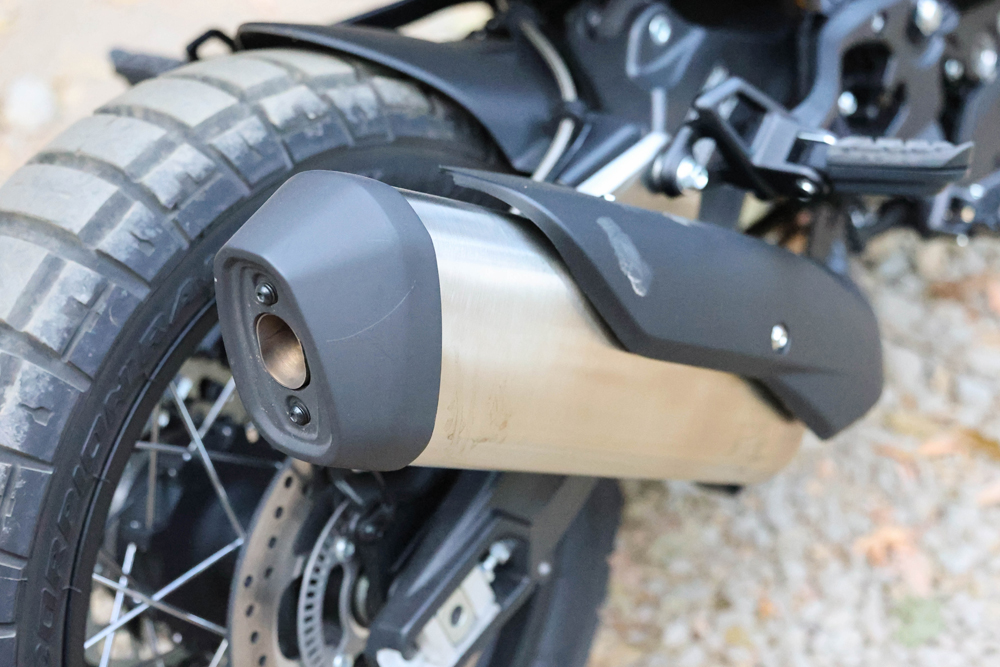
From the handlebars, the motor feels significantly under-stressed, but it does suffer a significant flat spot when you first open the throttle at around 2500 rpm. Power steadily builds so that by the time you’re around 5000 rpm, you’ve got plenty of acceleration, but the early parts of the rev range leave a little to be desired. Clear the dead spot, and the throttle response is smooth and progressive, whether you’re threading through city traffic or charging over loose dirt on the many SoCal canyon passes. There’s a neater, slimmer exhaust system fitted to the larger motor, although it sounds rubbish, almost like you’re shooting a BB gun that’s run low on gas.
The X-Cape runs the usual six-speed ’box, and it’s geared relatively tall, mainly so it has ample room to reach freeway speeds. The gearshift is smooth enough, and there are no gizmos like a quickshifter or anything to play with. It’s a case of what you see is what you get.
The X-Cape is far from small, and it’s rather heavy, given it punches out less than 70 horsepower once it has all reached the rear tire. At a claimed 514 pounds and with a seat height of 33.2 inches, the X-Cape is one for a rider who’s got a bit of off-road experience. It’ll go most places you’ll want to take a bike of this size, and with no traction control and ABS switched to off-road mode that disengages ABS at both the front and rear, there’s nothing holding you back.
Chassis numbers tell their own story. A wheelbase of 58.7 inches and that 514 pounds of weight give the Morini a planted, stable demeanor. Ground clearance is adequate at 7.5 inches, although I did have a few instances where I ground down the factory-fitted center stand while we were shooting the bike off-road.
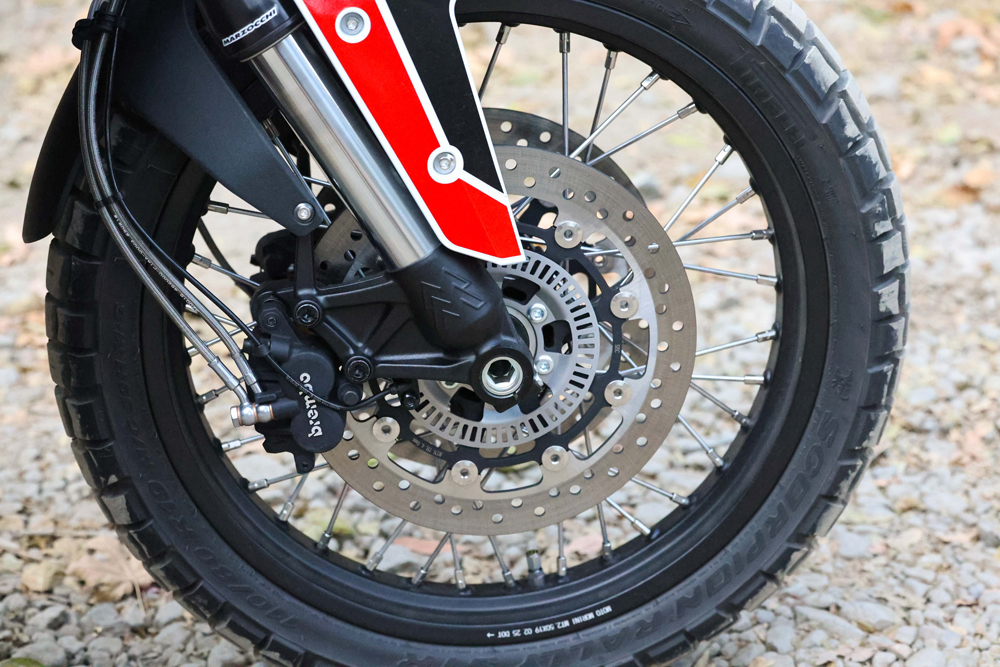
Suspension hardware is pretty much the same as it was on the 649cc X-Cape. Up front is a beefy 50mm Marzocchi upside-down fork, fully adjustable for preload, compression and rebound, with 6.9 inches of travel. At the rear, a KYB monoshock offers 6.5 inches of travel, but isn’t fully adjustable and comes with preload and rebound damping, although you do get a remote preload adjuster on the left side of the swingarm, so well done, MM, on that one.
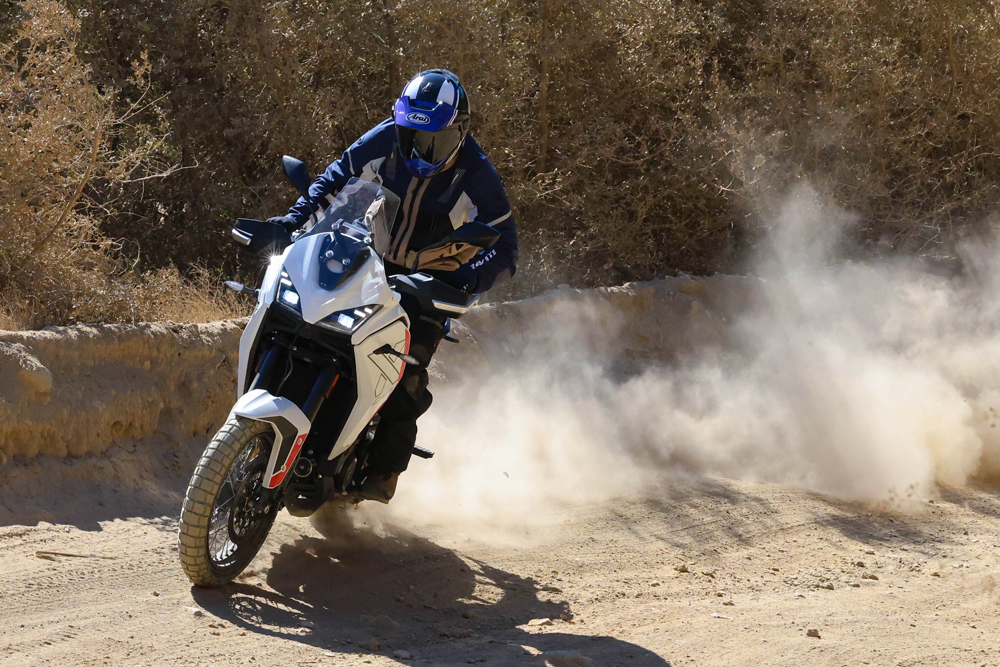
Given the fact that the X-Cape costs substantially less than the bikes it’s going up against, like the Yamaha Tenere 700 or the Triumph Tiger, the road holding offered by the Marzocchi/KYB setup is pretty good. The fork has a touch of harshness at the top of the stroke, but this is something I’ve noticed is a bit of a Marzocchi trait over the years on different bikes fitted with the Italian fork. Off-road, the setup works well. While not as sure-footed as a WP setup on a KTM, the X-Cape will hold its own for slow- to medium-speed trail riding, offering a relatively comfortable ride on the blacktop.
Wheels are classic adventure spec 19-inch front and 17-inch rear, shod in Pirelli Scorpion Rally STR rubber. While they won’t outdo purpose-built ADV tires or tarmac tires, the Pirellis are a good split between both and are hard enough that they should offer decent mileage for the owner.
Brembo anchors take care of stopping, with twin 298mm floating discs up front and a 255mm single at the rear. However, just like on the 650, these brakes are a weak point, with the twin-piston calipers providing low feel and low stopping performance. At least you have switchable Bosch ABS as standard, but overall, the brakes leave a lot to be desired.
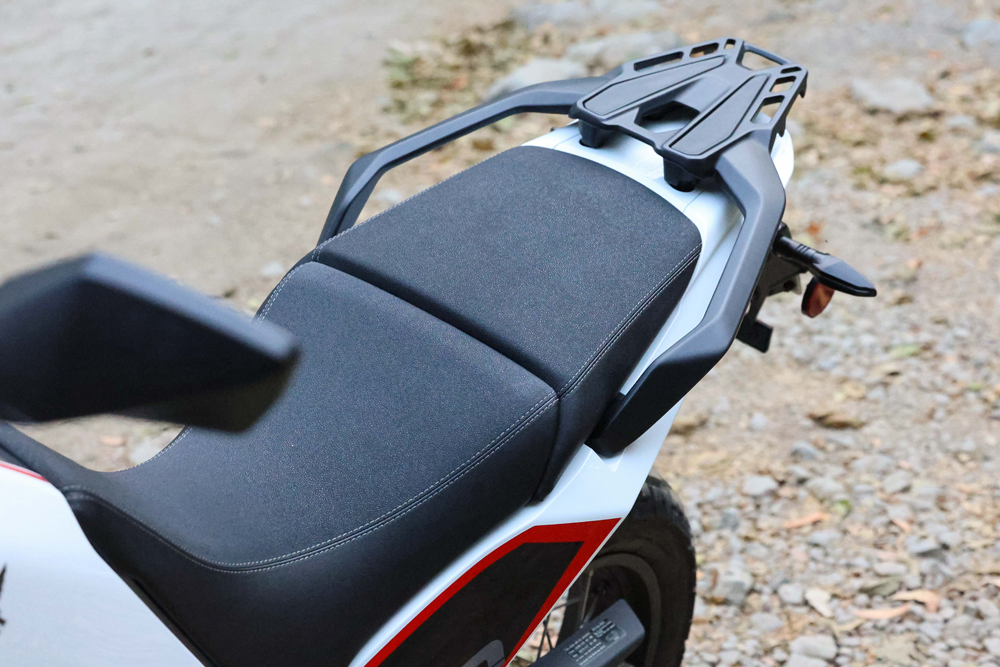
The seat is slightly revised for 2026 with a broad, stepped shape, and given there’s ample room from the seat to the footpeg, you should be able to knock out big mile days, no worries.
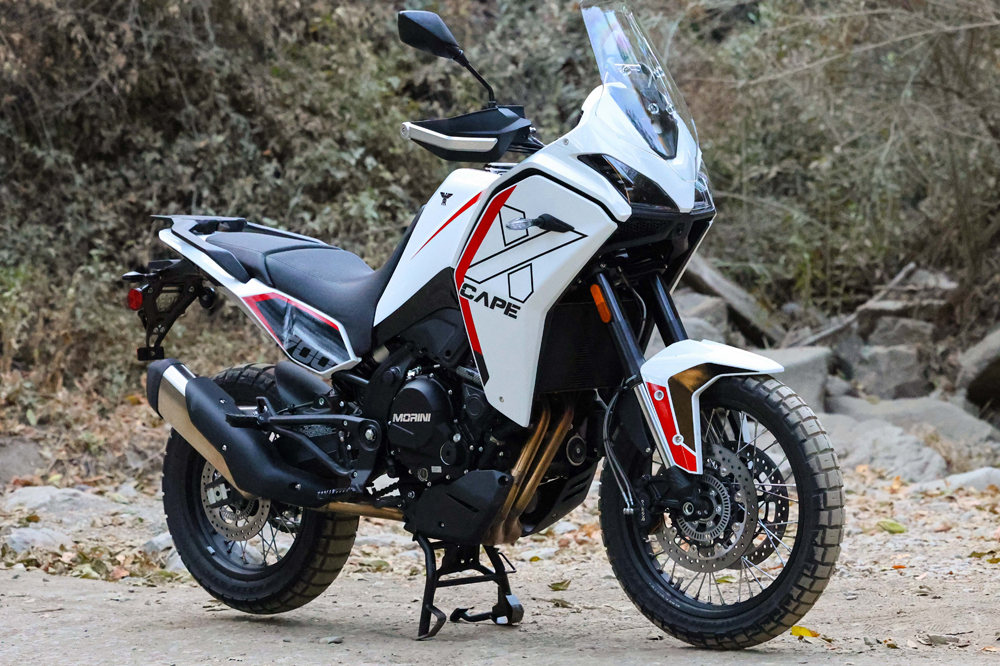
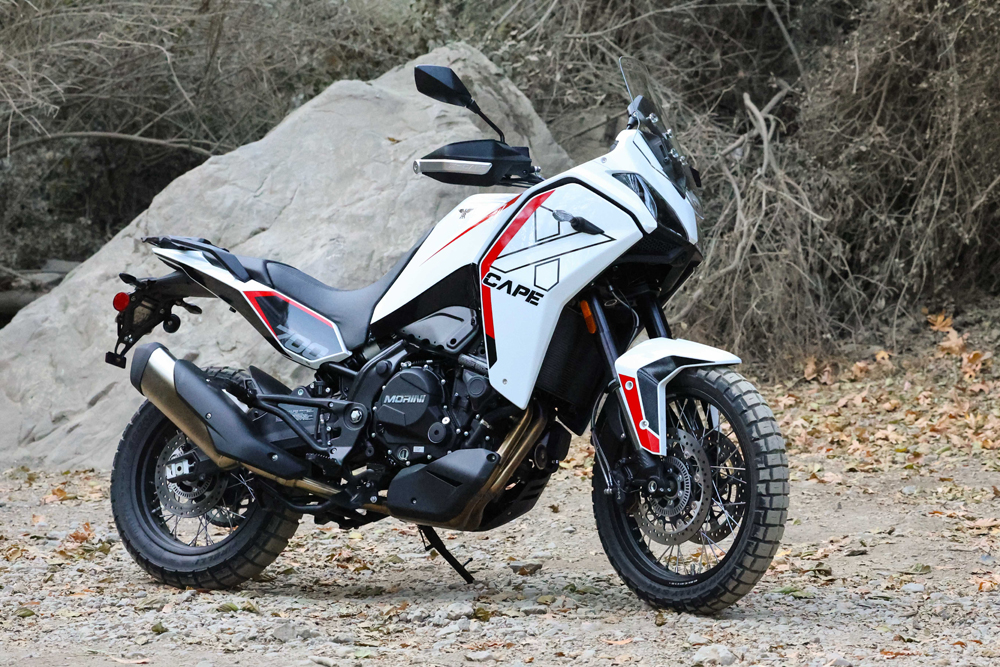
On the highway, the updated windscreen earns its keep as it’s now adjustable while you’re riding via the stepped locking system. Taller and more effective than before, it reduces wind blast and makes the ride a little more comfortable. The buffeting is minimal at regular touring speeds, though taller riders might still wish for an aftermarket extender. Handguards now come as standard, as do engine heat shields, and that rounds out the aesthetics package nicely. It is a handsome-looking bike, after all.
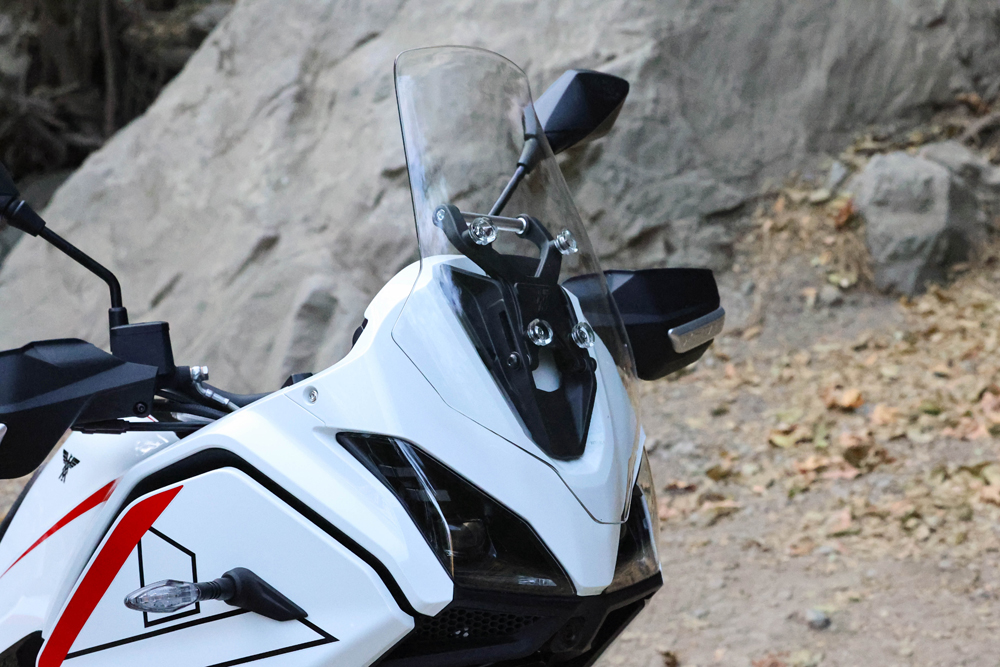
At 6-foot-1, my reach to the handlebar feels pretty natural, but just in case it doesn’t, you can move the handlebar up to six different positions via the threaded top triple clamp, so you’ll be sure to find a riding position that suits whatever frame you have.
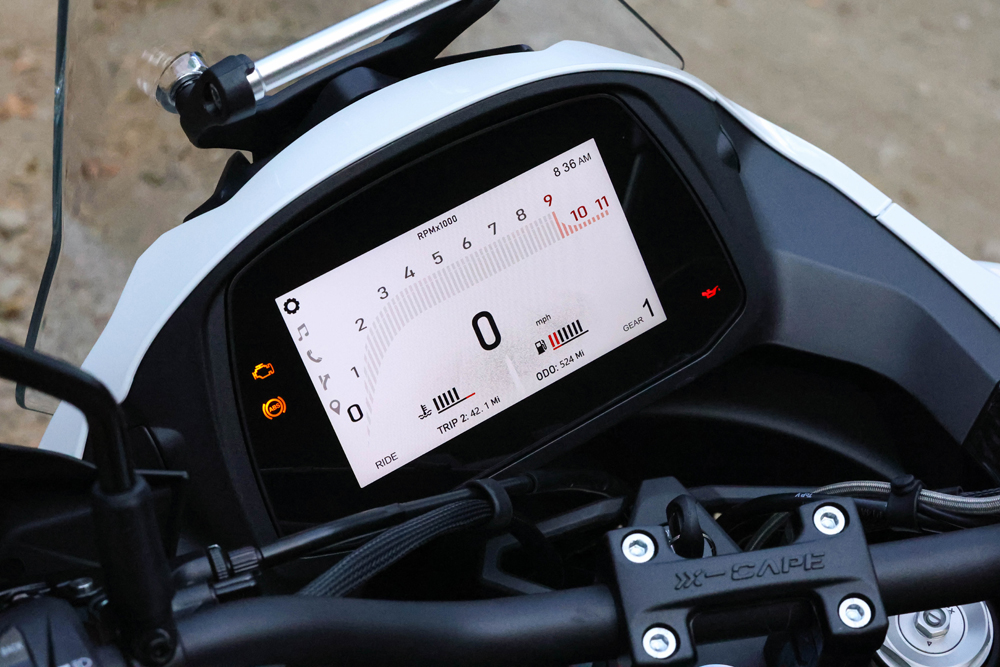
Behind the handlebars sits a revised seven-inch TFT screen. It’s the same size as before, but the engineers have given it a much faster processor, enabling more accurate readings of the bike’s vitals. It’s perfectly legible in afternoon sunlight (something some other manufacturers still struggle to get right), with Bluetooth integration for phone mirroring via the Carbit Ride app that lets you handle calls, maps and music. There are also two USB ports (Type-A and Type-C, yay), and Moto Morini has one-upped pretty much everyone by fitting a video/dash camera on the front of the bodywork under the headlight.
The camera works with the Road Cam app and lets you run either a continuous stream of footage, or you can set it up like a traditional dash cam that runs on a loop and deletes unneeded footage when it starts creating a new video. The latter is an obvious benefit for insurance purposes, because now you’ll be able to prove that car jumped out in front of you and you weren’t riding in an irresponsible and dangerous manner, right? Right?
It’s a little hard to know where to put the X-Cape in terms of class and competition. The MSRP is substantially lower than many of the bikes it’s up against, but it equally doesn’t have the top-notch quality feel that something like the Triumph has, for example.
For me, personally, the 700 motor needs more oomph to match the weight, as it doesn’t pull as hard or as cleanly as I would like in the lower revs, which is where much of the riding off-road is carried out. The curb weight, while manageable, is noticeable at low speeds. And while the electronics suite is honest, it lacks the more advanced aids now common in the class.
On the plus side, having things like that excellent seven-inch TFT dash and the camera at the front of the fairing gives the X-Cape a couple of good selling points, as do the standard fitment handguards, sump guard, centerstand and the cylinder-head heat shields. The switches, while easy enough to use, feel a little cheap, but now I’m really nitpicking.
Another good thing is service intervals. Oil changes are done every 3000 miles, but you won’t have to touch the valves for 25,000 miles. That’s a big boon in ownership for the X-Cape, reducing maintenance costs and hopefully drawing a few new riders in.
The X-Cape 700 doesn’t aim to be the fastest, the lightest, or the most high-tech of the many mid-size ADVs on the current market. Despite this, it’s a well-rounded, approachable adventure motorcycle that nails the essentials and throws in some thoughtful extras at a more than reasonable MSRP.

In a middleweight adventure segment crowded with serious contenders—the Yamaha Tenere 700, Honda’s Transalp, Triumph’s Tiger Sport—the Moto Morini X-Cape 700 holds its ground well. Whether that’ll be enough to get the riders on the Chinese-built X-Cape 700 instead of any of the former marques remains to be seen, but the ride itself is good given its price tag.CN
VIDEO | 2026 Moto Morini X-Cape 700 First Ride

2026 Moto Morini X-Cape 700 Specifications
| MSRP | $8299 |
| Engine | Inline parallel-twin |
| Valvetrain | 8-valve, DOHC, |
| Cooling System | Liquid |
| Displacement | 693cc |
| Bore x stroke | 83 x 63mm |
| Fuel injection | Bosch EFI |
| Compression ratio | 11.31 |
| Exhaust | 2-1 |
| Transmission | 6-speed |
| Clutch | Wet, multi-plate, slip and assist |
| Electronics | Two Riding Modes, ABS, Traction Control |
| Chassis | Tubular steel |
| Front suspension | 50mm Marzocchi fork, fully adjustable |
| Rear suspension | KYB monoshock, rebound and preload adjustable |
| Front brake | Twin 298mm discs, Brembo 2-piston calipers |
| Rear brake | Single 220mm disc, Brembo single-piston caliper |
| Front tire | Pirelli Scorpion Rally STR 110/80-19M/C |
| Rear tire | Pirelli Scorpion Rally STR, 150/70-17M/C |
| Rake | 25° |
| Wheelbase | 58.7 in. |
| Seat height | 33.2 in. |
| Fuel capacity | 4.7 gal. |
| Weight (curb) | 514 lbs. |
Click here to read the 2026 Moto Morini X-Cape 700 Review in the Cycle News Digital Edition Magazine.
Click here for the latest Cycle News Adventure motorcycle reviews and news.