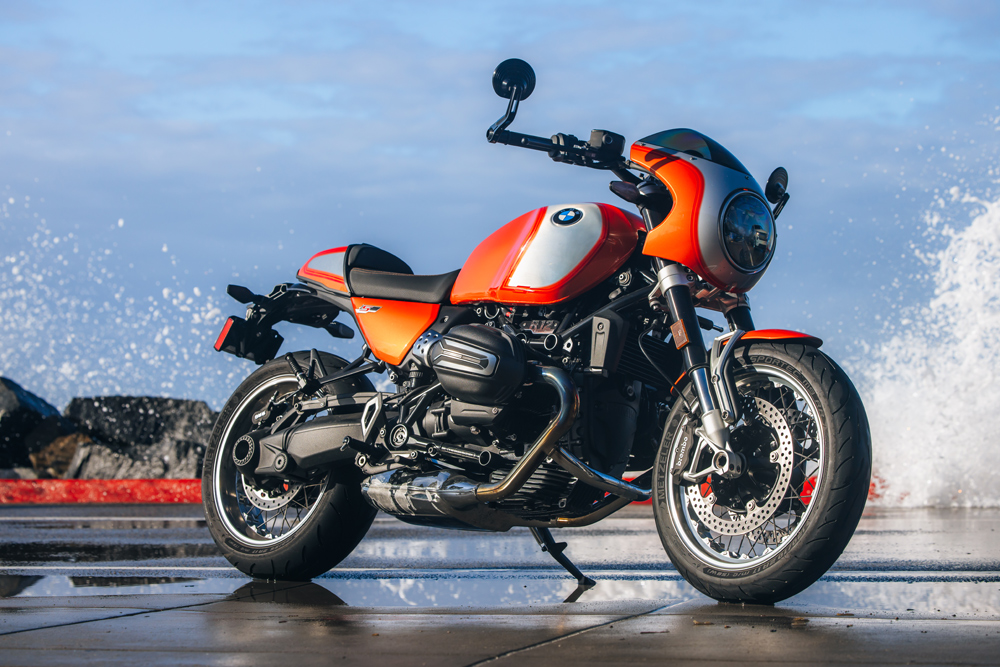
There is something particularly appealing about a motorcycle that manages to look expensive without looking ostentatious. The 2026 BMW R 12 nineT Option 719 achieves exactly that. It has the mechanical presence of BMW’s traditional boxer, the proportions of a classic roadster, and enough modern technology underneath the surface to make it a genuinely capable sporting motorcycle.
And then there is that stunning color.
Photography by Connor Moore
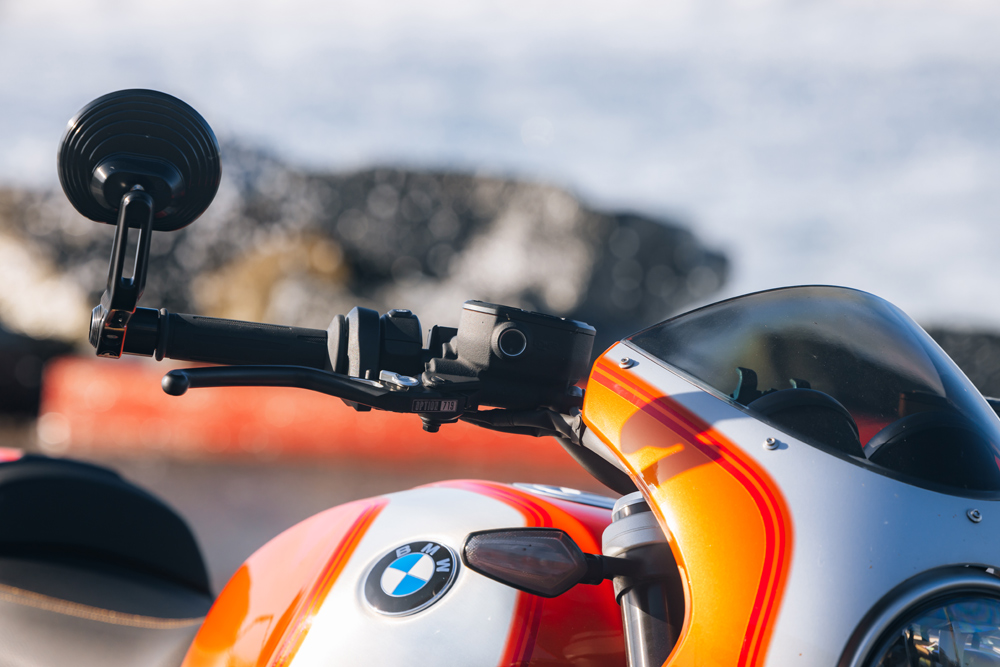
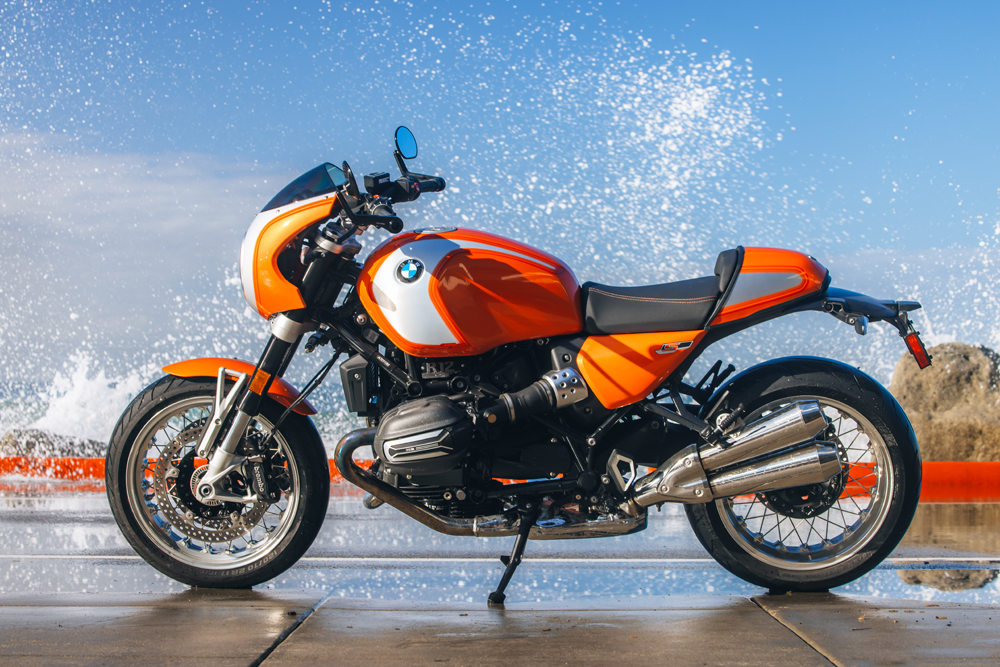
Finished in Lava Orange Metallic, with Option 719 Classic II wheels, Shadow billet components and a solo-seat treatment, this R 12 nineT is hard to mistake for anything else. Indeed, I have got more looks on this bike and more comments from passersby than any bike I’ve ridden in 2026, and I’ve ridden quite a few.
The orange is a deliberate nod to one of BMW Motorrad’s most important motorcycles—the 1970s R 90 S and its famous Daytona Orange paint. BMW’s own description identifies the color as a reference to the Daytona Orange finish of the 1975 R 90 S.
That makes this particular R 12 nineT more than simply a nicely equipped Heritage BMW. It is a modern interpretation of an important piece of BMW history, while retaining enough contemporary performance to make it enjoyable on a properly twisty road. And that’s where the R 12 nineT really starts to make sense.
From R nineT to R 12 nineT
The original 1170cc R nineT arrived in 2014 and quickly established itself in something of a new category for BMW. Rather than being another conventional touring, adventure or sport motorcycle, it was deliberately designed around simplicity, character, customization and a nod to a simpler time.
It became the foundation for an enormous family of variations, from the Pure and Scrambler to the Racer and Urban G/S. More importantly, it became BMW’s modern interpretation of the classic boxer roadster—a motorcycle where the engine, fuel tank, frame and exposed mechanical components were as much a part of the design as they were functional components.
The R 12 nineT is the direct successor to that machine. BMW describes it as the consistent follow-up to the R nineT, retaining the same essential philosophy while bringing new, slightly sportier ergonomics, more dynamic performance and a revised chassis.
The change in name is significant, too. The R 12 family is BMW’s current Heritage platform, with the R 12 nineT as the roadster, the R 12 as the cruiser, and the R 12 G/S carrying the boxer-adventure tradition forward. The nineT is therefore the sporty, minimalist member of the family.
At its heart is the same basic philosophy that made the original R nineT so successful: give riders a charismatic boxer engine, a handsome chassis and a platform that doesn’t need to pretend to be anything other than a motorcycle to be enjoyed.
The result is one of those bikes that looks better the longer you study it, but the Option 719 takes it up another level.
The standard R 12 nineT starts at $17,245. BMW offers an extensive range of factory customization through its Option 719 program, a name that dates back to BMW’s historical special-order production and is now used for particularly high-end factory finishes, milled components and other exclusive equipment.
This particular motorcycle effectively takes that philosophy to its logical conclusion.
The $4895 R 12 S Package adds the Lava Orange Metallic paint, Gear Shift Assist Pro, Headlight Pro, Hill Start Control, heated grips, cruise control, the single seat, Option 719 Classic II wheels and the Option 719 Billet Pack Shadow and Shadow II packages.
Add the $265 tire-pressure monitor and $345 ConnectedRide Control, and the motorcycle comes to $22,750 before BMW’s $995 destination charge, resulting in the $23,745 MSRP of this particular specification.
That is a substantial jump from the $17,245 base bike, but this isn’t simply a case of paying more for paint.
The Billet Pack components add beautifully machined details throughout the motorcycle, while the Classic II wheels provide an especially strong visual contrast against the orange bodywork. The solo seat cleans up the rear and gives it a much more purposeful roadster look. Then there are the options that actually improve the riding experience.
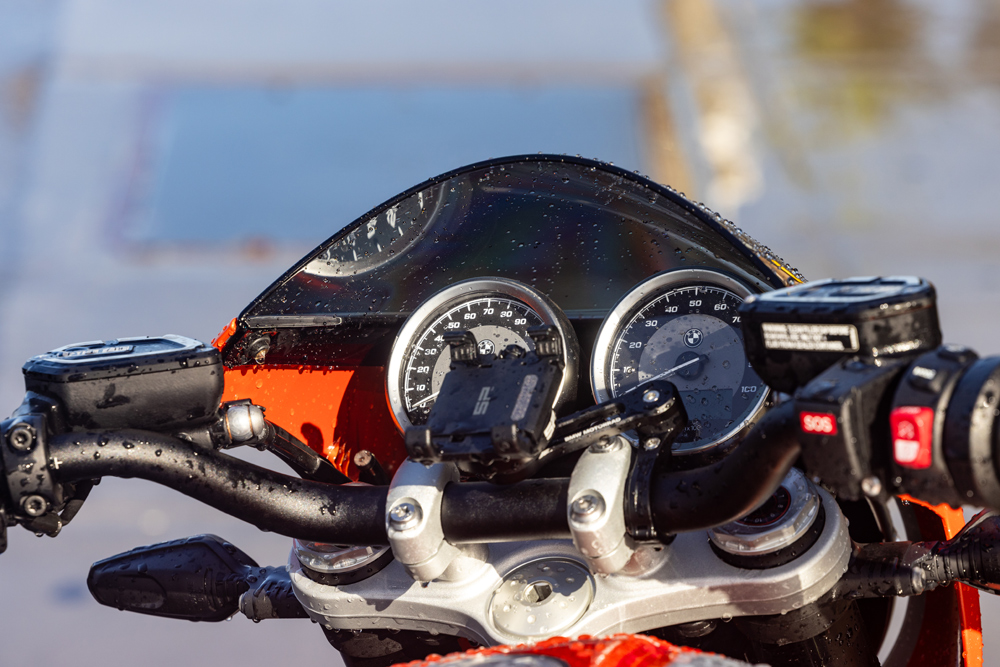
Heated grips and cruise control make longer rides considerably easier, Hill Start Control takes some of the drama out of stopping on steep grades, while Gear Shift Assist Pro allows clutchless upshifts and downshifts. Headlight Pro adds adaptive lighting, and ConnectedRide Control brings smartphone integration to the otherwise deliberately traditional cockpit.
It might look a bit sparse, but there’s a lot of motorcycle in there.
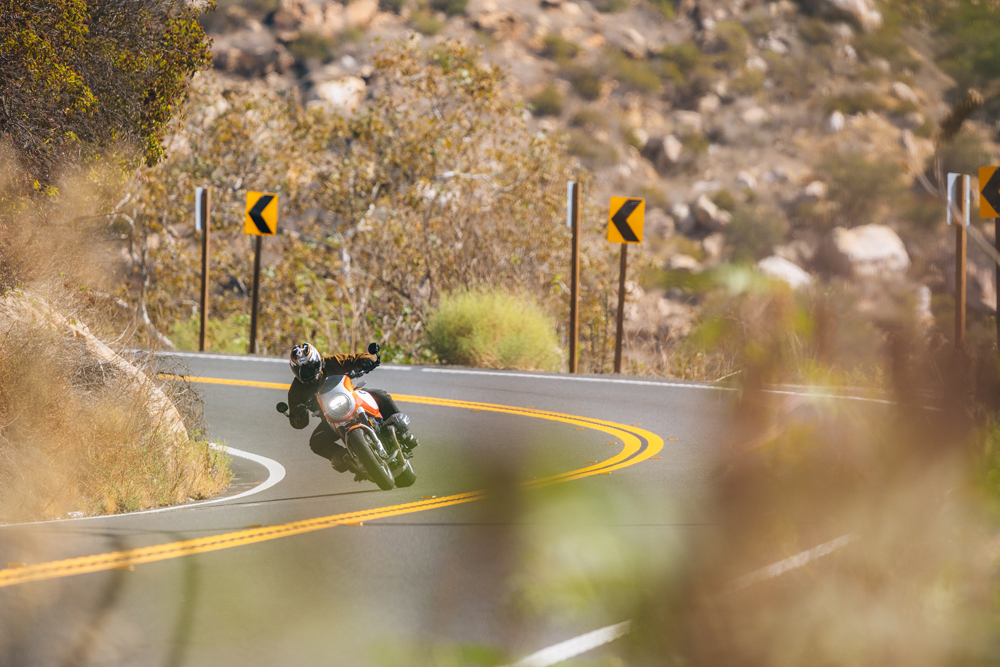
For the Love of a Boxer
The engine remains one of the strongest reasons to buy an R 12 nineT.
BMW’s 1170cc air/oil-cooled boxer twin produces 109 horsepower at 7000 rpm and 85 lb-ft of torque at 6500 rpm, fed through DOHC cylinder heads with four radially arranged valves per cylinder and, of course, a throttle-by-wire.
Those numbers don’t necessarily sound spectacular in an era of 200-horsepower superbikes, but to worry about that misses the point entirely.
The R 12 nineT’s engine is about delivery rather than dyno sheets. It delivers a substantial wave of torque from low revs, and the boxer pulls hard without making the rider constantly chase the top of the tachometer. I rarely bother trying to rev the boxer out at all—keep the revs low, click through the gears and let the torque take care of the rest.
That makes it particularly well suited to the chassis’ character.
You can leave it in a higher gear and surf the torque as you thread the corners together or use the upper half of the rev range and discover that the old-school-looking boxer has considerably more urgency than its appearance suggests.
The six-speed transmission and shaft drive also make the R 12 remarkably easy to live with. There is no chain maintenance and no need to constantly stir the gearbox simply to keep the engine in its powerband.
And with Gear Shift Assist Pro fitted, there is even less reason to reach for the clutch, although shifting up from first to third in the mid-level revs can be a bit clunky. It’s best to shift up in the lower third of the rev range with a little less stress on the gearbox and shifts are noticeably smoother.
One of the clever aspects of the R 12 nineT is how well its electronic systems disappear into the background.
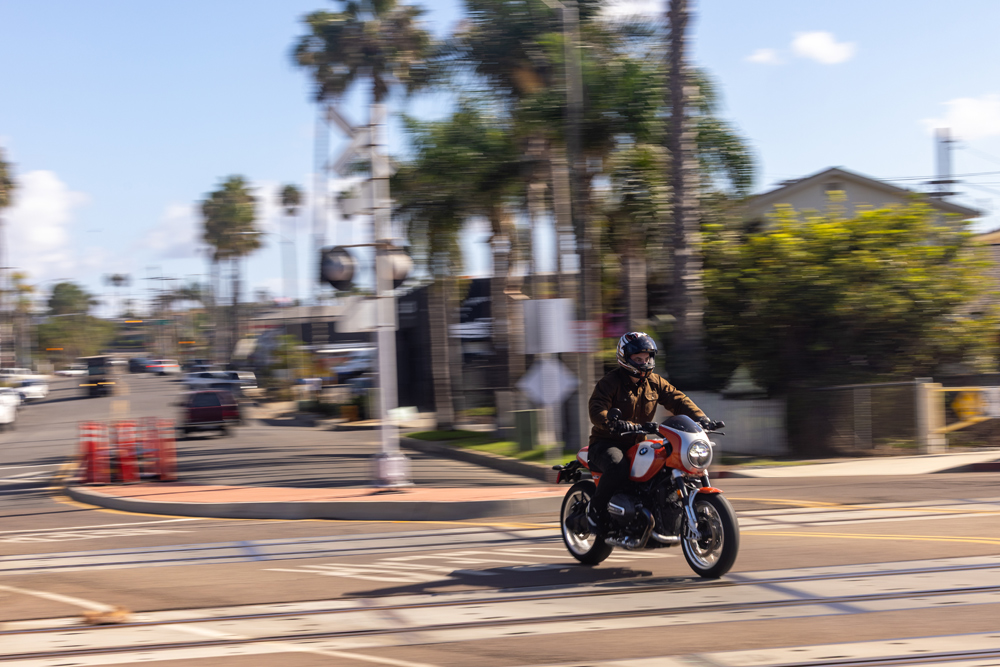
There are the three usual riding modes in Rain, Road and Dynamic, and after an exploratory ride through Rain and Road, Dynamic was quickly settled on as my go-to. BMW also fitted dynamic traction control and dynamic engine-brake control, together with ABS Pro.
The important thing is that these systems don’t overwhelm the mechanical character of the motorcycle.
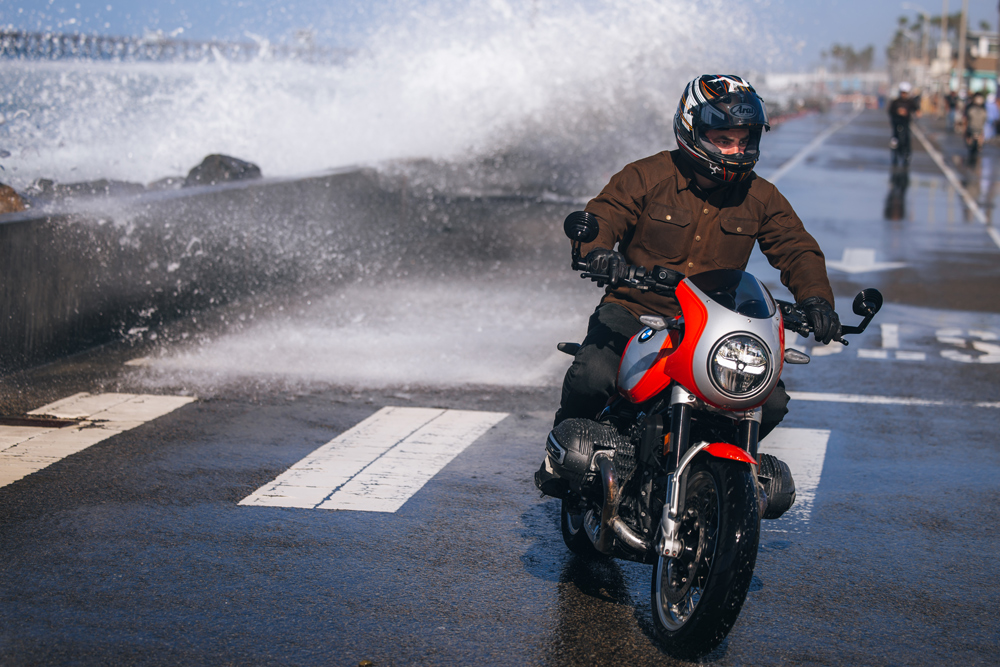
In Dynamic, the R 12 nineT feels appropriately lively without becoming nervous. Roll on the throttle and the boxer responds immediately, accompanied by that flat, low drone from the beautiful twin-outlet chrome exhaust.
The Chassis is the Surprise
The R 12 nineT looks like a relaxed retro roadster, but its chassis is far more serious than the styling initially suggests.
The tubular spaceframe uses the engine as a structural component, while suspension is provided by a 45mm upside-down fork at the front and BMW’s Paralever-equipped single-sided swingarm at the rear.
The fork offers full adjustment of spring preload, compression and rebound, while the rear shock offers preload and rebound adjustment. Suspension travel is 4.7 inches at both ends.
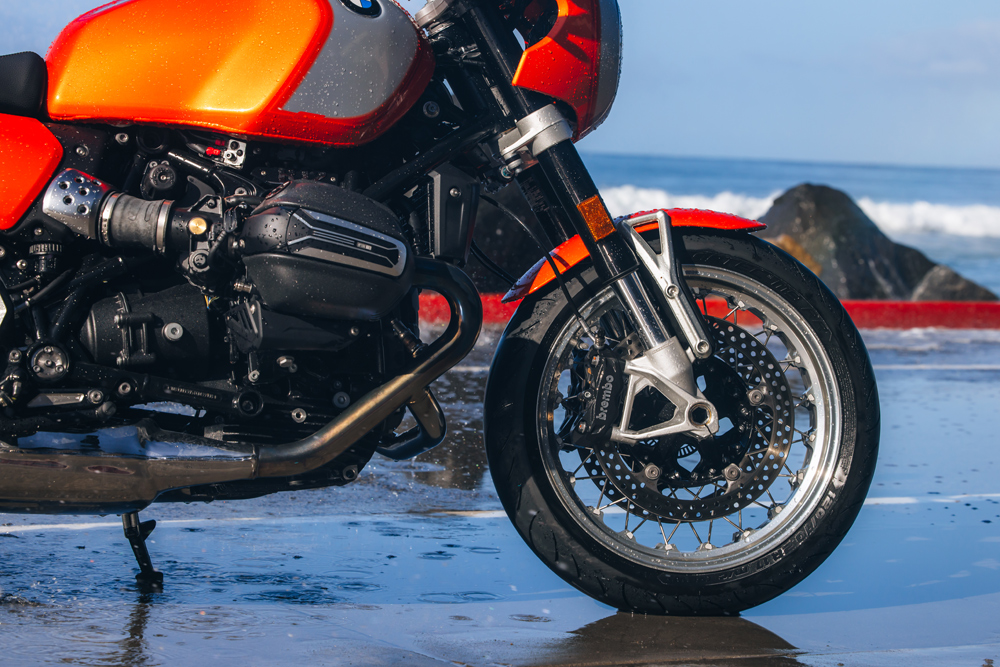
The R 12 isn’t a razor-sharp sportbike. Its 59.5-inch wheelbase and 62.3-degree steering-head angle give it a planted, stable character rather than the hyperactive steering of a modern naked sportbike. But that’s part of the appeal.
Turn into long, sweeping corners and the BMW settles naturally onto its line. There is a reassuring lack of nervousness, and the relatively low center of mass makes the 485-pound, fully fueled R 12 feel considerably more manageable than the number suggests. The weight is there, but it is carried low, and with the relaxed suspension geometry, the ride is far from intimidating.
The braking hardware is another area where the R 12 nineT punches above its retro appearance.
Up front are twin 310mm floating discs and four-piston radial-mount monobloc calipers. The rear uses a 265mm disc with a two-piston floating caliper, backed up by BMW Motorrad Integral ABS Pro.
The brakes provide the confidence you want from a motorcycle this heavy. Initial bite is strong without being abrupt, and there is plenty of power available when you really need to slow the bike down. More importantly, the chassis stays composed under heavy braking, but if you’re really pushing the R 12, you might want to look at sportier BMW options. The R 12 is more about quick cruising than sportbike performance, but it will keep up with quicker bikes up to a point—at that stage, the lack of ground clearance starts to show, and the ride can get a little nervous.
The R 12 doesn’t pitch dramatically onto its nose or fight you when significant brake pressure is applied. Instead, it stays composed and predictable, letting you release the brakes smoothly and transition onto the throttle.
It is this combination of braking stability, suspension control and the low-slung boxer engine that makes the R 12 considerably more sporting than its styling suggests.
There are plenty of motorcycles that look like they should be fun but become less convincing once the road gets fast and twisty. The R 12 is the opposite. Its visual identity suggests a relaxed Sunday ride but start linking corners together and it reveals a chassis that is extremely competent.
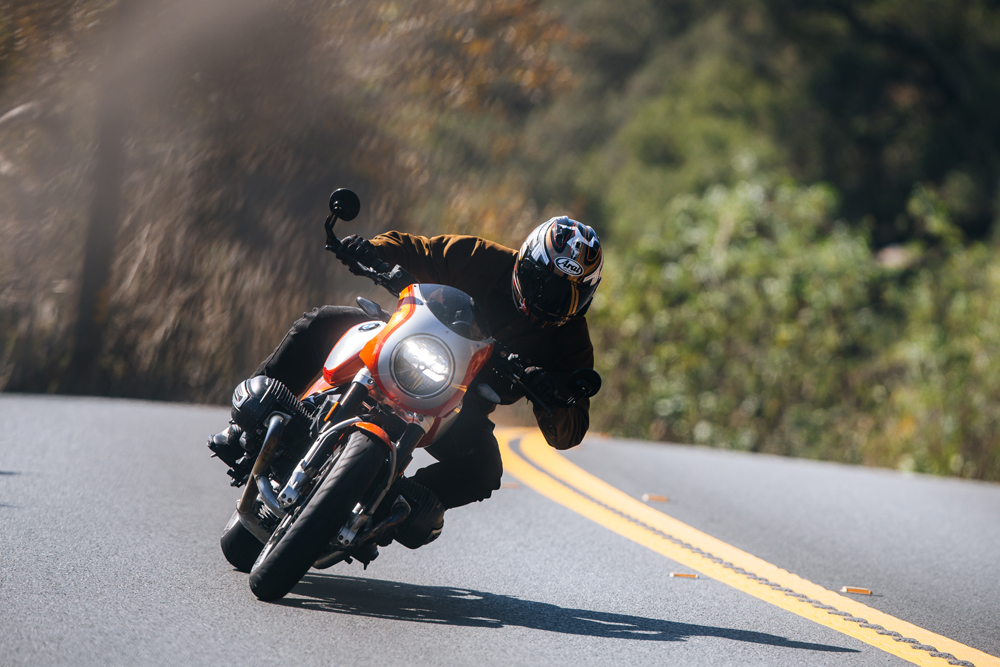
If you do want to ride it quick through the canyons, you’ll want to hang off the chassis more and keep it on the fat part of the tire, lest you start hitting those footpegs on the ground. The steering is deliberate rather than nervous, the suspension gives you a good sense of what the tires are doing, and the boxer engine supplies enough torque that you don’t need to be perfect with your gear selection.
The 31.3-inch seat height is low enough to make the bike approachable for almost any rider and although the 4.2-gallon fuel tank isn’t enormous, the engine’s relaxed nature means the R 12’s claimed 485 pounds can cover respectable distances between stops.
The Orange Connection
The original R 90 S was one of BMW’s defining motorcycles of the 1970s. Its Daytona Orange finish became inseparable from the bike’s identity, particularly after the model’s competition successes.
In 1976, Steve McLaughlin won the Daytona 200 on a Butler & Smith-prepared R 90 S, with teammate Reg Pridmore finishing second; Pridmore would also become the first AMA Superbike Champion that year.
The R 12 nineT doesn’t attempt to replicate the R 90 S mechanically. It doesn’t need to. Instead, the Lava Orange paint provides the visual connection, while the underlying motorcycle brings the concept forward by half a century.
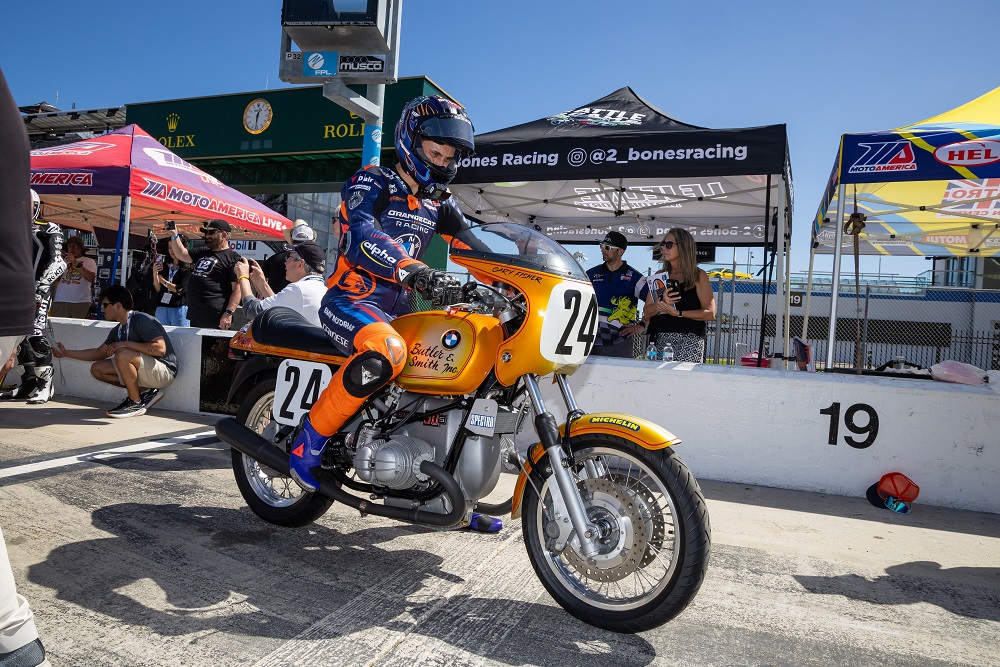
That is what BMW does particularly well with its Heritage models: it borrows the emotional cues from its history without asking the rider to accept the compromises of an old motorcycle.
At $23,745, the 2026 BMW R 12 nineT Option 719 is not cheap. The $17,245 base R 12 nineT is already a substantial purchase, and the additional $6500 or so represented by the factory equipment and destination charge pushes this motorcycle firmly into premium territory.
It’s therefore a good thing that it also feels premium.
The Option 719 treatment gives the R 12 nineT an extraordinary level of finish, while the R 12 S-derived equipment adds features that genuinely improve the ownership and riding experience. More importantly, beneath the beautiful paint and machined aluminum is a motorcycle that is genuinely enjoyable to ride.
It doesn’t feel like a motorcycle designed exclusively for looking good outside a cafe (although it does that very well). Take it into the mountains, ride it hard, and the R 12 nineT suddenly makes perfect sense—then take it to the cafe.
And in Lava Orange Metallic, with a little bit of R 90 S history shining through, it might just be the most desirable version of the R 12 nineT yet.CN
VIDEO | We Ride The Beautiful 2026 BMW R 12 NineT Option 719

2026 BMW R 12 nineT Option 719 Specifications
| MSRP | $23,745 |
| Engine | Air/oil-cooled, four-stroke, horizontally opposed two-cylinder Boxer; DOHC, four valves per cylinder |
| Displacement | 1170cc |
| Bore x Stroke | 101 x 73mm |
| Compression Ratio | 12.0:1 |
| Transmission | Six-speed |
| Final Drive | Shaft |
| Horsepower (claimed) | 109 hp @ 7000 rpm |
| Torque (claimed) | 85 lb-ft @ 6500 rpm |
| Clutch | Wet, hydraulically operated, multi-plate |
| Frame | Tubular steel space frame |
| Front Suspension | 45mm upside-down fork, adjustable spring preload, compression and rebound damping |
| Rear Suspension | Single shock with BMW Motorrad Paralever; adjustable spring preload and rebound damping |
| Front-Wheel Travel | 4.7 in. |
| Rear-Wheel Travel | 4.7 in. |
| Front Brake | Dual 310mm floating discs, four-piston radial-mount calipers, BMW Motorrad Integral ABS Pro |
| Rear Brake | Single 265mm disc, two-piston floating caliper, BMW Motorrad Integral ABS Pro |
| Front Tire | 120/70 ZR17 |
| Rear Tire | 180/55 ZR17 |
| Overall Length | 83.9 in. |
| Wheelbase | 59.5 in. |
| Seat Height | 31.3 in. |
| Fuel Capacity | 4.2 gal. |
| Weight (curb, claimed) | 485 lbs. |
| Electronics & Rider Aids | Rain, Road and Dynamic modes; dynamic traction control; dynamic engine-brake control; ABS Pro; Hill Start Control; cruise control; Gear Shift Assist Pro; tire-pressure monitor; heated grips; Headlight Pro; ConnectedRide Control; LED lighting; TFT display |
| Color | Lava Orange Metallic |
Click here to read the 2026 BMW R 12 nineT Option 719 Review in the Cycle News Digital Edition Magazine.