Norton Motorcycles conducted an extensive research and development process prior to the launch of the Manx R, with its new model shaped by rider research, real-world telematics, and iterative engineering. Real-world telematics analyzing more than 50 test riders, over nearly 220,000 km. Rider-oriented development optimized the 1200cc V4, controlled-flex chassis, electronic suspension, braking and rider-assistance systems for usable performance, feedback, confidence and enjoyment.
READ CYCLE NEWS 2026 NORTON MANX R REVIEW HERE
This is a press release from Norton Motorcycles…
More than 500,000 kilometers of development and validation, including over 20,000 kilometers on track, involved more than 100 prototypes and 700 tests across five countries
Solihull, UK (August 12, 2026) — Norton Motorcycles conducted an extensive research and development process prior to the launch of the Manx R, with its new model shaped by rider research, real-world telematics and iterative engineering. By integrating design and engineering with prototype development and global validation, Norton created a superbike that delivers engaging performance that is usable on real roads without compromising track capability.
Spanning more than 500,000 kilometers, including over 20,000 kilometers on track, the development and validation program involved more than 100 prototypes and over 700 tests across five countries.
How did rider research define the Manx R engineering brief?
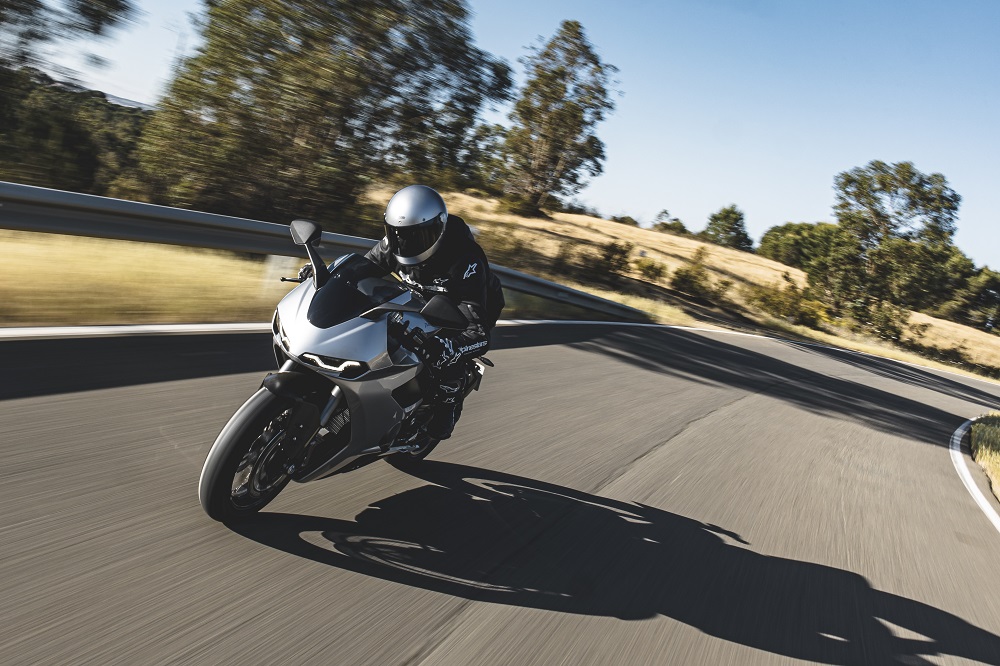
Norton considered rider feel as a measurable engineering requirement from the start of the Manx R development process. Structured feedback carried equal weight alongside performance, durability, software and complete-vehicle validation targets, so a motorcycle could not be signed off simply because numerical requirements had been met.
More than 50 riders took part, from everyday enthusiasts to Isle of Man TT champions and Italian Supersport racers. Defined road loops, track assessments and back-to-back comparisons examined throttle response, torque delivery, chassis communication, braking feel and rider-assistance intervention timing.
Norton engineers compared rider reactions with instrumented data and repeated the process as hardware and calibration evolved. The same feedback-and-measurement loop was used to refine chassis communication, braking feel and rider-assistance intervention, creating a distinctive and repeatable response across different roads, conditions and skill levels rather than meeting technical targets in isolation.
Brian Gillen, Chief Technical Officer, Norton Motorcycles, said: “If you’re going to ask riders to believe in a new superbike from Norton, you have to put proof on the table. Real mileage, real conditions, and a level of validation that stands up to real scrutiny. But what defined this program was that rider feel was treated as a hard requirement, not a nice-to-have. We didn’t just want data that said the bike was right. We listened hard to our test riders, who consistently described the Manx R as ‘special.’ Their reactions kept coming back the same: a real grin factor, an ‘addictive’ V4 exhaust note, and a feeling of connection they described as genuinely different to anything else in the class.”
Why did real-world data change the powertrain brief?
Across 218,000 kilometers, telematics fitted to development and comparison motorcycles logged engine speed, throttle position, gear selection, rider-assistance activity and system temperatures. The data showed that more than 98% of riding time occurred between idle and 7000 rpm, even among fast, experienced riders.
The telematics evidence focused powertrain development on usable torque, accurate throttle response and acceleration feel in the part of the rev range riders use most. The all-new 72-degree, 1200cc V4 produces 206 hp at 11,500 rpm and 130 Nm / 96 lb-ft at 9000 rpm, providing immediate drive for overtaking and corner exits without requiring the rider to chase extreme engine speeds.
The engineering team developed the intake-port and runner geometry together with the piston-crown shape and ignition strategy. Separately controlled electronic throttle bodies for the front and rear cylinder banks, together with two injectors per cylinder, support precise fueling and torque management across different loads and engine speeds. Independent cylinder-bank control also improves low-speed running and enables cylinder deactivation in high-temperature conditions.
The torque-led philosophy continues through the transmission. Closely stacked gear ratios and the final-drive calibration keep the engine within its usable operating range, while the slip-and-assist clutch, electronic quickshifter and automatic rev matching support smooth acceleration and deceleration.
Norton’s Phased Pulse firing order uses irregular combustion intervals to improve mechanical traction before electronic assistance is required. The spacing gives the rear tire more time to recover between groups of torque pulses, strengthening throttle connection and reducing dependence on intrusive traction-control intervention. The same firing strategy also contributes to the Manx R’s distinctive V4 exhaust character, which Norton further developed through the intake, exhaust headers and silencer.
How were the chassis, suspension and braking systems tuned for road riding?
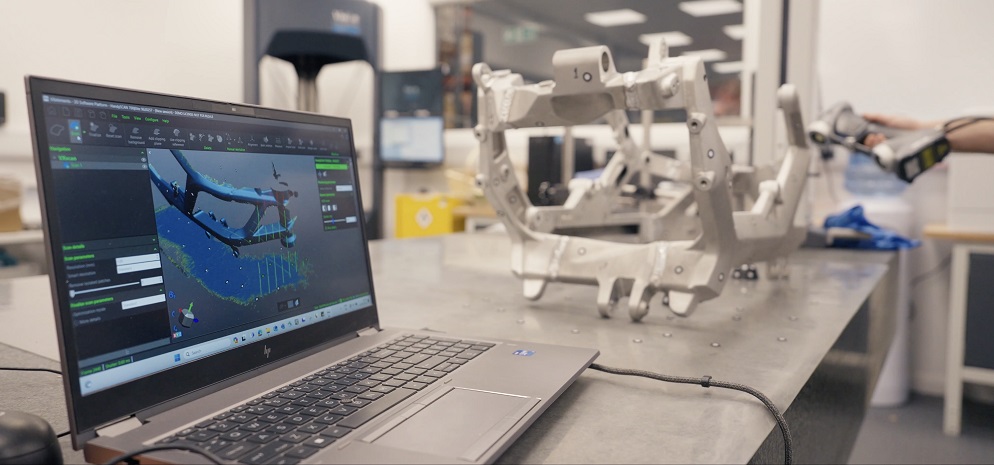
Norton engineered the Manx R chassis for strong longitudinal rigidity with controlled lateral and torsional flex, rather than pursuing an excessively stiff, narrowly track-focused structure. The aim was to preserve useful road feedback and predictable responses at realistic road speeds while retaining high-load track capability.
The twin-spar aluminum frame is formed from five cast members that are welded and then machined as a complete unit using computer numerical control (CNC). The engine acts as a semi-stressed member and interacts with the single-sided swingarm. Norton tuned these connected structures as a complete system to reduce unwanted vibration while preserving useful movement and feedback.
Suspension follows the same principle: preserving communication while controlling pitch, load transfer and tire contact. On semi-active variants, sensors measure suspension position, speed and acceleration; front and rear damping are controlled independently by an algorithm that updates every three milliseconds in response to rider inputs and changing conditions. The base Manx R uses manually adjustable passive Marzocchi suspension, while the Apex, Signature and First Edition use the Norton-tuned semi-active system.
How did design and engineering work together in the development of the Manx R?
From the first sketch, Norton established design and engineering as equal partners in the Manx R development process. Form and function were treated as equally important, allowing both disciplines to influence the motorcycle’s proportions, packaging, ergonomics and dynamic requirements.
The bodywork was developed as part of the Manx R’s functional architecture. It affects rider ergonomics and airflow around and through the vehicle, rather than serving only as an exterior covering. Powertrain, chassis and design teams also worked together around the centre-of-gravity position, engine width and vibration performance when defining the 72-degree V4 package.
What did Norton develop, and how did TVS Motor Company and technical partners contribute?
Norton defined the product concept, rider-experience targets, powertrain character and chassis philosophy at its Solihull R&D center, where the Manx R was designed, engineered and built.
The company also led vehicle integration, calibration, prototype development, test methodology, rider evaluation and final dynamic sign-off. Norton led the development of the torque-led V4 character, Phased Pulse firing strategy, the controlled-flex chassis philosophy and whole-vehicle calibration centered on rider feel.
Norton’s parent, TVS Motor Company, played a key role in engineering packaging by supporting whole-vehicle computational fluid dynamics analysis, particularly for heat management and optimization of the engine cooling system. TVS Motor Company’s scale also gave Norton access to additional engineering resources, technologies and global test capability.
Specialist suppliers contributed systems within the Norton-led vehicle program. The semi-active suspension was co-developed with Marzocchi and tuned by Norton. Bosch supplied the electronic platform and Cornering ABS EVO, with rider-assistance strategies calibrated by Norton. Brembo supplied the Hypure braking hardware, which Norton integrated with the chassis, suspension and electronic controls.
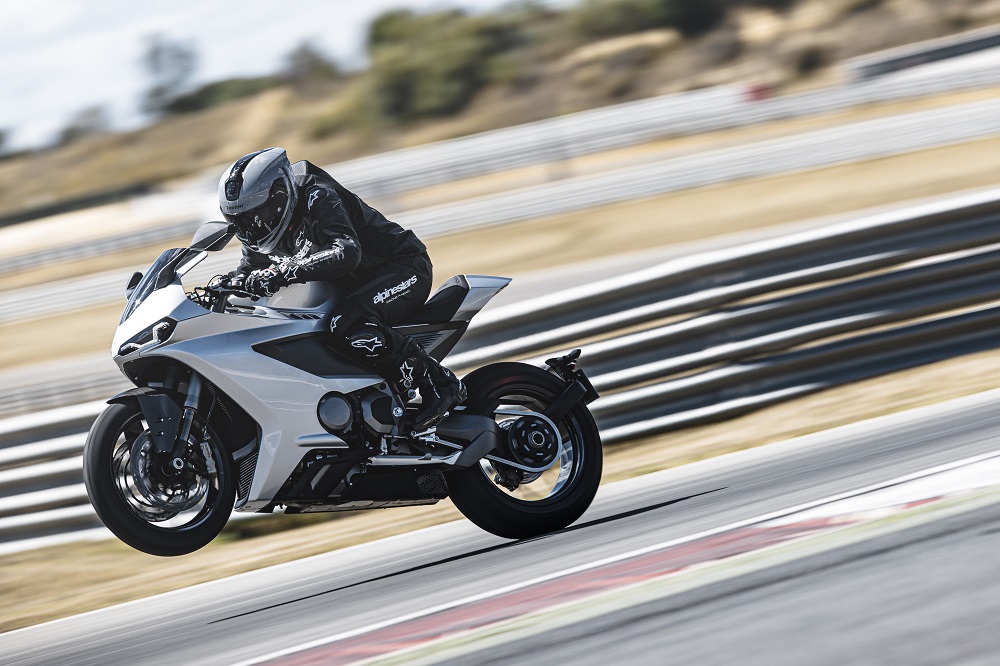
Braking, suspension and electronic calibration were developed together and evaluated as an integrated system. Brembo Hypurefront calipers act on dual 320mm discs, working with Bosch Cornering ABS EVO and Norton-tuned rear-lift control. The integrated system can deliver deceleration of up to 1g under maximum braking. A six-axis inertial measurement unit, a sensor system that measures motorcycle movement and lean, informs traction control, wheelie control, rear-slide control, engine-brake management, launch control and five riding modes, with intervention adjustable to rider preference.
How did Norton iterate and validate the Manx R?
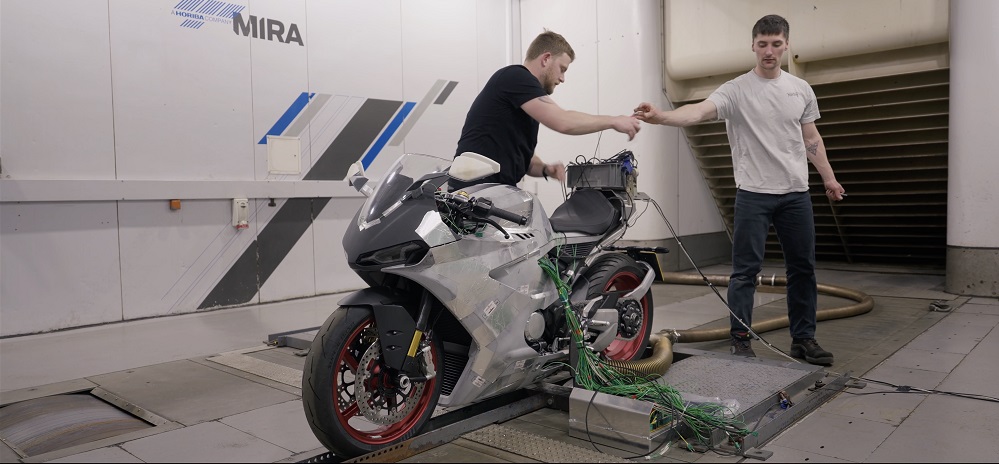
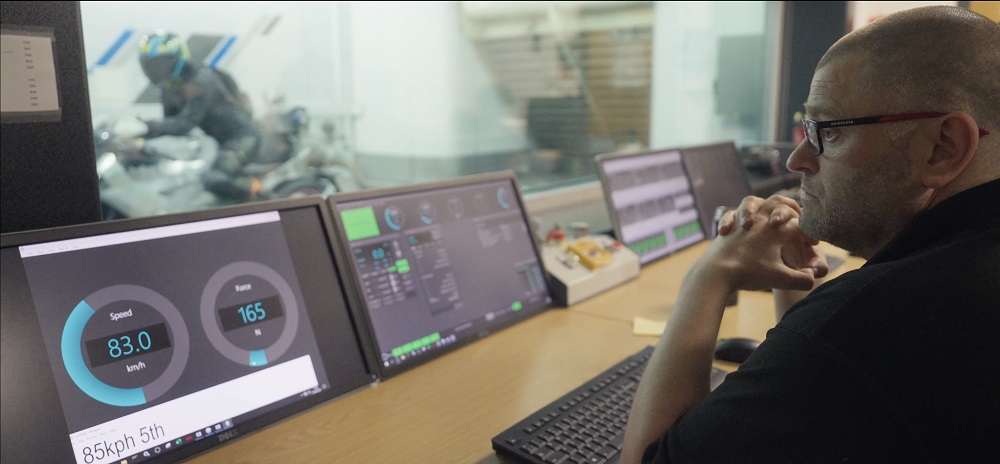
More than 100 prototype motorcycles were built and evaluated through more than 700 validation tests covering durability, thermal performance, chassis dynamics, homologation, software verification and complete-vehicle endurance. Different locations and test types were selected to answer specific engineering questions.
- United Kingdom: MIRA, Millbrook and year-round road development covered durability, engine-rig work, handling and all-weather performance in rain, snow and freezing conditions.
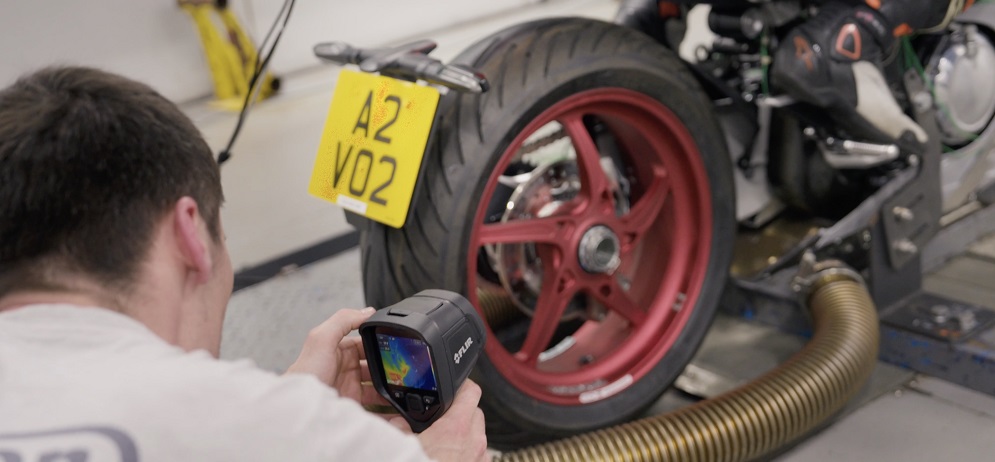
- Italy: Nardò validated high-speed thermal robustness and chassis performance above 45°C, with more than 100 thermocouple channels monitoring components and rider touchpoints.
- Spain: IDIADA supported homologation and calibration of braking and rider-assistance functions.
- Austria: testing above 2,500 meters verified consistent engine management under reduced air pressure.
- India: high-temperature component, powertrain, engine-rig and complete-vehicle testing provided additional validation on demanding roads and in challenging thermal conditions.
Engine-durability testing included 100-hour accelerated assessments representing more than 150,000 kilometers of real-world equivalence and more than 40 million crankshaft revolutions. Three motorcycles dedicated to pavé [cobblestones] rough-surface fatigue testing each completed 520 laps, correlating to approximately 125,500 kilometers of real-world use. Full strip-down and inspection followed, including dimensional measurement, X-ray inspection and dye-penetrant testing of relevant components.
Rider-assistance validation combined objective verification with evaluation by riders of different skill levels. Testing also included deliberate misuse and abuse scenarios, together with bench testing under simulated fault conditions, to confirm robust and predictable behavior.
What does Norton’s Manx R development program deliver for riders?
The result is a superbike engineered to make its performance accessible and rewarding on real roads. Immediate torque, predictable throttle response, clear chassis feedback, progressive braking and adjustable rider assistance work together to give riders confidence without masking the Manx R’s character while retaining serious track capability.
Norton supports the complete Manx R range with a 36-month warranty.