Kawasaki completely revamped its mini motocross lineup for 2026, giving the KX85 and KX112 their most significant updates in recent memory. They feature substantial upgrades to the suspension, chassis and braking systems, along with fresh styling inspired by Kawasaki’s full-sized motocrossers. Team Green is clearly looking to reclaim its stake atop the ultra-competitive minibike classes, and the revamped KXs are next in line to do so.
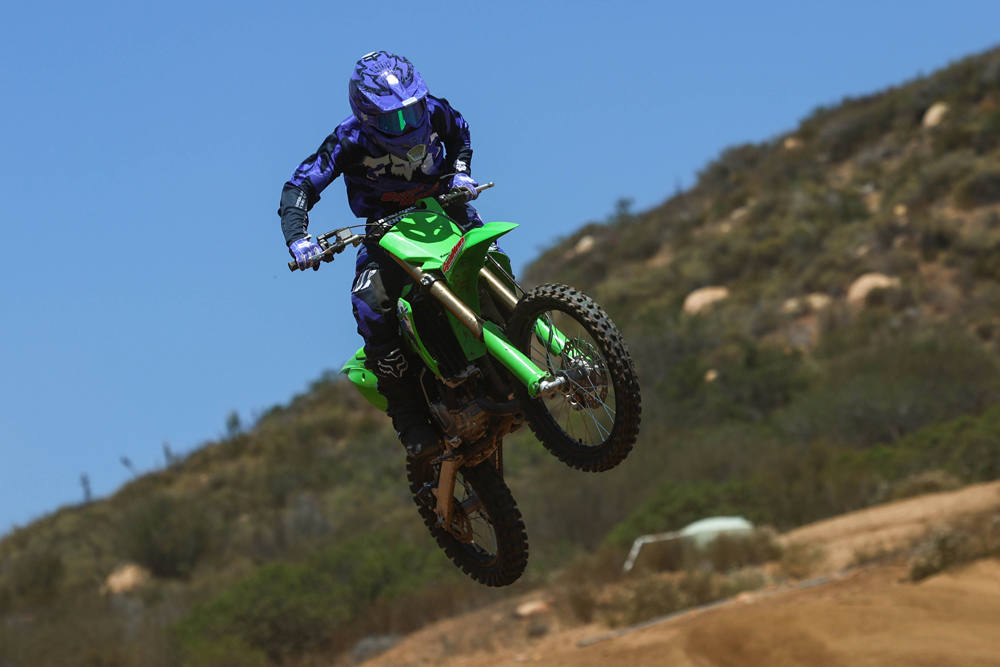
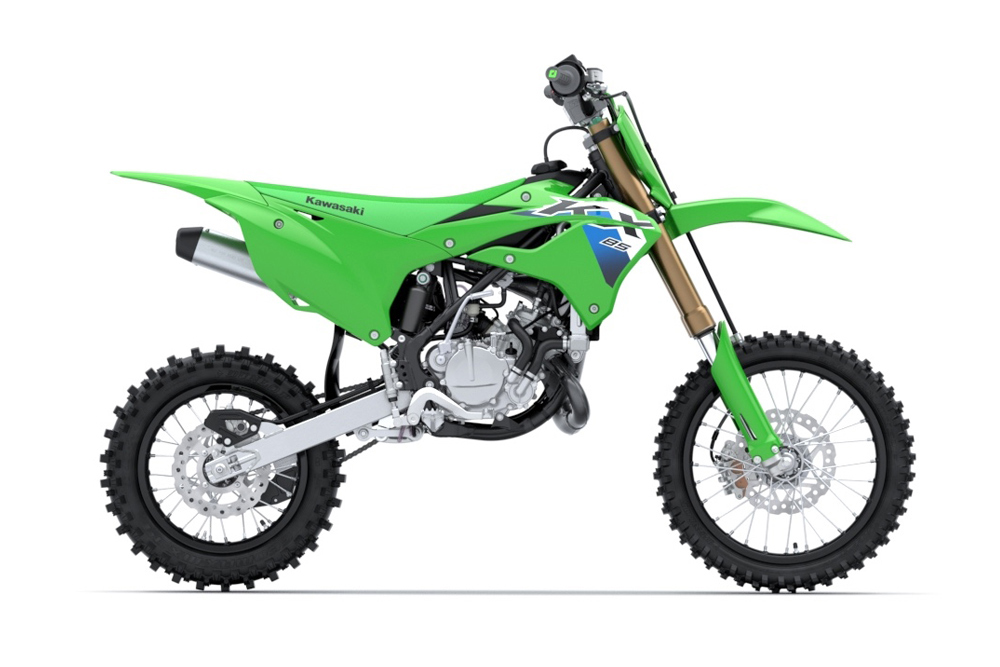
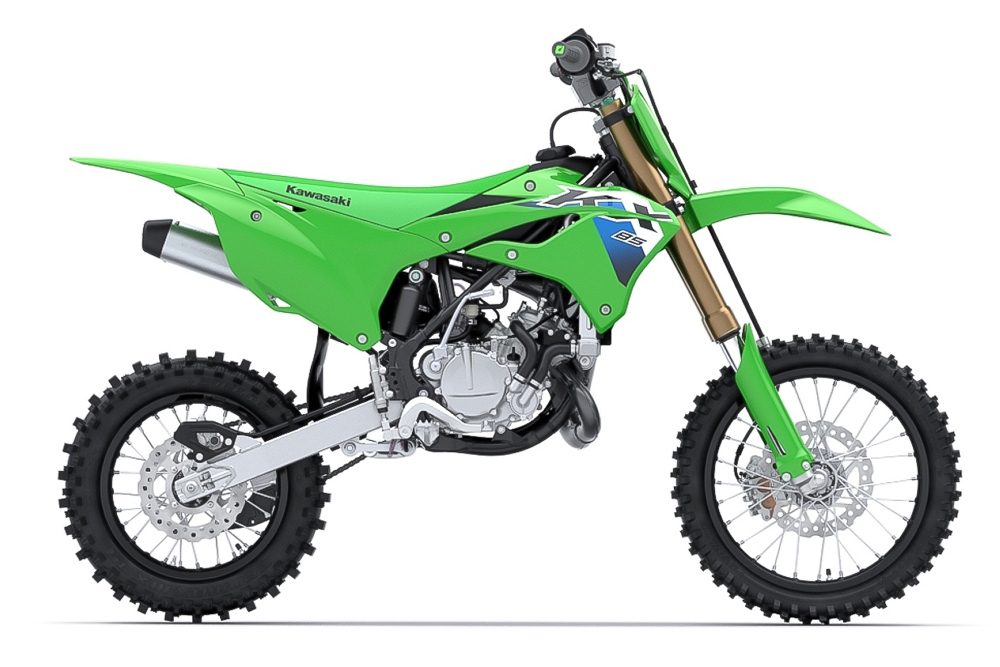
The 2026 KX85 has an MSRP of $4999, while the larger-displacement KX112 Supermini has an MSRP of $5749. There’s also a big-wheel option for the KX85, the KX85L, for $5199. The 85L shares the same 19/16-inch wheel combo as the 112, while the standard 85 rides on a 17/14-inch combo. Both bikes receive many of the same changes for 2026 but offer different riding experiences due to their size and power output.
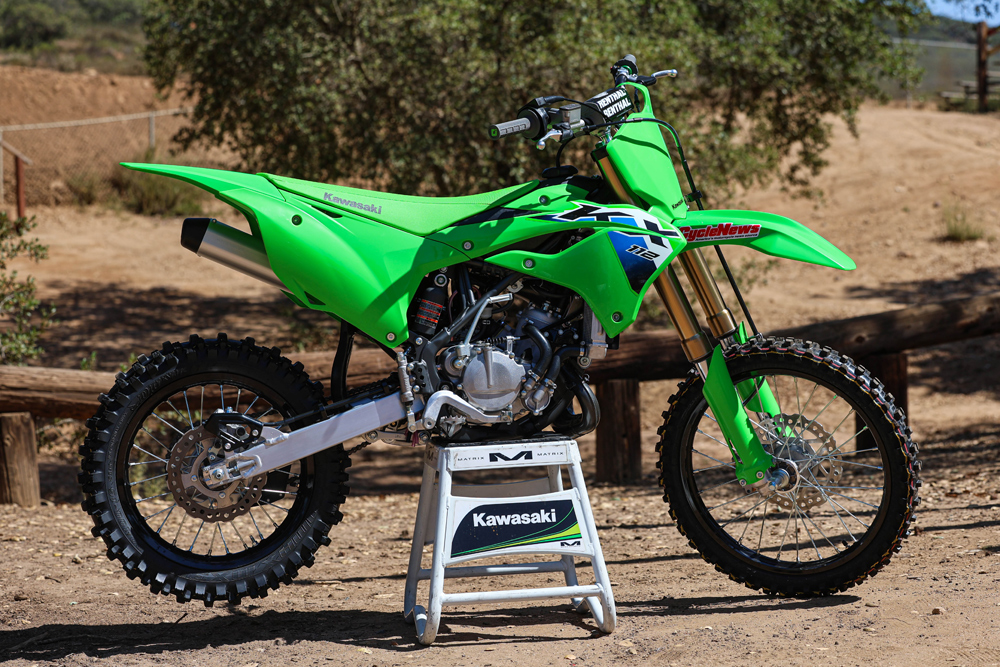
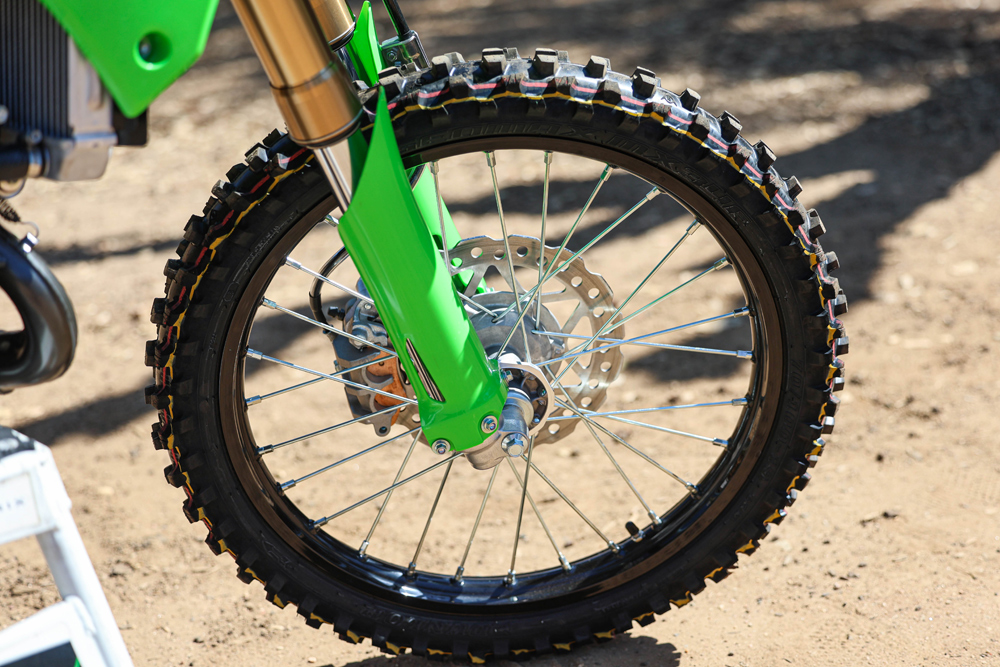
One of the biggest updates for 2027 is the suspension. Both the KX85 and KX112 now feature a fully adjustable 43mm KYB inverted fork, replacing the previous 36mm forks. The larger fork tubes were designed to improve damping throughout the stroke and increase front-end rigidity. The forks also include compression and rebound adjustments. They’ve also been given a Kashima coating on the fork tubes to reduce stiction and improve overall suspension feel.
Kawasaki’s Uni-Trak rear suspension system also receives several updates. The shock features a larger rod diameter, increased cylinder length, and a high-speed compression adjuster. On the KX112, rear-wheel travel has increased to 12 inches, matching Kawasaki’s full-size motocross models.
The chassis also gets a longer steering tube, which Kawasaki says “increases front-end rigidity and overall stability.” Other upgrades include a lighter aluminum steering stem, a lighter rear sprocket and Renthal Fatbar handlebars. New ODI lock-on grips, adjustable handlebar mounts and wider footpegs further modernize the rider compartment.
Styling follows Kawasaki’s current motocross design with a new front fender, an updated number plate, redesigned radiator shrouds, black rims, green suspension adjusters and a brushed-aluminum swingarm, creating a modern, factory-inspired look.
The front brake disc grew from 220mm to 240mm with the same caliper from the larger KX250, and the rear disc increased from 184mm to 220mm.
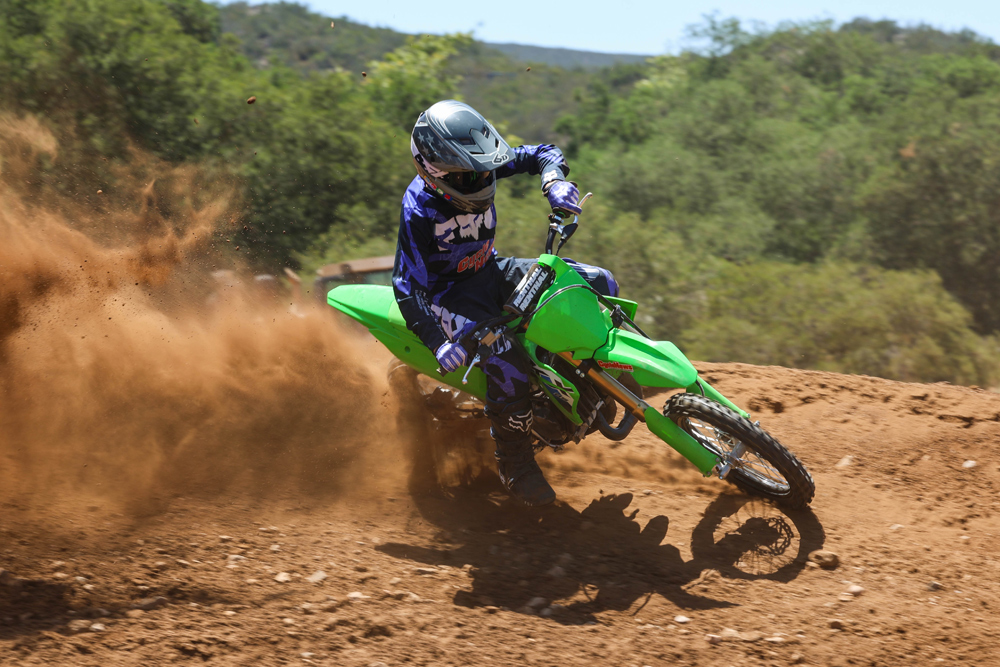
For this review, we enlisted 15-year-old Myles Abbott from Star, Idaho. Myles weighs 118 pounds and stands five-foot-five. He currently races a 2025 Husqvarna TC85 and a KTM 105 Supermini, and he provided a direct comparison between his bikes and the new Kawasaki models.
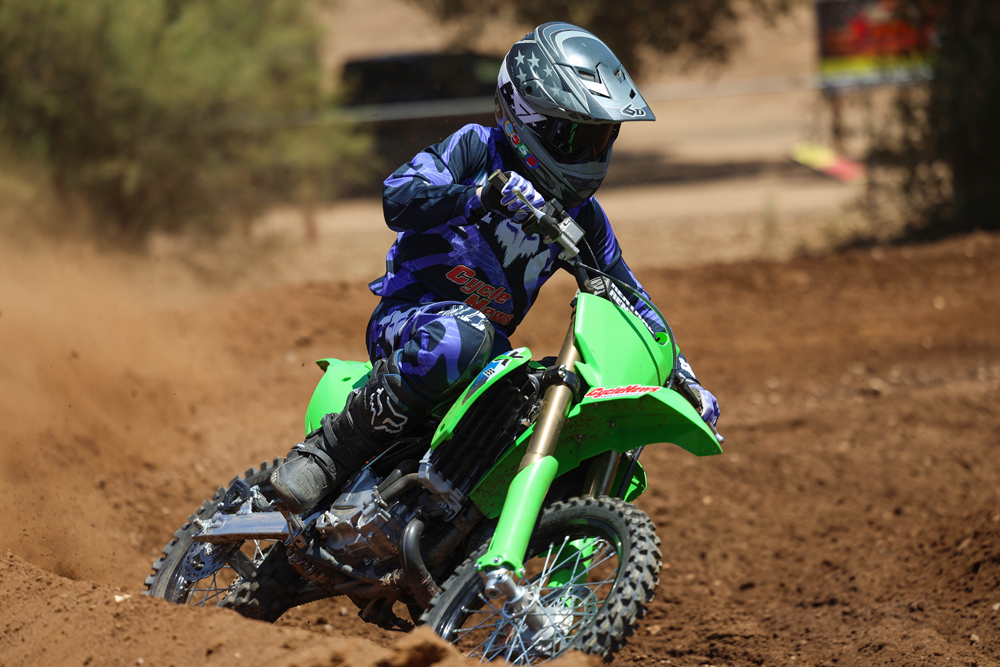
Initially, the transition to the Kawasaki platform required some adjustment for Myles. The ergonomics, chassis feel and power delivery, he said, were noticeably different from his KTM and Husqvarna. However, with each passing lap, Abbott gained familiarity and confidence on both motorcycles.
Engine performance clearly distinguishes the KX85 from the KX112, which debuted in 2022 to bridge the gap between Kawasaki’s smaller youth bikes and full-size motocross bikes. The 85 favors aggressive riding and high rpm, requiring more clutch work, especially when exiting corners. Its high-rev window felt narrower and required more effort near the redline. Compared to Myles’ Husqvarna TC85, he said the Husqvarna offered stronger acceleration.
The KX112, he said, had a broader, more forgiving power character, with the extra 27cc producing stronger low-end torque and allowing the rider to maintain momentum without relying on the clutch. It became the favorite for its smoothness and ease of riding, especially for taller riders, making it easier than the smaller-wheeled 85.
Both KX models use a cable-actuated clutch instead of the hydraulic systems on the KTM and Husqvarna models. Myles felt the Kawasaki’s clutch had a more immediate engagement point, which felt somewhat on/off compared to the wider range on the European bikes. We removed nearly all free play from the lever to achieve quicker engagement, which nearly matched the hydro setup.
Myles said both Kawasakis vibrated more than his bikes. As engine speeds increased, so did the vibration through the handlebars and footpegs, he said.
Myles had us stiffen the Kawasakis’ suspension on both bikes throughout the day. We increased the shock’s preload and increased the fork’s compression. This improved balance and allowed him to push the bike harder in more areas on track. As we dialed in the suspension setup, the planted feeling increased confidence and lowered lap times. The overall function of the fork felt smooth, and the Kashima coatings were noted as looking “extra factory.”
Myles loved the oversized Renthal handlebars and ODI grips, and he said the throttle action was so smooth. He said the clutch and brake levers were comfortable and easier to operate than those on his bikes.
Despite Kawasaki’s upgraded braking package, Myles felt the overall braking power was not quite as strong as that of his bikes.
On jump faces and in the air, the KX112 delivered a different feel than the KTM Supermini, said Myles. The wider seat and roomier cockpit made the Kawasaki feel more comfortable over jumps and while moving around the bike. The KTM still felt slimmer and slightly more agile in corners, but the Kawasaki offered a more relaxed overall riding position.
The KX112 showed its best traits in rough sections. Thanks to its larger wheels and additional suspension travel, it tracked through bumps better than the KX85. The KX112 also felt lower to the ground than the KTM 105 Supermini, allowing Myles to easily stand flat-footed. The lower center of gravity made it easy to move around and contributed to a confidence-inspiring feel. This could be helpful for riders transitioning up from a 65cc machine.
The strongest takeaway from this test was how much the KX112 grew on our rider throughout the day. Jumping on two new bikes proved challenging, and the differences between the Japanese and European bikes became apparent immediately. Initial impressions gave way to greater comfort as Myles became more familiar with the KXs. Nothing stood out as a major weakness, and the overall package proved easier to ride than expected.
By the end of the day, it became apparent that the KX85 remains a solid option for riders and those moving up through the youth ranks. While serious racers might want to add further modifications, the updated platform, particularly the suspension, provides a strong foundation right out of the crate. The big-wheel option might also be the perfect in-between for taller riders.
For our 15-year-old test rider for the day, the KX112 was the clear favorite. Its smoother power delivery, larger wheels and improved suspension made it easier to ride across a wider range of terrain. Kawasaki’s extensive updates transformed both machines into more capable race bikes, but the KX112’s versatility made it the standout of the pair.
Kawasaki has already announced the 2027 KX85 and KX112 models, which are identical to the ’26s except for minor graphic changes. The ’27 KX112 also sees a small price bump, with a $5799 MSRP.CN
VIDEO | Kawasaki KX85 & KX112 Quick Spin

2026 Kawasaki KX112 / KX85 Specifications
| MSRP | $5749 / $4999 |
| Engine | 2-stroke, single-cylinder |
| Displacement | 112cc / 84cc |
| Bore x Stroke | 52.5 x 51.6mm / 48.5 x 45.8mm |
| Compression Ratio | 9.9:1 (low speed), 8.6:1 (high speed) / 10.9:1 (low speed), 9.0:1 (high speed) |
| Cooling System | Liquid |
| Starting System | Kickstart |
| Fueling | 28mm Keihin carburetor |
| Transmission | 6-speed, return shift, with wet multi-disc manual clutch |
| Frame | Perimeter, high-tensile steel |
| Rake/Trail | 29.2°/4.6 in |
| Front Suspension | 43mm inverted fork with adjustable compression and rebound damping |
| Rear Suspension | Uni-Trak single shock, adjustable compression and rebound damping |
| Front-Wheel Travel | 10.8 in. |
| Rear-Wheel Travel | 12 in. / 10.8 in. |
| Front Wheel | 19 in. / 17 in. |
| Rear Wheel | 16 in. / 14 in. |
| Front Tire | Dunlop Geomax MX34; 70/100-19 / 70/100-17 |
| Rear Tire | Dunlop Geomax MX34; 90/100-16 / 90/100-14 |
| Front Brake | Single Nissin 240mm disc, dual piston caliper |
| Rear Brake | Single Nissin 220mm disc |
| Seat Height | 34.1 in. / 32.7 in. |
| Ground Clearance | 13 in. / 11.6 in. |
| Fuel Capacity | 1.32 gal. |
| Wheelbase | 51.6 in. / 49.8 in. |
| Weight (wet, claimed) | 172.8 lbs. / 168.4 lbs. |
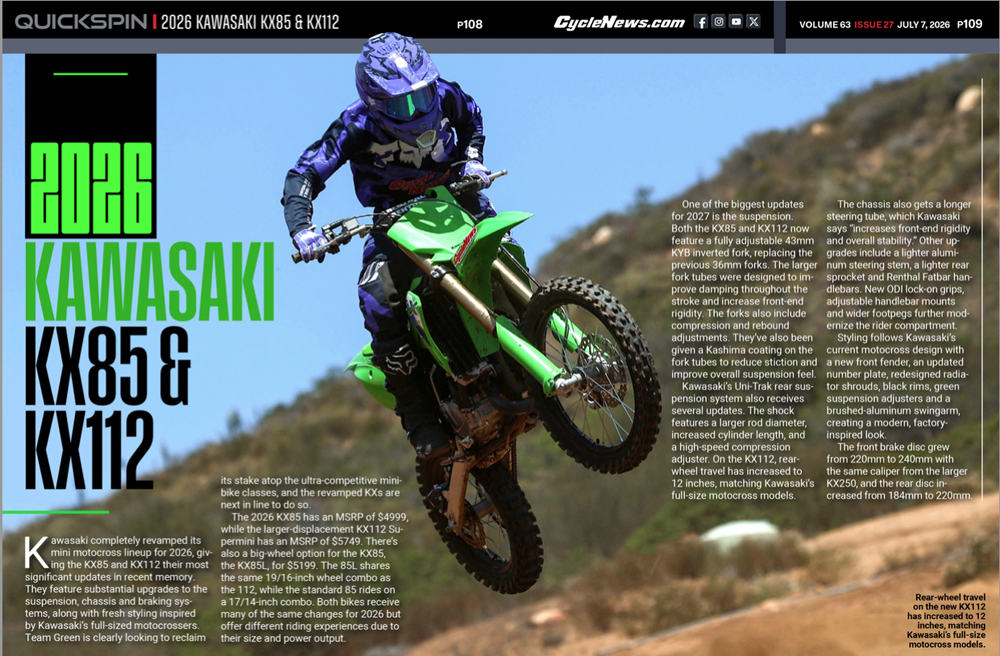
Click here to read the 2026 Kawasaki KX85 & KX112 Quick Spin in the Cycle News Digital Edition Magazine.