Cycle News Archives
COLUMN
Our assessment of the 1974 Kawasaki 250 S1B.
By Kent Taylor
They were Kawasaki’s “muscle bikes,” these 750cc, 500cc, 350cc and 250cc two-stroke street bikes. They were “quick, agile and gutsy,” because it said so right there in the two-page spread in your favorite 1970s motorcycle magazine. Three spunky adjectives for four motorcycles, which means somebody missed out. The 500 Mach III was definitely “quick,” while the extra cc’s made the big 750 H-2 “gutsy.” The 350 (which became a better motorcycle when it grew 50 more cc’s in 1974) was plenty “agile,” so where did this leave the S-1 250, the runt of the litter, in the name game?
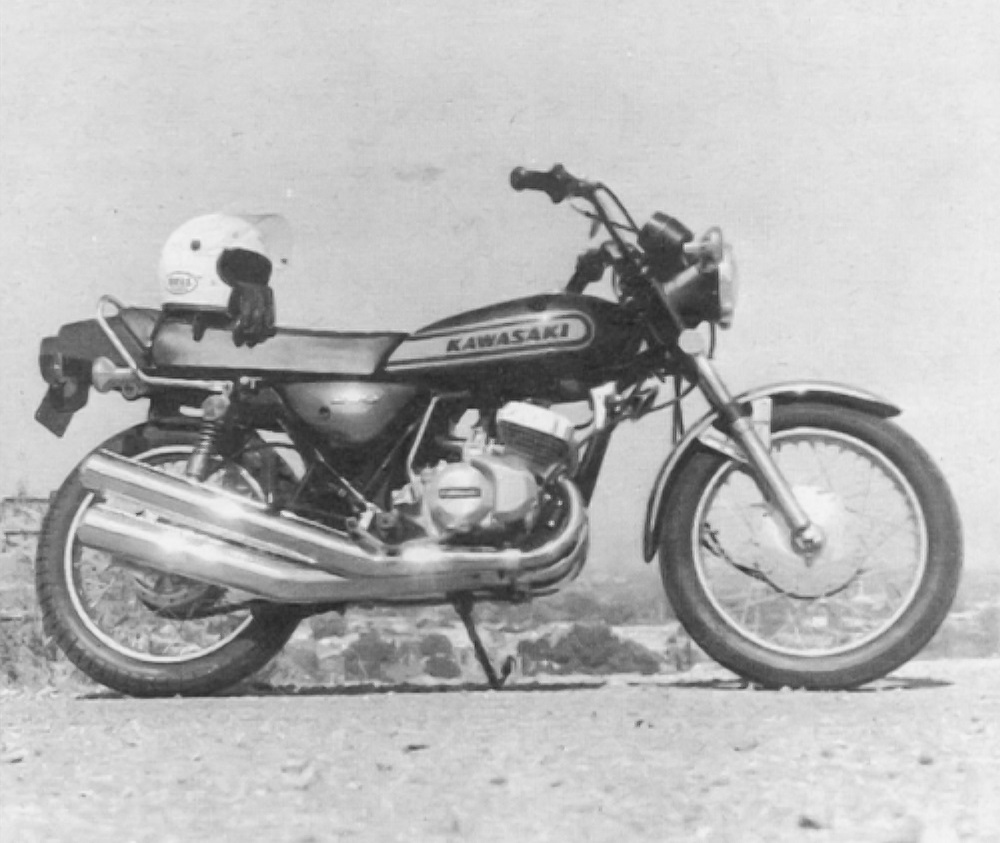
Cycle News offered a suggestion in their June 11, 1974, issue. Their headline christened the little Kawi “A Reasonable Motorcycle.”
Stare at the floor in silence. The little brother of some of the fastest two-strokes around was a wimp. This apple not only fell from the tree, it rolled far away, until it hit Jim Belushi, Tommy Cash and Stephen Baldwin.
A Kawasaki 250cc triple street bike probably sounded like a good idea in the early 1970s. Motorcycle manufacturers were getting into the act of making small versions of big successes. Honda had a 350cc version of its mighty CB750, and Suzuki had two-stroke triples in many configurations. Kawasaki’s big triples were fast and fun, so why not make a 250, sell it for under a grand, stand back, and let the good times roll?
“This 250 is pretty swift off the line,” wrote the CN crew, “if you start with the tachometer needle above 7000 rpm.” That’s not a misprint. To get the little Kawasaki moving, the rider needed to rev it to the moon. This was just 1500 rpm short of the motorcycle’s 8500 redline, which, by the way, was the staff’s recommended rev range before even shifting into second gear. “The powerband is somewhat narrow,” they wrote.
Below 4000 rpm, the crew suggested there are “not enough ponies to move the bike.” Only when the rider took the machine to its sweet spot (between 7000 and 9000) would the little Kawasaki show some guts, hitting its claimed maximum top speed of 90 mph.
What the Kawasaki lacked in usable power, it more than made up for it with its unusable brakes. Really bad drum brakes, like barely effective when they were cold and dangerously unreliable when they were hot. A short 15-mile hop-about got the rear brake so hot and bothered that “riding at about 25 mph, a rider could pull in the clutch, stand on the rear brake, and still coast for a good 30 feet before noticing any significant slowing from brake action.” Staffers learned to take a 45-minute break to allow the stoppers to cool down.
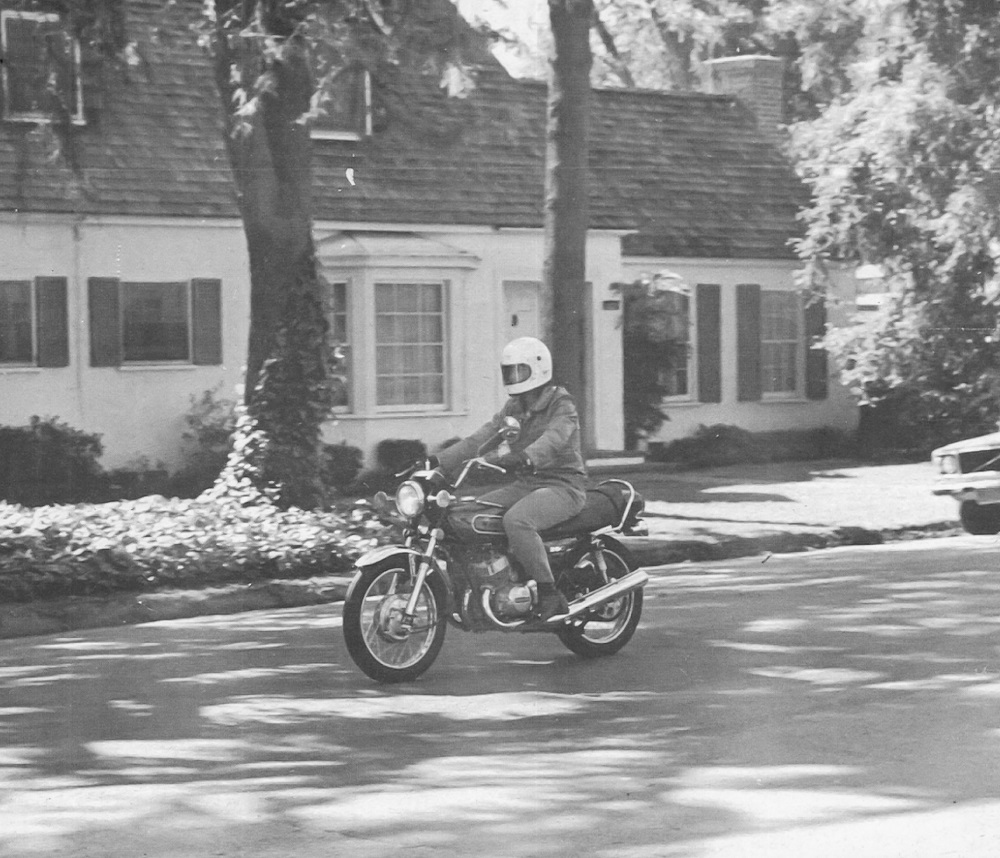
1974 was the year when panic-stricken consumers were told to fear gasoline shortages, and nearly every road test reported fuel consumption. The little Kawasaki, which put out little, still drank a lot, delivering only 35 miles to the gallon. It also chugged more than a bit of oil, with the CN crew noting that it “burned one quart of two-stroke oil in 750 miles.” An overnight road trip would necessitate bringing along extra two-stroke oil.
That was probably an unlikely event, because the Kawasaki S-1 was about as comfortable as a vibrating Iron Maiden. Pilots and passengers alike complained of butt-numbing shaking in the seat and on the pegs. The shocks and forks were mighty stiff as well, making “the tester sorry he had ever taken the freeway.” Every expansion joint and every settled slab boundary was transmitted through to the rider’s guts. Changing spring preload did not help, but maybe a kidney belt would have.
Ground clearance was good. The finish was solid. The toolkit was meh, with no wrench to fit the rear axle nut, making it impossible to tighten the chain while on the road. No major reliability issues were reported. In the end, the crew reiterated that the little 250 was “reasonable” before adding in “practical, unflashy and bland.”
It didn’t have to be like this. Yamaha’s 250cc two-stroke street bike was a fine machine, still sought after by two-stroke buffs. The Kawasaki 250 had a short life in the company’s lineup. Sometimes, even being reasonable just isn’t good enough.CN
Click here to read the Archives Column in the Cycle News Digital Edition Magazine.
Subscribe to six decades of Cycle News Archive issues