Everything you knew about the 2026 Honda CRF450R is now largely obsolete because the 2027 model is all-new. And we mean all-new.
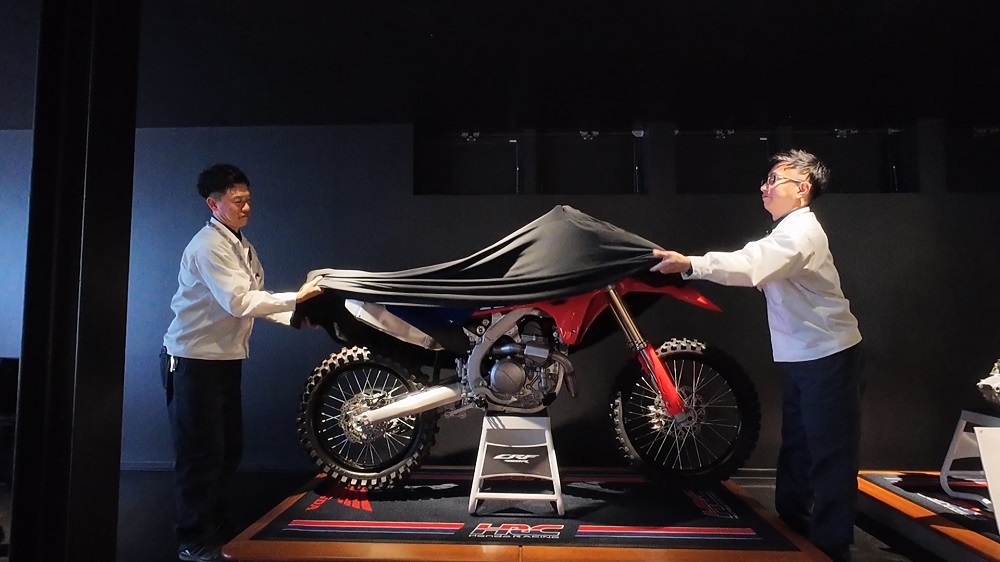
The 2027 Honda CRF450R receives its most comprehensive update in more than a decade, combining an all-new engine and chassis with extensive refinements inspired by Honda’s factory racing programs. Honda says the 2027 CRF450R was developed with direct input from its HRC teams in both the USA and abroad. It claims the latest CRF450R delivers stronger, more controllable power, enhanced stability and improved rider connection across a wide range of track conditions.
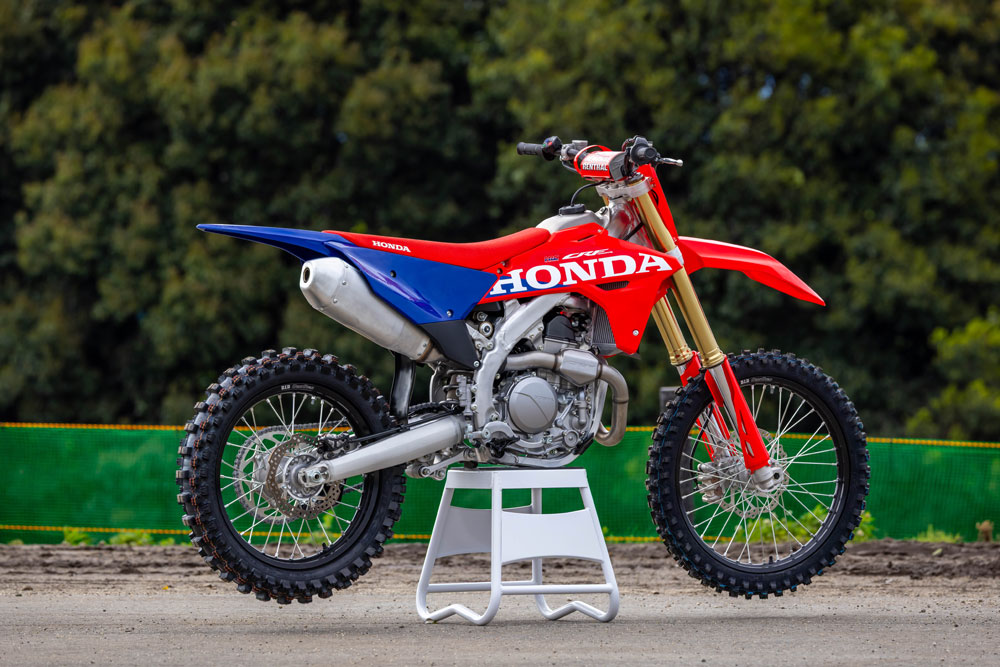
“From its redesigned intake and exhaust systems to its updated frame, suspension and lighter weight, every aspect of the machine has been carefully engineered to give riders a competitive edge, whether chasing championships or pushing their personal limits at the local track,” says Honda.
Two versions of the CRF450R will again be available: the standard CRF450R and the upscale CRF450R HRC Works Edition. Notice that “HRC” has been added to the Works Edition name.
VIDEO | Everything You Need to Know About The 2027 CRF450R

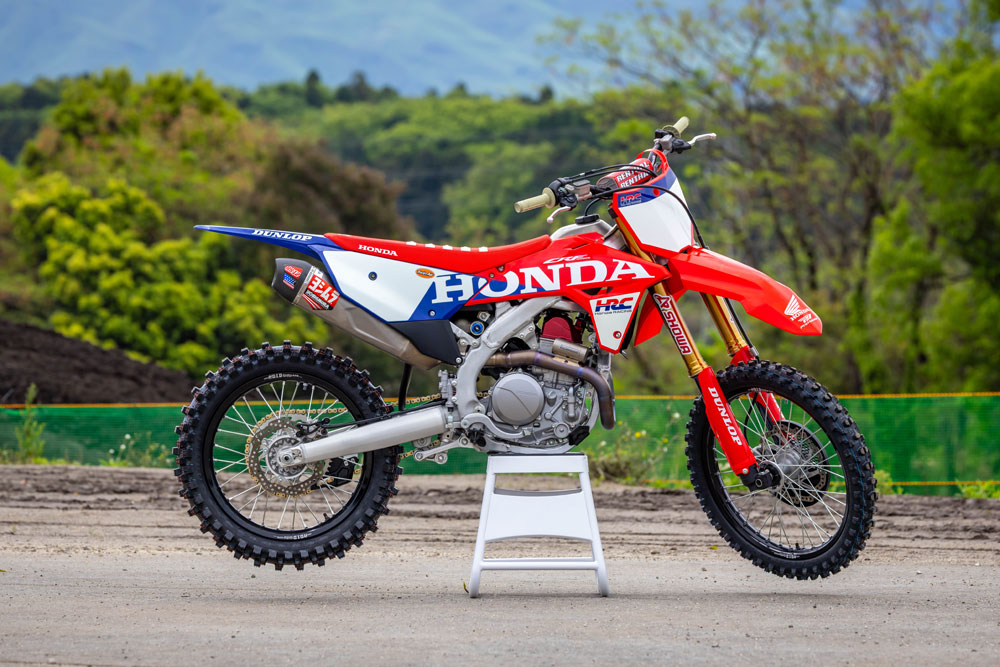
There is a boatload of changes to the ’27 CRF450R; very few parts are interchangeable with the previous model, but a few differences do take center stage, like weight. Honda claims the 2027 CRF450R is 9.9 pounds lighter than the ’26, with a curb weight of 238.1 pounds (226.4 pounds without fuel). The engine alone is six pounds lighter, according to Honda.
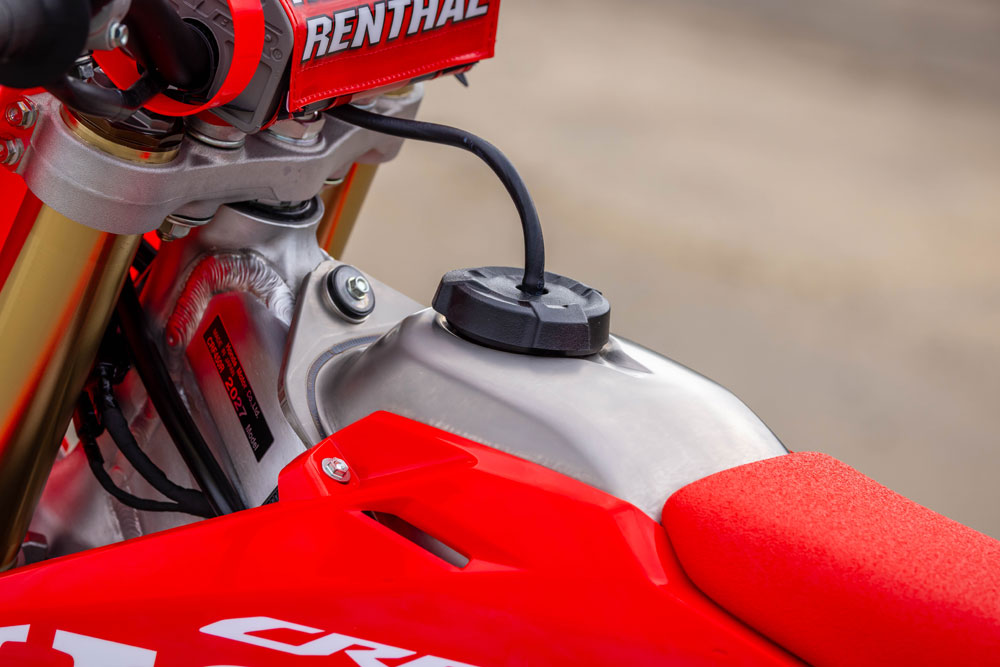
The titanium fuel tank has a higher capacity, from 1.7 gallons to 1.9 gallons.
One of the highlights of its all-new engine is a much smaller in physical size and a lighter clutch assembly, which is completely redesigned and features a unique rubber-damper-activated back-torque-limiter system, similar to a cush drive in a rear-wheel hub. The result is a “slipper”-style clutch action. This clutch system is already being used on the HRC Factory bikes in the MXGP Championship.
The new exhaust system, which features a 3.4-inch-longer header and a 3.0-inch-longer muffler, is designed to meet the AMA’s new 109 dB pro racing sound limit.
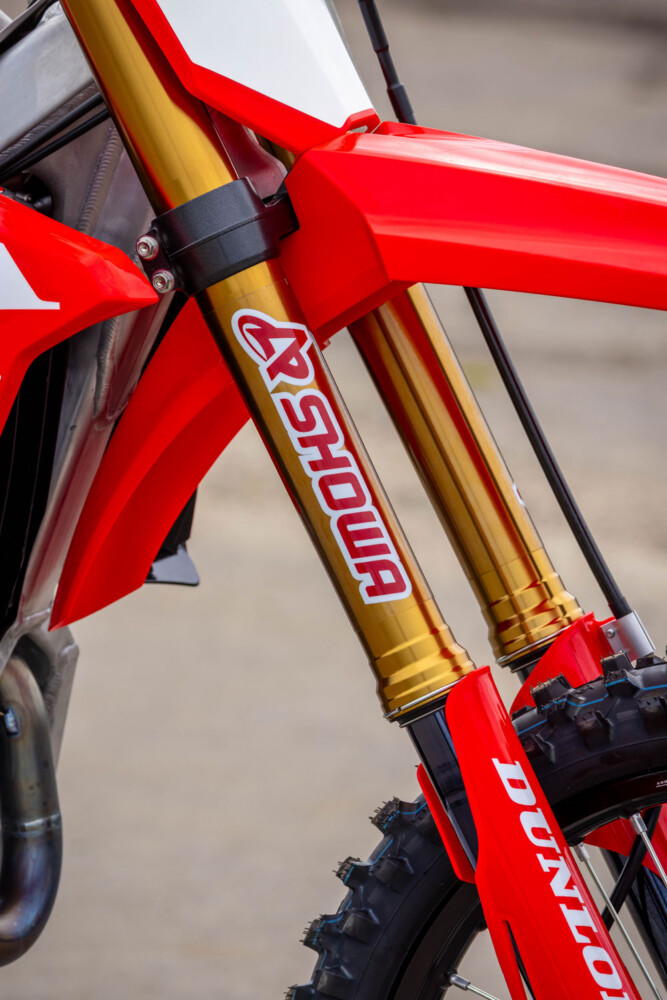
The suspension is all new, with a strong focus on the 49mm inverted Showa coil-spring fork, which has moved from a traditional Bending Control Valve configuration to a Dynamic Blow System main-piston-valve structure. It also gets a Kashima coating and stiffer springs, increasing from 5.0N/mm to 5.2N/mm.
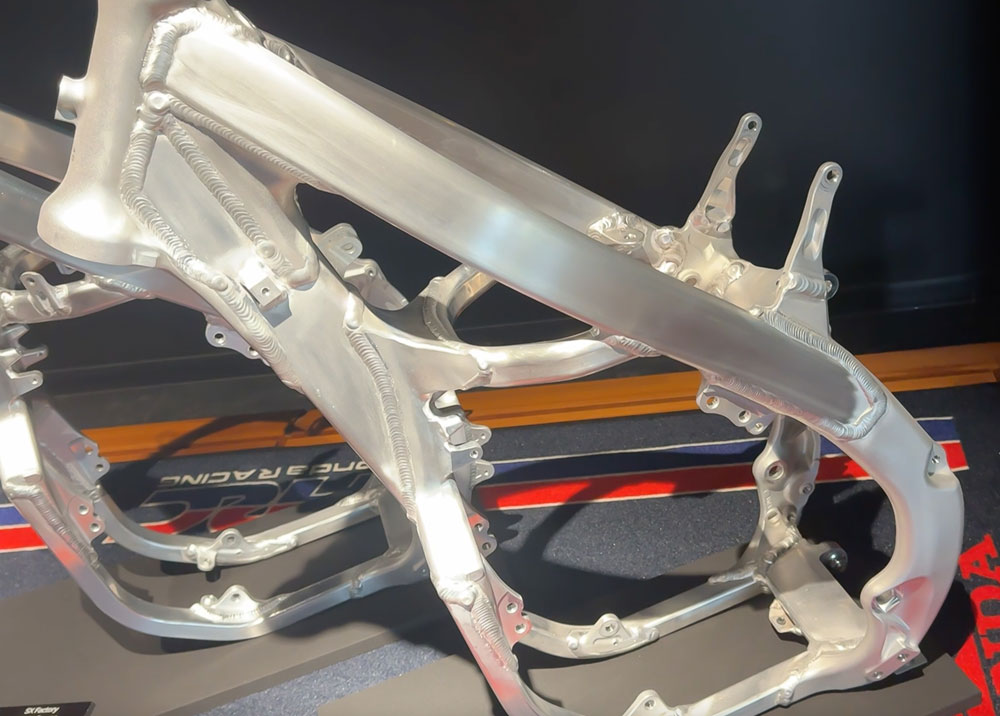
The ’27 Honda CRF450R also features a new frame and subframe, and, as you can tell, all-new bodywork that is 2mm wider at the radiator shrouds and 7mm wider at the seating area to “make the bike easier to grip with your legs,” says Honda. The seat is flatter, as well.
The rider triangle has also changed slightly, with the footpegs moved 5mm rearward. The rake has 0.2° more slack (27.5°), the trail is 1.4mm longer (117mm), the rear axle sits 0.5 of an inch higher, and the wheelbase is 0.3 of an inch longer at 58.7 inches.
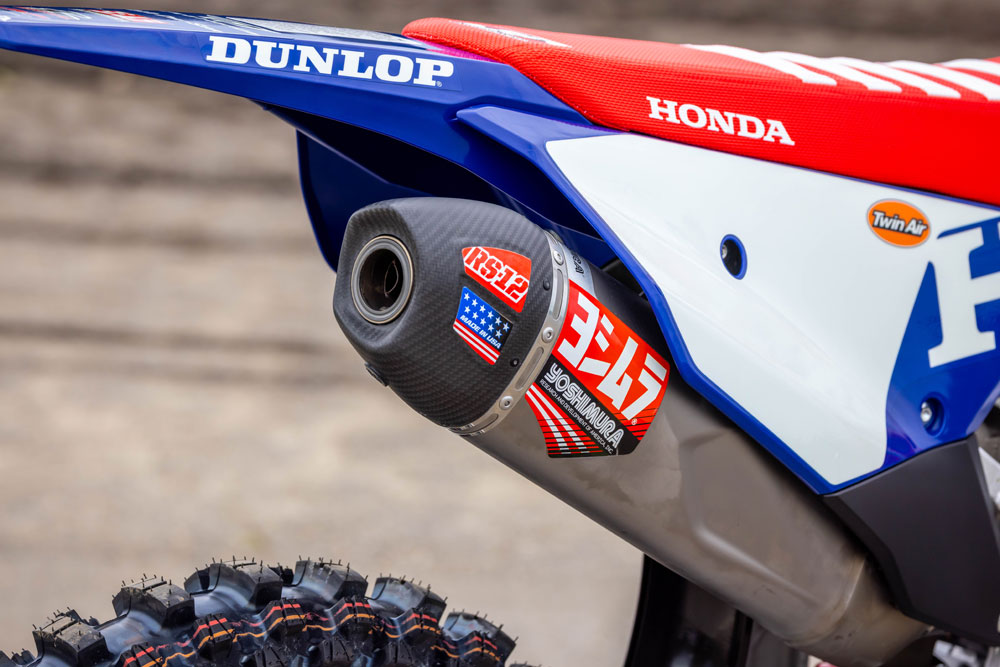
The HRC Factory Edition version includes all the latest updates of the standard, plus more. Some of the items you get with the HRC model that you don’t with the standard include a gripper seat cover, a Twin Air air filter, a Yoshimura exhaust system, a D.I.D gold chain and black rims, Renthal G165 grips, black triple clamps, a metallic-red cylinder-head cover with an “HRC Works Edition” laser stamp, a hand-finished intake port, and dedicated suspension settings and ECU mapping, among other upgrades, like new styling. The 2027 CRF450R is styled after the ones that are raced on the MXGP circuit by Honda HRC’s Jeffrey Herlings and Tom Vialle.
The 2027 CRF450R has a $10,099 MSRP, and the CRF450R HRC Works Edition has a $12,999 MSRP. The standard model is expected to be available in July, the HRC model in October.
UP CLOSE & PERSONAL
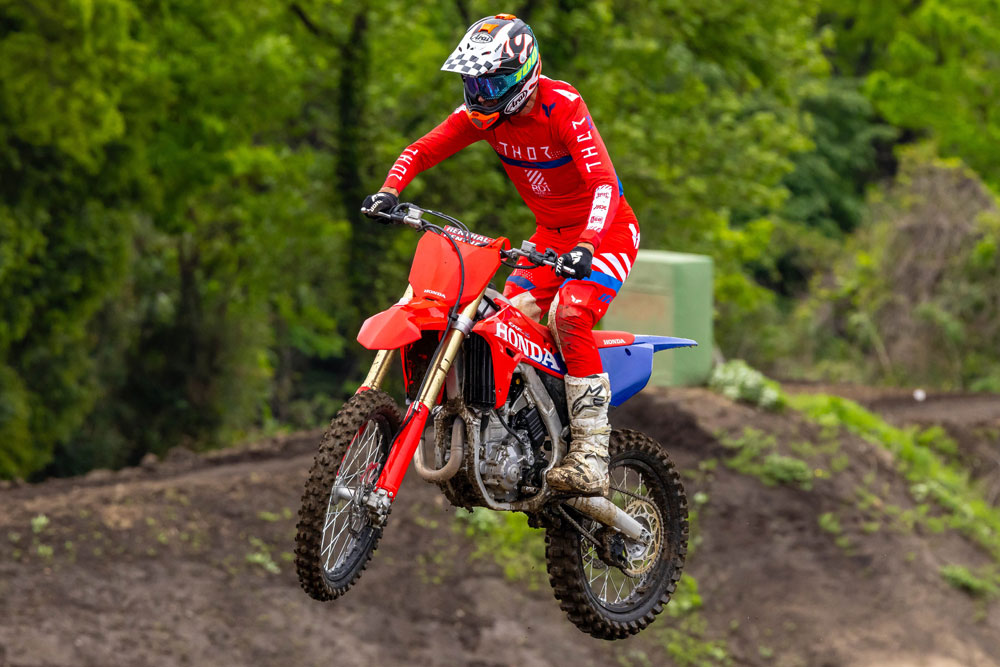
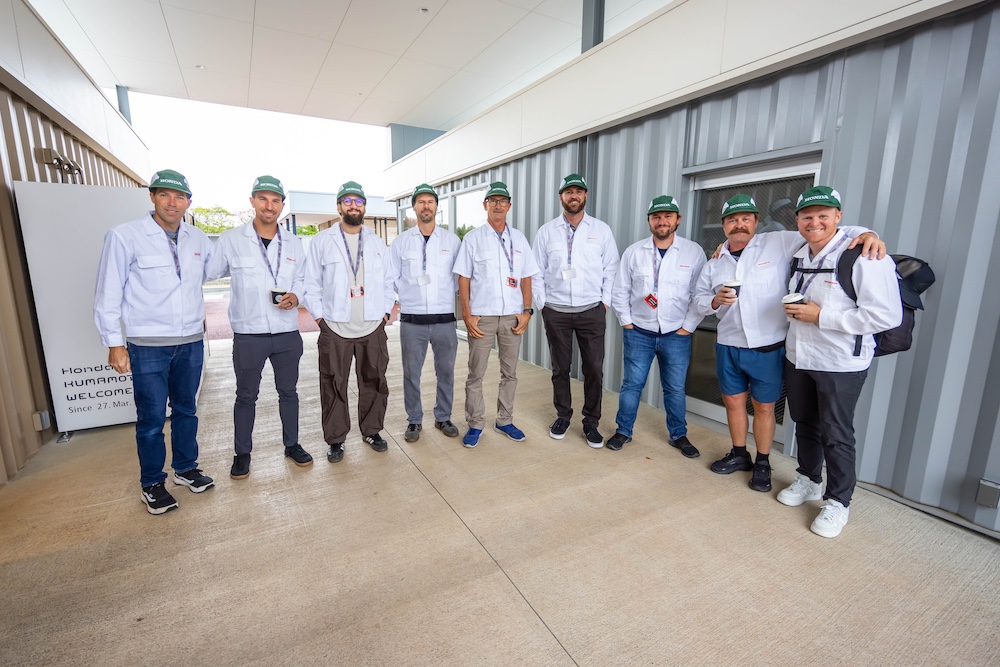
Last month, Cycle News and a few other media outlets got an up-close sneak peek at the 2027 Honda CRF450R and HRC Works Edition and even had the chance to ride both models in Japan, just a stone’s throw from Honda’s Kumamoto Factory, where these bikes are built. We witnessed several CRF450Rs go from a box of parts to running motorcycles in what seemed like just a few minutes and a short walk down the assembly line.
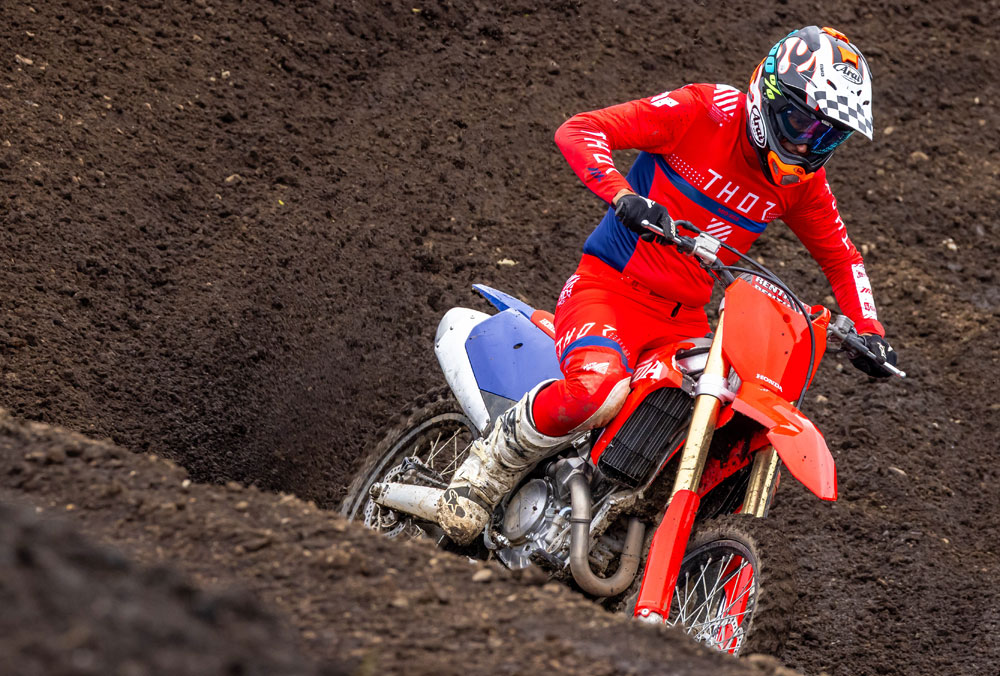
After a thorough and very entertaining tour of the factory, we returned to the Kumamoto Factory property the next day and suited up to ride the bikes on the facility’s test track, which had recently hosted a round of the All-Japan MX Championship. The weather, however, didn’t fully cooperate, as rain left the track better suited for a GNCC race than for motocross. At first, it was an accomplishment just to complete a lap without the handlebars touching the ground, which was my first pre-arranged, or luck of the draw, outing on the HRC bike. That was followed by a stint on the standard model and finally a stint on the 2026 standard CRF450R. By that time, the track had started to tack up a bit and get “good,” and then it was time to shower and prepare for our long flight home later that night.
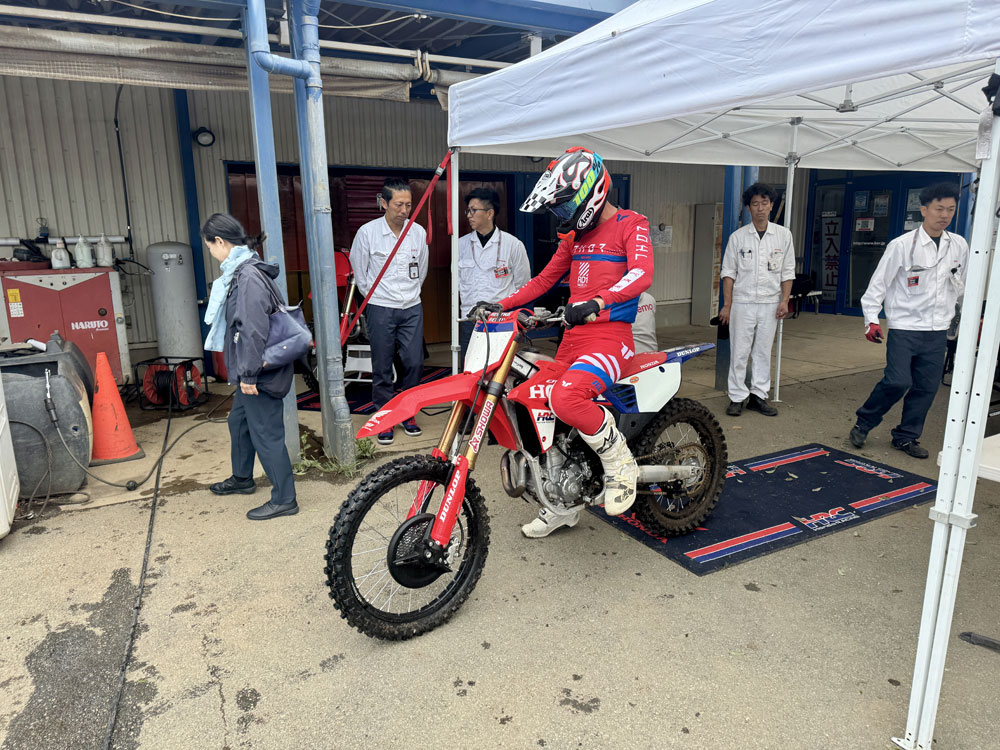
That was okay, because the 2027 bikes we rode were prototypes, not production bikes, and weren’t intended to be “tested” as we normally would. Just a hint of things to come. However, a few things did stand out to me, such as weight. The ’27 CRF450R felt light and agile, despite quickly packing on about 20 pounds of mud while I was on the HRC bike. And the new clutch, which did get some serious testing on both bikes, held up well and maintained a consistently light pull, which was very much appreciated in the muck. It wasn’t the greatest conditions for testing an MX bike, nor did we have much time, only about 20 minutes on each bike. But the experience was still well worth it.
As soon as the production 2027 Honda CRF450R and CRF450R HRC Works Editions are available to Cycle News, you can count on a thorough, comprehensive review of both bikes.
TREY’S FAVORITES
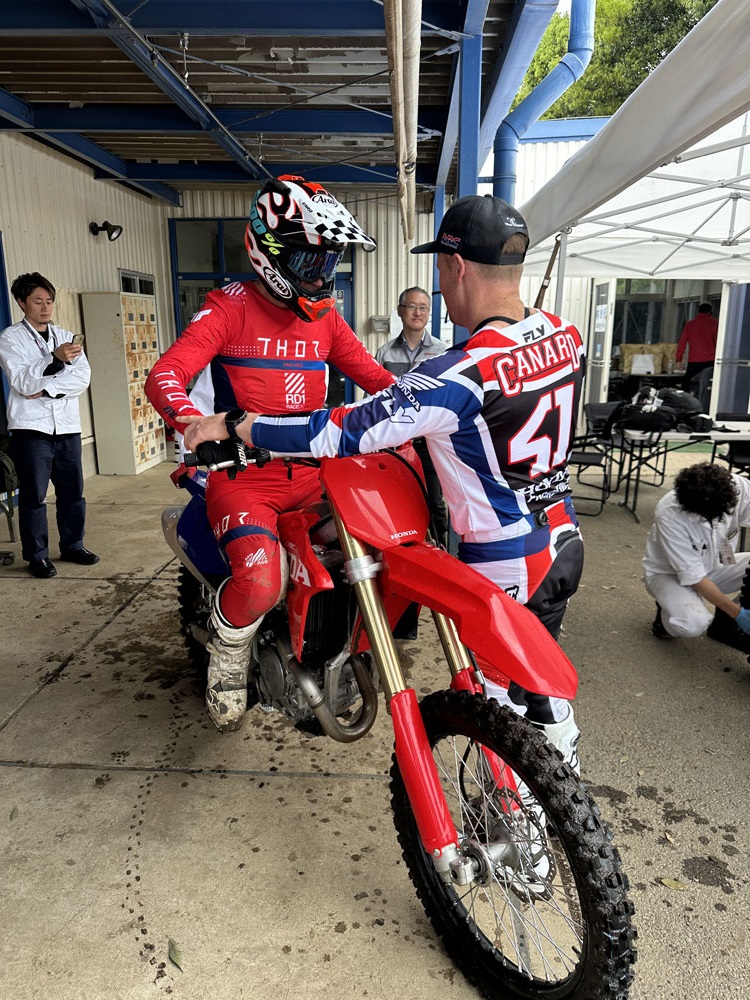
While we were in Japan, we spoke with Trey Canard, who played a major role in testing the 2027 Honda CRF450R and is a former Honda HRC factory racer. I asked him what he thought was the best improvement to the bike.
“I’m really pleased with how the rear of the bike panned out,” he said. “There are changes to the linkage, the swingarm pivot, and the shock, as well as the swingarm. To me, one of the things we’ve struggled with, I think, since 2009 is this harshness you get from the rear, which has been hard to work out. People have coined it ‘Honda back’ and things like that. For 2025, I thought we made good progress dealing with the feel of the chassis, but I still thought we lacked in that area. To me, they really tackled this part of the bike well with the ’27. That was one of the weaknesses for me for several years, so I’m happy that we finally hit that area.
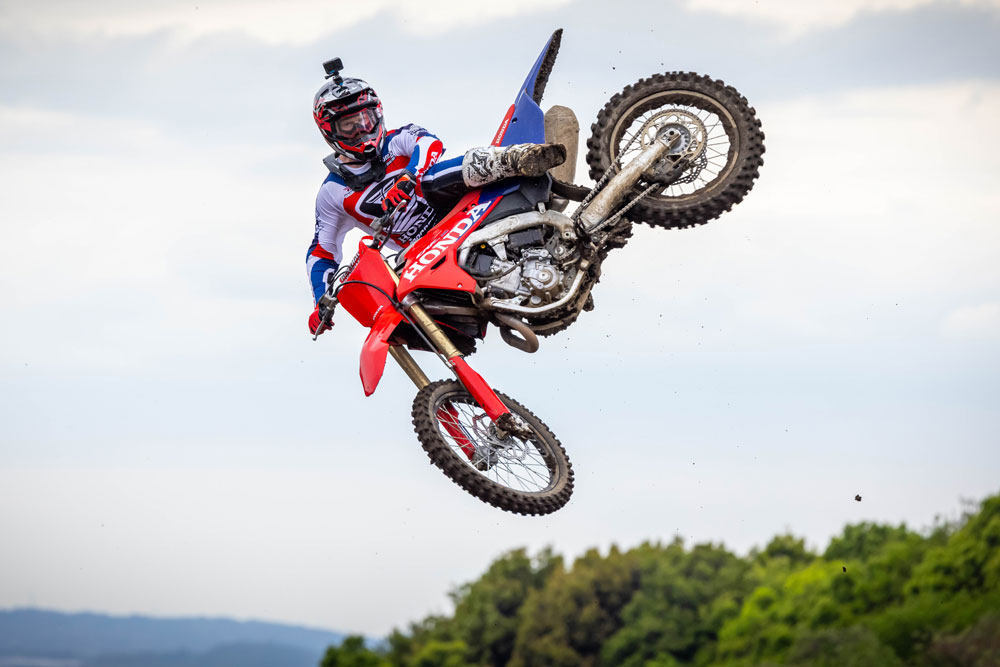
“Plus, the clutch. One of the things we’ve been really pushing for is pitch [control in handling], and one of the things that creates that is when you are off the clutch, it’s kind of grabby, so when you have that damper system in there, when you hit the face of the bump, it allows it to kind of slip—so reducing pitch is a huge part of that.

“And overall, the big theme of the bike is weight reduction. Nearly 10 pounds! When you think of 10 pounds on a motorcycle, for the longest time, we used a lot of titanium parts to lose half a pound, so the thought of losing nearly 10 pounds is incredible.”
How does that 10 pounds, I asked Canard, translate to the track?
“On the track, it’s funny, because when we had our first test on the bike, and we didn’t know a whole lot about it, and the first time I rode it, they kept asking me, ‘Trey-son, Trey-son, how was the weight feeling?’ And I go, ‘Ah, it’s a little heavy.’ That’s because one of the targets for the ’27 was stability. So, we had to create a new category on how we scored weight because the weight feeling is actually nicer because it moves a little bit slower, but once you’re in the air, then you can really feel how easy the bike is to maneuver. It’s very, very noticeable.”
FACTORY TOUR
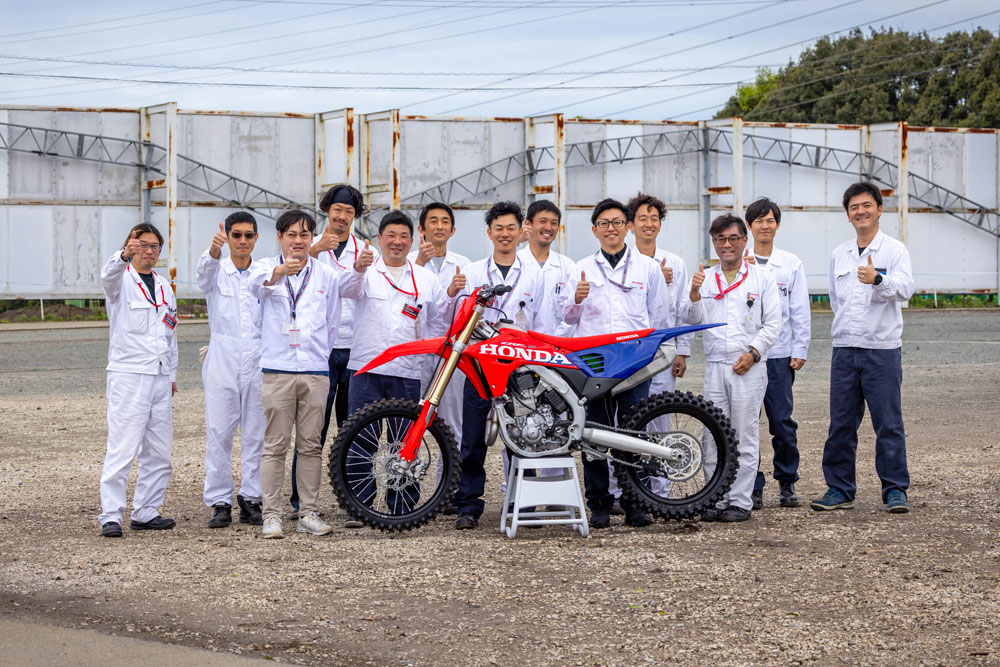
As I said earlier, Honda gave us a tour of the Kumamoto Factory, where we saw several motorcycles, not just the CRF450R, as well as power products being produced. There were so many fascinating things to see, I’ve already forgotten most of them, but there were a few things I’ll never forget. One of those was the engine, or dyno, room where the CRF450R’s engine gets thoroughly tested for reliability. They’ll literally run one for days at full throttle, stopping only to refill oil and fluids.
There was also the drop test, in which they lifted a fully assembled CRF450R about 40-50 feet into the air by a cable and then let it go. They demonstrated it for us, and it was spectacular. The bike looked just fine afterward. I’ll never look at coming up short or flat landing a jump the same way ever again. The bike can handle it, no problem. You’ll break way before the bike will.
Unfortunately, I can’t show you any part of our factory tour because we were required to surrender our cameras and video equipment at the door.
DETAILS, DETAILS
For more technical details about the bikes, I’ll let Honda explain, right from the horse’s mouth, to you all the changes that were made to the 2027 Honda CRF450R and the CRF450R HRC Works Edition.
~Kit Palmer
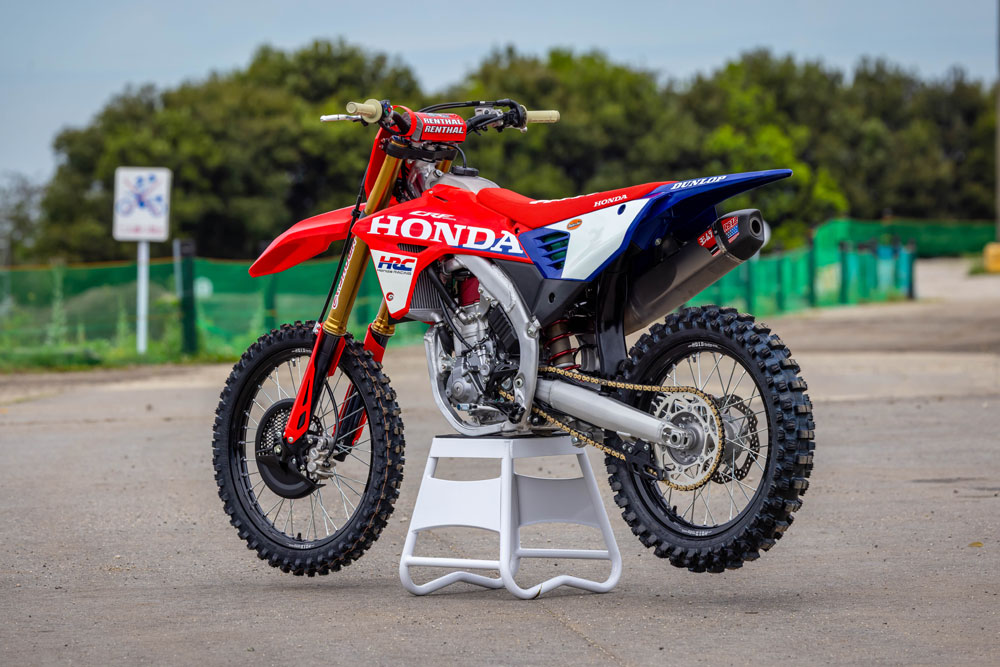
NEW FOR 2027 | Honda CRF450R
New bodywork, matching works bikes used by the Honda HRC Petronas MXGP team.
- New tricolor livery unifies the Honda Racing image/brand.
- New larger-capacity titanium fuel tank.
- New swingarm, chain slider and plastic chain-guide plate.
- Sustainable materials used for some parts, including front fender, front number plate, side panels and seat base.
- New engine with more rigid crankshaft assembly, new bearings.
- Cylinder-bore size is now 1mm larger.
- Full transistorized ignition and ignition coil, with updated fuel-injection and ignition settings.
- New airbox, air filter, air funnel.
- Evolved Unicam valvetrain system.
- Larger intake and exhaust valves, more aggressive cam profile, switch to titanium exhaust valves.
- Steeper angle for all valves, and shorter/steeper downdraft intake.
- New clutch with lighter-weight design and innovative back-torque-limiter design.
- Redesigned transmission is smaller and lighter, and has revised, taller gear ratios.
- Redesigned lighter, more reliable starter system.
- New exhaust system, designed to meet AMA sound limit.
- New main wiring harness.
- New design for main frame and rear subframe.
- Suspension has changed internals/oil/setting, with extensive steps taken to optimize damping feel and consistency, including between front and rear.
- Kashima coating added on internal suspension parts, front and rear.
- Stiffer front- and rear-suspension springs.
- Fork switches from the traditional Bending Control Valve configuration to a Dynamic Blow System main-piston-valve structure for improved stroke consistency.
- New shock linkage with revised ratio and a new thrust needle bearing.
- New rear-wheel hub design.
- Dunlop MX34 tires front and rear (rear with a new size).
- Extensive detail updates to simplify bike maintenance.
DESIGN / STYLING
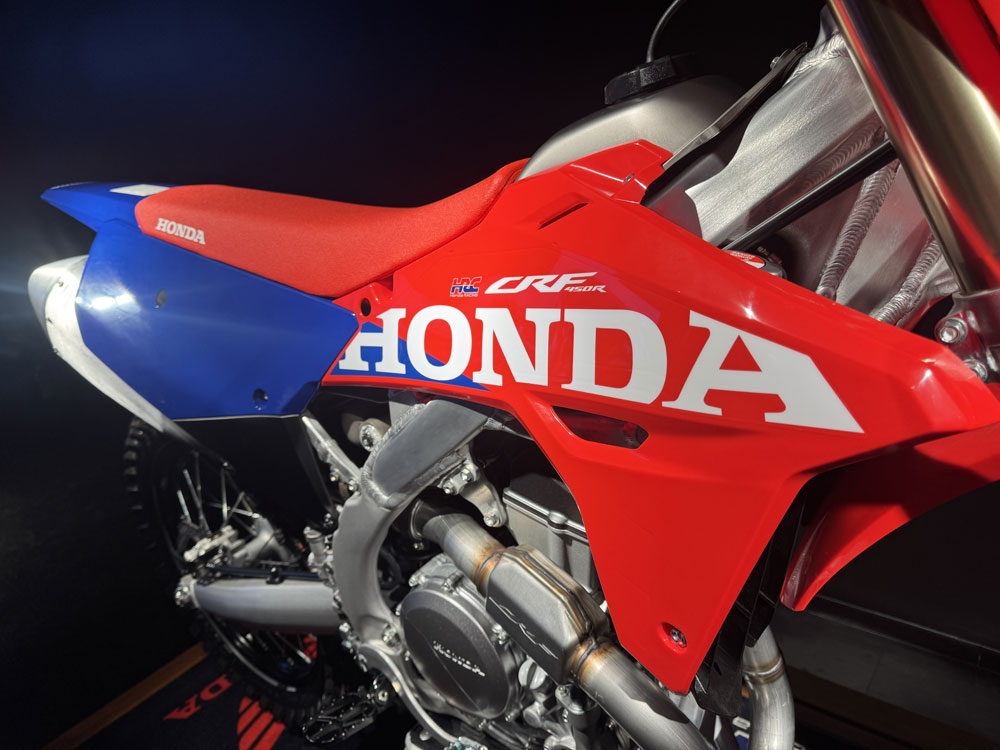
The CRF450R has long been known for its excellent design, ergonomics and attention to detail, and that continues for 2027. One of the most visible changes to the bike is a switch to a new tricolor scheme, matching the look of HRC motocross and road-race teams worldwide. The red/white/blue colors and large Honda logo are designed to unify and strengthen the Honda Racing brand and identity, as debuted by the factory Honda HRC Progressive team at the opening 2026 AMA Pro Motocross round.
The bodywork is also new, with updated shapes for the radiator shrouds and side panels. To create a flatter side surface and allow freer rider movement, the difference in the bike’s width between the radiator-shroud area and the seating area is reduced. Compared to the previous model, the 2027 bike is 2mm wider at the radiator shrouds and 7mm wider at the seating area, making the bike easier to grip with the legs, improving rider control. The side panels now have a symmetrical shape that facilitates gripping with the legs when the rider’s weight is placed rearward on the bike; this also improves lateral movement when seated. The left side panel now mounts via bolts at the front and rear for a more secure attachment. (The right-side panel still uses a clip at the rear.) The seat has more cushion for 2027, and as before, the seat base has rearward-facing tongues and front-located mounting tabs. This design makes installation simple while still keeping the seat securely in place.
The titanium fuel tank is new for 2027, with capacity increased from 1.7 gallons to 1.9 gallons—large enough for the factory Honda HRC Progressive team to use in longer motos (including AMA Pro Motocross competition)—but without sacrificing the bike’s slim cross section. Returning to the model’s roots, the skid plate has been eliminated, although a small guard on the right side protects the water pump. A larger, model-specific plate from the CRF450RX can be fitted if the owner prefers.
A single-switch cluster addresses several functions: engine stop, ride modes and Honda Selectable Torque Control (HSTC). The starter and HRC launch control utilize the same button on the right side of the Renthal Fatbar handlebar. There are two locations for the handlebar clamp, and the clamp can be turned 180º; as a result, four different mounting positions are possible through a range of 26mm.
Consistent with Honda’s “Triple Action to Zero” initiative (a part of the brand’s aim for zero environmental impact by 2050), the 2027 CRF450R features several first steps at using sustainable materials. For example, the front fender, front number plate and radiator shrouds are made from post-industrial recycled material that achieves a high-gloss finish and good weather resistance, achieved through the selection of highly transparent raw materials and optimal design. In addition, the seat base is constructed from an impact-resistant post-industrial recycled material.
An extensive list of detailed changes was carried out to simplify bike maintenance: The shock can now be removed without first removing the ECU, and the air filter can now be accessed via the side panel (there is no airbox lid for 2027). The rear brake rotor can be removed and installed with just one wrench, as the bolts now thread directly into the hub. Similarly, the chain guide now has press-fitted nuts, so only one wrench is needed for installation and removal. The rear wheel’s side collars now have a rounded shape and are held in place more securely, simplifying rear-wheel installation. Finally, the routing of the clutch hose has been updated so that the fuel tank needn’t be removed to access it.
ENGINE / DRIVETRAIN
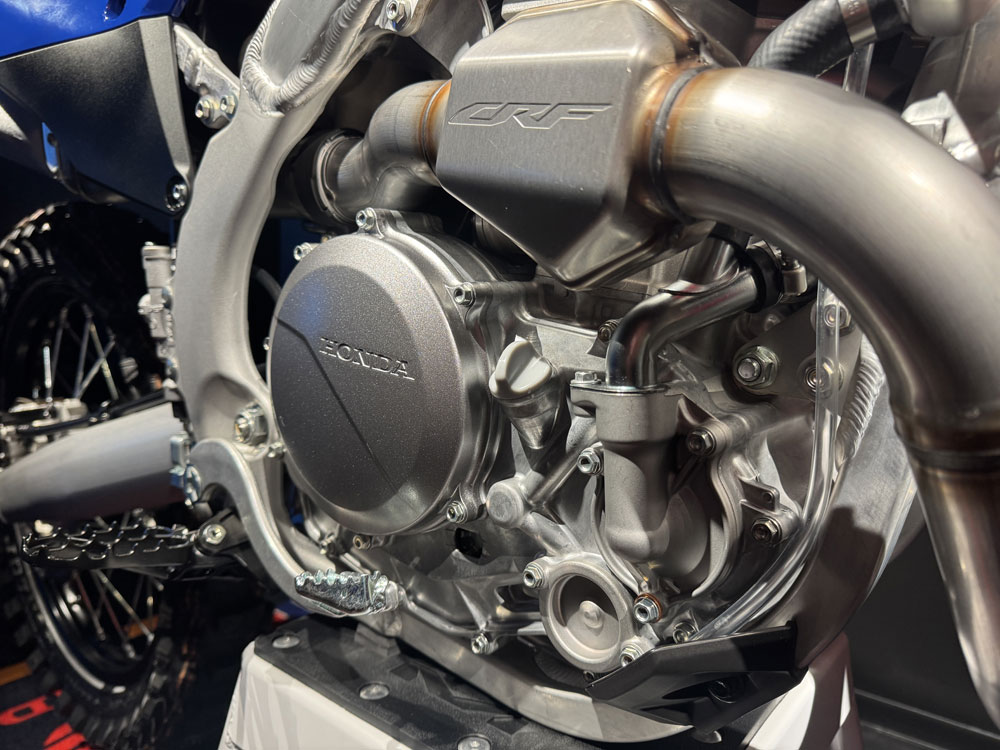
For 2027, Honda introduces a brand-new powerplant for the CRF450R, offering more power, better control, reduced weight and a narrower cross-section. The engine delivers a clear advantage across the rev range but also gives the rider greater confidence due to its improved torque and smooth character. In addition, by thoroughly downsizing engine components wherever possible, the new engine is 17mm narrower at its widest point, and it weighs 6 pounds less than its predecessor, significantly improving handling.
The shape of the crank web was changed from an anchor profile to a round profile, increasing overall crankshaft rigidity. The journal bearings on both the left and right sides of the crankshaft were changed from ball-and-roller bearings to roller bearings, reducing deformation caused by combustion pressure. These improvements result in a more efficient conversion of combustion pressure into rotational energy while also reducing friction losses at both the bearings and gear-engagement points, further enhancing output performance.
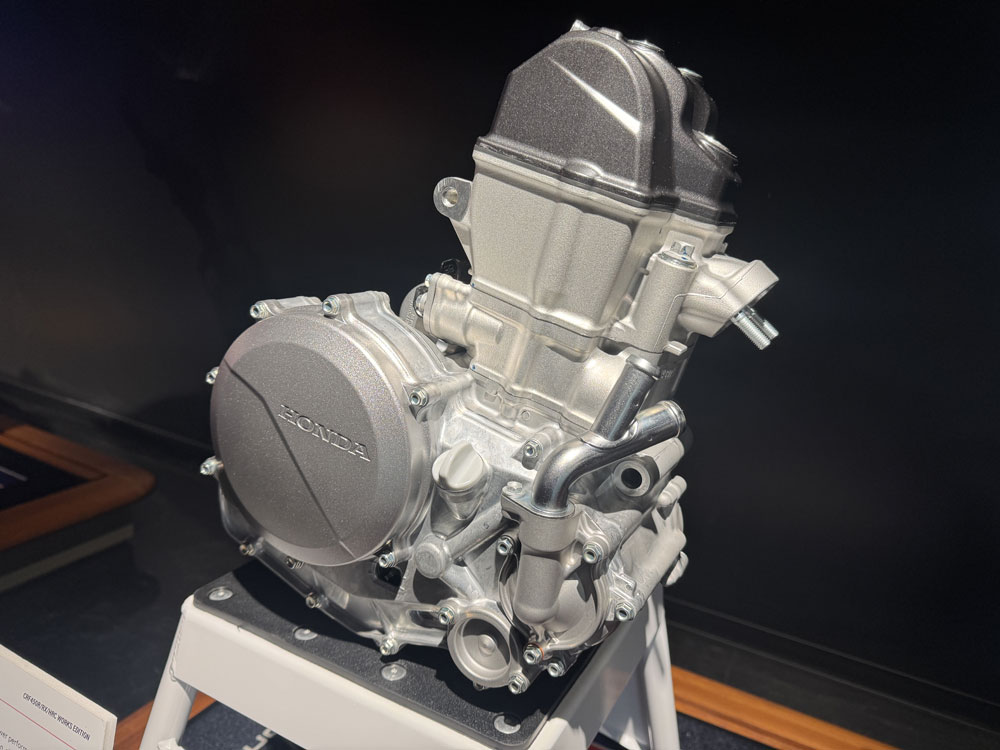
Cylinder Head
The engine’s cylinder-bore size was increased by 1mm, to 97.0mm, while stroke is 60.8mm, for a 450cc displacement. Optimizing the shape of the piston crown and cylinder-head combustion chamber results in a higher compression ratio (13.75:1, compared to 13.50:1 before), while improving the smoothness of the piston-crown surface results in enhanced overall combustion efficiency compared to the previous model. In addition, a DLC coating was applied to the top piston ring, reducing friction, improving durability and contributing to consistent, stable engine performance.
As with the previous model, a Unicam valvetrain layout is used due to the design flexibility that finger-follower rocker arms enable, as well as the lightweight, compact benefits of a single camshaft with the wide valve timing. That said, the Unicam system has evolved on this new model, with the intake and exhaust rocker-arm shafts aligned on a common axis, increasing valvetrain strength and achieving an even more compact and lightweight mechanism.
To increase power in the mid- to high-rpm range, the intake and exhaust valve diameters were enlarged (by 2mm for the intake valves, to 40mm; and by 1mm for the exhaust valves, to 32mm), improving airflow efficiency, while the included angle between the intake and exhaust valves was optimized as well. Larger valves typically reduce low-rpm output, but in this case, the cam profiles were updated for increased valve lift and more aggressive valve timing—a change that was made possible in part by a switch to titanium construction for the exhaust valves. The lighter, more rigid Unicam valvetrain mechanism accurately drives these cams at high rpm, ensuring precise valve motion. As a result, significantly higher output was achieved across the entire rpm range while engine reliability was improved as well.
As before, the cylinder-head cover is magnesium, with a thin-wall design for light weight.
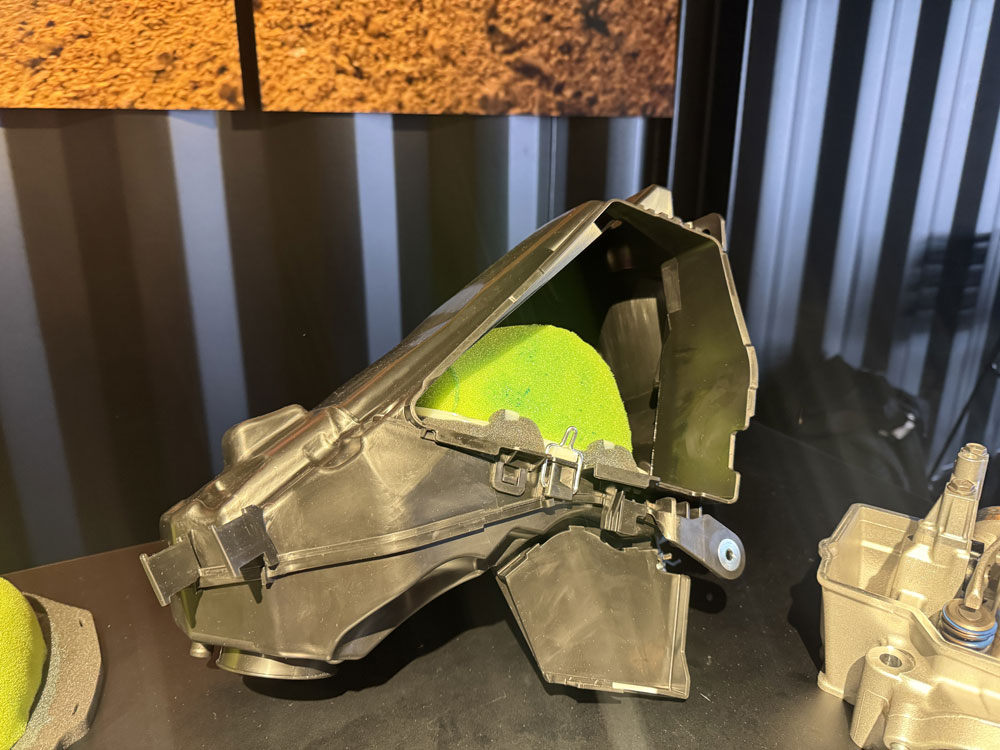
Intake
Compared to the previous model, the intake-port angle was made even steeper, the port length was shortened, and the intake-port shape was revised. These improvements, combined with the steeper valve angles, further advance the model’s highly efficient “downdraft” intake characteristic—a key strength of the model—resulting in improved power and enhanced rideability.
In addition, the design of the new airbox incorporates a new rear duct, eliminates the cover used in the previous design, and simplifies the route to the engine, positioning the air filter more directly in the path of airflow. Meanwhile, the air filter has a revised density and a rounder shape. These changes combine to reduce airflow resistance by approximately 10 percent, improving power and torque.
Exhaust
The 2027 CRF450R’s exhaust system has been optimized for the new engine while also taking into account the AMA’s new, stricter sound regulations for professional motocross (109.9 decibels). Comprising a 3.4-inch longer header (34.8 inches total length) and a 3.0-inch longer muffler (28.5 inches total length), the exhaust system helps improve power delivery while maintaining strong acceleration.
The engine’s exhaust port is centrally located, has an oval shape, and is nearly straight, creating efficient, usable power in the low- to mid-rpm range. The centralized exhaust-port location enables the exhaust header and muffler to be positioned close to the vehicle’s centerline for a slim profile, contributing to freedom of movement for the rider. The muffler is constructed with strong 6061-T6 aluminum for impact resistance and weight savings. A dual-resonator design (one in the header and one in the muffler) optimizes power while simultaneously minimizing noise.
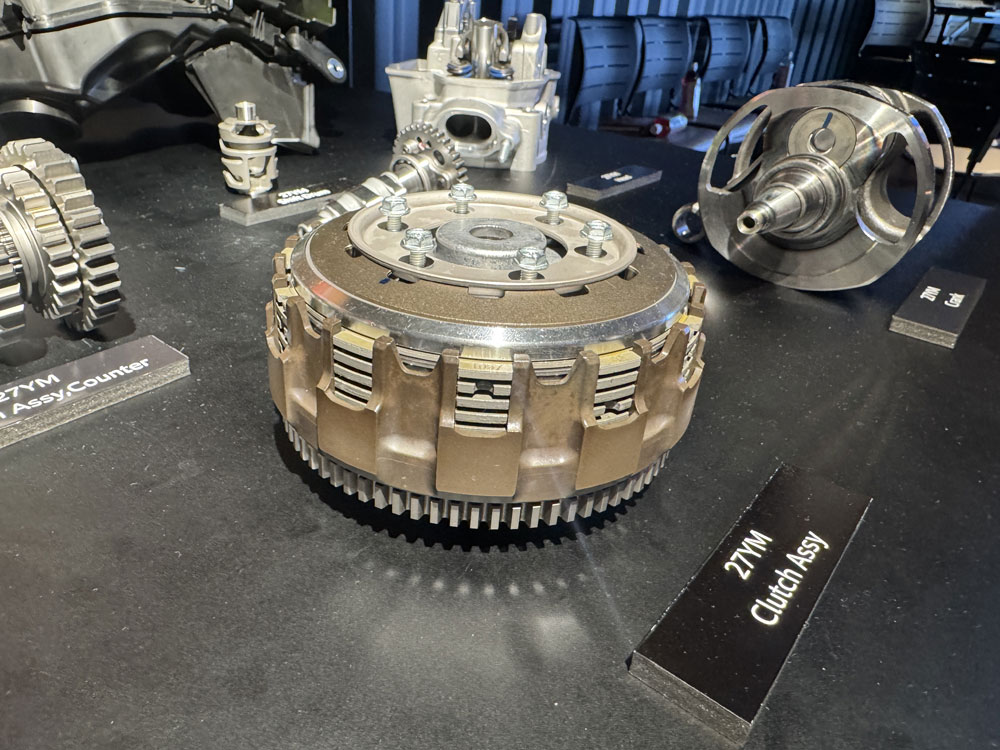
Clutch
For 2027, engineers developed an all-new, lighter clutch for the CRF450R, featuring first-of-its-kind technology. The basket diameter was reduced by 7mm, to 132mm, and the primary driven gear has a lighter, ring-type design, eliminating the center portion of the previous version.
The new clutch also features a unique rubber-damper-activated back-torque-limiter system, similar to a cush drive in a rear-wheel hub. In addition to the rubber damper’s conventional function of absorbing and mitigating torque fluctuations, it takes on an additional role with this new design; now, the damper also adjusts clutch capacity by deforming when back torque is generated. This provides a slipper function, smoothing the connection between the engine and the rear wheel. This design is significantly lighter than typical cam-type slipper clutches, but it still delivers operating characteristics ideally suited for off-road applications. The optimal rubber-damper shape, structure, durability and limiter-capacity settings were validated through MXGP competition.
The hydraulically actuated clutch has eight plates and a large volume for good durability and light lever pull.
Transmission
To match the significant increase in engine power, the transmission’s gear ratios were reoptimized. Compared to before, all five gears are taller—first is 18.173 (versus 18.954 before), second is 14.908 (vs. 15.156), third is 12.554 (vs. 12.626), fourth is 10.741 (vs. 10.755) and fifth is 8.889 (vs. 9.271). With the new ratios, the engine works across a wider speed range, requiring fewer gear changes.
At the same time, the number of lead grooves on the transmission’s shift drum was reduced from three to two by combining the lead grooves for the right shift fork and the center shift fork. This allowed the width of the shift drum to be reduced by 13.4mm, to 63.5mm from 76.9mm. The drum is also now constructed of a high-strength material, enabling further wall-thinning and contributing to an additional weight reduction of 0.3 of a pound (46 percent).
In addition, engineers changed the transmission’s main-shaft bearing from an annular-collar design to a split, resin-cage needle-bearing design, a change that subsequently enabled reductions in the size and weight of other transmission components. Each gear was carefully updated, implementing the ideal shape, shaft diameter, wall thickness and position, without being restricted by adjacent gear geometry. The new transmission has a 14mm shorter main-shaft length, and it weighs 1.1 pounds less than its predecessor (a 15 percent reduction).
Starter
A complete redesign of the starter system resulted in a weight reduction of over 1 pound while also improving reliability. The number of axes in the starter-gear layout was reduced from five to four, while the press-fit-type torque eliminator was replaced with a lightweight friction-disc type, with three disc springs and one friction disc. In addition, the one-way starter clutch was updated, reducing the size for a lighter outer structure. The redesigned system achieves a more stable, more durable slip-torque characteristic, contributing to the lightweight starter-gear architecture.
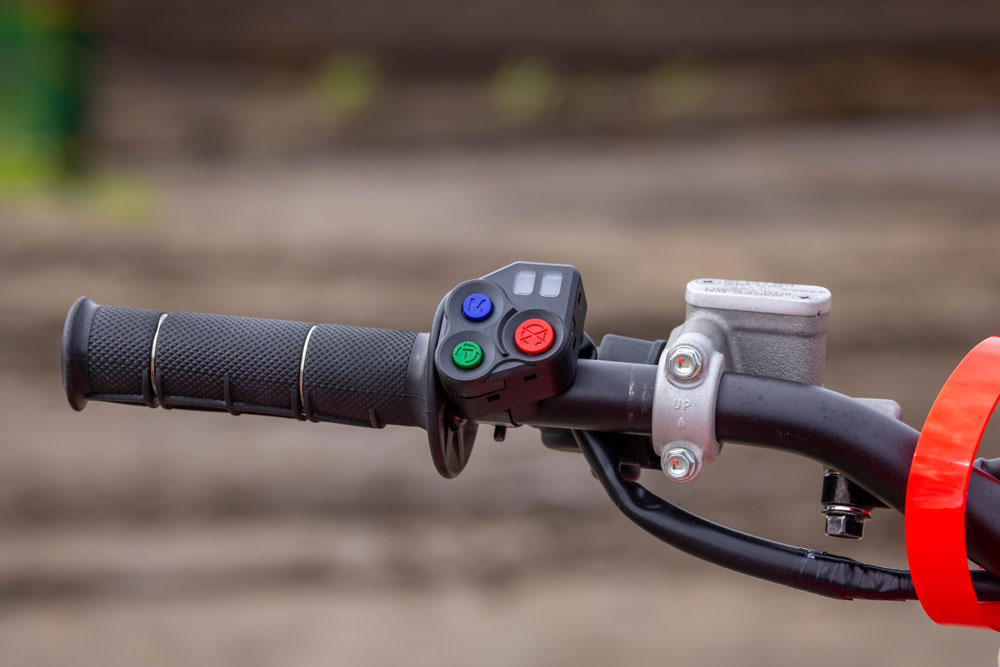
ELECTRONIC CONTROLS
The CRF450R features a suite of electronic rider aids that enhance control and allow for great customization. To mimic what the HRC factory riders were looking for, the engine uses selectable ECU maps that offer a smooth delivery while retaining strong torque and power throughout the rev range. The settings for all the ride modes have been optimized for 2027.
Ride Modes
A gear-position sensor allows the use of three specific ignition maps for first and second gears, third and fourth gears, and fifth gear. There are options for Standard, Smooth and Aggressive ignition maps, selectable via a handlebar-mounted switch, enabling simple tuning depending on rider preference or course conditions.
- Mode 1: Standard
- Mode 2: Smooth
- Mode 3: Aggressive
HSTC
In addition to ride modes, Honda Selectable Torque Control offers three levels of intervention. HSTC monitors rpm spikes and responds by temporarily reducing torque. This is accomplished by retarding ignition timing and controlling PGM-FI to aid rear traction. A handlebar-mounted switch allows selection between modes, depending on conditions and rider preference:
- HSTC 1: The system intervenes the least and waits the longest to do so—useful for reducing wheel spin and maintaining control in tight corners.
- HSTC 2: A midpoint between modes 1 and 3 in terms of how quickly and assertively the system intervenes.
- HSTC 3: The system intervenes most quickly and assertively, which helps in conditions that are slippery or muddy.
The HSTC system can also be switched off completely.
Launch Control
For 2027, the launch-control settings incorporate feedback from the HRC works teams, with three modes to choose from:
- Level 1: For high-traction conditions and/or advanced riders. When waiting for a gate drop while in level 1, the launch-control system holds a high rpm and then returns to normal immediately after the start, resulting in high wheel spin.
- Level 2: For high-traction conditions and/or average riders. In level 2, a slightly lower rpm than mode 1 is held before revs return to normal immediately after the start for medium wheel spin.
- Level 3: For slippery conditions and/or novice riders. In level 3, the held rpm is low, and it gradually returns to normal a few seconds after the start for low wheel spin.
CHASSIS / SUSPENSION
As with the rest of the CRF450R, the chassis has been completely overhauled for improved handling. Stability is enhanced considerably, delivering confidence during all types of conditions. Front-to-rear pitching during acceleration and braking has also been reduced, further enhancing overall stability. The rougher the track conditions, the greater this advantage becomes.
Suspension has been significantly improved as well, with engineers adding appropriate friction through the entire stroke—particularly at the very initial stages of movement—for a consistent feel. Front and rear damping performance has also been made more consistent, from initial movement to full bottoming, resulting in improved overall ride performance. Suspension oil has been unified between the front and rear systems, enhancing consistency in damping control.
Geometry
To improve stability while maintaining good cornering performance, the base dimensions and rider position have been optimized. Mimicking the direction of the factory race team, the footpegs were repositioned 5mm rearward, moving rider weight to the rear of the bike, improving traction and facilitating loading of the shock. Wheelbase is now 58.7 inches—0.3 of an inch longer than before—and the rear axle is moved upward by 0.5 of an inch. Rake is increased by 0.2º, to 27.5º.
Frame / Subframe
The main frame was redesigned for 2027, with approximately 70 percent new components. The focus was on improving stability and predictable handling in rough track conditions, and while rigidity was increased, the frame weight remains unchanged.
Changes include optimization of the head pipe area, including an upsized gusset that is now cast instead of forged, increasing longitudinal and torsional rigidity by 10 percent. The down tube and front joint (the area above the cradle junction) are optimized for rigidity and weight, while the pivot plate and upper shock mount are reshaped to optimize rigidity. The cylinder-head hanger plates have been redesigned and are now constructed of aluminum instead of steel for improved rigidity and a combined 0.3 of a pound of weight savings. To accept the new engine, the lower cradle and the middle engine hanger have been revised.
The upper bracket for attaching the subframe is new, as is the attachment point on the subframe itself. The subframe’s lower pipes are also revised to simplify airbox access.
Swingarm
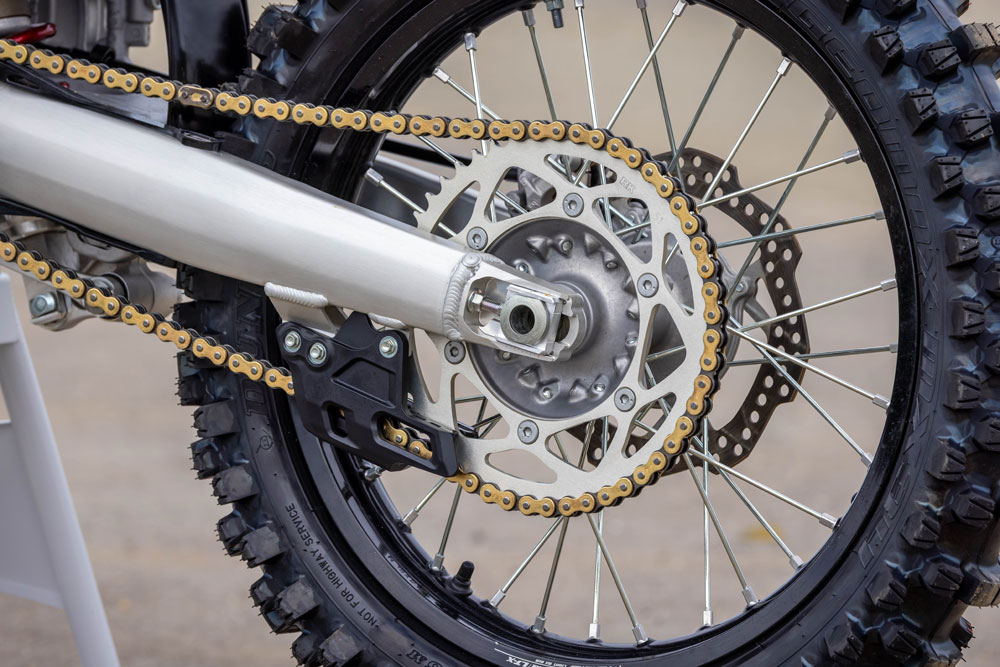
The swingarm has been redesigned, with updates to the main arms, cross-body, end pieces and weld-bead for improved handling and a more premium, refined look. The entire component is now hand-polished to achieve a premium finish.
Applying throat welding at the joints where the main pipes meet the cross member results in a smooth, consistent surface. This enables the main pipes to be designed with a larger outer diameter but thinner walls, reducing weight by 0.9 of a pound. Rigidity is maintained while reducing weight, achieving a balanced distribution of stiffness in the longitudinal, lateral, and torsional directions for uniform flex characteristics throughout the swingarm. Also, the main arms’ cross section is now a D-shape, with no sharp edges, minimizing drag in ruts.
The chain guide is more resistant to deformation under impact loads, thanks to an impact-resistant resin material derived from the Monster Energy Honda HRC Rally team. In addition, the chain slider has been reinforced on both the top and bottom, while the addition of a small damping hole reduces chain bounce for more consistent drive characteristics.
Front Suspension
When developing the 49mm inverted Showa coil-spring fork for the 2027 CRF450R, engineers worked hard to minimize any feeling of steps in the stroke. A Dynamic Blow System main-piston valve structure replaces the traditional Bending Control Valve structure. Additionally, the rate of the main spring was increased from 5.0 N/mm to 5.2 N/mm, delivering a slightly firmer setup and better front-end feel.
A Kashima coating was applied to internal sliding components like the rod and cylinder, and the hole in the main piston rod is now smaller, increasing extremely low-speed damping force. The previous resin conical spring seat has been replaced with an aluminum cylindrical seat, reducing step-like sensations when the oil level is reached. The sub-comp valve shims are thinner and greater in number.
The combined result of these changes is improved stroke consistency and better damping feel, with increased compression damping in the extremely low- to low-speed range.
An updated seal between the steering stem and the top triple clamp delivers optimized friction characteristics during steering inputs for enhanced chassis stability.
Rear Suspension
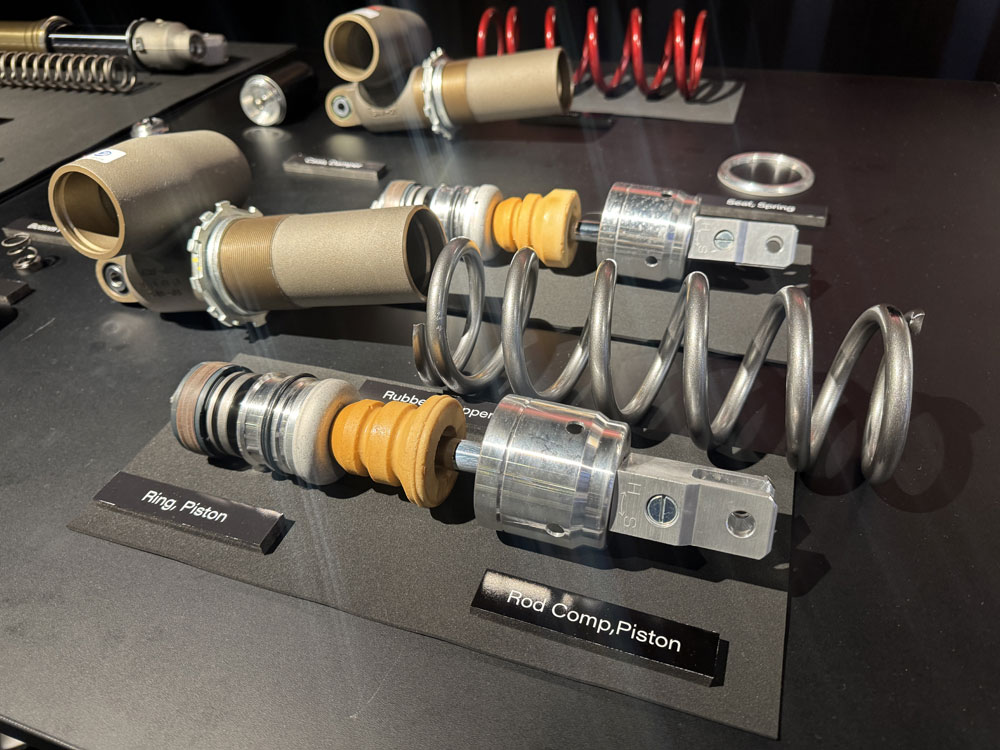
The Pro-Link rear-suspension system is highlighted by a Showa shock absorber with a 50mm body. Some internal sections of the reservoir body were machined, resulting in a thinner wall and reducing weight by 1.4 ounces.
As with the fork, compression and rebound damping have been increased, and the main piston band was optimized to permit freer piston movement. This reduces the difference between static and dynamic friction, improving consistency.
The coil spring within the shock’s compression damping-force adjuster has a stiffer rate, enhancing damping feel in the low-speed-compression range, improving overall consistency. In addition, the spring guide has been redesigned to optimize adjustment sensitivity, and SS37 suspension oil is used (replacing SS35), matching the fork’s fluid for a consistent damping feel between front and rear.
Following the direction of the race team, the shock’s bladder was changed to a more responsive round type, resulting in improved plushness and consistency. The bump rubber is now smaller, improving bottoming feel. Also consistent with Honda’s factory race teams, the collar and dust seal housing the spherical bearing within the upper shock mount have been updated to reduce shock play while also moderating initial impact harshness, resulting in improved overall performance.
The linkage ratio has been optimized as well, reducing kickback behavior during acceleration for improved comfort and stability. In addition, a thrust needle-bearing construction has been adopted for the link (replacing the previous thrust washer), reducing friction for better smoothness and traction feel.
Wheels
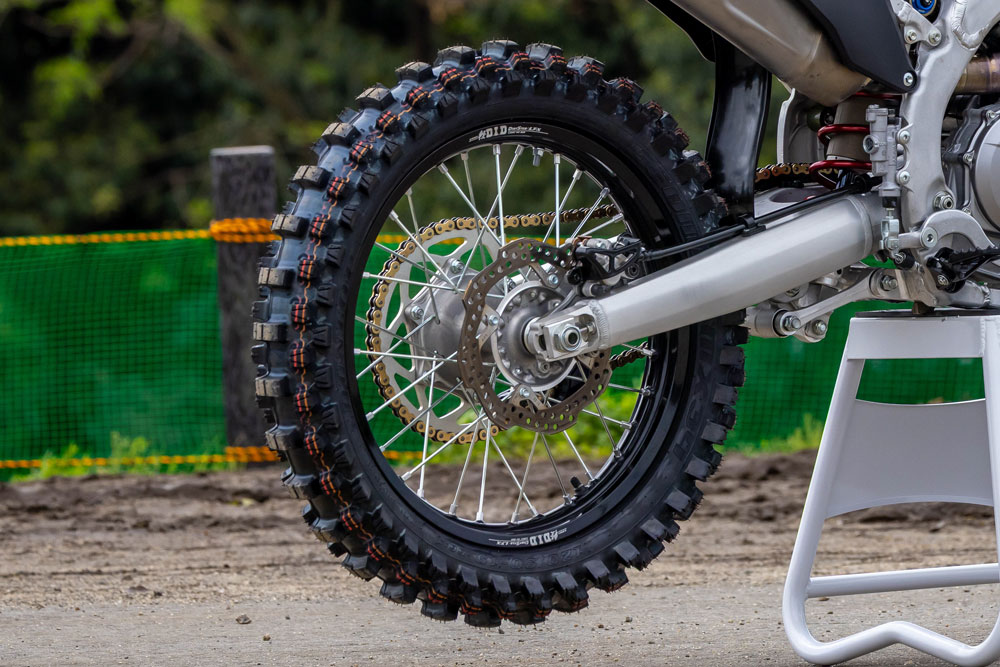
Black D.I.D rims deliver durable performance and a premium appearance. The rear hub has been redesigned using feedback from works-level racing programs to increase strength, performance and serviceability, while reducing weight by 0.6 of a pound (5.5 percent, excluding the tire). The span between the axle bearings has been increased to enhance wheel rigidity and increase axle strength. The spokes are now larger in diameter, and a revised spoke angle optimizes wheel rigidity and strength while also enhancing traction.
The rear sprocket has been upgraded to a fully machined design from RK, and the lightening-hole pattern is new. Importantly, the sprocket’s mounting diameter is 7mm larger (now 160mm) for improved sprocket strength.
Dunlop Geomax MX34 tires replace the previous MX33 tires, featuring a carcass material that improves damping and absorption, maintaining performance up to 30 percent longer. Progressive Cornering Block Technology improves cornering grip and enhances feel and absorption, while the rubber compound increases traction and maintains durability. The rear knob pattern has center blocks that are 11 percent taller and 44 percent wider for increased traction and control, as well as advanced mud-evacuation technology.
Brakes
Petal-style brake rotors (sized 260mm front, 240mm rear) disperse heat while a low-expansion front-brake hose gives strong feel and consistent stopping power. The front-brake caliper was developed based on feedback from Honda HRC Progressive riders, and it features two pistons (sized 30mm and 27mm), allowing for a smooth, linear feel that’s consistent throughout a moto. The caliper also features machined accents. The rear brake has a single piston. CN
2027 Honda CRF450R Specifications
| MSRP | $10,099 (HRC Works Edition $12,999) |
| Engine | 449.5cc liquid-cooled single-cylinder four-stroke |
| Valvetrain | OHC Unicam; four valves; 40mm intake, titanium; 32mm exhaust, titanium |
| Bore x Stroke | 97.0mm x 60.8mm |
| Compression Ratio | 13.8:1 |
| Induction | Programmed electronic fuel-injection system (PGM-FI); 46mm throttle body |
| Ignition | Transistor Controlled Ignition (TCI) |
| Starter | Push-button electric starter |
| Transmission | Constant-mesh five-speed manual |
| Clutch | Multiplate wet, hydraulically actuated |
| Final Drive | #520 chain; 13T/51T |
| Front Suspension | 49mm Showa telescopic inverted coil-spring fork w/ adjustable compression/rebound damping |
| Rear Suspension | Pro-Link system w/ single Showa shock absorber; adjustable spring preload, compression/rebound damping |
| Front-Wheel Travel | 12.2 in. |
| Rear-Wheel Travel | 12 in. |
| Front Brakes | Single dual-piston hydraulic caliper w/ 260mm petal-style disc |
| Rear Brakes | Single one-piston hydraulic caliper w/ 240mm petal-style disc |
| Front Tire | Dunlop Geomax MX34 80/100-21 tube-type |
| Rear Tire | Dunlop Geomax MX34 120/90-19 tube-type |
| Rake/Trail | 27.5° / 4.6 in. |
| Length | 86.6 in. |
| Width | 32.6 in. |
| Height | 49.7 in. |
| Ground Clearance | 13.1 in. |
| Seat Height | 37.5 in. |
| Wheelbase | 58.7 in. |
| Fuel Capacity | 1.9 gal. |
| Curb Weight (claimed) | 238 lbs. |
| Weight No Fuel (claimed) | 226 lbs. |
| Colors | Red, HRC Works Edition |