Cycle News Archives
COLUMN
You shoulda been there
By Kent Taylor
“This is the one where they say, ‘You shoulda been there.’ And it’s really true.”
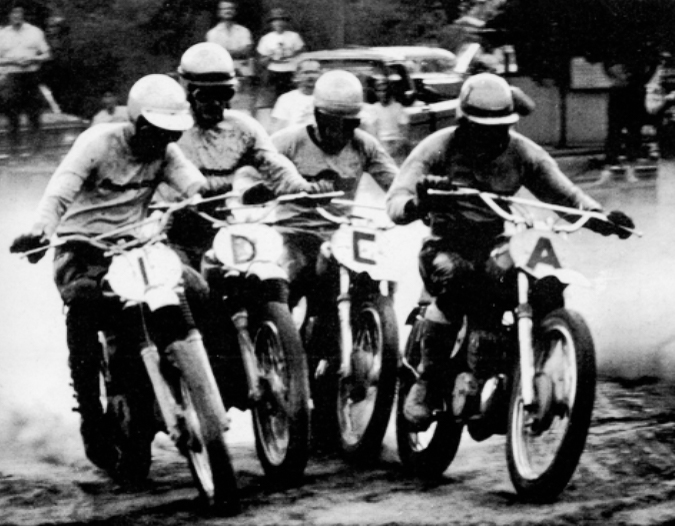
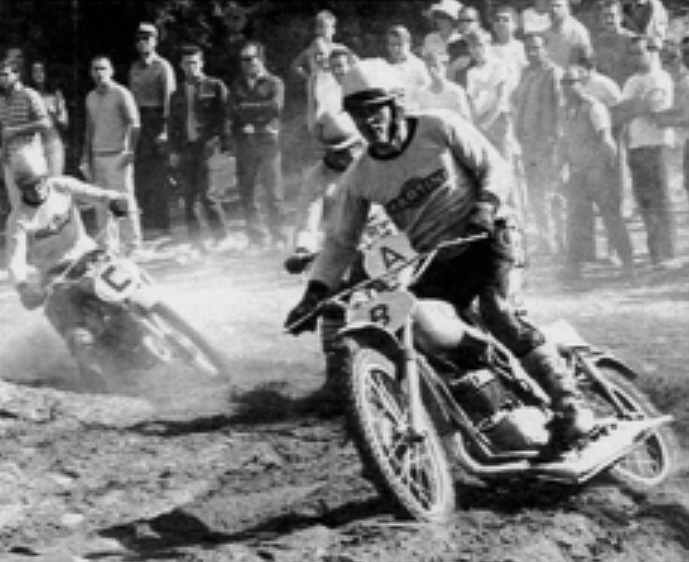
Where you should’ve been, according to the Cycle News headline, was Hopetown, California. Just hitch a ride back to 1971 and line up for the Hopetown Grand Prix, an annual event put on by the Dirt Diggers motorcycle club. It was a fun event, taking place at a facility named after its comedian owner, Bob Hope.
“If there was a type of terrain,” wrote Cycle News’ Ron Schneiders, “that particularly turned you on (it’s 1971, ya know), you could be sure of finding it on the longish three-mile course. There were long straights, sweepers and a power-sucking hill for guys who like explosive excitement. Tight, tricky turns and off-camber stuff with complicated lines…[and] any kind of traction you wanted from damp sand…” Not to mention the most well-known Hopetown track obstacle, a giant mudhole.”
The Hopetown track was just a small parcel of the 2000-acre ranch property, which had been originally owned by Western movie star Ray Corrigan. In the 1930s and ’40s, moviegoers loved their Westerns, and Corrigan purchased the sprawling acres in Simi Valley as a location site for filming. Old West street fronts, outlaw hideouts, and country schoolhouses sprang up, providing settings for hundreds of movies and television shows. The Lone Ranger, Have Gun Will Travel and even a few Star Trek scenes were shot at “Corriganville.” He even opened it up as an amusement park for tourists. In 1966, Corriganville became “Hopetown” when the famous comedian purchased it, with plans to develop the property into commercial real estate.
The name had changed, but the good times continued, just as they had since 1958. In 1971, however, “a dark cloud hung over the Dirt Diggers’ annual classic” when organizers received an entry from someone claiming to be California’s notorious Zodiac Killer. The serial killer (who was never found) had already committed at least five murders in the San Francisco area and may have killed many others. The note promised that he would strike again over the race weekend. It could’ve been real or a hoax, but either way, the police and, eventually, the FBI were brought in to investigate. The situation was apparently deemed under control, and racing was allowed to proceed.
In the 1960s, Hopetown regulars included such stars as Roger DeCoster, Joel Robert, Torsten Hallman, Ake Jonsson and others. By the time the 1971 event rolled around, these big names were no longer participating. Still, there were 1200 entries signed up for the Grand Prix in 1971, with at least a few riders coming over from Europe to compete. German rider Werner Schutz and Great Britain’s Vic Eastwood were there, along with American MXers Bob Grossi, Marty Tripes and Jim Wilson. ISDT competitor Gene Cannady, dirt tracker Mike Haney, and future industry legend Preston Petty were all battling it in many of the different classes offered over the weekend.
Husqvarna rider Bob Grossi would, in his brother Billy’s words, “spank those SoCal guys” in the pro race, which would be run in three motos. Despite badly twisting his knee, Grossi held off Schutz for the win, which was good for $1000.
That kind of purse was real money in 1971, but serious racing took a backseat to serious fun at the Hopetown Grand Prix. Sidehack motocross, bicycling jumping contests (judged by racing legends like John Hateley, Keith Mashburn and Gene Romero) and a race for Powder Puffers (it’s still 1971, ya know) kept the sternest of race faces smiling. The most populous spectating point on the track was the famous mudhole, which was swallowing up race bikes all day long. In 1972, the swamp became even more treacherous after a heavy rain on Friday. The next day, the mudhole was deep enough to “lose a cow in…if a guy picked the wrong line, he just stopped and virtually sank out of sight.”
Just a few years later, Hopetown itself would begin to sink out of sight. A prairie wildfire had destroyed many of the Old West buildings, which happened at about the same time that Hollywood lost interest in Westerns. The Pro Motocross season extended deep into the fall with the Trans-AMA series, and it began early in the year with the new sport of supercross. Factory teams and riders now had plenty of serious races on their schedules, and there was neither time nor inclination for silly events. The last Hopetown Grand Prix was held in 1975.
Once upon a time, in a place that looked like the Old West, motorcycle racing was low-key, spontaneous and fun for all. Like Cycle News said: you shoulda been there. CN
Click here to read the Archives Column in the Cycle News Digital Edition Magazine.
Subscribe to six decades of Cycle News Archive issues