Cycle News In The Paddock
COLUMN
Europe Strikes Fear at Japan’s Showpiece Race
There must have been a few chills down the spine for Honda at the Suzuka 8 Hours. This is and has been many years by far the most important race for them and all the other Japanese factories.
It outranks even the GP in status.
Sure, Honda won this year’s event, extending its domination at the circuit built at the behest of revered founder Soichiro Honda. It was their third win in succession, and 30th in 45 races (Yamaha has won eight, Suzuki five and Kawasaki two). And sure, the other home racing factories Yamaha and Suzuki finished second and third, respectively, for a typical all-Japan podium.
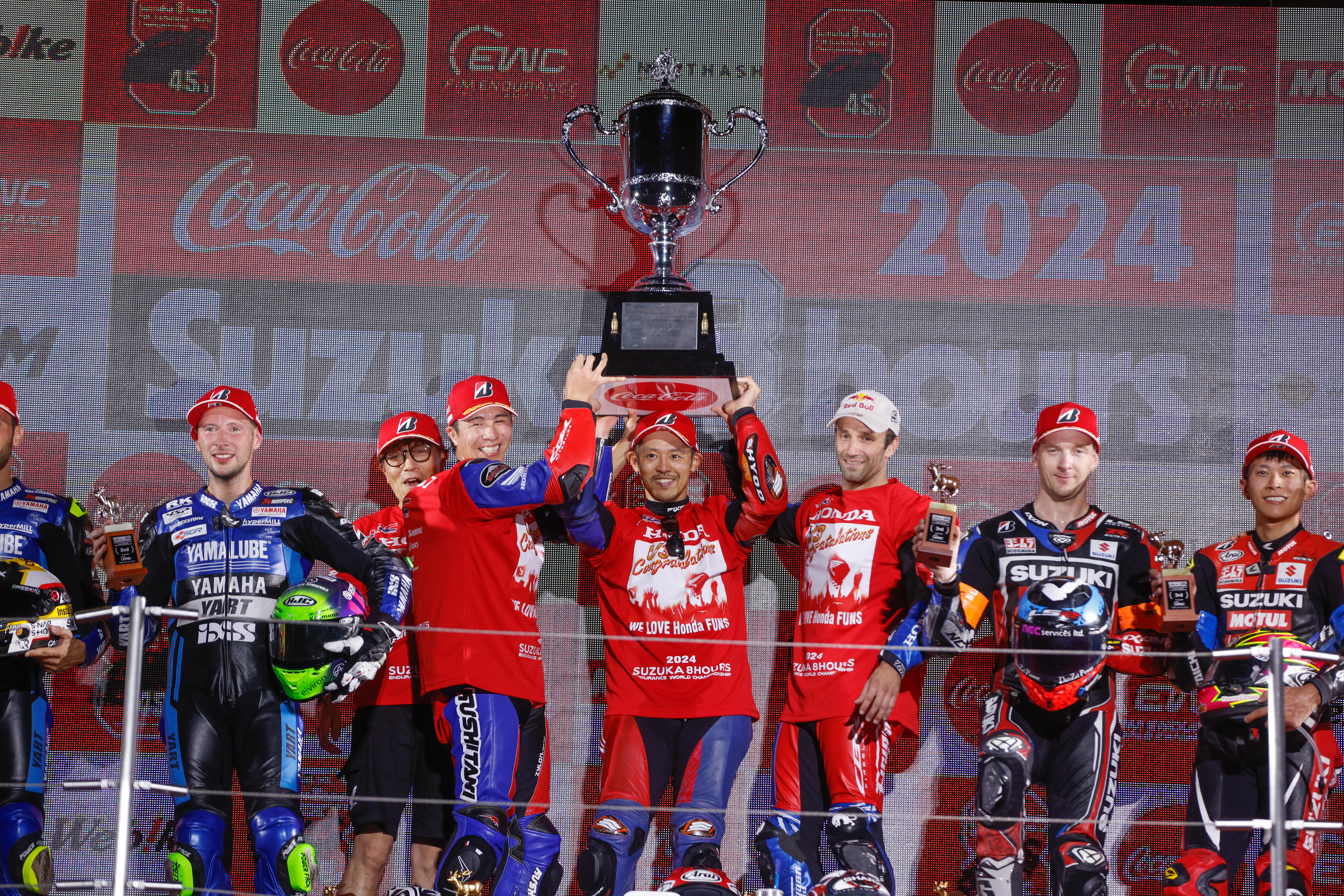
But fourth and fifth? Well, that’ll be Ducati and BMW. Both are on a World racing roll in MotoGP and WorldSBK, respectively, and certain to strike dread into the corporate hearts of Japan, Inc. Racing has always played large in Honda’s legend, and right now the dominant company needs to find all the comfort it can.
The big race was a bit different in other ways, with an echo of the past as well as a warning for the future. One of the three riders who took Honda to the top spot was Johann Zarco. Not just a double Moto2 World Champion, and not just a current MotoGP rider, but also (finally, last year) a MotoGP race winner.
The last time the 8 Hours had a GP winner on the top step of the podium was in 2008. That was Carlos Checa, and he was by then an ex-GP rider, having just switched to Superbikes.
The one before that was (like Zarco) very much an active rider, for it was Valentino Rossi, in his second Honda factory year of 2001, when he won the race on a VTR1000SPW V-twin, teamed with Colin Edwards.
These were isolated outings. It’s more than 30 years since active factory riders were absolutely expected to take a mid-season break from their GP schedule to race for hours into the dark for the honor of their factories.
If you wanted a works ride with Honda, Yamaha, or Suzuki, the 8 Hours was pretty much compulsory, like it or not. And for the main part, the riders didn’t like it at all. With good reason, and not just because it entailed racing at fever pitch for much longer than 40-odd minutes of a GP, nor because of debilitating jet lag midway through an intense GP season.
It was because of the difficulty of switching from light and feisty 500cc two-strokes (aka “real racing bikes”) to burly four-strokes with headlights (aka “diesels”). To race them at high level involved a major change in technique. The differences, including heavier weight and unfamiliar engine braking, took quite a bit of getting used to and, more importantly, quite a bit of getting over when it was time to get back on the smokers. Or so the two-stroke masters insisted.
All the biggest names were involved. Past winners between 1985 and 1992 include Wayne Gardner (three times), Mick Doohan, Wayne Rainey, Eddie Lawson and Kevin Magee. The absolute elite of the 500 class. Only the last-named did not win at least one 500-class World Championship, the others shared 13 between them.
How they complained. The mid-season trip engendered growing disquiet; the return to their full-time employment huge relief. It was a most unwanted interruption.
How different the reported message from Pecco Bagnaia to Ducati big cheese Paolo Ciabatti at this year’s Suzuka race: “Please do a good job and get ready for me.” Implying an enthusiasm that reflects, among other things, that a modern GP racer is already racing a big four-stroke and that the endurance-series thumpers are not very different from a MotoGP bike.
Ciabatti is a crusty veteran of Ducati’s racing enterprises, occupying senior positions in both Superbike and MotoGP, stepping down at the end of last season as the MotoGP team’s sporting director to take up another managerial role. He was at Honda’s track this year as Ducati’s man, presiding over the debut of an official V4 Panigale. This was run by ex-rider Yukio Kagayama’s All Japan Superbike team, which switched to Ducati this year after more than 30 years with Suzuki.
It was ominous, at a race that has always existed as a proving ground and showpiece for the Japanese industry. Ominous also that while Honda, Yamaha and Suzuki took the top three slots, Ducati was fourth, just one lap behind, and BMW just another lap down, their bike entered by the BMW Motorrad World Endurance Team, no less.
Ducati currently dominates MotoGP, BMW looks set to take over the Italians’ control of WorldSBK, thanks to Toprak Razgatlioglu’s serial winning habit.
What’s next? Taking over Japan’s most prestigious event? CN
Click here to read the In The Paddock Column in the Cycle News Digital Edition Magazine.
Click here for all the latest Road Racing news.

