Cycle News Archives
COLUMN
The Italian Connection
By Kent Taylor
You might not believe that there would be a strong Italian presence in a place like Milwaukee, Wisconsin, but you would be as wrong as red wine with seafood. In the early 1900s, thousands of Italian immigrants packed into ocean liners, made their way to this city, and eventually settled in Milwaukee’s Third Ward. They took the backbreaking jobs that hard-working immigrants are willing to do and built the area that would become known as “Little Italy.” Italian heritage is on display everywhere. Milwaukee’s County Courthouse is just one of several structures that feature beautiful Italian architecture, and every year, folks gather for “Festa Italiana” to celebrate their Italian heritage and remember the sacrifices made by their great-grandparents.
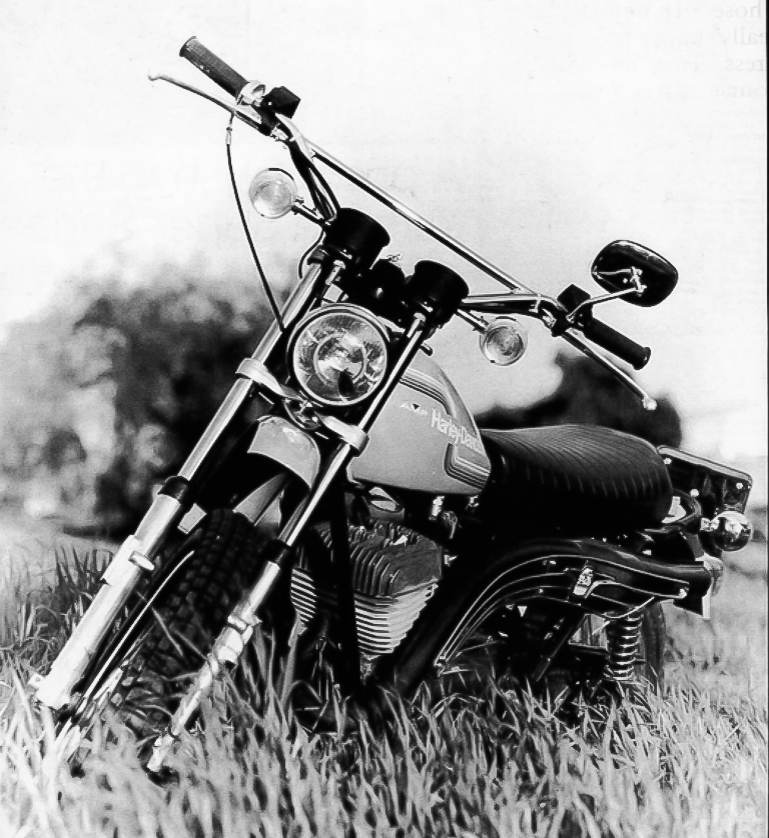
Perhaps this is why Harley-Davidson, that Motor Company located at 3700 West Juneau Avenue in Milwaukee, has a soft spot in its crankcase for Italians. Famous Italian racers like Renzo Pasolini and Walter Villa rode for the Harley-Davidson team in the 1970s, and H-D has dabbled not once, not twice, but thrice in Italian motorcycle companies. They briefly owned MV Agusta and even made a swipe at buying Ducati. The other attempt, which was the most successful, involved the purchase of the Aermacchi company, which would manufacture Harley-Davidson-branded cycles throughout the 1960s and ’70s. Harley and Aermacchi, USA and Italy. Il Viaggio (the journey) was underway!
Cycle News tested one of these H-D Italian jobs way back in 1975. The SX 250 was known as an enduro bike at the time but would be classified as a dual-sport machine today. Some moto-journalists called these bikes “foo-foo” bikes, and they were built for both dirt and the street. Although they usually delivered underwhelming performance in both categories, the CN crew wrote a positive review of this particular foo bike in their April 1st issue. No foo foolin’.
The test began on the asphalt, where the little H-D was a solid performer. “Until we had a good long ride in the dirt with it,” wrote CN, “we would have guessed it was too good of a streetbike to be any use off-road.” The SX 250 came to life quickly (though the too-long kickstart lever, apparently sourced from a Sportster, was an annoyance) and shifted smoothly through its five gears. Like every two-stroke, the little Harley needed to get revved up, and the test crew was happy to oblige, getting into its “kick-in-the-pants” range between 5000 and 5500 rpm.
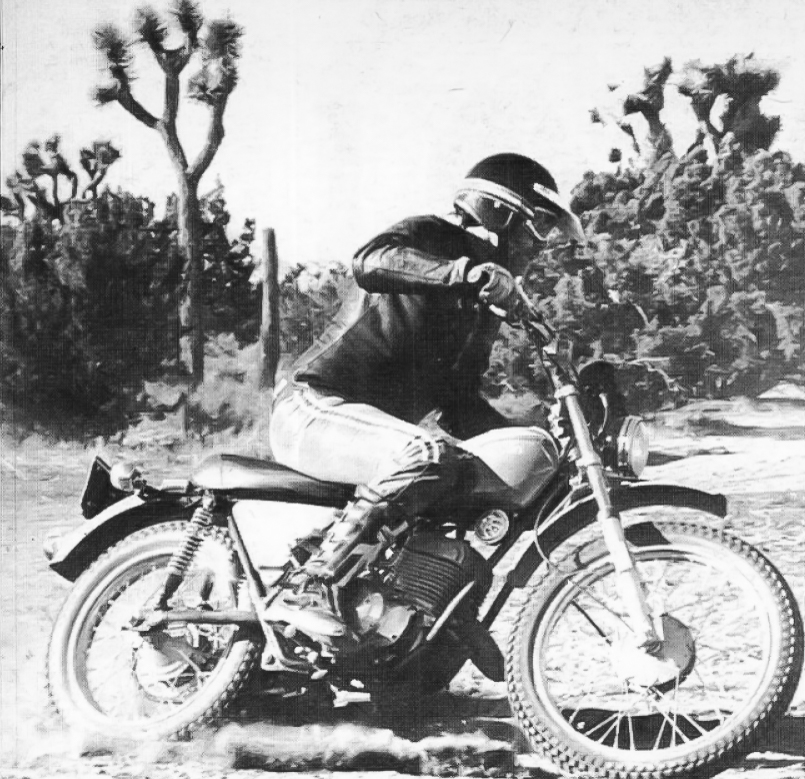
Mind you, the Harley only put out 23 horsepower, so the word “kick” is relative to whatever else turned us on in 1975. “Love Will Keep Us Together” by the Captain & Tennille was the number one song of the year, and the Ford Pinto was still a big seller, indicators that most Americans were satisfied with low-energy entertainment and even lower-energy performance.
The SX 250 didn’t lose its luster with the crew when the road came to an end. Clocking in at just 254 pounds wet according to the CN report, light for a 1970s two-stroke enduro, the Harley was “a Hog that whips through the turns and over the bumps like a jackrabbit.” Photos show the Harley could pull its weight uphill. “There is no mountain the SX can’t climb as long as she is on the pipe.” Whoop-de-doos were no problem. In the turns, the crew recommended that the pilot “massively shift the rider’s weight over the front wheel” for better cornering. For serious off-road work, the owner was encouraged to remove the battery, turn signals and other street bits, all of which could reduce the weight of the bike by about 20 pounds.
The Aermacchi, er, Harley engineers didn’t compromise when it came to adding value to the SX 250. Marzocchi forks were industry-leading suspenders at the time, and they were standard equipment on this motorcycle. No mixing oil and gas, as the Harley used oil injection, smartly located in the top frame tube. There was a quick-change rear hub, a fork lock and the cylinder had a chrome bore. Not good when it is time to bore that same cylinder, but diamond-hard and durable until that point.
The SX 250 carried a price tag of $1130, and Harley-Davidson dealers were plentiful in the ’70s. A good value for a fine motorbike, but as the Motor Company has learned (and has been many times reminded), a Harley-Davidson is a chromed-up or blacked-out V-twin. End of story. The Aermacchi connection would only last a couple more years before the plug was pulled. Il Viaggio finito.CN
Click here to read the Archives Column in the Cycle News Digital Edition Magazine.
Subscribe to more than six decades of Cycle News Archive issues