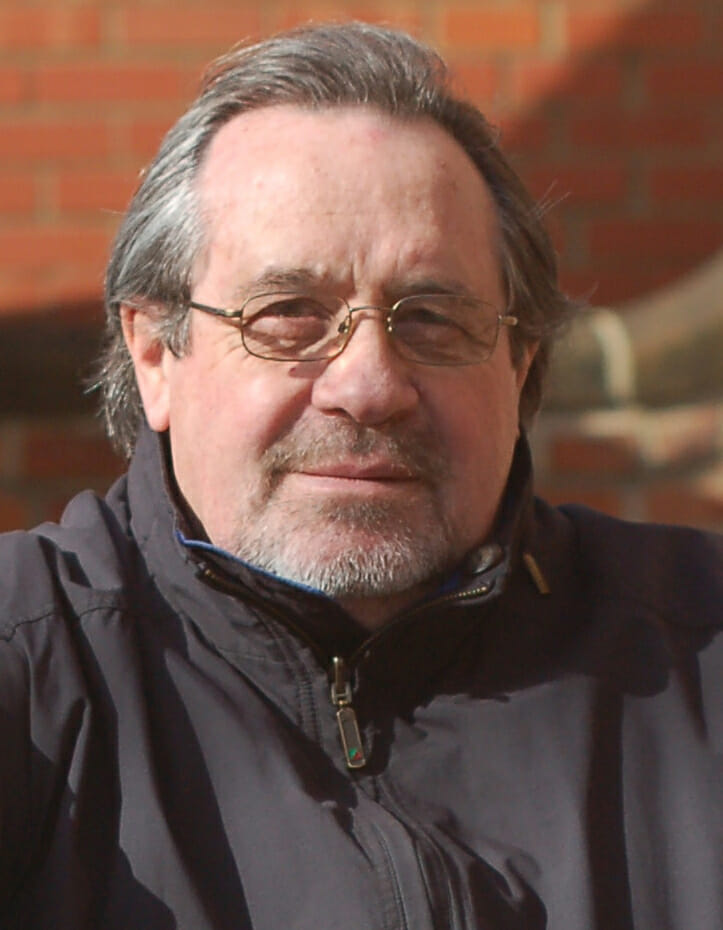
Bruce Cox said he was always looking over fence. He just knew the grass was greener.
As it turns out motorcycle racing was the beneficiary of Cox’s almost continuous stream of great ideas.
Bruce Cox was one half of the legendary promotional company Trippe-Cox Associates (along with his partner and fellow British expat Gavin Trippe). This was the partnership that brought America the Hang Ten U.S. Motocross Grand Prix, the ABC Wide World of Sports Superbikers, helped foster the launch of the AMA Superbike Championship, promoted the Transatlantic Match Races and published a motorcycle publication that raised the bar on racing coverage in this country.
It’s not hyperbole to say that Bruce Cox and Gavin Trippe were two of the most seminal figures in all of motorcycle racing during their fruitful partnership that lasted for 15 years starting in 1969.
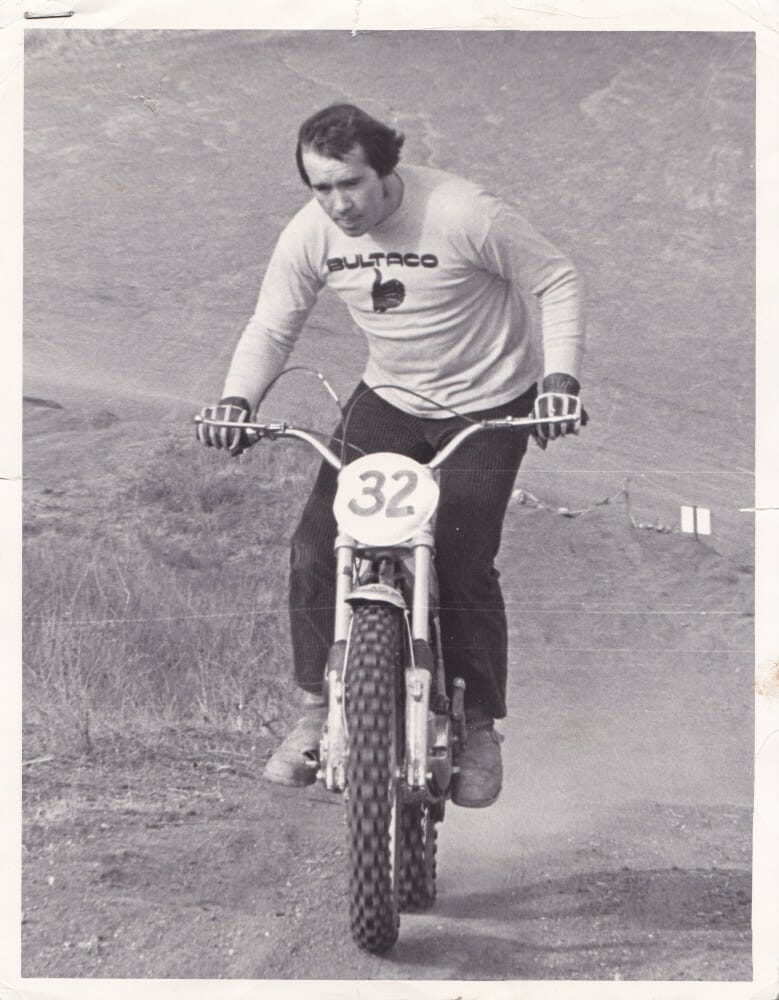
Off-road riding and racing became a favorite for Cox when he lived in Southern California.
In America, Trippe is better known, since he stayed in the States and re-emerged during the heyday of the AMA Supermoto Championship in the mid-2000s. Cox, on the other hand, moved back to his home in England and although he continued to make major contributions to motorcycle racing there, his visibility in the U.S. faded after he returned. Trippe rightfully went on to become a member of the Motorcycle Hall of Fame, while Cox’s considerable contributions to the sport here in America have been largely overlooked.
Cox was a self-admitted motorcycle and car racing fanatic from childhood. He and some friends rode their bicycles to Silverstone in 1956. “We huddled under our rain capes all day as it poured down and watched the likes of John Surtees and people like that going ‘round.”
He also had a talent for writing. While still in school he began covering sporting events for a newspaper in his hometown of Banbury. When he was 16 they offered him a job on the sports desk. “Much my parents’ horror,” Cox adds with a grin. “they expected me to go to college and get a degree and a proper job.”
After only a year the paper gave Cox his own racing column. Shortly afterwards he was hired as a feature writer by Motor Cycling – a leading British weekly motorcycle magazine. At 19 years-old he was then the youngest feature writer ever employed by a major motorcycling publication. After a stint as Assistant Editor of Motorcycle Mechanics, he became a freelancer in 1964.
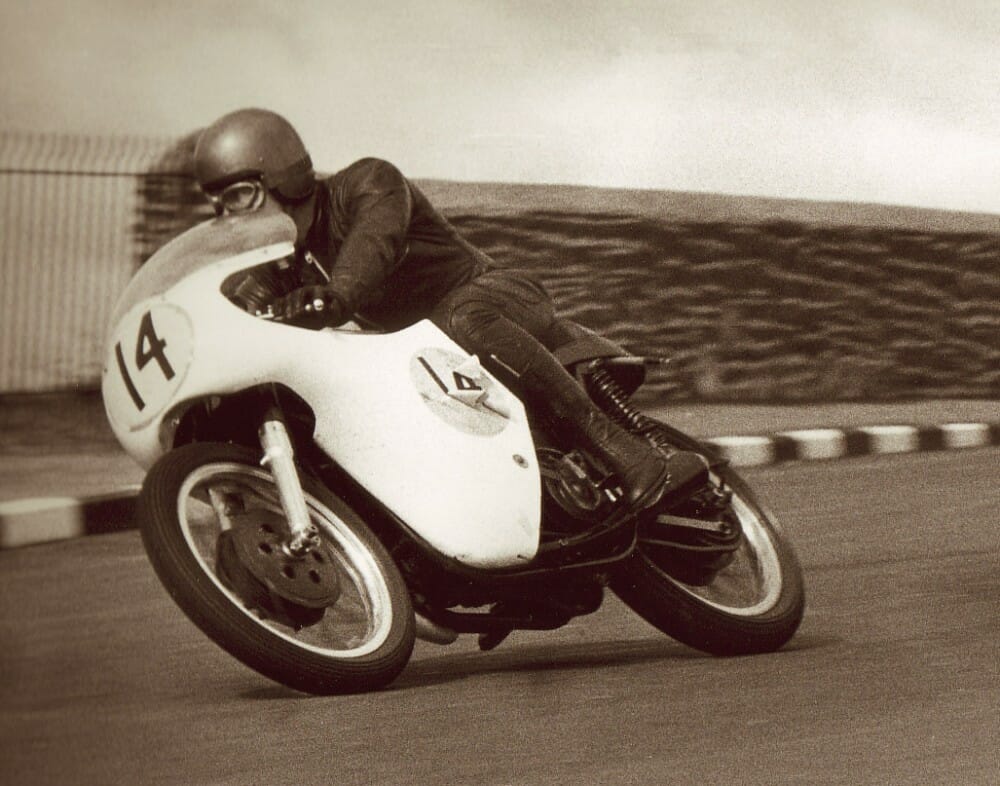 Cox in the 1963 Manx GP
“I very much wanted to be my own boss since I was getting into racing as well,” said of his decision to strike out on his own. “I thought I could go off racing and combine it with journalism. That was the dream anyway.”
Cox got good enough in racing that he earned an international license and he competed in a variety of events including the iconic Isle of Man.
He even made the jump from racing motorcycles to cars for a time. “I was a bit of a jack of all trades and master of none,” Cox said of his racing days. “I was fairly competent, but was never going to be anything more than a name in the program really.”
Friend and burgeoning GP racer Rod Gould and Cox went to check out America for an extended working vacation in the winter of 1967. Gould knew Cycle World editor Ivan Wager, having met at the Isle of Man.
“The first stop we made in California, having just driven cross country from New York, was the Cycle World offices hoping to get a lunch,” Cox remembers with a laugh. “Joe Parkhurst and Ivan took us out and before the lunch was over Rod was set up to help at a dealership and got a Kawasaki ride with Chief Galbraith, who had a dealership in Goleta and sponsored Reg Pridmore, and I was hired to work at Cycle World for the three months I was there.”
While in America Cox surveyed the landscape, and felt there was room for another weekly motorcycle racing publication in America. He recruited fellow British journalist Gavin Trippe, who bravely agreed to join Cox in America along with another young writer named Bob Berry early in 1969 to launch Motor Cycle Weekly, even scoring some generous help from his friend Joe Parkhurst, in the form of Cycle World’s mailing list!
It wasn’t long after starting the new publication that the owner of Ascot Park somehow convinced Cox and Trippe to take over the promotions of the weekly flat track races. “He told us we had the newspaper to advertise and cover the races and that was half the battle, so we suddenly became race promoters,” Cox said. That was the beginning of Trippe-Cox Associates, a company that would become arguably the most important motorcycle racing promotion group of the 1970s.
It was Trippe-Cox which began promoting motorcycle races at Laguna Seca Raceway and helped back a group trying to get Superbike racing on a national level by becoming the first promoter to hold Superbike events alongside the regular AMA National Road Racing weekend. That helped the foster the formation of the AMA Superbike Series by 1976.
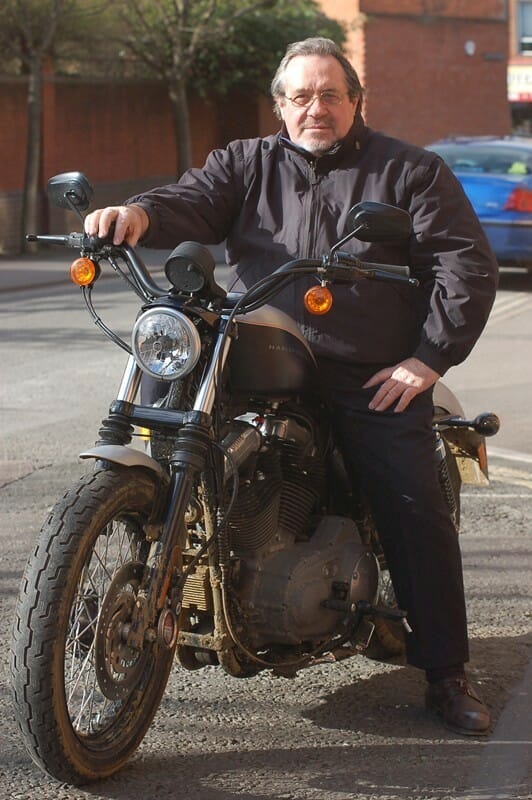
Perhaps most importantly it was Trippe-Cox who first brought Grand Prix Motocross to America. To this day, Cox remembers the meeting at AMA headquarters in Ohio where he sat and explained a perplexed group of AMA senior leadership and select promoters on the particulars of motocross scoring.
Numerous national events in road racing, motocross and flat racing were promoted by Trippe and Cox during the period between 1970 and 1984. Also of major significance was the creation of the Transatlantic Trophy Series of match races between the top riders in the UK and USA which ran from 1971 until 1986. Along the way, the duo also helped produce and promote the wildly popular ABC Wide World of Sport Superbikers competition.
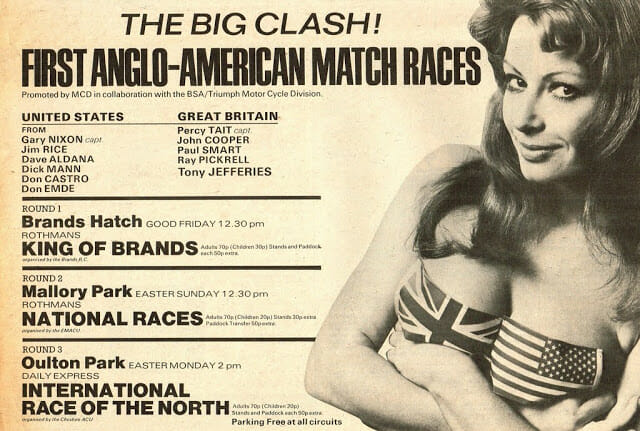 Trippe-Cox Associates promoted the popular Transatlantic Match Races.
It was an unbelievably productive period for the pair of Brits and their activities changed the course of racing in America.
By 1984 the business relationship between Cox and Trippe had run its course. “I’d gone back to take on a major project with Yamaha in Europe,” Cox said. “Our partnership was more of a drifting apart rather than a formal split.”
Cox continues to be an idea man to this day with boundless imagination. After developing several racing series in Europe, Cox eventually moved into television and video production. He had a hand in producing over 100 programs on automotive and motorsport subjects and remains involved on projects in which he has a personal interest.
Cox is semi-retired now and is working on a producing a book series with popular motorcycle journalist Alan Cathcart. At the end of this year he and his old friend Rod Gould plan on reuniting and retracing their trip across America on the 50th anniversary of their first visited.
It was a trip that ultimately not only changed Cox’s life, but also the history of motorcycle racing in America.