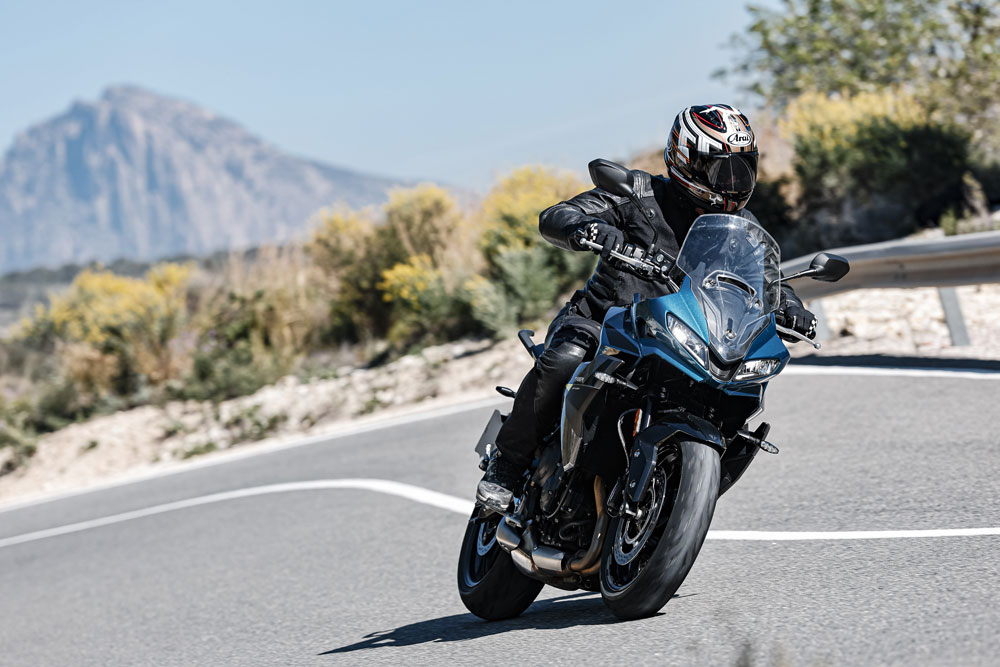
The Triumph Tiger Sport 660 has been a resounding success for the brand for the last four years, and Triumph has given it the once-over for 2026.
Photography by Chippy Wood
The middleweight adventure/travel category has become one of the most hotly contested riding battlegrounds of late, and for good reason. Riders want versatility without bulk, performance without intimidation, and long-distance comfort without sacrificing fun.
Into this space rolls the updated 2026 Triumph Tiger Sport 660—first seen in 2022, but now sharpened via revised bodywork, an IMU with ride-by-wire, cruise control and lean-angle-sensitive traction control and ABS, and a fresh palette of colors aimed at keeping it relevant in an increasingly crowded field that includes Yamaha’s Tracer 700, Suzuki’s V-Strom 650 range and the Kawasaki Versys 650.
At first glance, the $10,445 Tiger Sport 660 changes might seem modest, but we spent a day in the saddle in Spain, and the improvements revealed themselves in a bike that felt more cohesive and enjoyable than its predecessor.
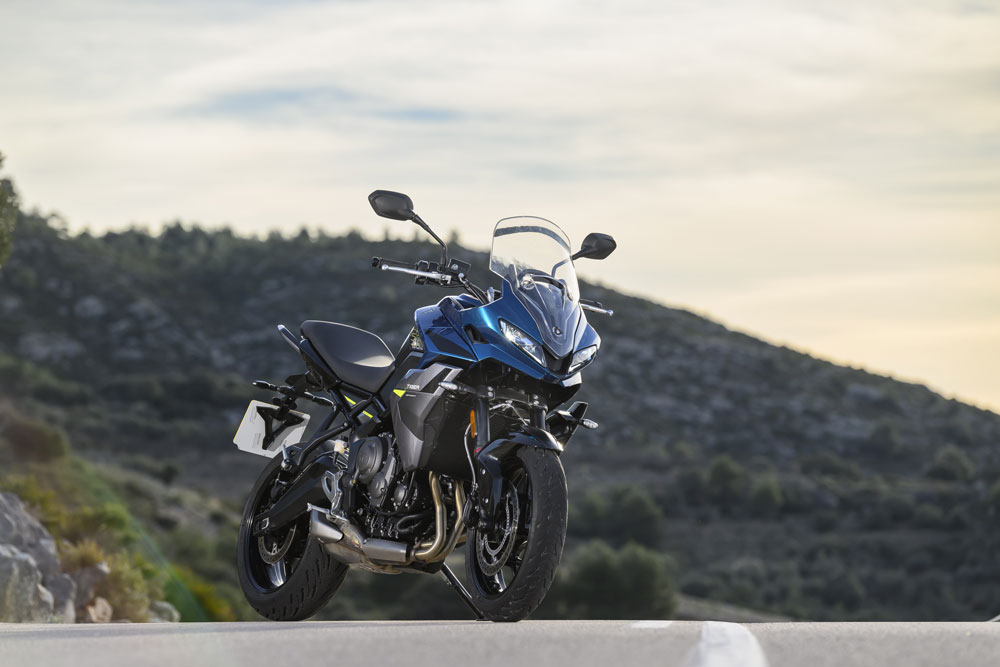
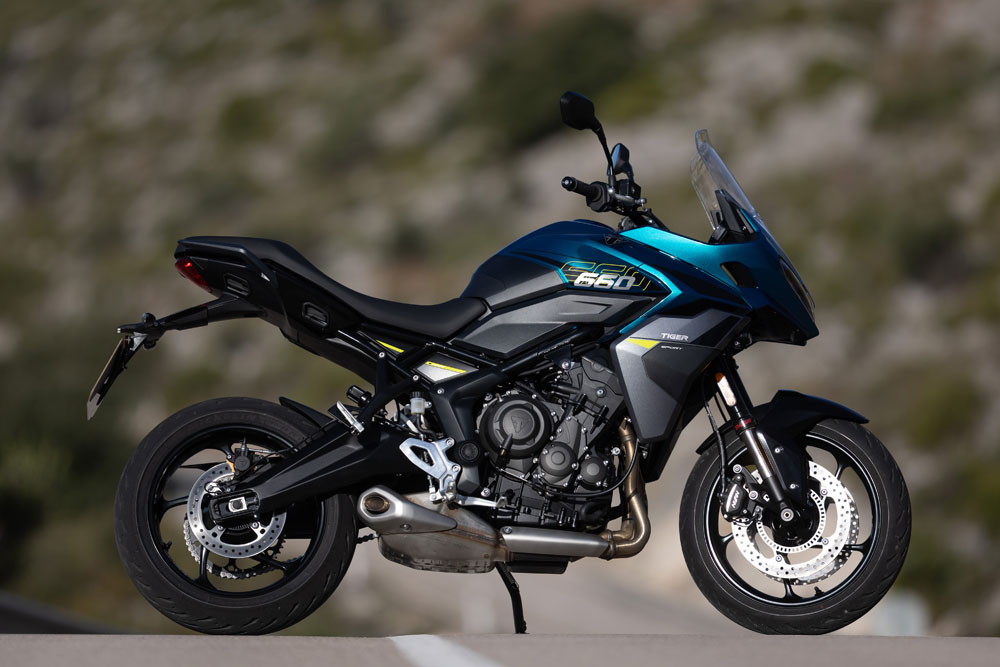
The 2026 Tiger 660’s bodywork is slimmer through the midsection, with sharper lines that give it a sportier stance. The front-end gets a subtly tweaked headlight bezel and cleaner airflow, and while it’s not a radical departure from the 2022-2025 model, it’s enough to give the bike a fresher, more premium appearance.
The seat height sits at a very reasonable 32.9 inches, which should be low enough for shorter riders to feel confident but tall enough to maintain that commanding adventure-bike posture. The Tiger feels narrow between the knees, and at a claimed wet weight of around 465 pounds, you still have a decent amount of bike underneath you.
At the heart of the Tiger 660 is Triumph’s 660cc inline-triple that has seen action first in the Daytona and also in the Trident 660. Producing a claimed 95 hp and 50 lb-ft of torque, the engine delivers its power in a smooth, linear fashion that suits both new riders and experienced hands. There’s enough go there to keep both camps happy.
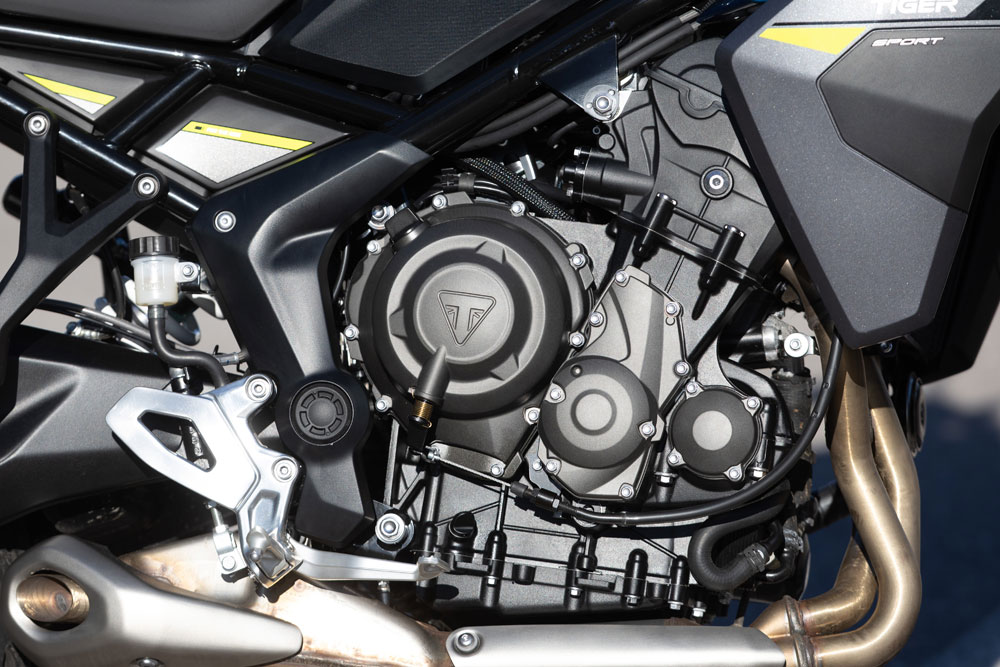
The ’26 Tiger shares much of its DNA with the Trident 660 and thus gains the new triplet of 44mm throttle bodies in place of the single unit on the 2022-2025 models. There are also higher-lift cams and larger exhaust valves, enabling this triple to boast an increase of 14 horsepower and 2.8 lb-ft with 1000 rpm more to play with.
There are three riding modes of Rain, Road and Sport, and the throttle response is cleaner and crisper, particularly at low traffic speeds, as rolling on the throttle from a stop or navigating tight traffic feels more controlled.
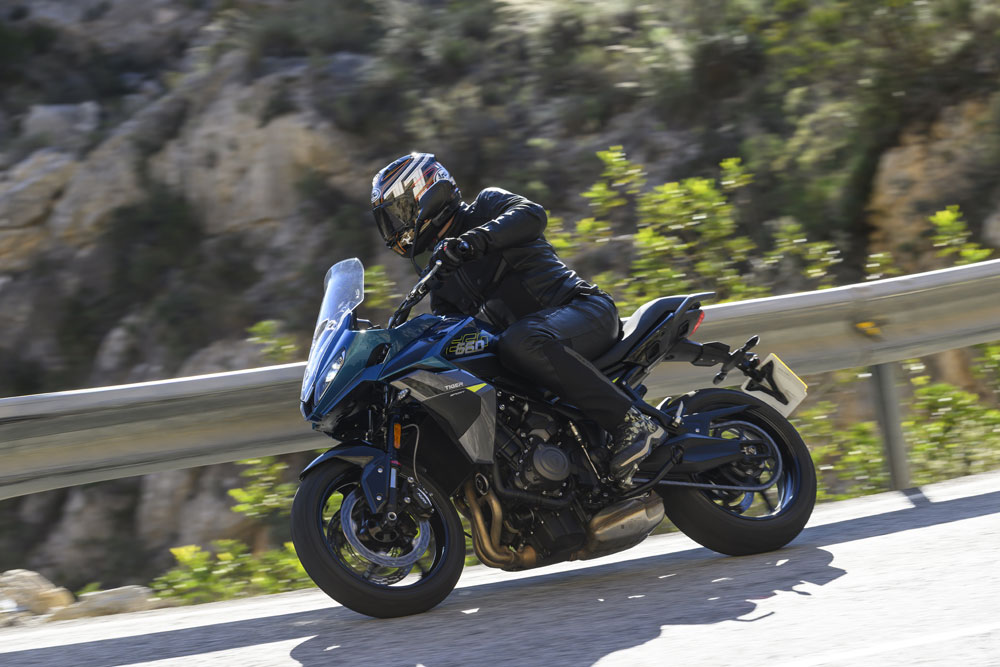
On open roads, the three-cylinder engine shines. Triumph claims 80 percent of its torque is on hand from 3000 to 12,000 rpm—the 660 pulls cleanly from low revs, builds momentum through the midrange, and continues with a satisfying rush toward the top end, almost like a four-cylinder.
And when paired with that monster induction roar, you could be forgiven for thinking you’re on a bike 300cc larger. There’s character to burn with this motor. It’s the kind of engine that encourages you to ride longer, not faster—though it’s certainly capable of both.
Inside the six-speed gearbox, the first five ratios are closer together, while cruising at 65 mph on the freeway in sixth gear puts the engine at a comfortable 4000 rpm with minimal vibration. Sixth gear is more of an overdrive for long-distance travel, but there’s enough reserve power for snappy overtakes without having to backshift excessively via Triumph’s delightful quickshifter-assisted six-speed ’box.
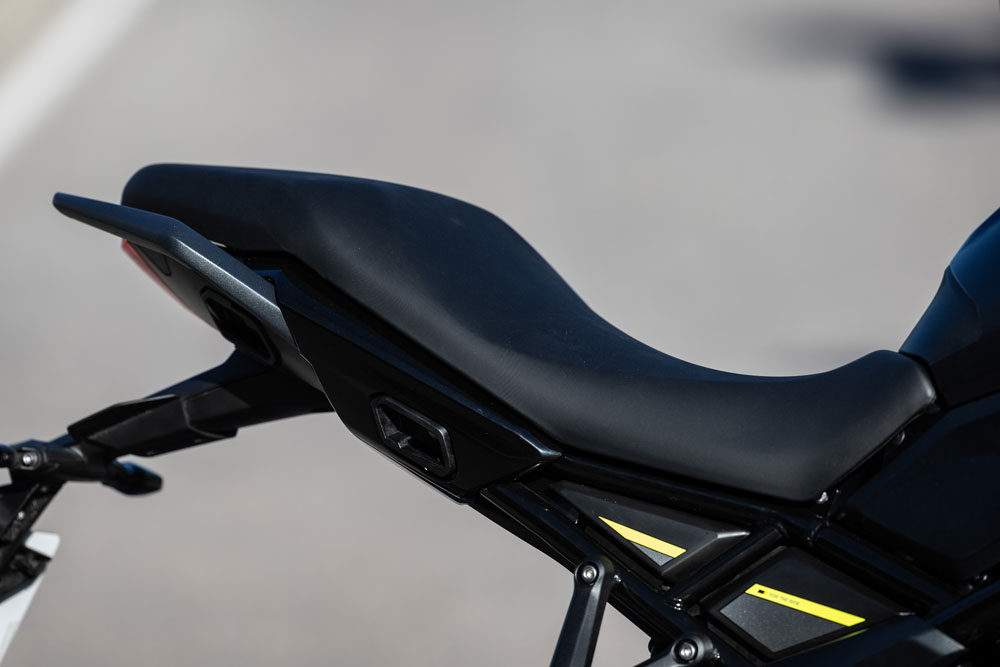
The Tiger uses a steel rather than an aluminum chassis and swingarm, primarily for cost-saving reasons. There have been various ergonomic changes implemented, partly due to those three throttle bodies and the necessary widening of the top of the chassis, and to make the rider a touch more comfortable.
Wider side panels accommodate a larger radiator and give it a slightly fatter look from the front, while a 10mm-wider handlebar provides a touch more cockpit room. There’s also a little more tank capacity, 0.36 of a gallon, to be precise.
The suspension setup—nonadjustable Showa 41mm upside-down forks up front and a preload-adjustable rear shock—has not seen major changes for 2026. It’s a similar setup to the Trident 660, but unlike that sportier version, the softness of suspension seems to play into the Tiger’s strength.
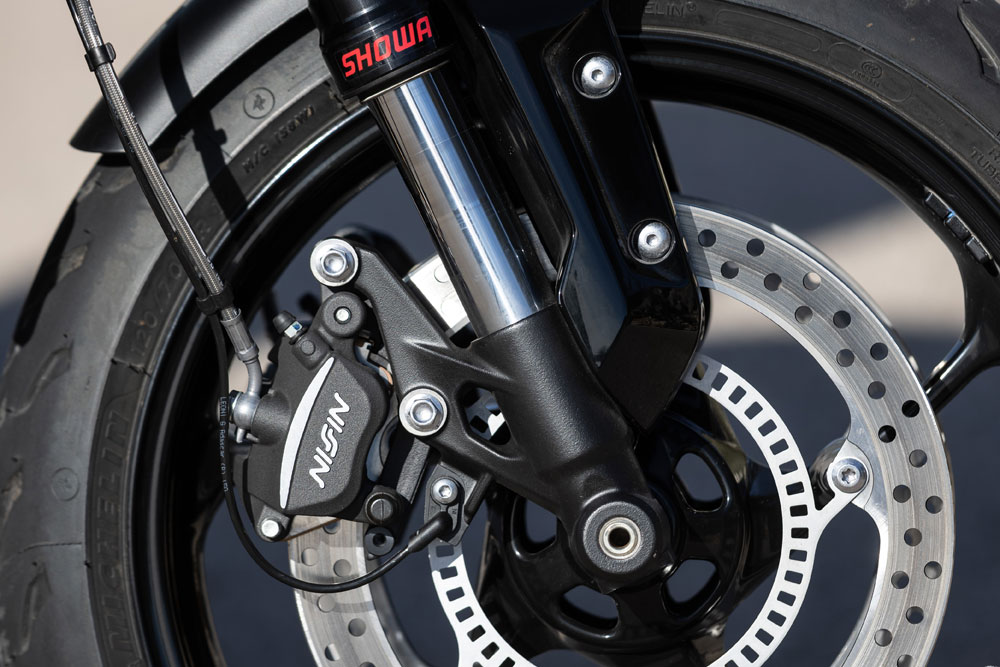
Triumph has judged the balance between comfort and control pretty well, if, indeed, the same setup on the Trident is too soft. Over rough pavement, the Tiger absorbs most of the imperfections, although don’t go searching for hard-edged potholes, lest you go blowing through the stroke quicker than you can blink.
When the pace wicks up a touch, the suspension will handle things up to relatively quick speeds, but you need to be slow and careful with your movements to stop the chassis pogoing itself.
Braking performance is lacking via its small twin-piston front caliper and 310mm disc setup. The feel at the lever is progressive, offering good initial bite without being overly aggressive that will appeal to newer riders, but don’t go expecting huge performance out of the stoppers. Cornering ABS comes standard, as expected, and works unobtrusively in the background.
One of the Tiger 660’s strongest attributes is its comfort. The upright seating position, combined with the wider handlebar and well-padded seat, makes it an easy bike to spend hours on. The rider triangle feels natural, and after four hours on board I could have easily done four more.
Wind protection has been subtly improved with the new bodywork. The revised front fairing does a better job of deflecting airflow away from the rider’s chest, and the adjustable windscreen will deflect air decently as long as you’re under six feet tall. Any taller than that and it will blast the air right at your head, so I left it in the lowest setting and just dealt with the wind blast, which really wasn’t that bad in the end.
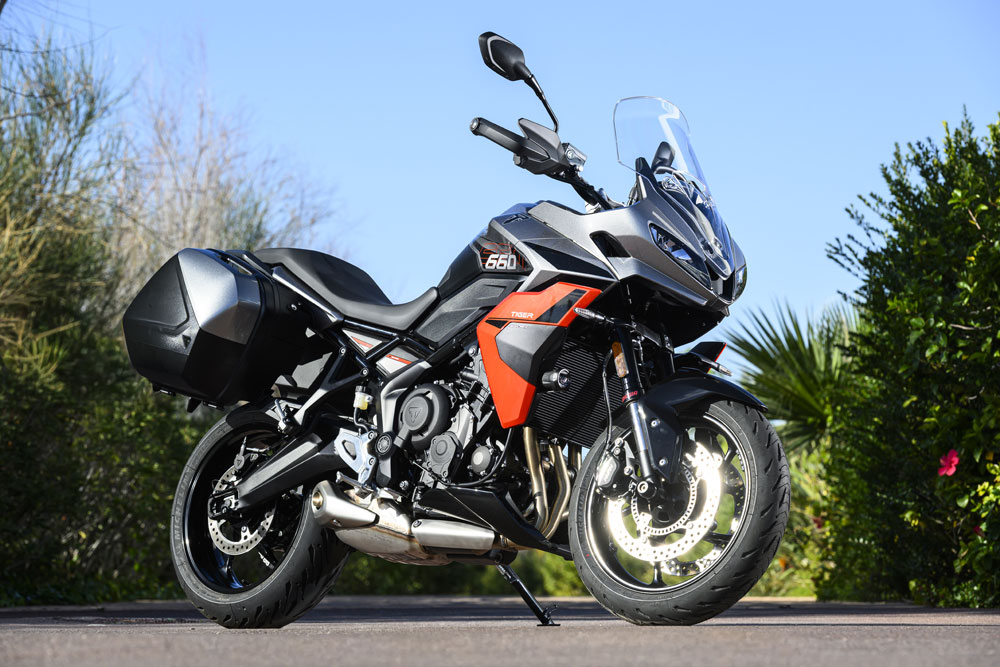
Passenger accommodations are also respectable with a good-sized seat and long grab handles. It’s a bike that can comfortably handle two-up riding, although I feel that if you’re carrying more than one person with luggage, you’ll want to put a stiffer rear spring in the shock to stop it from understeering under all that weight.
Triumph has kept the Tiger 660’s electronics package relatively straightforward, which is arguably part of its appeal. You get ride-by-wire throttle, switchable cornering ABS traction control and three riding modes of Rain, Road and Sport. These systems are easy to understand and don’t overwhelm the rider with complexity.
The TFT display is pretty small and dated by today’s standards, but it is clear and intuitive, providing all the essential information at a glance. Smartphone connectivity is available, allowing navigation, calls and music control. Lighting is fully LED, contributing to both visibility and modern aesthetics.
Where the Tiger 660 really excels is in its versatility. It’s a bike that feels just as at home filtering through city traffic as it does carving through canyon roads or heading out for a weekend getaway. It would make a perfect inner city courier bike.
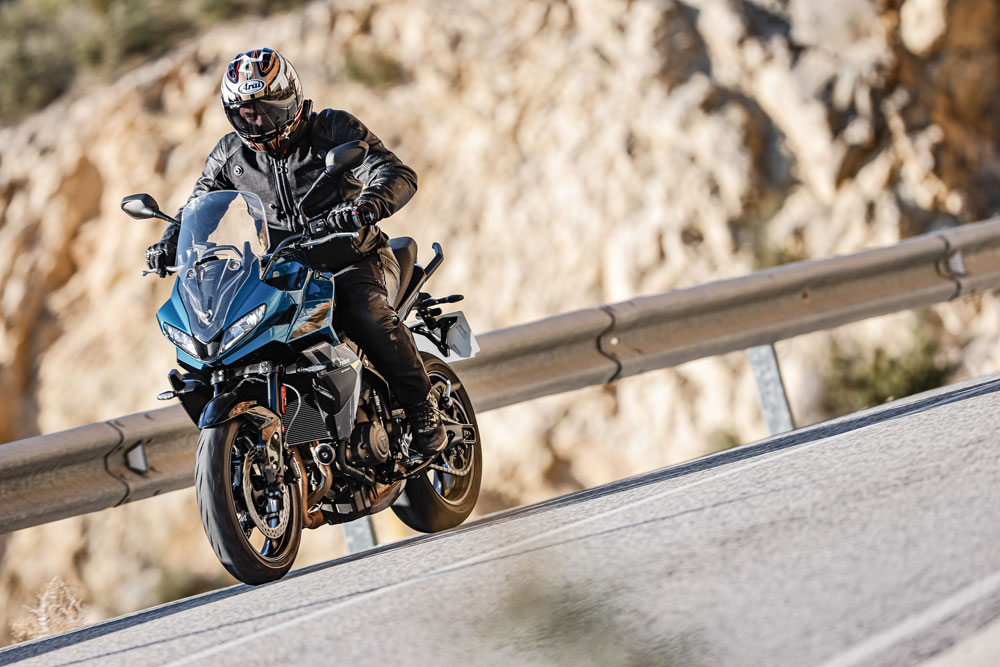
The 2026 Tiger Sport 660 isn’t a dramatic reinvention, but it is a thoughtful evolution of a platform that was already doing many things right. The updated bodywork brings a fresher look and improved wind protection, while the fuel injection tweaks enhance the riding experience in subtle but meaningful ways.
It’s approachable without being boring and versatile without trying to be everything to everyone, although I suspect new riders will find more favor with this bike than anyone else. The triple-cylinder engine remains a highlight, offering that beautiful Triumph concoction of smoothness and character that sets it apart from its twin-cylinder Japanese rivals.
For riders looking for a practical, enjoyable, and well-rounded travel-style motorcycle—whether as a first travel bike or a downsized alternative to larger steeds—the Tiger Sport 660 makes a compelling case.CN
VIDEO | 2026 Triumph Tiger Sport 660 First Ride

2026 Triumph Tiger Sport 660 Specifications
| MSRP | $10,445 |
| Engine | Inline 3-cylinder, 240° firing order |
| Valvetrain | 12-valve, DOHC |
| Displacement | 660cc |
| Bore x Stroke | 74 x 51.1mm |
| Cooling System | Liquid |
| Compression | 12:1 |
| Max Power EC (claimed) | 95 hp @ 11,250 rpm |
| Max Torque EC (claimed) | 50 lb-ft @ 8250 rpm |
| Fuel System | Multipoint sequential electronic fuel injection w/ electronic throttle control; 3 rider modes (Rain, Road, Sport) |
| Exhaust | Stainless-steel 3-into-1 header system w/ low single-sided stainless-steel silencer |
| Clutch | Wet, multiplate, slip & assist |
| Gearbox | 6-speed |
| Frame | Tubular steel perimeter frame |
| Swingarm | Twin-sided, fabricated pressed steel |
| Front Wheel | Cast, aluminum alloy, 5-spoke, 17 x 3.5 in. |
| Rear Wheel | Cast, aluminum alloy, 5-spoke, 17 x 5.5 in. |
| Front Tire | 120/70 R 17 in. |
| Rear Tire | 180/55 R 17 in. |
| Front Suspension | Showa 41mm upside-down SFF-BP forks |
| Rear Suspension | Showa monoshock RSU, with preload & rebound adjustment |
| Front-Wheel Travel | 4.72 in. |
| Rear-Wheel Travel | 5.12 in. |
| Front Brakes | Twin 310mm fixed discs, 2-piston sliding calipers, OCABS |
| Rear Brakes | Single 255mm fixed disc, 1-piston sliding caliper, CABS |
| Instrumentation | LCD multifunction instruments w/ integrated color TFT screen |
| Length | 81.5 in. |
| Seat Height | 32.9 in. |
| Wheelbase | 55.8 in. |
| Rake / Trail | 23.1° / 3.8 in. |
| Weight (wet, claimed) | 465 lbs. |
| Fuel Capacity | 4.9 gal. |
| Service Interval | 10,000 miles/12 months (whichever comes first) |
Click here to read the 2026 Triumph Tiger Sport 660 Review in the Cycle News Digital Edition Magazine.