Cycle News Archives
COLUMN
The Boy’s Wish
By Kent Taylor
It seems like everybody these days is afraid of socialism again, but history shows us that everything from rock stars to cars to electric guitars thrives in a world of shared resources. Ronnie Wood went from the Faces to the Rolling Stones. Gretsch guitars are owned by Fender, and in a crazy family tree of automotive brands, Mercedes-Benz once held the intellectual property rights to American Motors. A luxury Mercedes Gremlin is a laughable idea, but a Javelin Benz (with the optional 390 cubic-inch V8, pumping out 315 horsepower) would’ve shown stiff-lipped Germans what a real muscle car could do on the Autobahn. Wunderbar!
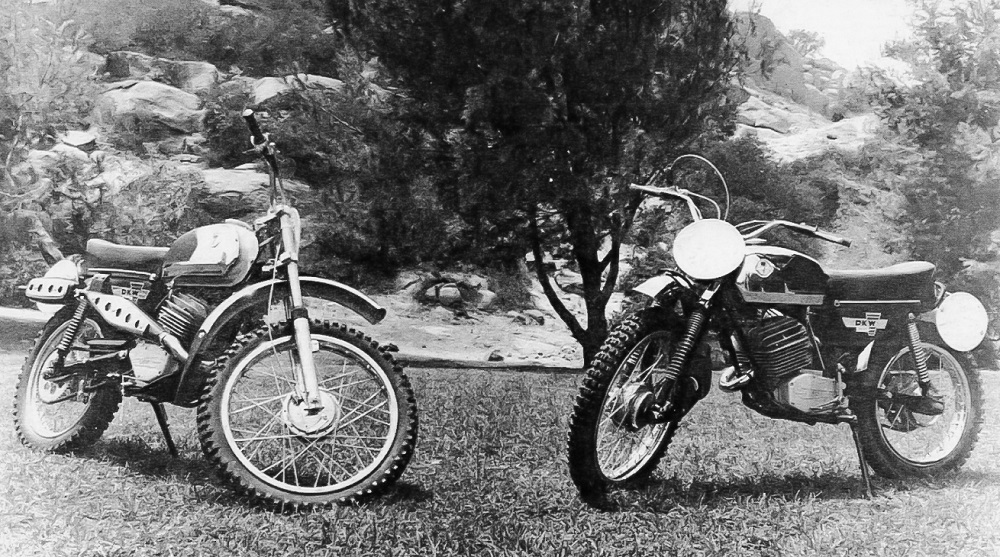
While in Germany, be sure to drive that imaginary automobile to Zschopau, Saxony, the birthplace of the DKW motorcycle. DKWs have been gone for nearly 50 years, but in the 1960s and ’70s, it was not unusual to see these unique machines near the front of the motocross pack, especially in the 125cc class. Cycle News tested two DKW 125 models in its August 22nd issue, way back in 1972, right about the time that Ronnie and the Faces were laughing about poor ol’ granddad.
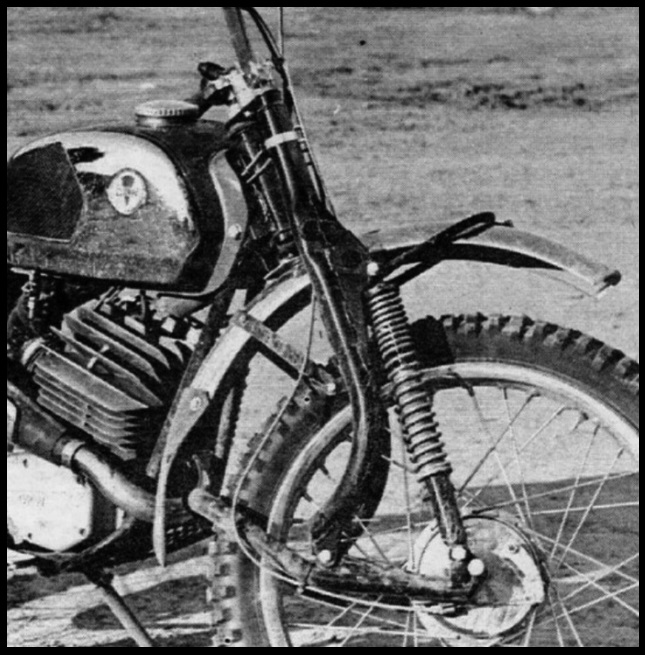
In 2026, even the most discerning MX fan will have a hard time distinguishing one motocross bike brand from another. Swap out their many plastic parts, and it would be nearly impossible. It was a different story in the 1970s, when motorcycle manufacturers were designing and testing from original ideas. And no machine looked more like itself than the DKW Hornet with its springer front end.
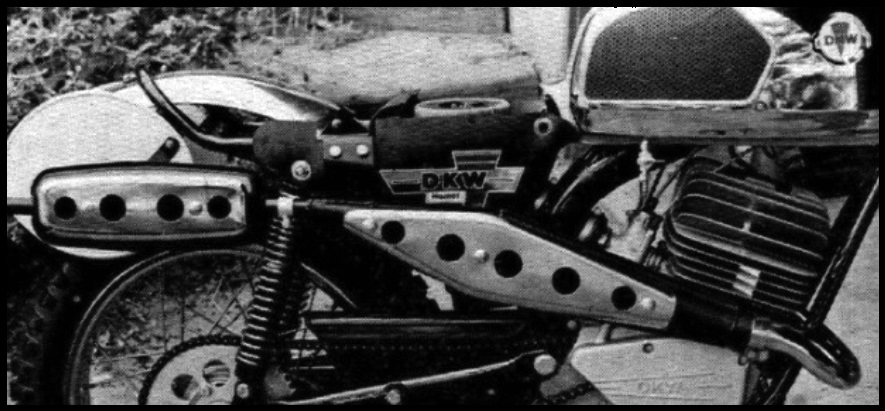
“On rough, cobby stuff,” CN wrote, “…any telescopic [fork] will transmit the up-and-down jolts to the hands. The springer front-end doesn’t. The movement of the springer fork is a fairly slow, dampened back-and-forth motion in the horizontal plane, which is much easier to hold onto at speed. Stories that they are not as precise in tracking are, for 95 percent of all riders, nonsense. You stick the springer DKW into a corner and hold it on a line, and it stays there.”
CN refers to the “springer DKW” because it also tested the conventionally forked Hornet in the same story. The DKW springer model sold for $829, while the Hornet with Betor front suspensions could be yours for $859. Aside from the front-wheel suspension (and a painted stripe on the fuel tank), the two bikes were identical. The CN crew loved the powerplants on the German bikes. They were one-kick starters and never fouled a spark plug. A six-speed transmission was well-spaced, helping the little DKW produce a claimed 24 horsepower. “There is probably more to be gotten out of it,” wrote CN, before admonishing the reader to “leave it alone.”
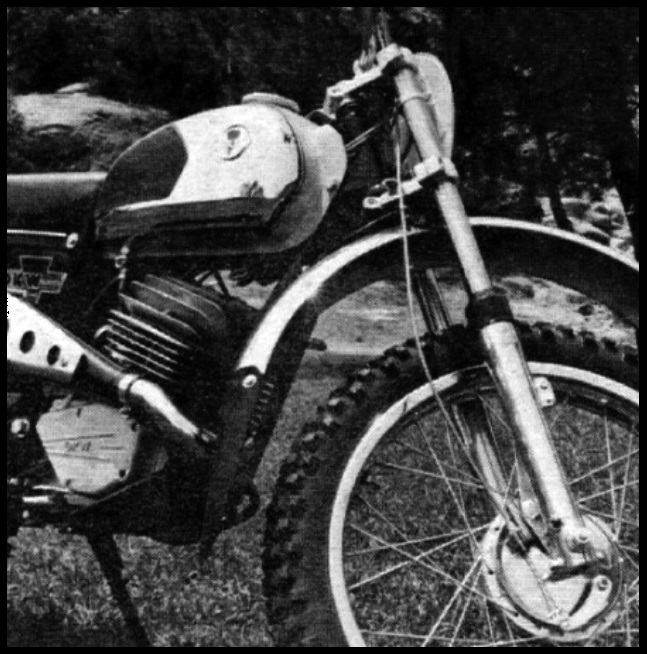
Great performance and “handling that cannot be faulted.” The only noted grievances were the stock paper air filter and the rubber cover on the gearshift lever. A rubber-covered gearshift lever on a motocross bike is another reminder that, along with a kickstand and chromed fenders, motocross bikes have come a long way. Though faster and stronger, they certainly aren’t as user-friendly as they once were.
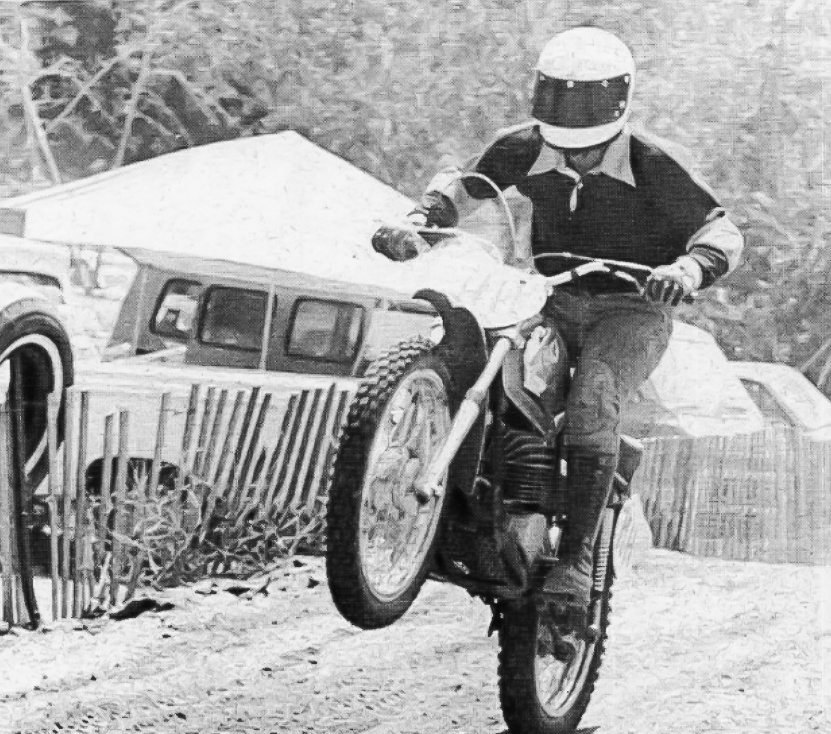
DKW (des Knaben Wunsch, meaning “the boy’s wish”) was once the world’s largest manufacturer of two-stroke motorcycles, and its three-cylinder engines were even used to power DKW automobiles. When World War II came along, being on the losing side cost the company one of its smaller-engine designs, with both the United States (Harley-Davidson) and Great Britain (BSA) awarded the rights to the motor, which ultimately became the Hummer (Harley) and the Bantam (BSA). In the mid-’60s, Sachs acquired DKW, and Sachs engines began appearing in other brands’ lineups. This same issue of Cycle News featured a test of a Swedish motorcycle called a Monark, powered by what appears to be the very same two-stroke found in the DKW.
Aprilia, Penton (KTM), and Hercules motorcycles all have at least one root in the Sachs/DKW tree, and the 125 Hornet earned its place in MX history, giving young MX’ers a competitive mount in the small-bike class. Ooh la la! The boy’s wish, indeed. CN
Click here to read the Archives Column in the Cycle News Digital Edition Magazine.
Subscribe to more than six decades of Cycle News Archive issues