Cycle News Archives
COLUMN
When a motocross National was held in a cornfield in Nebraska
By Kent Taylor
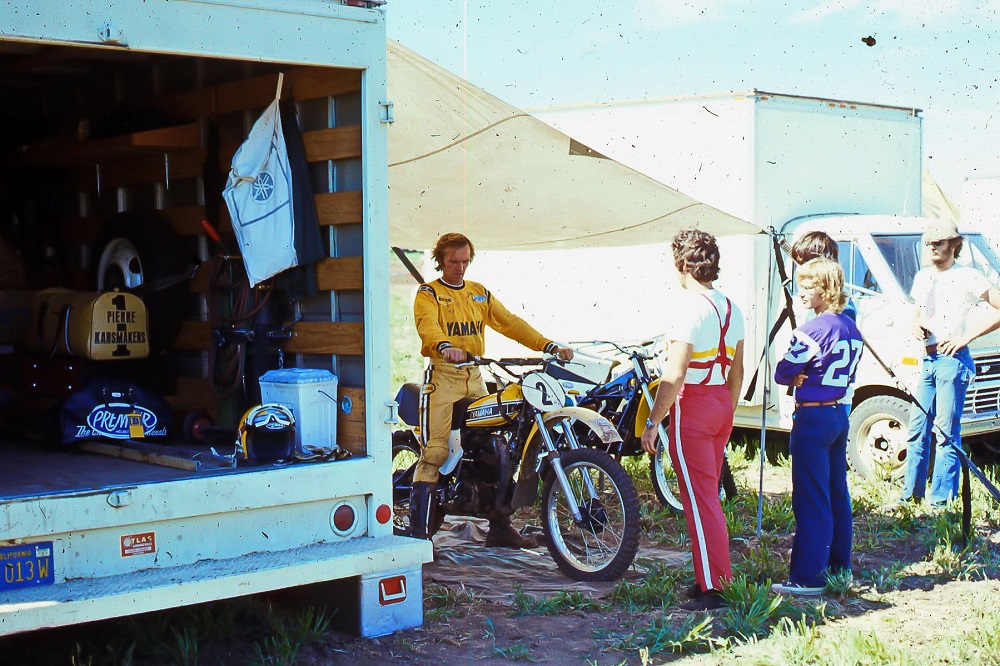
It happened in 1974, he said, at a non-National motocross race in Herman, Nebraska. Pierre Karsmakers lifted his hand to reveal 4 7/8 fingers and then began to tell the story of the day his works Yamaha snapped a titanium motor mount bolt during his moto. Determined to keep the engine in place as best he could, Pierre reached down to push the sheared bolt back into the hole in the mount and into the engine casing. And it worked, many times, until the bolt fell away and Karsmakers blindly pushed his finger into the empty hole. The motor mount was solidly in place, but the Yamaha engine moved—just enough to slice off the tip of the Dutchman’s digit. A fingertip and one headless titanium bolt, buried in the clay of a rural Nebraska racetrack.
“Every time it is cold,” winces Karsmakers, many decades later, “I think about Nebraska.”
Photography by Mark Lancaster
Pierre Karsmakers was from the Netherlands, a Husqvarna rider who was competitive in Grands Prix competition, lured to the U.S. by Team Yamaha to compete in the young AMA series. Yamaha had just lost its own champion, Gary Jones, to rival Honda, and they responded by bringing in an established European star as payback.
Foreigners dominating U.S. motocross is no longer a foreign concept. In 2026, the best motocross racers in America aren’t even Americans. At the recent RedBud 450cc National, the top three finishers—Hunter Lawrence, Jorge Prado and Jett Lawrence—are Australian, Spanish and Australian, respectively. Eleven of the top 25 racers were from other countries. RJ Hampshire’s distant fourth overall at RedBud (on the Fourth of July weekend, no less) was reminiscent of a time when “First American” in the standings was a big deal 50 years ago.
Such was the scene in 1973 when Karsmakers dominated American MX, winning the 500cc National Championship for Yamaha. U.S. riders, who were accustomed to being thumped by foreigners in the autumn Trans-AMA series, were now getting a woodshed whipping, Euro-style, during the rest of the season, too.
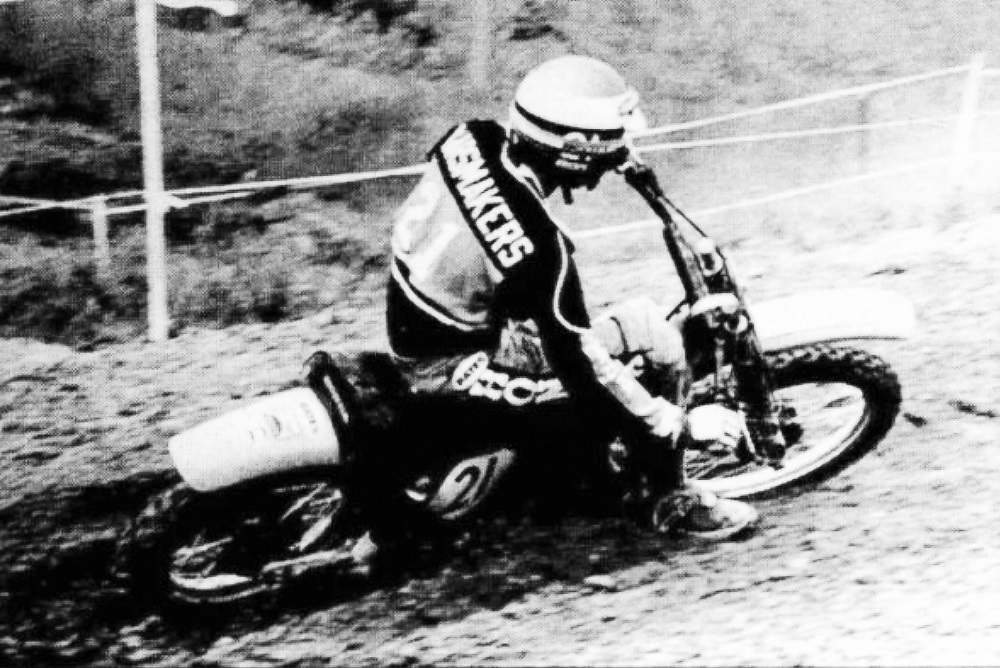
In 1974, the AMA ruled that he was ineligible to win these championships, and even though Pierre was likely still the fastest gun in America, he scored no AMA points. The sanction was lifted in 1975, and Pierre, now with Team Honda, was out to reclaim the title that he could not defend. No fingertip, no problem.
For amputees, phantom-limb syndrome is an actual occurrence, recognized by the medical community. Mixed signals between the brain and the spinal cord beguile the body, creating a real physical sensation that the missing limb is still very much alive and experiencing intense discomfort. Amputees believe that their now-separated leg, arm or hand is being twisted or tightly squeezed. Burning, throbbing pain is commonly reported by the patient. In the 1866 fictional short story “The Case of George Dedlow,” Dedlow, a Confederate soldier, undergoes the amputation of both legs and experiences such mental anguish that he eventually contacts a medium to communicate with his missing legs in the spirit world.
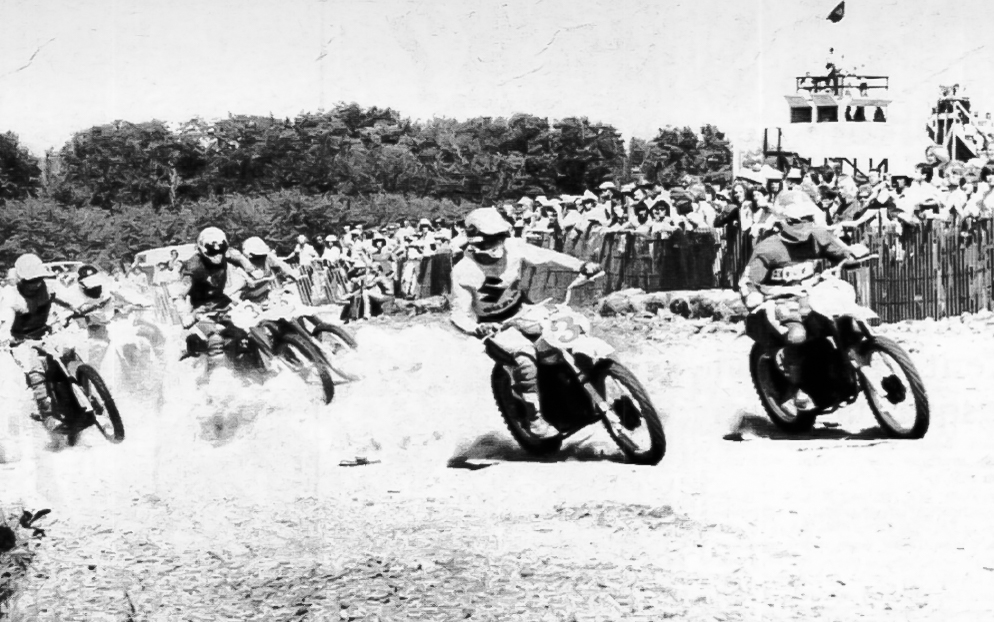
The Herman, Nebraska track, operated by an Omaha dentist named Dr. Gerald Byrd, had proven itself worthy during its 1974 test drive, and the track was awarded three major events starting in 1975. On June 1, Herman was the site of an AMA 250cc National, and along with Pierre Karsmakers, Nebraska fans would get to see Tony DiStefano, Billy Grossi, Jimmy Ellis, Jim Weinert, Marty Smith and others do battle on the country hillside. 1975 had started slowly for Karsmakers, but on this day in Nebraska, the Flying Dutchman seemed to be whole again. He battled DiStefano for much of the moto before turning it up and pulling away for the moto win, his first of the season. His Honda teammate, Marty Smith, would win the second, and although DiStefano took the overall victory, it was still a very good day for Pierre and Team Honda.
Civil War folklore spun haunting tales of soldiers who could not escape their agony until their lost limbs had been found and then properly buried. There are also examples of amputees who have requested that all removed parts be kept and returned for burial with their original owner. How does one come to terms with the puzzlement of this reconnection between the body and its parts? How does the brain receive these long-distance signals without wires and receptors? An explanation must exist. It’s just difficult to put a finger on it.CN
Click here to read the Archives Column in the Cycle News Digital Edition Magazine.
Subscribe to six decades of Cycle News Archive issues