Adrenaline is a funny thing. It’s a human condition difficult to understand and one of the most subjective feelings a person can experience. Some get adrenaline rushes from tending a herb garden (seriously, I love my basil plant). For others, nothing short of base-jumping will do. But for soldiers of the front, their adrenal glands have pulsated to a degree most people will never experience, nor ever want to, and this can create problems on their return to civilian society.
As an Australian, one of the things that stuck me most about living in America is the revere the military is held in. This country’s pride in its servicemen and women, from honoring them at a Supercross to grocery discounts and priority boarding at the airport, is nothing short of inspiring. As is the public’s steadfast belief in what they do in the name of the Stars and Stripes in far off lands. But that’s only what I see.
Photography by Brett Robinson and Scaysbrook
I know no one in the military. I have a family member who served alongside U.S. forces in Afghanistan and Iraq, but that was a long time ago. And I’ll admit my understanding of what a soldier actually goes through in battle and when returning to civilian life is limited to, forgive me, watching movies like Jarhead and American Sniper.
There is a silent war that begins the second a solider returns from the front. The war between the ears can often be far more devastating than the physical one, to such a degree the U.S. military loses 22 returning members a day to suicide, according to a 2013 United States Department of Veterans Affairs study. That’s one person for every 65 minutes, a quite staggering statistic. Post Traumatic Stress Disorder (PTSD) is far and away the biggest problem facing returning servicemen and women, and is one issue Bosnia, Kosovo, Iraq, and Afghanistan veteran Brett Robinson decided to tackle head on.
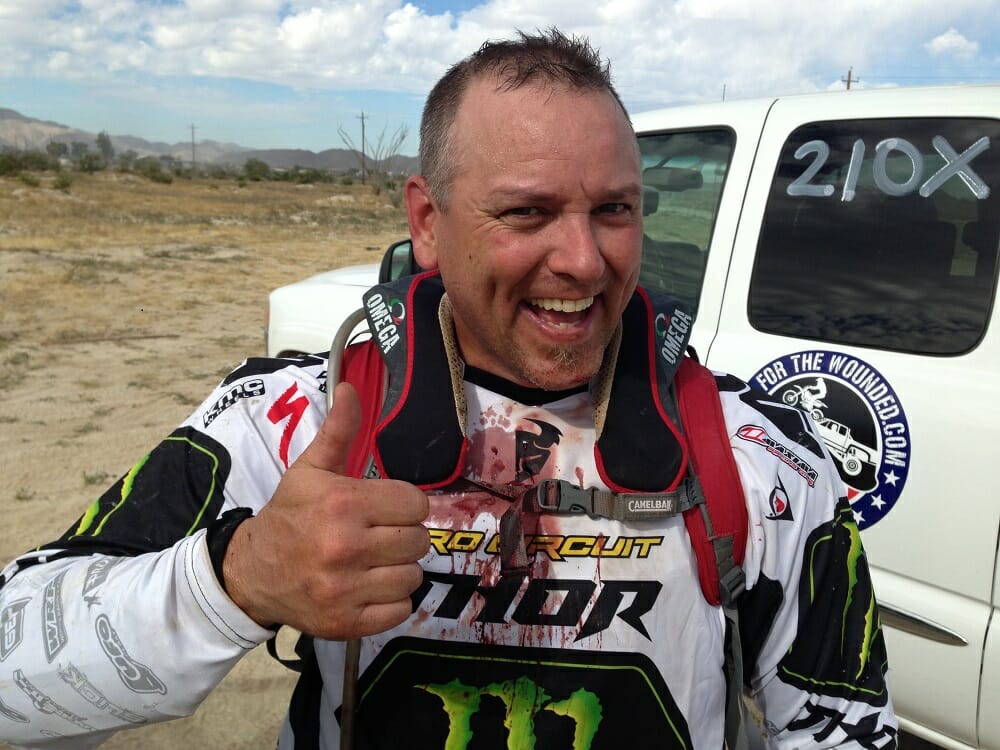
In 2012, Brett founded Race For The Wounded, a non-profit organization that uses motorsport to help wounded returning soldiers feel the same sense of adrenaline and camaraderie that once defined their lives within the military. A proper rider in every sense of the word, Brett knows the therapeutic benefit of a racing an engine and wheels, and he’s dedicated his life to ensuring other veterans catch the bug.
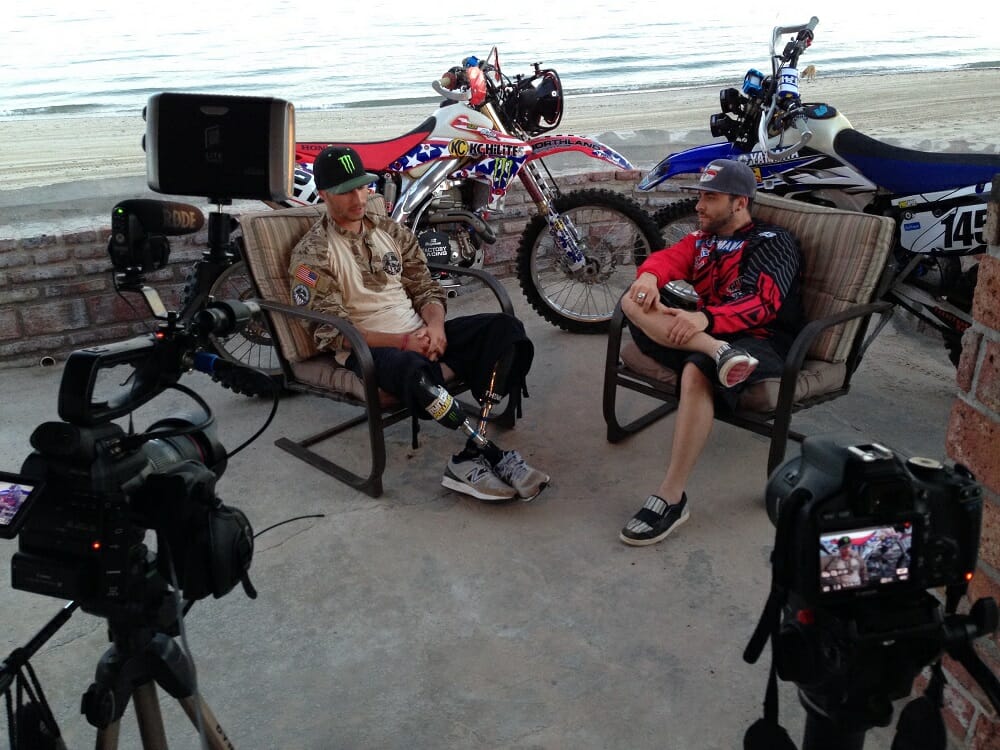
“Endurance racing helped me readjust,” Brett says. “Racing brings you back. It gives you a goal, a mission. You get pushed to your limits and you have to depend on your teammates. It’s a lot like the military and I like that aspect. For me, the lack of adrenaline when I returned was bad. We have a huge suicide rate of returning veterans and personally I think a lot of it is because you lose your identity. It’s hard to assimilate back into something after you’ve been through war. So with Race For The Wounded, I figured we could bring returning guys in, get them with like-minded people, and we could help them start adjusting. We want to give them a focus, a goal, and let them know we’re not forgetting them.”
In the four years Race For The Wounded has been in existence, the team has entered the first double amputee to compete in the 2013 Baja 1000 in a team formed by Colin Edwards and Mike Myers at the Texas Tornado Boot Camp, plus innumerous Trophy Truck races with champion driver Tony Scott, himself a veteran from the original Gulf War and now Race For The Wounded ambassador. Add to that a massive array of assorted dirt bike races in mainland USA and Mexico, and partnerships with companies like Warfighter Made who modify all manner of two and four-wheeled vehicles for racing and recreational use for wounded veterans and it’s easy to see why Race For The Wounded is going from strength to strength.
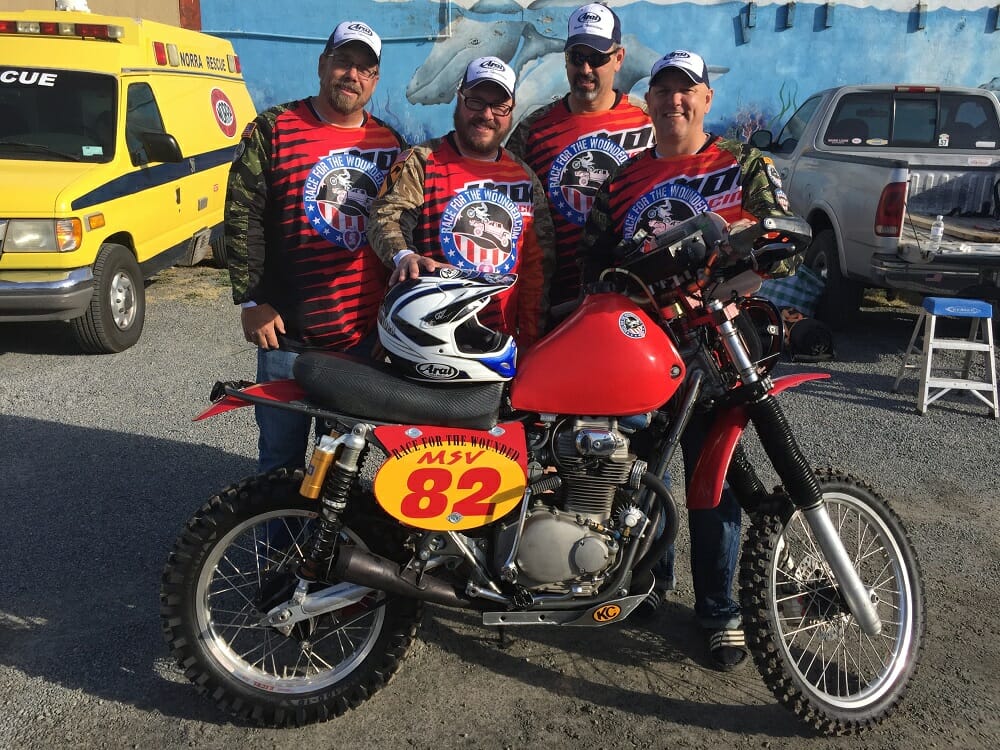
“I’m a bike guy, so it was all about motorcycles,” Robinson says. “But then Tony Scott called me up, and I had no idea who he was. He loved what we were doing and was paying out of his own pocket to put wounded guys in his trophy truck. He’d had enough and was going to sell his truck, he’d won all his championships, but he wanted to help us—so he donated his truck, and this was before we were a full charity! Now we have a truck and Tony runs that program covering long distance four-wheel desert stuff, and we’ve just recruited a guy, Chris Heart, who is still active in the military. He’s running our east coast motorcycle program now. We’re doing thirteen races this year in the Hare Scramble Association.”
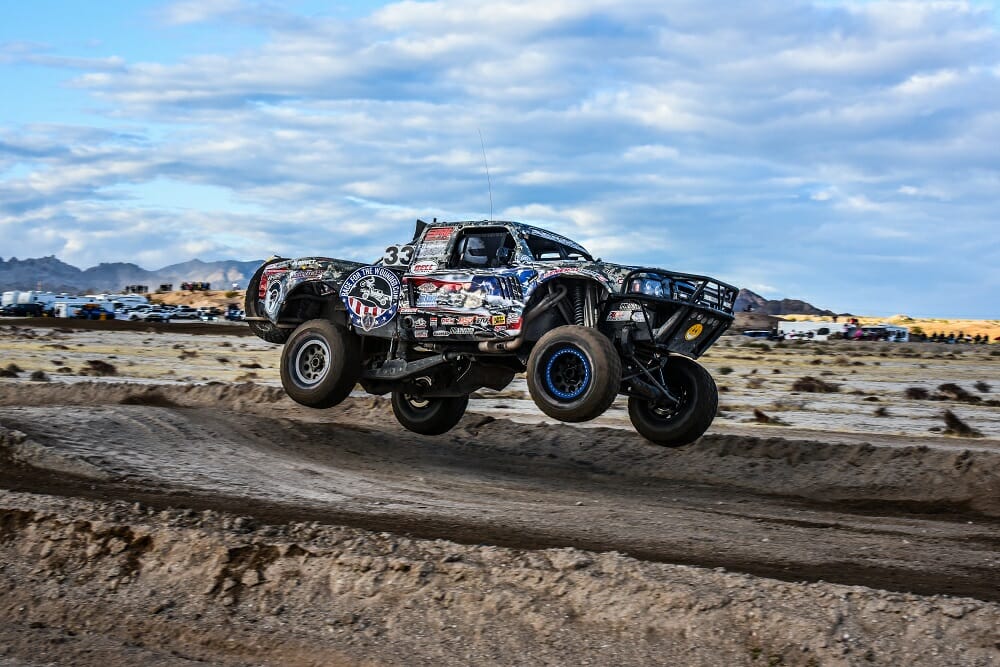
Season 2015 was a good one for the charity, with the team taking a vintage class win and seventh outright in the Mexican 1000 with riders Craig Hall and Scott on a 1971 Honda SL350, four-wheeled action in the Mint 400, Caliente 250, Rage At The River, Vegas Off-Road Experience and a bunch of visits to the Colin Edwards Texas Tornado Boot Camp. Slowly but surely the Race For The Wounded name is coming to prominence, but there’s still no government funding heading Brett’s way.
“None, zero,” he says with conviction. “To me it’s very sad that I have to do this. We’re real small, and I know that we can’t help everybody, but we try to help as many as we can. We’re trying to help those who sacrificed so much for our country, but nothing is going to stop us doing this work. We have a great number of people who donate time and money to this program, and I know it’s making a difference in the lives of these soldiers.”
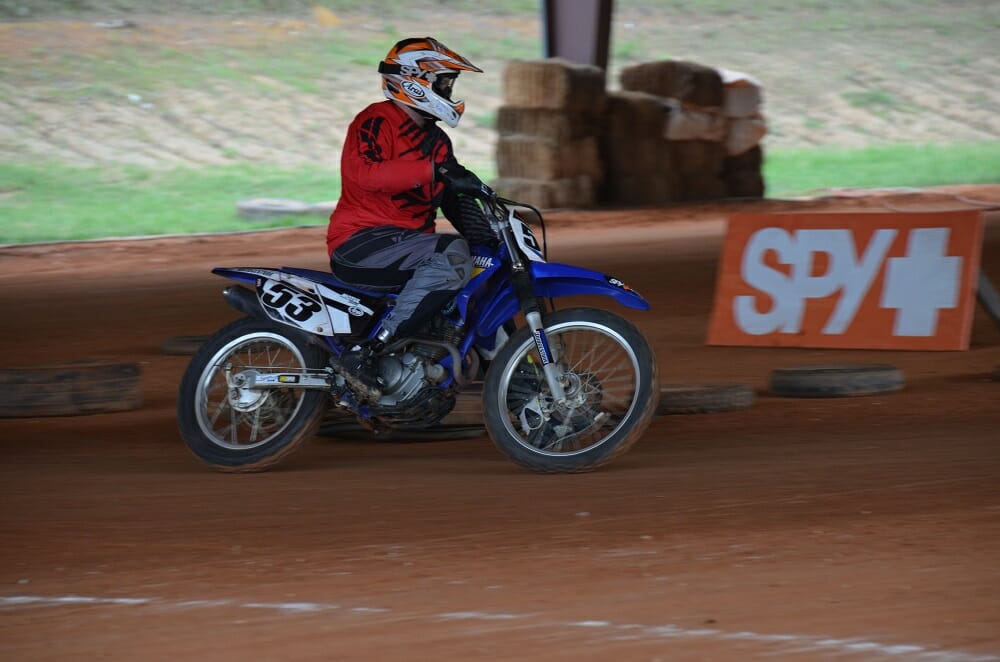
Rob Dickey
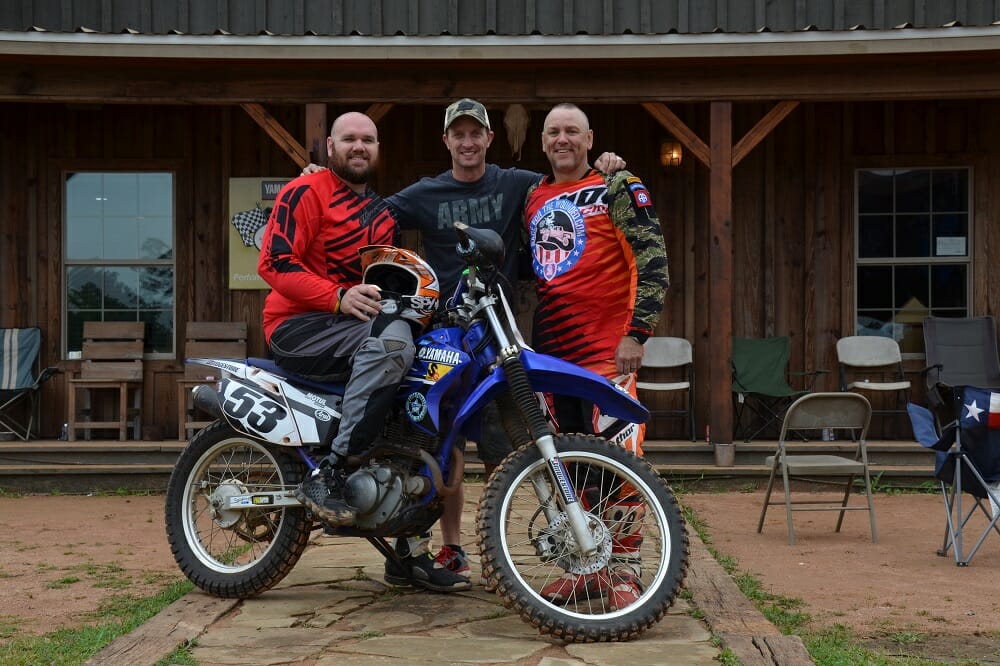
Rob Dickey, 38, is one of the latest veterans to take up the Race For The Wounded challenge. Dickey is now medically retired after losing the lower half of his right leg in Afghanistan as a 19D in the Scout Sniper Platoon.
“It was a more adrenaline type of job for me I think than some of the regular guys that were there,” Rob admits. “You’re constantly having some adrenaline rushes and then you stop. It’s rough. Now you’re doing nothing and you’re just kind of going to mush. Your brain’s just not working like it was. Racing definitely gets it going again and allows you to feel a whole lot better—just like yourself regardless of your injuries.”
A newcomer to the Colin Edwards Texas Tornado Boot Camp, Rob was at more than a slight disadvantage on the slick dirt surface thanks to having no rear brake. He equipped himself admirably, gaining speed quickly and consistently without going overboard and injuring himself.
“I hadn’t been on a dirt bike since I’d been hurt,” Rob says. “After meeting Brett through Rob Blanton at Warfighter Made and the side-by-side program, he gave me a call and asked me if I’d be keen to try the Colin camp, which I heard about at X Games last year. No question, it’s been an awesome experience.”

Colin Edwards And Race For The Wounded
All-American boy Colin Edwards is a hardcore military supporter. He’s spent many years trumpeting and supporting the camo-clad guys and girls fighting in Iraq and Afghanistan, long before he and Brett met at the 2008 Indy MotoGP, the two forming a solid friendship a few years later when readying themselves for the Baja 1000.
“I actually started way earlier,” Colin says. “At the end of 2001, I tested in Philip Island. I was (WorldSBK) champion in 2000 and I finished second that year in 2001. I had a number made and it was a big number 2 for 2002. Right at the bottom of the 2 it said 9-11-2001. That’s all I could really do to show support.
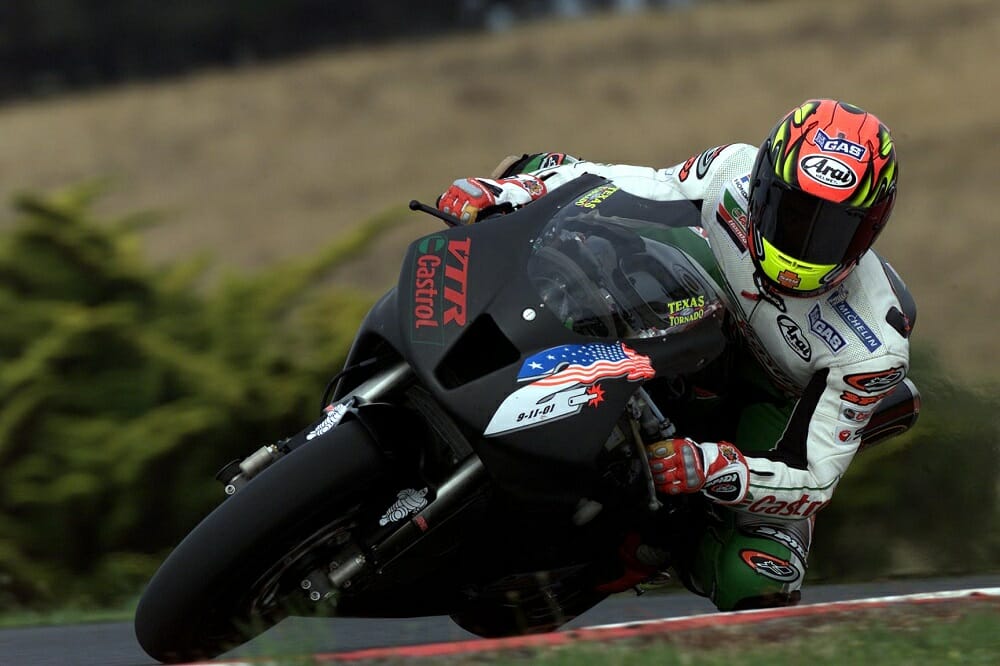
“Then I started wearing the military hats on the grid. When I was teammates with Valentino, every picture I have on the grid, that was ’05, ’06, ’07, I had a military hat on all year that year. The same in 2003 and ’04, Marines hats all year.
“I want to get military guys to blend in with motorcycle guys. Motorcycle guys are kind of freaks. We have a little small niche of people that are into it. I’d like to get military guys, it could be three or four, whatever that number is, to come hang with us.”
How You Can Help
Charities like Race For The Wounded don’t exist without a bit of help from people like us, and donating to the cause is now a little easier with retail chain Kroger.
“Kroger has come on board and that means we are in some states like Georgia and Arizona, Idaho and Alaska. We haven’t got to California yet, but that’s the next step,” Brett says. “People can link their VIP cards so when they shop and scan their card, they save some money that gets donated to Race For The Wounded. It costs absolutely nothing, and you get gas points when you scan your card, so it’s a win for everybody.”
Of course, normal donations are also accepted so if this sounds like a cause you’d like to be a part of, click on http://raceforthewounded.com/ways-to-donate/ and follow the prompts.