Cycle News Archives
COLUMN
Dream Job
By Kent Taylor
In 1970, $18.50 a day was the going wage for a dream job. This was a gig where you could travel the country with your best friends, raise a little hell on the highways and in the hotels, with breaks on the weekends for really fast motorcycle rides. This was the life of Tom Rapp, one of America’s early motocross stars, a California boy who was racing motocross here in the States before it even had a name. His journey began on the campground trails, which led him to the desert and finally to something called “European Scrambles.” He was a motocross pioneer, and he cleared the trail for every pro MX’er that has come after him.
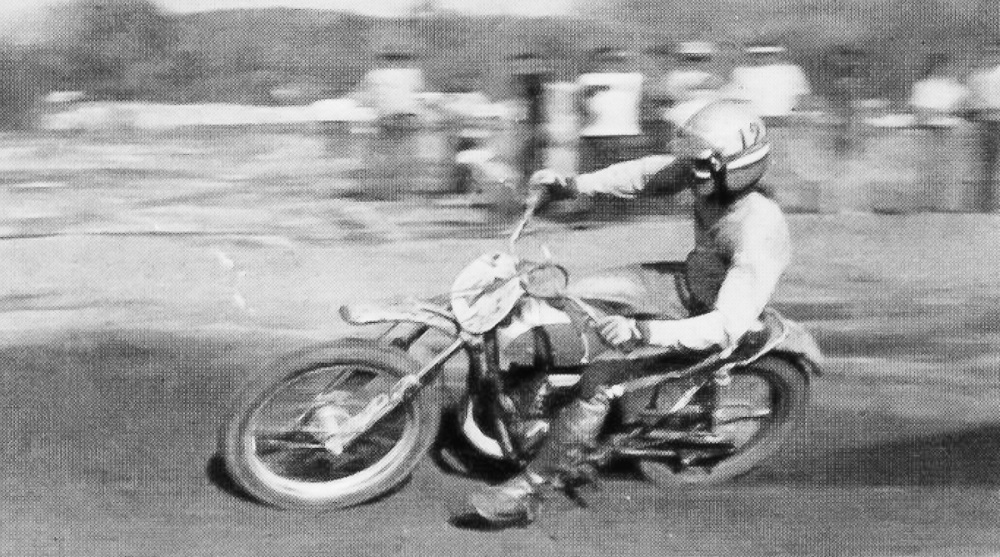
Tom Rapp comes from a two-wheeled racing family. His father, Don, raced a little in the desert, and Tom’s grandfather was one of the fearless Indian-mounted daredevils who cheated death on the motordrome board tracks in the days of World War I. Tom was born in Southern California in 1952, the youngest of three children. As the baby of the family, he benefited in the same way that most youngest children do.
“My dad was a Teamster truck driver,” Rapp says today, “and by the time I came around, there was some money for fun things. My dad bought a Honda step-through 50, and we would take it camping. We belonged to the Santa Ana Trailer Club, so we would go fishing and bring the Honda along to ride.”
“When I was 12, my dad sold a home that he owned in Orange County and gave each of us kids $500. I took my money right to the cycle shop and bought a new Hodaka, and pretty soon I was doing some desert racing. It was 500 guys lined up, and then somebody lights some tires on fire about four miles away, and they tell you to go find them. You can’t see where you’re going because of all of the dust. It was kind of scary for a kid!”
“In 1967, my dad and I went to watch the Hopetown Grand Prix, which was kind of more like a motocross race, but still not really motocross. I remember seeing Joel Robert and Roger DeCoster, but it was Torsten Hallman who just really impressed me. We knew a lot of good riders in California, and Hallman was lapping those guys three times! That was hard to believe. All of these European riders were really good. They trained and ate right, things that we weren’t even thinking about. And they all had really good bikes, too.”
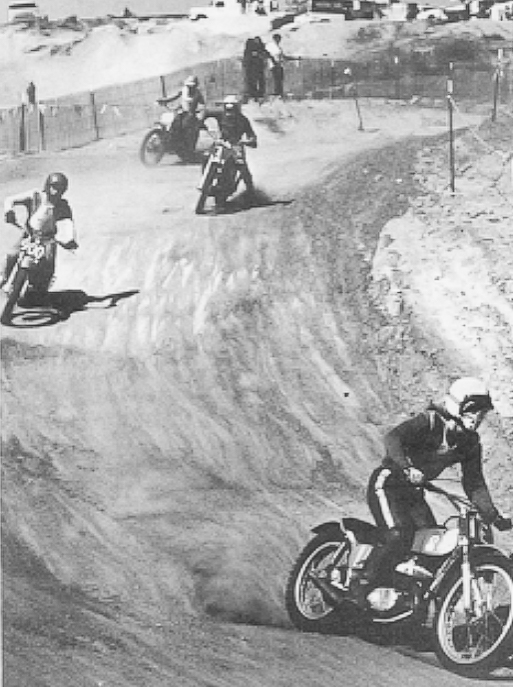
Rapp’s next two-wheeled adventure would be racing scrambles, which would soon evolve into motocross. Carlsbad, Saddleback, Indian Dunes and other tracks began popping up like dandelions. It wasn’t long before a lot of the desert riders decided that this new sport, usually three motos, was a better deal than driving three hours out to the desert to race in the hot sun.
“We wore blue jeans, work boots and funky gloves,” Rapp says. “We were having fun and had no clue about the future of motocross. We had no idea where this sport was going to go.”
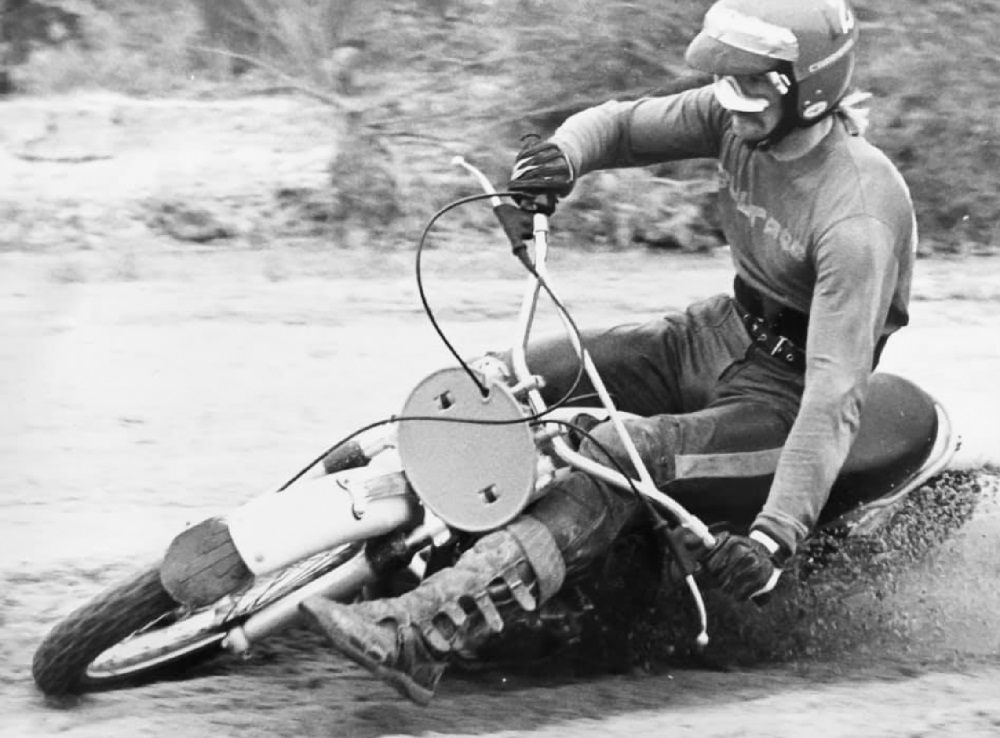
“I was fast enough on my Hodaka that the Bultaco distributor in Van Nuys asked me to ride for them. He gave me a Bultaco 125 Sherpa T. I loved that bike. It was really easy to steer, and it was twice as fast as my Hodaka. The next year, we took a Bultaco 200 Sherpa T, put a 250 head on it, and I won the CMC number one plate in 1969 on that bike.”
When 1970 rolled in, Bultaco USA was ready to go racing in the old Inter-AM series, which was being run by Edison Dye, sans support from the AMA.
“The distributor wanted me to head out right away, but my parents insisted I get my high school diploma first,” Rapp says. “I graduated and then signed a contract with Bultaco to ride the Inter-Am series. Myself and two other riders took off in one van and a Chevy El Camino. They gave us bikes, parts, a gas card and $18.50 per diem.”
Young men with long hair and motorcycles in 1970. This was Tom Rapp, along with his buddies Brad Lackey, Mark Blackwell, Tim Hart and many others. Just one year earlier, the movie Easy Rider helped convince most middle-class folks that long-haired men with motorcycles were a combination to be feared, and Rapp remembers a heady moment when he and his traveling companions pulled into a rest stop, somewhere near stubby beer bottle, Texas.
“I went to the restroom,” Rapp says, “and I was standing at the urinal. Two Texans, cowboy hats and everything, came in, and they each took the urinals on either side of me.”
In Easy Rider, Billy (Dennis Hopper) meets a violent end after a couple of good ol’ boys ask him, “Why don’t you get a haircut?” Rapp, with hair to his shoulders, can feel the icy stares coming from the two. Finally, one cowboy says, ‘Son, don’t you think you’re in the wrong restroom?’ ”
“We made it out okay,” Rapp says, laughing, “but we learned that if you’ve got long hair and a bunch of motorcycles in a vehicle with a California license plate, stay out of Texas!”
In most of the other states, Rapp and his companions found significantly less trouble, which meant, of course, that they had to make their own. Tossing M-80 firecrackers at each other’s vehicles was just one way to break up the long drives between races. More firecrackers would help keep fellow racers awake.
“We would pull up alongside each other and roll down the window, like we wanted to say something. So, the other guy would roll down his window too, and then we would start firing Roman candle shots at him. When we were done for the night, and if we were lucky, we had enough money for a hotel. As soon as we got inside, somebody would grab the fire extinguisher off the wall and start blasting everybody else. The Holiday Inn folks really didn’t care much for us!
“Most of the time, we had no money, so we slept in our cars. You would race on Sunday, then drive three days straight to get to the next race, just hoping you might have a chance to ride your bike and work on it.”
“We were all friends, doing this together. We would race like hell on the weekends against each other, but during the week, we were like a traveling carnival. One summer, it was me and Tim Hart, who was riding for Maico, riding with me in my van, with Bultaco paying for our gas!”
Rapp’s career is poorly represented in the official records of the sport, which catalog only AMA-sanctioned events. But he was a two-time winner at Hangtown, in both 1972 and ’73, and he was a three-time winner of the Mammoth Mountain Motocross. He underwent knee surgery in 1972, then broke the navicular bone in his hand. Painful injuries by themselves but salted even more by really bad timing.
“I had a chance to go to Europe with Jim Pomeroy in ’73, which was something I really wanted to do. But I tore up my knee in the Inter-AM series in Rio Bravo in ’72, and it took me almost a full year to heal up.”
“When the Japanese factories came in, it all changed. The Europeans used to race a few races against us and then go home, but then Pierre Karsmakers came and stayed and won everything. It was getting serious. It was never about the money for me. I didn’t like what it was becoming, so I quit.”
Rapp embarked on a career in mushroom farming and traveled the world for 40 years, teaching the tricky science involved with the process. You will find him on his Montana ranch, along with his wife and one other resident, a 1974 Bultaco Pursang, who gets to live inside when the temps in Montana’s Bitterroot Valley dip below zero. Above it is a framed letter from Senor F.X. Bulto himself, the founder of the company.
“I had a chance to ride for the Japanese factories, and I even tested a Suzuki. The Japanese built some great bikes. But I loved my Bultacos, and I loved the company. They were very loyal to me. There are just some things that are more important than money.”CN
Click here to read the Archives Column in the Cycle News Digital Edition Magazine.
Subscribe to six decades of Cycle News Archive issues