Norton’s resurgence under the ownership of Indian conglomerate TVS Motor Company continues with the arrival of the 2027 Atlas, the second all-new motorcycle to emerge from the partnership following the Manx R.
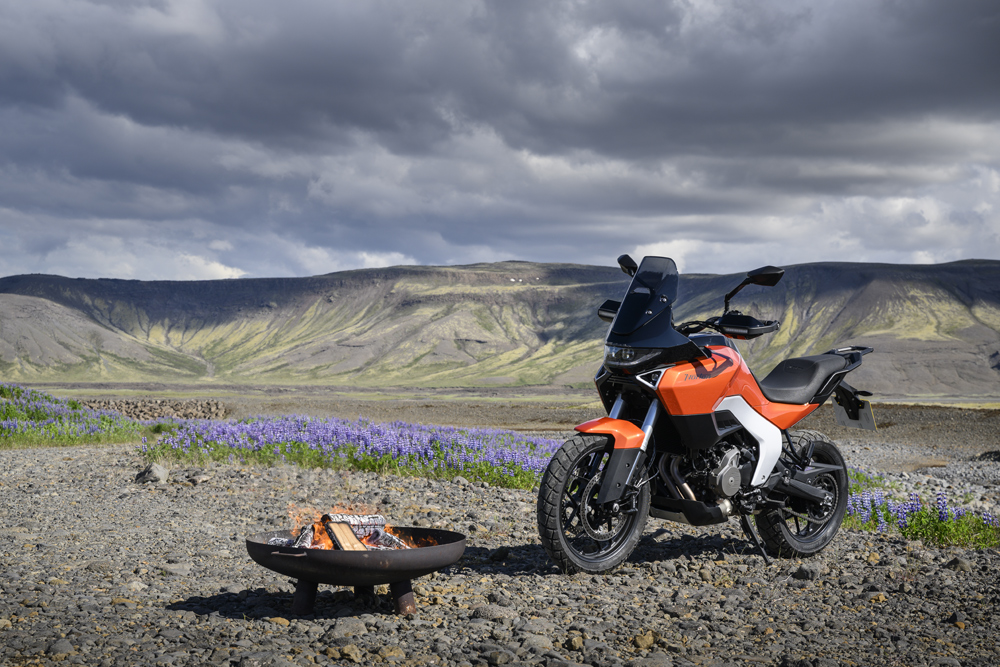
Where the Manx R is a high-performance roadster (remember, it’s not a superbike, so they say) aimed squarely at the premium end of the market, the Atlas takes Norton into the increasingly competitive middleweight adventure category.
The Atlas is offered in two versions: the standard model and the higher-specification Atlas Apex that I tested. Both are built around the same 585cc parallel-twin engine and share the same fundamental steel chassis architecture, but the Apex adds a suite of electronic features designed to give it a more premium touring focus.
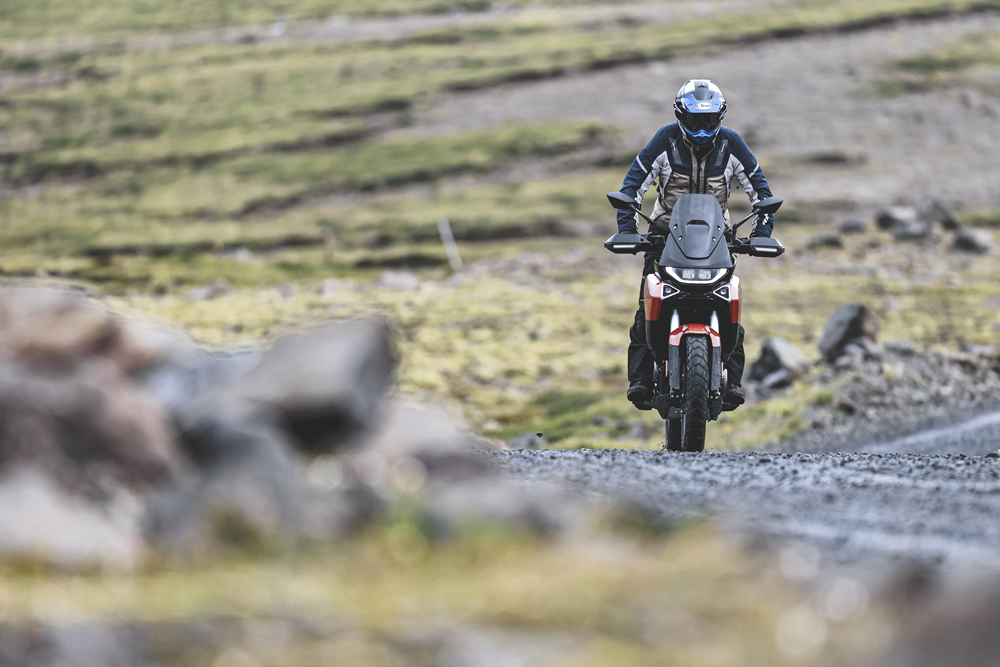
The Icelandic launch of the Atlas provided an appropriate environment in which to sample the Atlas. With its mixture of cold temperatures, wet pavement, gravel roads and strong winds that had us riding at near 45 degrees while going straight at times, Iceland offered the opportunity to experience the motorcycle in conditions considerably more demanding than a typical press launch.
The Atlas name itself has a storied history within Norton. The original Norton Atlas was introduced in 1962 as the company’s 750cc flagship, replacing the Dominator 650 and becoming one of the final iterations of Norton’s traditional parallel-twin road bikes. This was at a time when the British bike industry was still kicking, but it wouldn’t be long before the Japanese came along and rendered nearly the entire British industry irrelevant almost overnight.
The Atlas name was subsequently revived in the modern era with the Atlas 650 adventure concept, unveiled in 2018 alongside the Scrambler 650. That project, however, never reached production following the collapse of Norton’s previous ownership. The less said about that, the better.
The new Atlas therefore represents a second attempt to attach the historic name to an adventure-oriented Norton, although the new motorcycle is an entirely different proposition. Developed under TVS ownership, it is a clean-sheet design that embraces modern technology rather than attempting to recreate the styling or mechanical character of past Nortons.
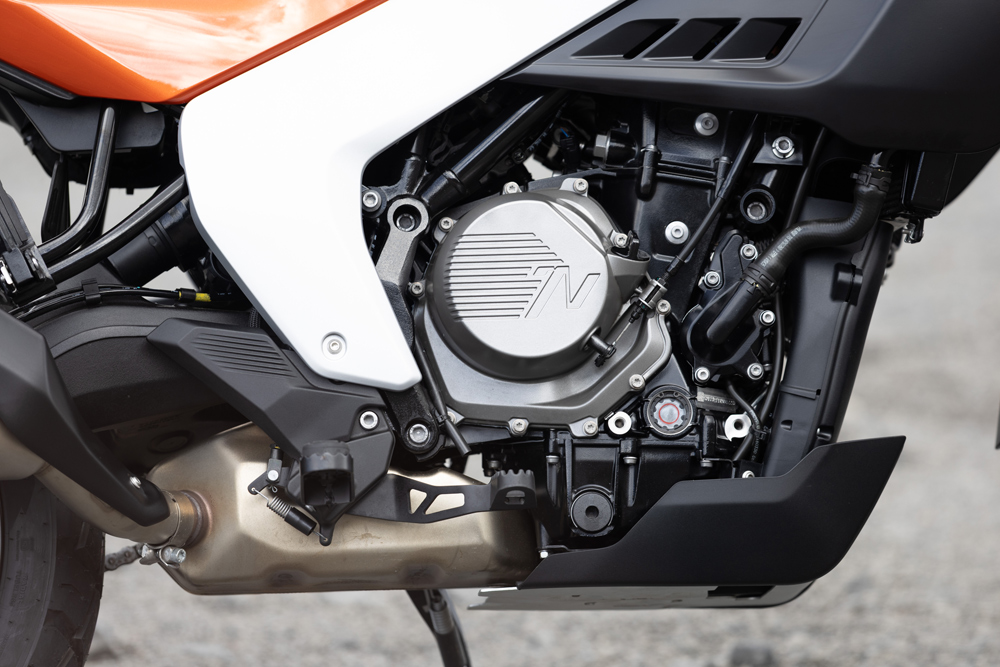
At its heart is a 585cc, liquid-cooled parallel-twin producing a claimed 69 horsepower at 9300 rpm and 42 lb-ft of torque at 7500 rpm. The engine uses a 270-degree crankshaft, giving it an uneven firing order intended to provide a more characterful delivery and improved traction feel. A slipper clutch and standard up-and-down quickshifter are also fitted.
The engine is one of the Atlas’s strongest attributes. It delivers its power in a quite accessible fashion, with enough low- to midrange torque to make progress easy without feeling intimidating. There is also a willingness to rev when the road opens up, giving the Atlas a useful spread of performance for both commuting and longer-distance touring.
The Atlas isn’t necessarily aimed at newer riders, but you can’t help escape that feeling when you ride it. The engine character is docile and easy to get along with, especially when you take it off-piste and stick the ECU in Enduro mode. Here, the Atlas is a gem of a bike, delivering its torque smoothly and cleanly and making slippery passes all but second nature.
The six-speed transmission is decent, though the quickshifter needs a little refinement. Shifts are light, but you need to be deliberate when selecting the cog. Light-footed gear changes are not appreciated by the system and, on a couple of occasions, resulted in the next gear not being selected. Use the system with a bit of gusto, however, and you’ll be fine.
The engine is housed within a steel trellis frame, with the powerplant forming part of the structural package, while a cast-aluminum, twin-sided swingarm controls the back end. Suspension comes from KYB, with a fully adjustable 43mm inverted fork at the front and a rebound- and preload-adjustable rear monoshock at the rear. Both ends provide 7.1 inches of wheel travel, which is adequate for dirt road riding, but not much else.
The Atlas rolls on a 19-inch front wheel and 17-inch rear, giving it the conventional wheel arrangement for a middleweight adventure motorcycle. Ground clearance is a claimed 8.7 inches, while the wheelbase measures 57.7 inches. Seat height is 33.3 inches, which may seem a little on the tall side for some, but Norton has a shorter (and taller) seat in its aftermarket catalog. The plus side is that the seat comfort is very good. The padding doesn’t sink after an hour on board, making long trips a surprisingly pleasant experience.
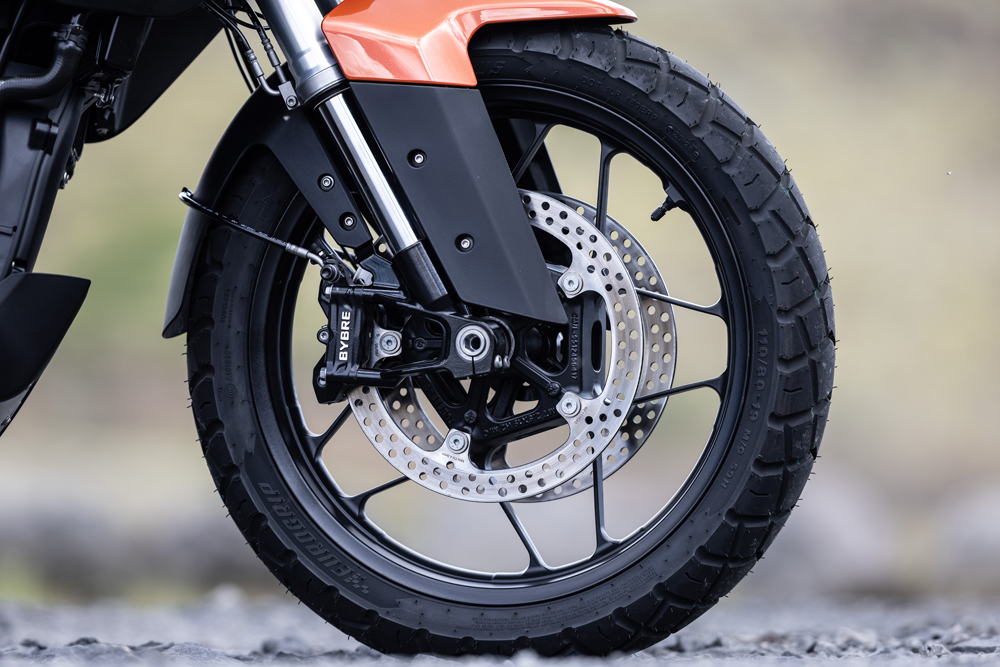
The standard Atlas and Apex share the same fundamental mechanical package, with the principal differences coming in their equipment levels. The Apex adds electronic combined braking, hill-hold functionality, tire-pressure monitoring, heated grips, cornering lights, an adjustable windscreen, and a rear luggage frame and puddle lamp to illuminate the area around the motorcycle when parked in low light, which is rather cool, I must admit.
Both the base model and the Apex feature an eight-inch TFT touchscreen display operated via a joystick on the left handlebar, while Bluetooth connectivity allows the machine to communicate with the Norton Rider app.
The electronics package is extensive for a motorcycle in this category. A Bosch six-axis inertial measurement unit provides the foundation for lean-sensitive rider aids, including cornering ABS, traction control, and cornering cruise control that debuted on the Manx R a few months ago. There are five riding modes—Rain, Urban, Sport, Tour and Enduro—with the various parameters adjusted to suit each environment. One thing to be aware of is that the Enduro mode disengages the traction control and the ABS from the rear so you can have a bit of fun in the dirt if you so wish.
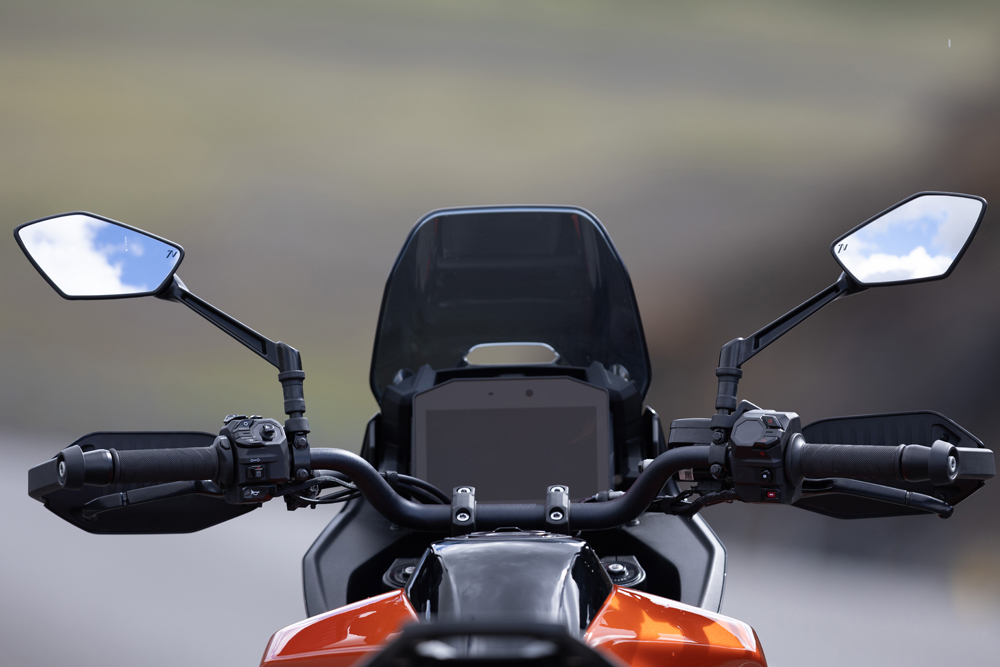
The electronics also incorporate drag-torque control, which is essentially engine braking and can be switched on or off via the dash. There’s also hill-hold assist to give you a helping hand if you’re not confident taking off on a hill. Got all that?
The Atlas also features full LED lighting, with cornering illumination on the Apex. The higher-spec Apex adds dynamic lighting adjustment, while the TFT system supports over-the-air software updates and integrates with the Norton app for functions including ride statistics and service information. Keyless operation is also part of the package, with the system extending to and accessing the seat and fuel tank.
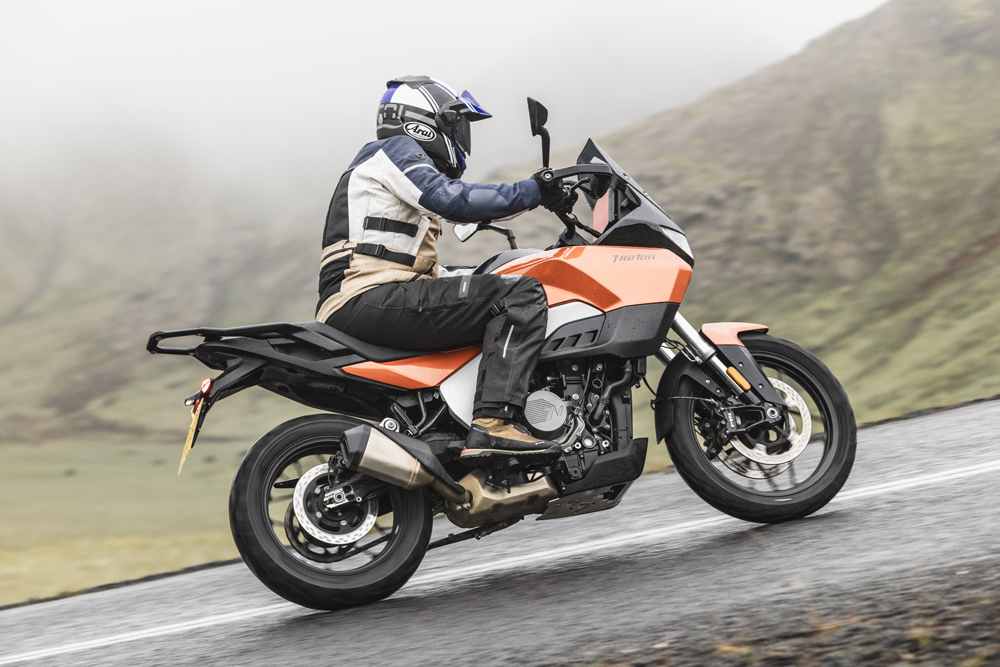
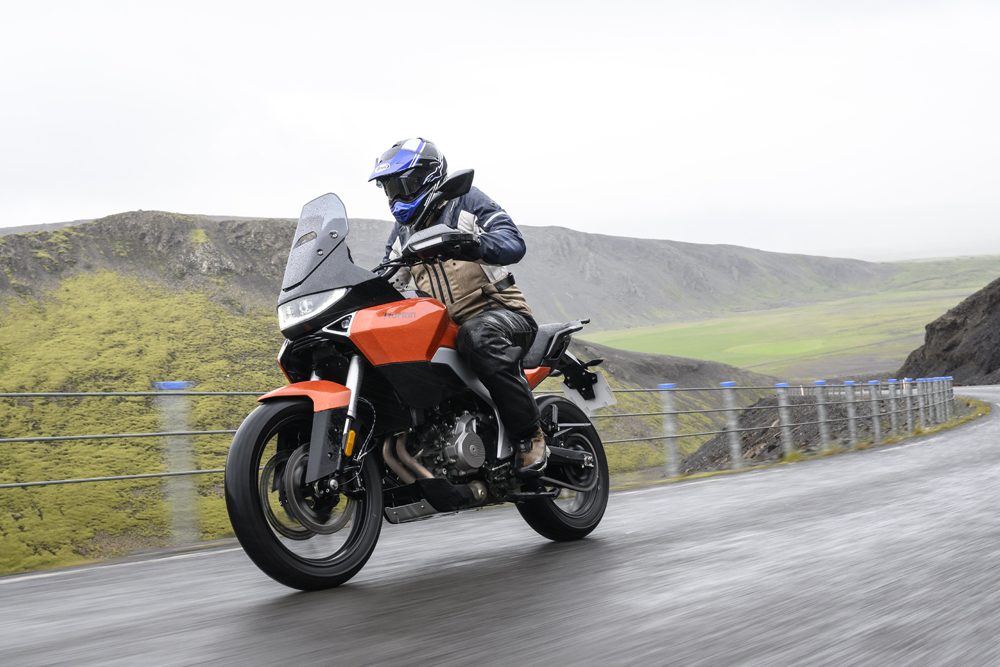
On the road, the Atlas feels light and manageable for its size. The riding position is neutral and upright without being excessively tall, and the ever-important rider-triangle relationship between the handlebars, seat and footpegs is comfortable for standing or sitting. The Atlas is light on its feet and changes direction easily, helped by the 19-inch front wheel and modest overall mass of a claimed 423 pounds without fuel.
The chassis is at its best on flowing pavement, where the Atlas feels stable without becoming cumbersome. It has enough agility to make a series of corners enjoyable while retaining the composure expected from an adventure motorcycle. The suspension provides a useful amount of travel and absorbs the larger imperfections found on Iceland’s often uneven roads.
The KYB components are fully adjustable, which gives owners scope to tailor the motorcycle to their weight and riding style. The standard settings provide a reasonable compromise between road comfort and off-road control, although riders who spend more time at either end of the Atlas’s intended operating range will likely benefit from experimenting with the available adjustments.
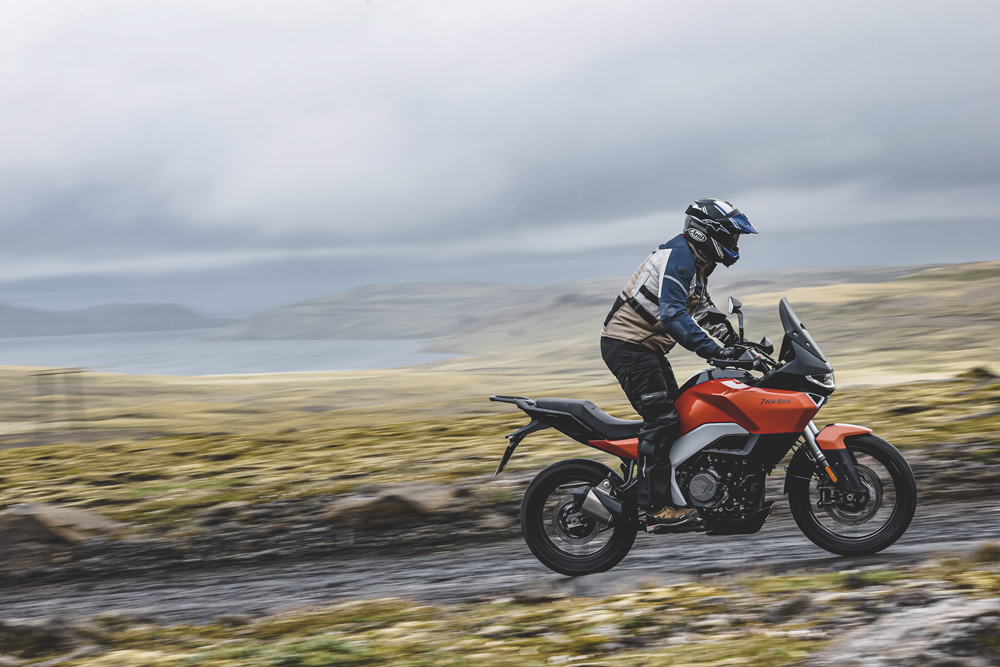
Venturing onto Iceland’s gravel roads highlights the versatility of the chassis, although the Atlas’s off-road ability is inevitably influenced by its standard tires.
Norton worked with Eurogrip, the tire company owned by TVS, to develop a dedicated tire specifically for the Atlas. The resulting Explo R Plus is intended to balance pavement performance and off-road traction, reflecting the motorcycle’s dual-purpose nature.
On loose surfaces, the tires provide adequate grip for the kind of gravel-road exploration most Atlas owners are likely to undertake, though they do not turn the motorcycle into a dedicated off-road machine.
The 19-inch front wheel and 8.7 inches of ground clearance provide the fundamentals for exploring beyond the pavement, but the Atlas is ultimately designed as a versatile adventure-tourer rather than a lightweight enduro.
The Bybre brakes provide sufficient stopping performance for the motorcycle’s performance and intended use, but they won’t blow your hair back in terms of performance. The feel at the lever is a little odd—there’s not a huge amount of bite at first, then the power ramps up quite quickly. This could be a bit of an issue for new riders, but it works well off-road, as the softer initial bite makes for a more progressive stop on loose surfaces. In all, it works fine, just feels a little different.
The Atlas enters a competitive segment dominated by established Japanese and European manufacturers. Its point of difference is a contemporary interpretation of Norton, combining a modern 585cc parallel-twin with distinctive styling, sophisticated electronics and premium equipment.
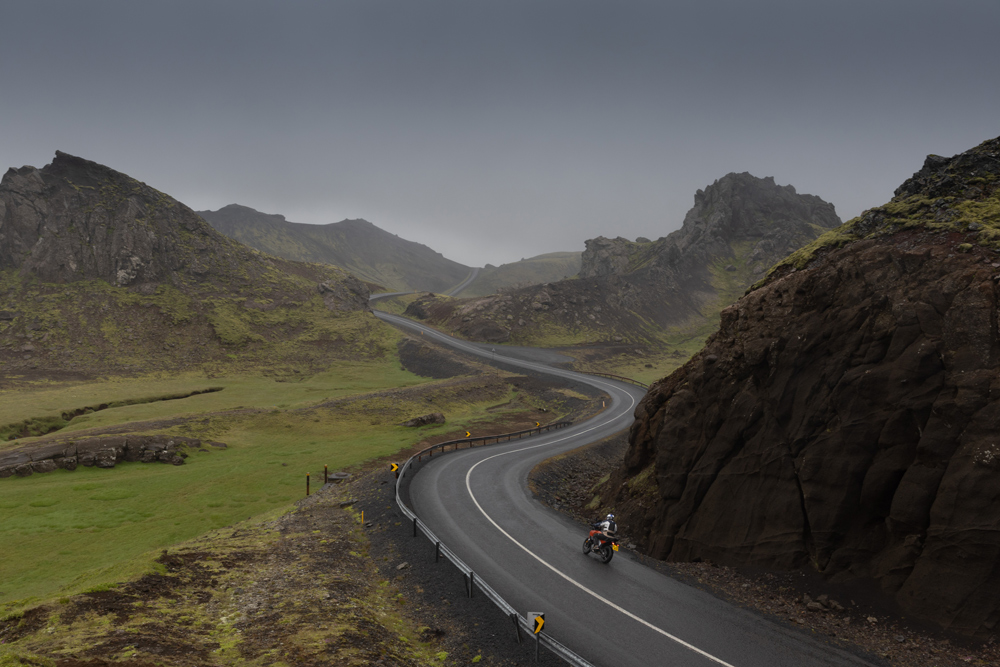
The Iceland launch demonstrated its versatility, with the Atlas comfortable on pavement, agile through winding roads and capable of tackling gravel and less-developed surfaces. The engine offers useful performance without being overwhelming, while the suspension and 19-inch front wheel provide the expected adventure capability.
The base Atlas is likely to appeal to riders prioritizing simplicity and value, while the Apex suits those seeking greater comfort and convenience for longer trips. As Norton’s second major release under TVS ownership, the Atlas is an important model for the company’s future. It carries a historic name but is firmly a product of Norton’s new era, offering a credible and technologically sophisticated entry into the middleweight adventure market.
Pricing for the base Atlas and the Atlas Apex will be available later in the summer, and bikes will arrive in North America in the fourth quarter of this year.CN
VIDEO | Norton Returns! 2027 Norton Atlas First Ride Review

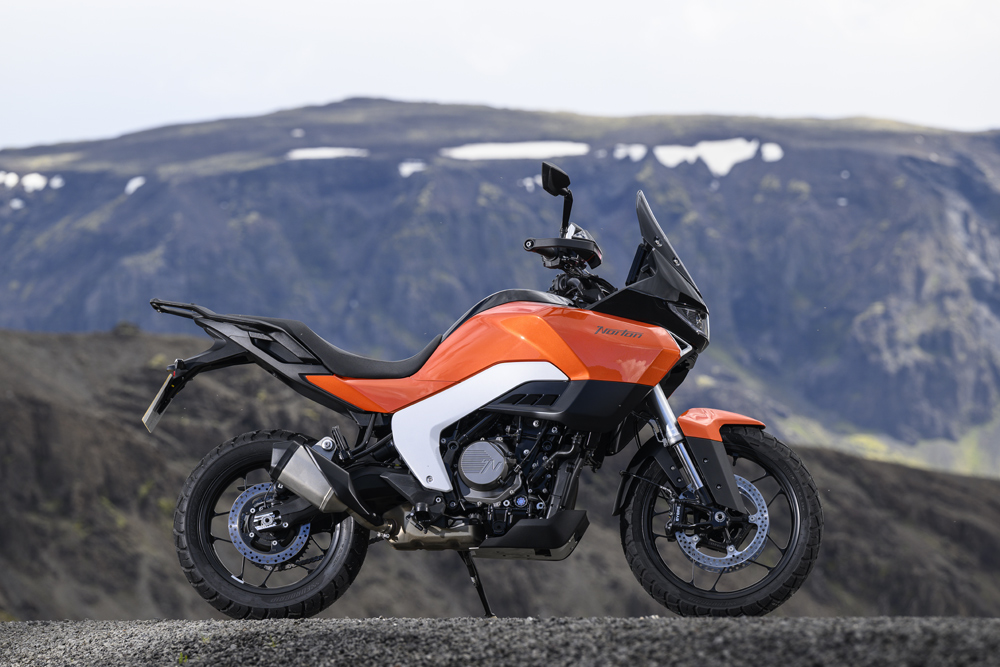
2027 Norton Atlas Specifications
| MSRP | $TBA |
| Engine | Liquid-cooled parallel-twin, 270-degree crank |
| Valvetrain | DOHC, 8-valve |
| Displacement | 585cc |
| Bore x Stroke | 78.0 x 61.2mm |
| Compression Ratio | 12.2:1 |
| Transmission/Final Drive | 6-speed |
| Horsepower (claimed) | 69 hp @ 9300 rpm |
| Torque (claimed) | 42 lb-ft @ 7500 rpm |
| Fuel System | Multi-point sequential fuel injection system, ride-by-wire throttle |
| Clutch | Wet, multiplate; slip-and-assist function; cable actuation |
| Frame | Steel trellis |
| Front Suspension | KYB 43mm inverted fork, fully adjustable |
| Rear Suspension | KYB monoshock RSU, fully adjustable |
| Front-Wheel Travel | 7.1 in. |
| Rear-Wheel Travel | 7.1 in. |
| Front Brake | Dual 310mm discs, radial Bybre calipers, cornering ABS |
| Rear Brake | Single 270mm disc, Bybre caliper, cornering ABS |
| Wheels, Front/Rear | Cast aluminum alloy, 19 x 3.00 in. / 17 x 4.50 in. |
| Tires, Front/Rear | Eurogrip Explo R Plus, 110/80 ZR19 / 150/70 ZR17 |
| Rake/Trail | 25.7° / 4.0 in. |
| Wheelbase | 57.7 in. |
| Ground Clearance | 8.7 in. |
| Seat Height | 33.3 in. |
| Fuel Capacity | 4.1 gal. |
| Average mpg (claimed) | 54 mpg |
| Weight (wet, no fuel, claimed) | 414 lbs. (Apex version 423 lbs.) |
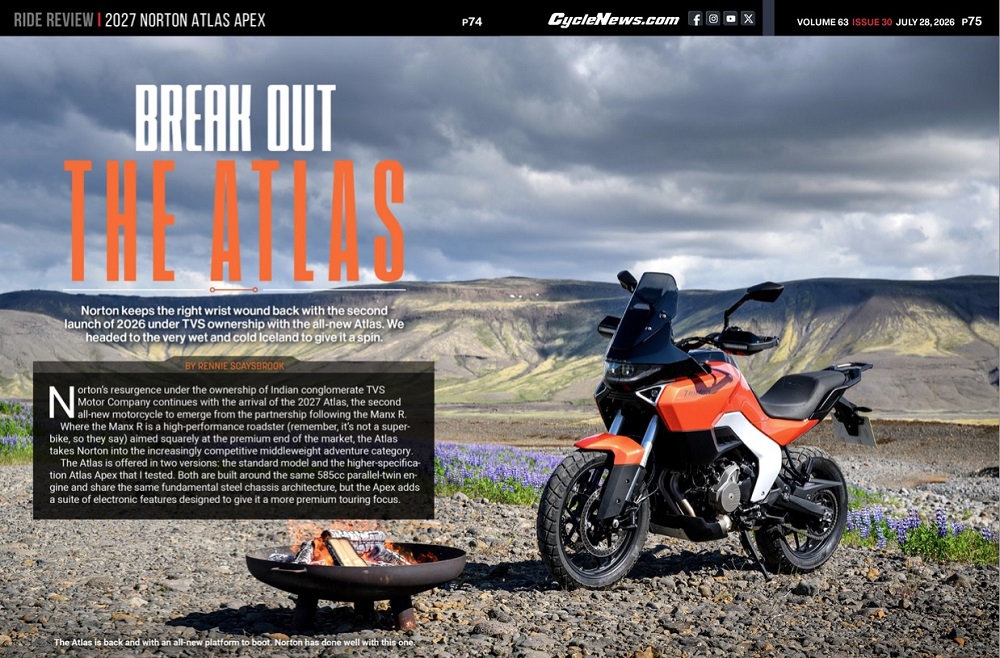
Click here to read the 2027 Norton Atlas Apex Review in the Cycle News Digital Edition Magazine.