Cycle News Archives
COLUMN
A rotary-powered dual sport bike? Kawasaki gave it a whirl.
By Kent Taylor
When it comes to animal machismo, the Bighorn sheep has to be one of nature’s most underrated critters. Heading into rut, the big ram on campus will seek to establish himself against all other rams as the alpha male, the leader of the pack, the necklace-wearing, hairy-chested guy with the open silk shirt, slathered in Brut. Watching two rams engage in the game of head-butting is like watching an 18th-century pistol duel. Facing opposite directions, the rams move measuredly away from each other before doing a 180 and gassing it for a direct head-on collision. Taking a minute or so to let the bell-ringing fade away, the animals will repeat the process. Eventually, one ram will sulk off, apparently deciding that even the hottest ewe just isn’t worth the headache.
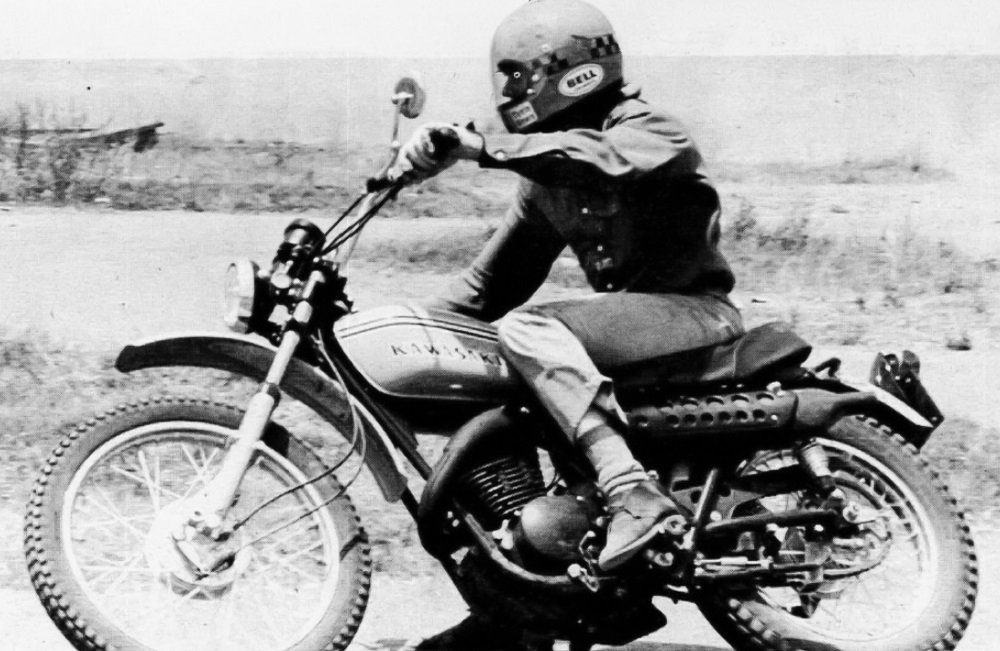
In the early 1970s, Kawasaki borrowed the moniker “Bighorn” from the manly beast and emblazoned it on its 350cc dual-purpose machines, which were called “enduros” at the time. Could the Kawasaki Bighorn properly honor the real ram in the great outdoors? And what happened when that two-wheeled wild animal needed to get civilized and run down to the Gas’n’Git for a gallon of milk?
In the August 15, 1972, issue of Cycle News, the crew put the big Kaw to the test. The Bighorn, like its competitors, was a large (for that time) two-stroke single. Unlike the others, the Kawasaki utilized a rotary-valve configuration. Suzuki used this design as well, but only on its smaller (100cc and under) motorcycles. The CN crew explained the pros and cons of Kawasaki’s choice.
“The rotary-valve engine is both a complement and a detraction to an enduro machine,” they wrote. “It is often easier to get a good power spreader with the disc valve, because the designers aren’t stuck with symmetrical intake timing. [It] does have a good low end…on the other hand, you could whiz along the freeway at a road racer-like 80 mph, and there was more available if you requested it. The 33 claimed horsepower seems to be at least as accurate as anyone else’s claims.”
The disadvantages listed dealt with the extra bulk resulting from the rotary-valve system. With the carburetor mounted on the side of the crankcase, the likelihood of “some portion of getting bopped by an antagonistic rock or stump” increases. “It also has the effect of decreasing the ground clearance…and lessening the number of narrow spots that it can fit through.” Performance-wise, the rotary valve setup was a winner, as the test crew liked the throttle response as well as “a lack of peakiness.”
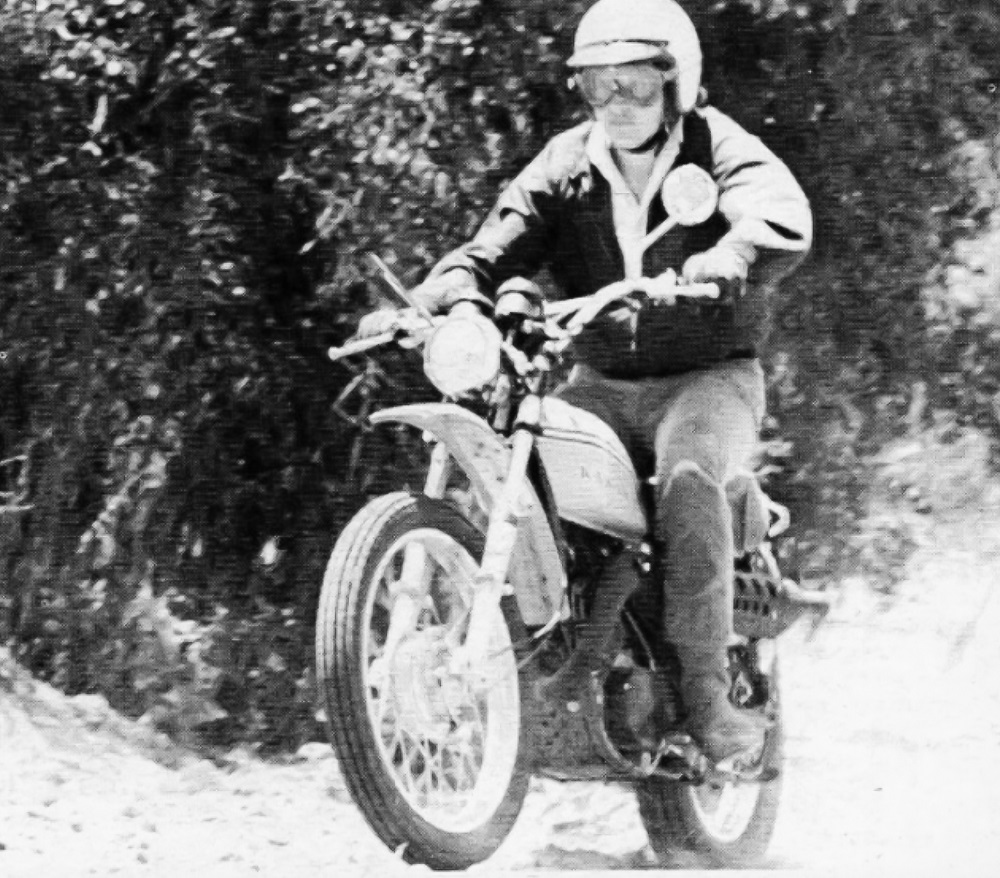
A good powerplant needs a good home. The Bighorn’s chassis was standard fare for the time, with a mild-steel frame and a suspension setup with limited adjustment options. Kawasaki was unique in its use of the Hatta brand fork, which allowed the rider to move the front axle forward or rearward. Spring tension could also be altered somewhat. Making things different doesn’t always make things better, however, and the test omitted any reference to the actual performance of the front forks.
“The 350 single is full of torque and puts out adequate power throughout the rev range. But it also vibrates a lot and makes longer rides less than pleasant. The hands receive a goodly buzz, the feet get massaged, and at some rpm settings, the seat seems to hum. In the dirt, you get bounced enough that the vibes aren’t that noticeable.”
In conclusion, the staff wasn’t too smitten with this bike, which was no surprise, as the ’70s crew wasn’t very fond of any enduro machine in those days. Devoid of gadgetry (which hadn’t yet been invented anyway) and free of complexity, the Kawasaki Bighorn lived in an era when riding motorcycles was more about freedom and less about convenience. It may not have been the big ram on campus, but it was high fun and low-tech. A no-headache kind of motorcycle. CN
Click here to read the Archives Column in the Cycle News Digital Edition Magazine.
Subscribe to six decades of Cycle News Archive issues