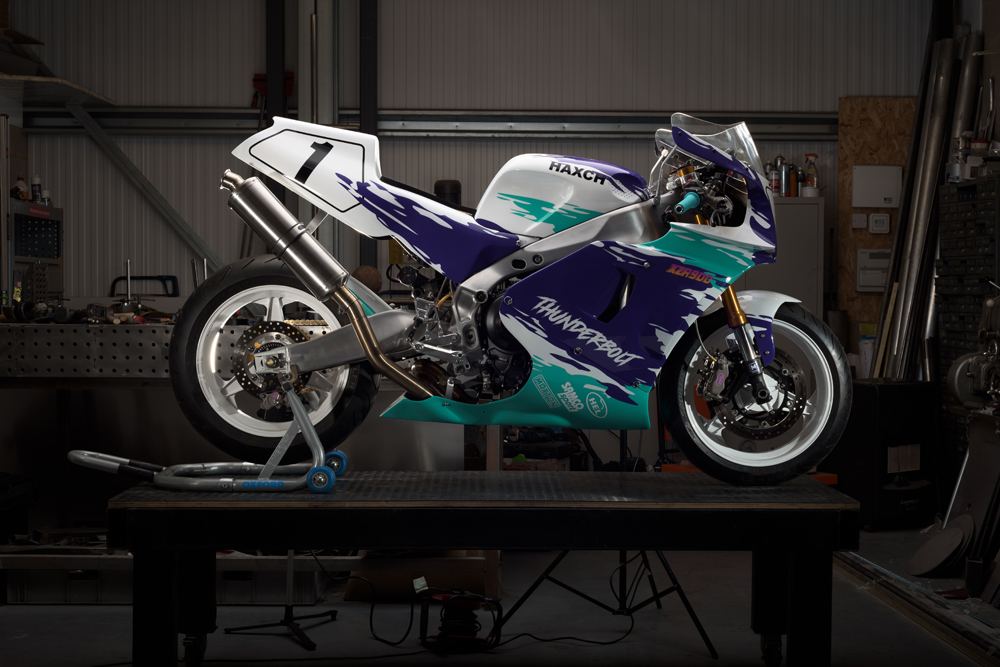
British custom-bike fabricator Marc Bell of Haxch Moto may have just created the ultimate homage to the glory decade of superbike racing with his fantastic Yamaha XZR900 build, Thunderbolt.
Photography by Kane Leyland, Callum Banister, Craig Stuart
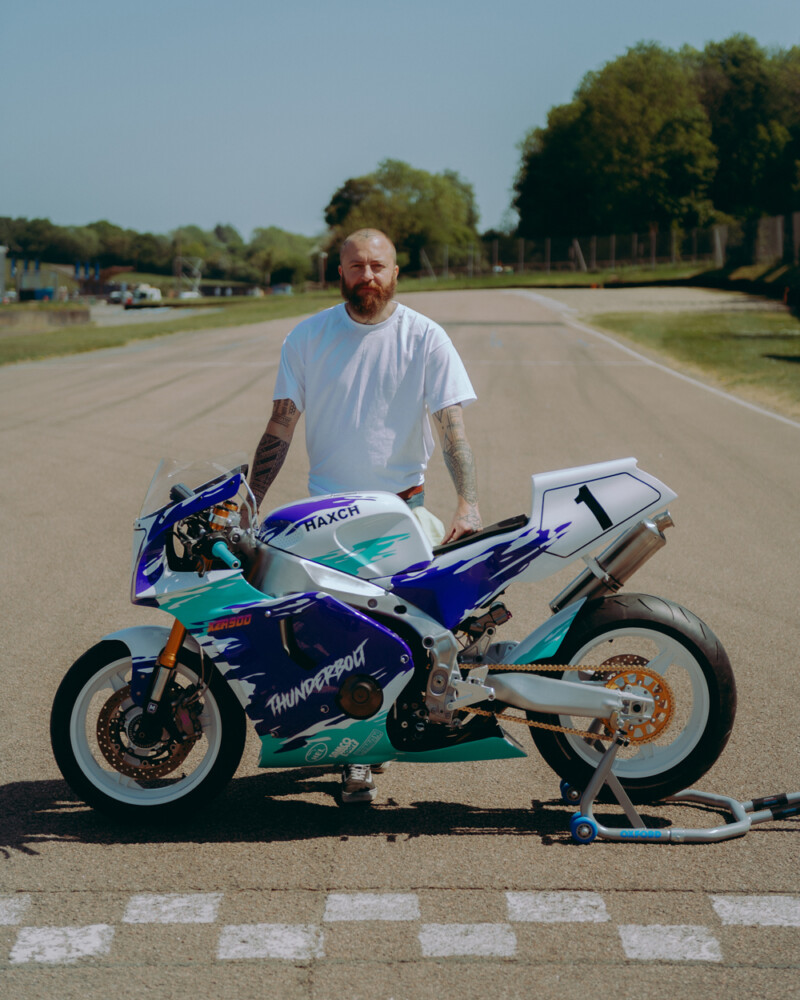
Buried at the back of a workshop in Kent, England, Haxch Moto’s Marc Bell toils away on yet another hand-crafted panel. The former Londoner, a gifted industrial metal fabricator who makes his living creating gorgeous one-off pieces like tables and cabinetry, has near-permanent rose-tinted glasses for the 1990s, the decade many regard as the zenith of superbike racing and popularity.
Simplicity, speed and style defined the era in which Carl Fogarty was a British national hero and superbike competition was undoubtedly more popular than 500cc Grand Prix racing.
The clean, curvy design lines of the time slowly faded into the more acute angles characterized by the first generation of Japanese 1000cc superbikes of the early 2000s, but the free-flowing lines of the 1990s have left an indelible mark on the memories of those who were there and those who wish they were.
Bell has made a slow but steady impact on the world of custom motorcycles over the past five years, one of his first major hits stemming from a highly modified 2008 Suzuki GSX-R1000 that was renamed Slabshot as a tribute to the air-cooled Suzuki “slabby” motors of the late 1980s and early 1990s.
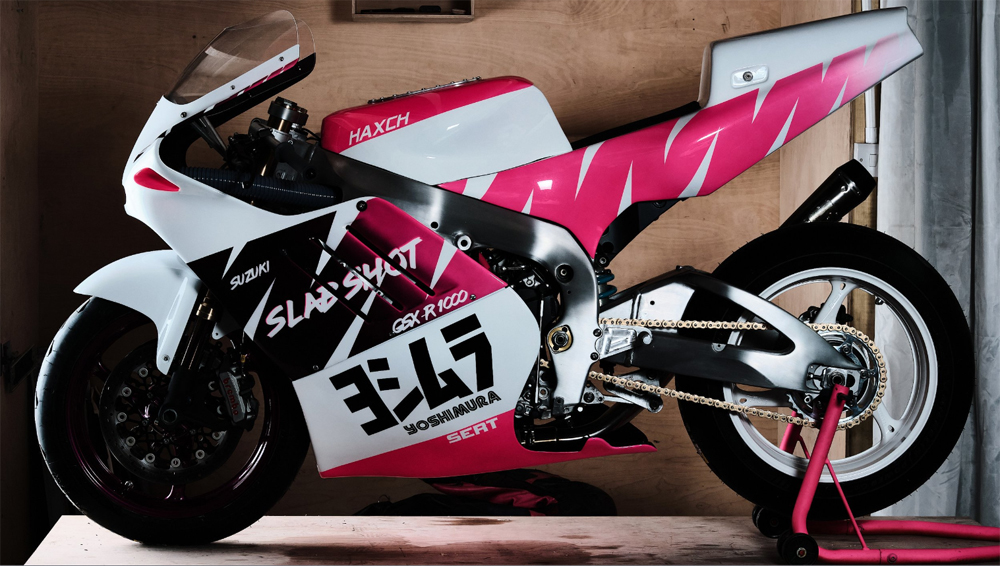
Dressed in hot pink and featuring hints of Suzuki’s RGV500 and GSX-R750, Slabshot hired Bell to head an era of custom bikes as yet untapped. Modern tech and running gear meet 1990s fancy dress. The question was, what could he do to top it?
He found the answer in Yamaha’s XSR900, which quickly became a bespoke Haxch XZR900.
“The frame on the XSR got me thinking,” Bell says. “It is super narrow, just below the seat where it comes together. It dictates the proportions of the whole bike. The proportions are a bit like a 250GP bike.”
Yamaha has seen incredible worldwide success with their XSR900 GP, a machine created by the Tuning Fork brand as a tribute to its racing successes in the ’80s and ’90s (well, everywhere except North America, as, inexplicably, we don’t get the XSR900 GP here).
The GP is part of the Faster Sons Yard Built custom initiative that has been running for well over a decade (check it out here), one that’s seen an incredible array of designs that include a Vance & Hines Eddie Lawson replica, Randy Mamola Lucky Strike Yamaha and a Christian Sarron Gauloises Yamaha replica, but those were largely aesthetic pieces.
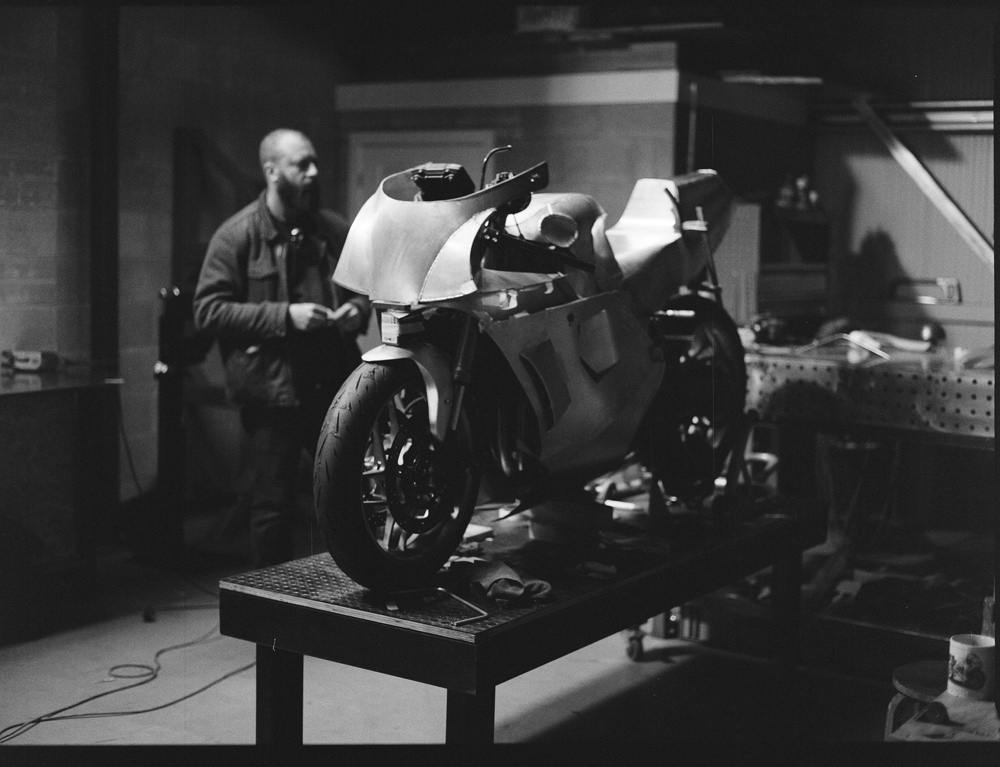
Bell went not just one but several steps further, using a base XSR900 (not the GP model), creating his own bodywork out of sheet aluminum and having to learn new processes to achieve a result most would not have the time or patience to attain.
“All the panels are handmade,” Bell says. “I had to learn how to do all the metal shaping on an English Wheel as well, so that’s why it took a lot longer.”
For those unfamiliar, the English Wheel can trace its history back to 19th-century England, where it was developed as an alternative to manual hammering for shaping metal, particularly in applications like coachbuilding and aircraft construction.
“Trying to use the English Wheel to turn a flat piece of aluminum into a given shape and angle took lots of trial and error,” explains Bell. “A lot of the time you do a whole day and actually you haven’t made any progress at all! It was a huge obsession—it’s all I thought about for the best part of the year.”
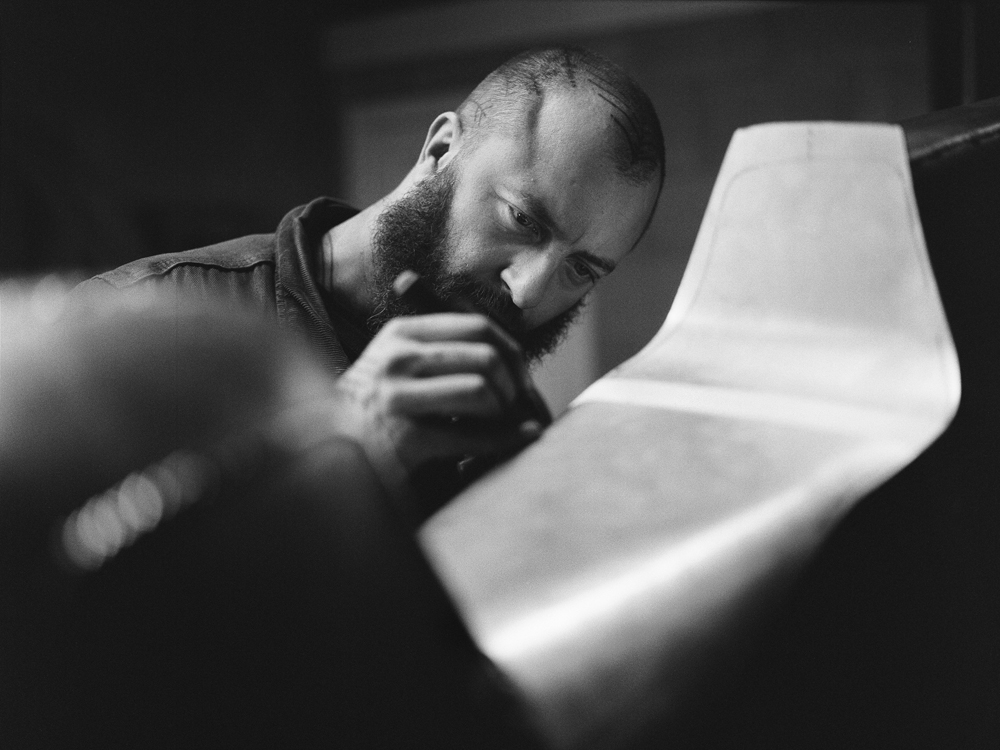
The obvious question is why, in an age of fiberglass and carbon fiber, has Bell decided to forge Thunderbolt’s shape out of aluminum?
“Honestly, I just wanted to learn,” Bell says. “Traditional metal shaping has been around for centuries, so there’s a real craft to it. It’s also quite a clean process. If you make a panel and then you bolt it onto the bike, you’ve got your finished panel already. You don’t have to make molds and then use lots of resin and lay up carbon fiber or fiberglass. People have a lot of respect for this build because it’s metal, not fiberglass or carbon. But for me, it’s a skill I have now. If I need to make something for the bike, I can get on with it, and it’s done. That’s satisfying.”
Bell notes also that there’s not a huge weight difference between his 1.2mm aluminum bodywork and a similar design made from fiberglass. Carbon fiber is a different step entirely and requires retooling, but Bell says now the original design has been completed in aluminum, creating customer kits out of fiberglass or carbon is no problem.
“Fiberglass isn’t particularly light when you’ve got all the resin in it,” Bell says. “Now I’ve got this all figured out, the plan is to take molds from it and then have it produced in carbon fiber. I am going to outsource that to someone who specializes in mold making and carbon fiber stuff. So, then I can effectively reproduce the whole build and it’s a much quicker process.”
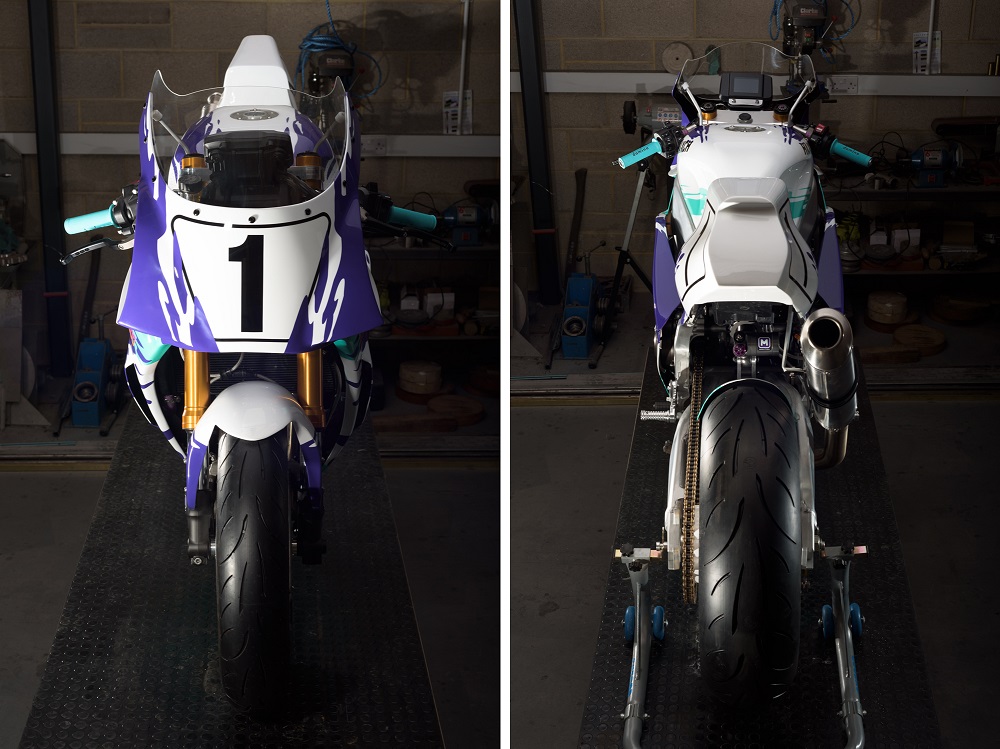
Bell’s Thunderbolt design uses the stock XSR900 cast aluminum frame and swingarm with a custom subframe for his seat unit that has hues of Colin Edwards’ factory Yamaha YZF750 racer from 1995-1997 to it.
“I had to make all the fairing brackets, and the fuel cell has been a bit tricky,” Bell says. “It’s the first time I’ve made a fuel cell, and you need to put a bit of tank sealer in, because you normally get little, tiny holes in them. The stock tank is huge. It goes out really wide to get the required capacity for road use. At the moment, the fuel cell is enough for the track use and what I want to do, but if I do a road version, I might extend the fuel cell down into the seat unit to match the capacity of the stock tank.”

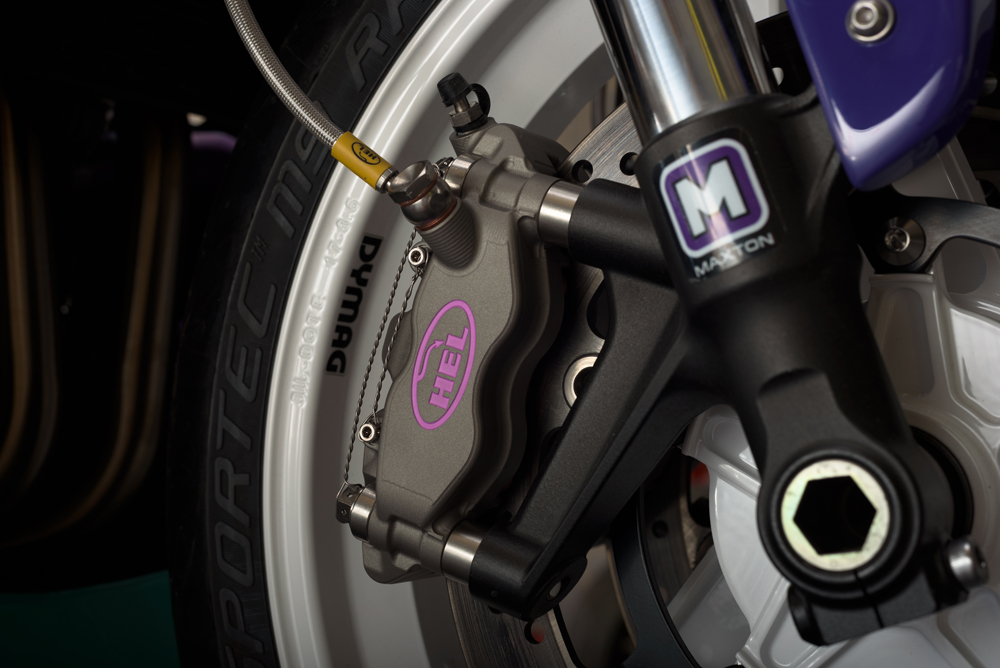
The UK bike industry is one of the most robust in the world, and Bell’s leaned on some friends to get Thunderbolt on the road, with British suspension gurus Maxton providing the fork internals and their GP10 rear shock, HEL providing the V2 front and rear calipers, master cylinder and braided brake lines, and Dymag providing their UPX7 forged aluminum wheels. The engine is stock, with a remapped ECU and that oh-so-’90s straight-through, high-mount exhaust.
“I wasn’t bothered about the brand or it being anything particular with the pipe,” Bell says. “I just wanted a 450mm long oval in stainless. It came polished, so I just brushed it. It was more about getting the oval 450mm long. That was all I needed. There’s no fancy branding on it. I can’t remember where it came from, to be honest.”
The final piece of the Thunderbolt puzzle, whose name comes as a continuation of Yamaha’s YZF600 Thundercat and YZF1000 Thunderace of the 1990s, came with the appointment of UK custom shop Image Design Custom, who were responsible for the beautiful purple, white and turquoise colorway.
“It was about three weeks with those guys,” Bell says. “They did an incredible job. I designed and drew it all in Photoshop, and then went over there. They did the prep and the base coat, and I went over there with the bike and we lined it all out and mocked the design on the bike. These guys really know their stuff and have some big riders they do custom work for, like Tim Gajser, Romain Febvre and Jason O’Halloran.”
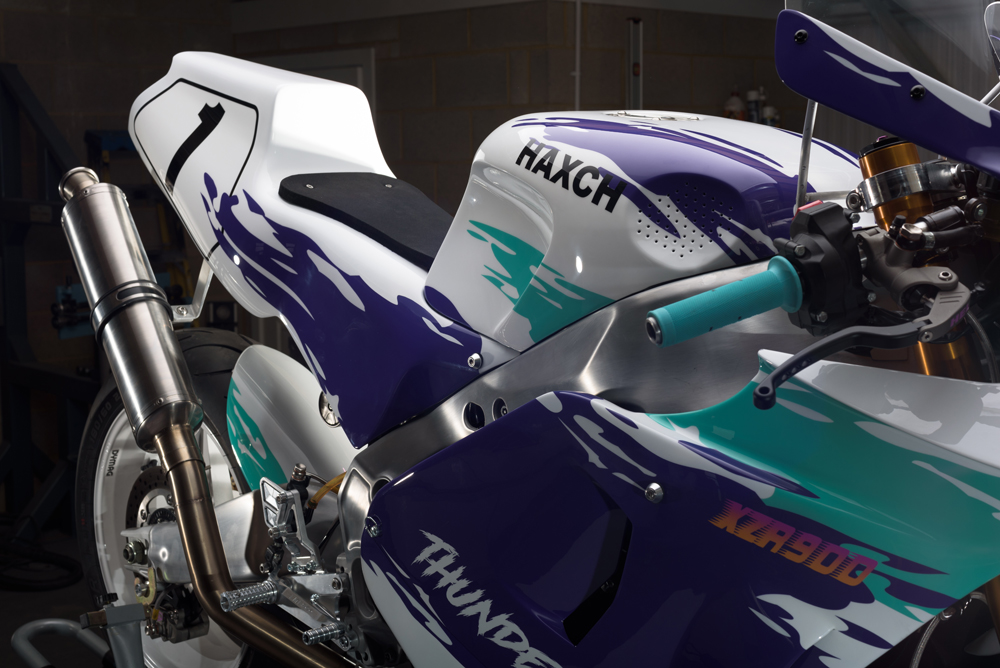
As you’d expect for such a detailed and prolonged process, the response to Thunderbolt from the custom-bike community has been incredible.
“I couldn’t have asked for a better launch,” Bell said. “It’s funny, after something like that, a year and a half of building something, and then launching it, there’s a bit of a comedown after. Back to reality, back to doing a bit of metalwork and other jobs and basically cover the cost of the build. It’s a funny mix of satisfaction that it went really well versus kind of getting back to normal and trying to figure out the next step, really.”
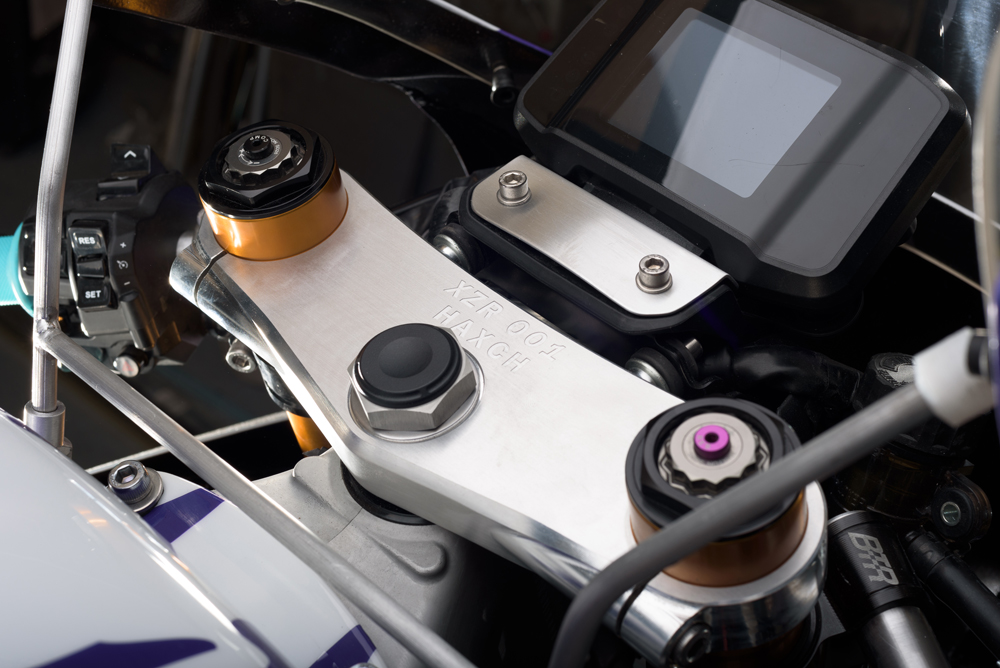
“The build wasn’t a replica of any one particular bike, but there are design elements from many of the great bikes of the time, like the YZR500, YZF750, TZR250 and FZR400. It seems to have really landed at the right time and had a big impact of people under 40, because those were our formative years and the ones we remember as kids.
“I got obsessed and looked at so many pictures just to guide the whole build. It’s a tricky thing to do, but somehow to capture that design language of what Yamaha were using in the ’90s but then reshape it all to start from scratch for a completely new bike, it’s great to hear when people see certain things in it. I’m really happy with it.”CN
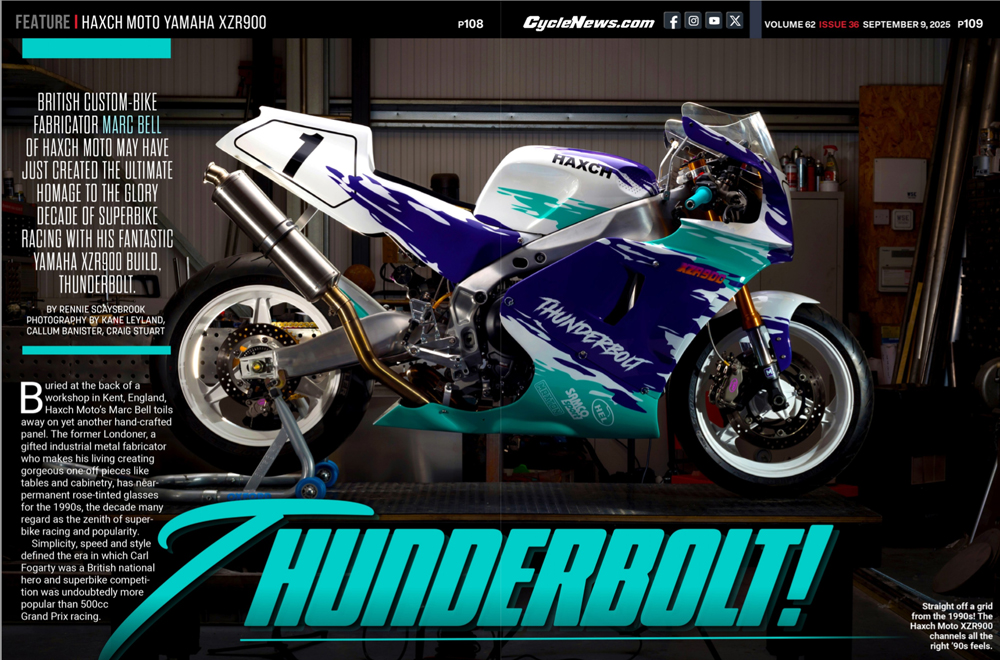
Click here to read the Haxch Moto Yamaha XZR900 Review in the Cycle News Digital Edition Magazine.