Cycle News Archives
COLUMN
Jim Turner never got the big break to crack the glass bubble
By Kent Taylor
There was a road to becoming a motocross champion in the 1970s, and it was a path that was way too rough for Daddy’s motorhome. There were no stops for wintertime motocross resorts or full-time MX schools. Leave the plastic amateur championship trophies at home, stacked along the walls in the den of child worship, because on this trip, you’re traveling lean. A bike, a buddy and a box full of tools.
A select few will finish the journey, but most don’t, and somewhere along the road, a place between local hotshot and factory-sponsored star, there was a racer named Jim Turner.
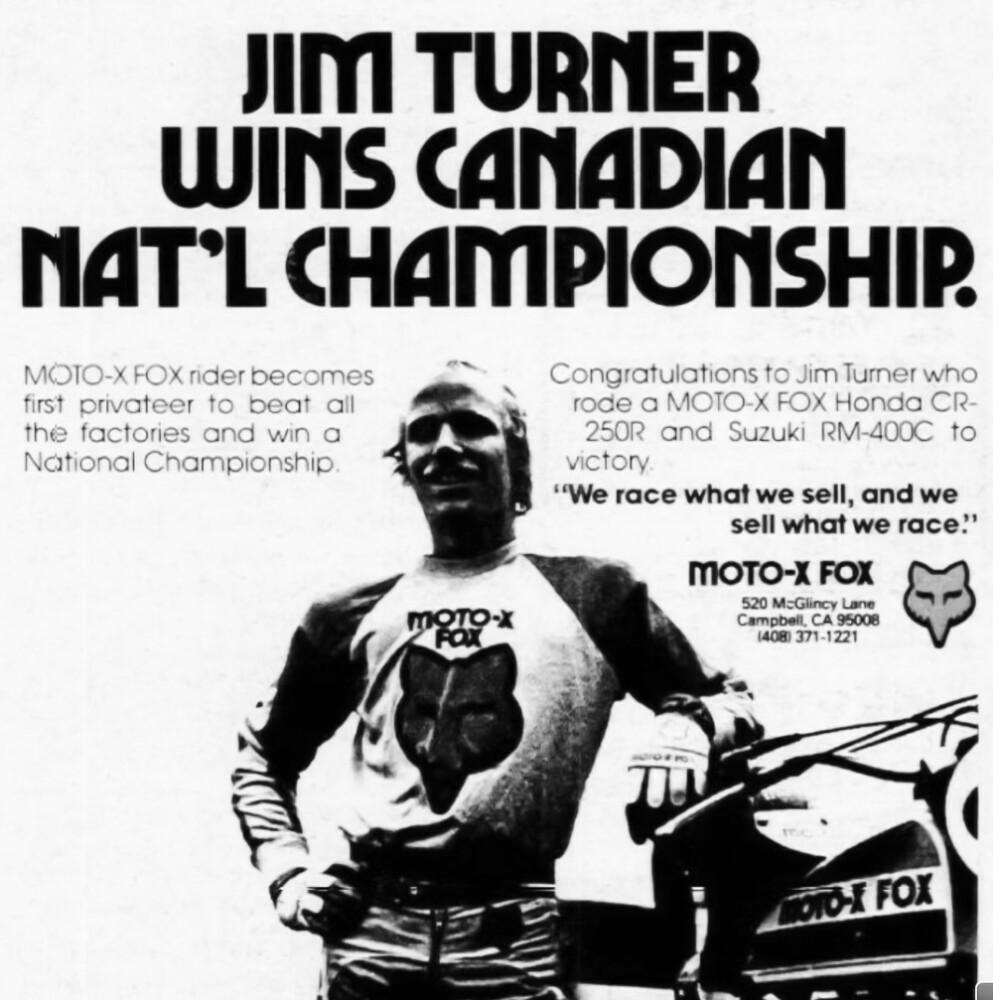
“I got a late start in the sport,” Turner says today from his home in Western Colorado. “We lived in Redwood City, California, where my dad was a doctor, and he wouldn’t let my brothers and me even ride bicycles until we were 10. I finally got a minibike when I was 12, and then I got a Yamaha 125 when I was 14. I started riding around at this dirt track with some other guys. They told me, ‘You’re pretty good at motocross.’ And I said,‘What’s motocross?’ This was the late ’60s, and I didn’t even know what the sport was at the time.”
It would be Jim’s mom, Joan, who would take him to compete in his first-ever race. “She told me, ‘I’ll take you one time.’ Well, we got to the race, which was held on a little dirt track near Candlestick Park, and I not only won, but I lapped the entire field! And on the way home, she said, ‘Okay, we’ll do this again.’ My mom loved the motocross family atmosphere. It was so very different from the life she lived as a doctor’s wife, PTA and all that, which was a life she really didn’t like.”
“‘What’s motocross?’ This was the late ’60s, and I didn’t even know what the sport was at the time.” ~Jim Turner
Bitten by the motocross bug, Turner’s life was now focused on riding his dirt bike. He even began skipping school to go riding, writing his own excused absence notes for his teachers. He graduated from high school early and also transitioned from his Yamaha to a Sachs, then to an AJS, and finally to a Montesa, before landing on a Bultaco, picking up a small shop sponsorship along the way. He dominated his local scene in 1974 and decided to make the leap to the AMA Nationals in ’75. Strong rides caught the eye of the factory mechanics like Bill Buchka and Brian Lunniss. Buchka, who was wrenching for Jim Weinert that year, got Turner a ride on a new production YZ125, which he rode to a third overall at the AMA 125 National held in Nebraska that summer.
It is at this point in the journey that some careers finally find a smooth road to the destination. Some good results, check; the right connections, check; and the fast local rider is now a fully sponsored factory racer, complete with a mechanic, gas, food and lodging. Jim Turner made all the right moves, and he was rewarded with the factory ride, with one caveat: Turner was signed by Team Suzuki to contest the National series—in Canada.
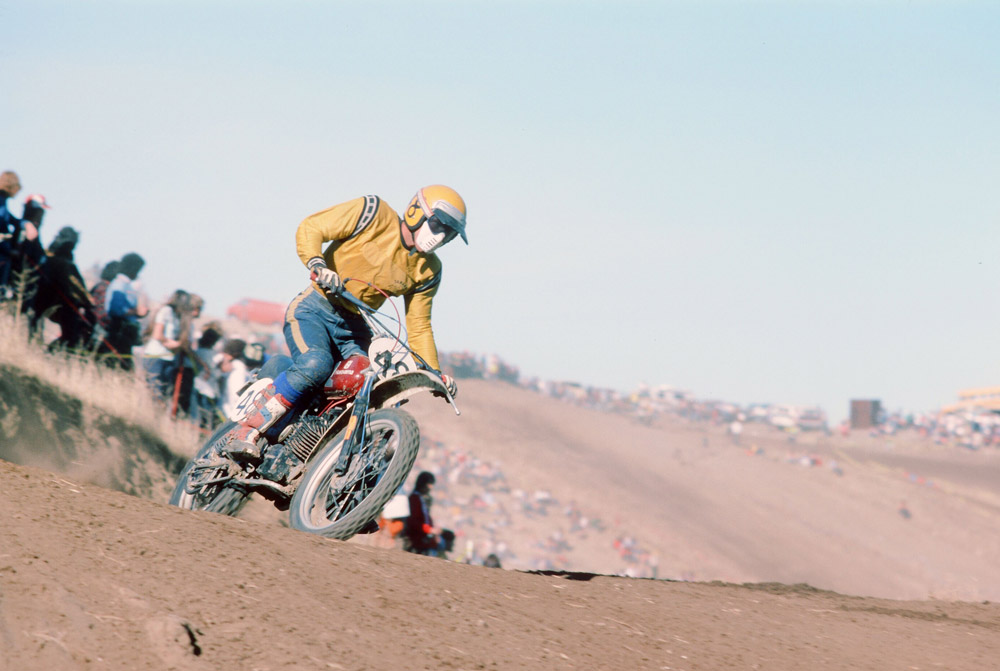
“I wanted to race in the States, but there were no rides for me. In Canada, I would have a mechanic, Masaru Ikeda, and a real works bike. Ikeda was a good racer himself, and he had gone back to Japan to build this bike for me. My Suzuki 250 weighed 178 pounds, and it was just like what they were riding in Europe.
“The competition was good. The talent wasn’t as deep as it was here in the States, but the top riders were very fast. There was Jan-Eric Sällqvist, who had come in from Sweden. I don’t think he liked me. At one race, we came into a tight corner, and he stuck his foot out and kicked me! I had never had someone kick me during a race. A few corners later, I retaliated by T-boning him!”
Canada’s grassy, all-natural courses reminded him of his Northern California tracks. There were creek crossings, muddy hills and one obstacle that Turner had never seen before.
“We were racing in New Brunswick, and I came past the mechanic area, and Masaru had a pit board saying, ‘Watch for sheep.’ I wondered if that was some kind of code or maybe a Canadian saying. But a few corners later, there they were: sheep! They were just crossing the track, and all of the riders had to dodge them.”
Turner was able to ram his way into the winner’s circle that day and many other days, ultimately capturing both the 250cc and 500cc Canadian National Championships. Eager to return to America, he soon discovered a Canadian title wasn’t worth much to the U.S.-based teams.
“I rode the Trans-AMA series that year and had some good rides, but nothing came my way. I rode a KTM in early ’77 but broke my ankle at a Supercross race. I went back to Canada and won another title that year and then raced in the U.S. on a Husky in 1978. During that season, I met Geoff Fox with Fox Racing.”
With sponsorship from Fox, Turner was able to race in Europe for a couple of seasons. More good performances netted him a ride with another factory, and he found himself in Belgium in 1980. “I signed a deal with Montesa to ride the Belgian National Championship. But there was an economic collapse in Spain, and the factory pulled the plug on the deal. I did ride in a local race and wound up crashing and dislocating my shoulder.”
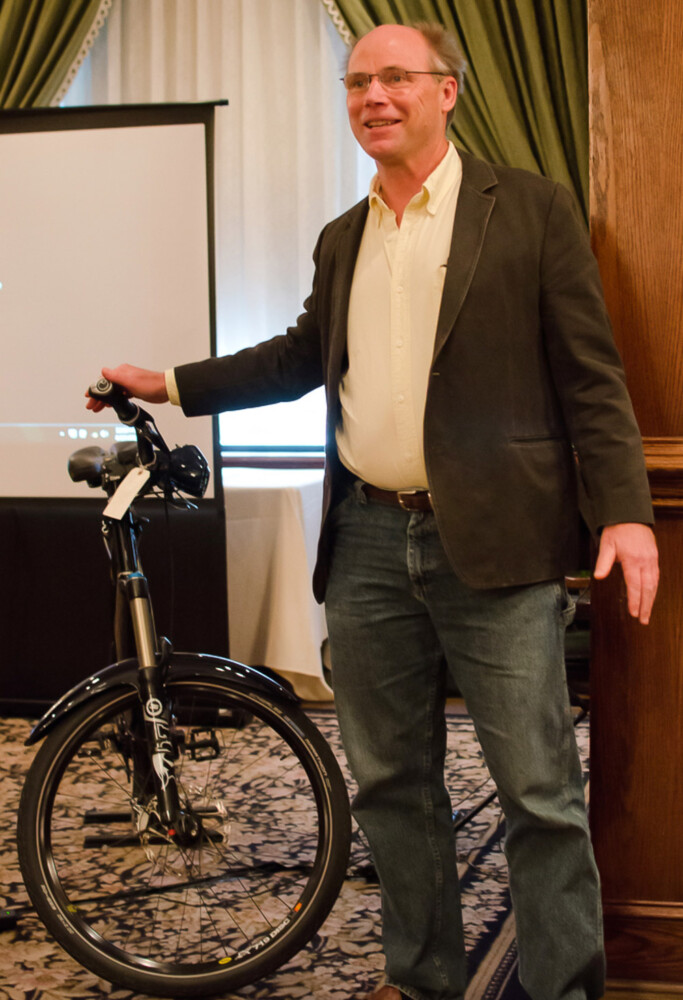
That was the end of Turner’s professional career. He went back to school and today, the Stanford University alum is the owner of Optibike, which bills itself as the “oldest e-bike company in America. He’s a highly successful businessman but also admits that letting go of his motocross dream didn’t happen easily. The trek to factory-level status in America was a 10-year journey for Jim Turner. He believes it took 10 more years to let go of the frustration of not quite arriving at his destination.
“There was a bubble—a glass wall—between the factory riders and the rest of us,” he says. “I just couldn’t break in.”CN
Click here to read the Archives Column in the Cycle News Digital Edition Magazine.
Subscribe to six decades of Cycle News Archive issues