Cycle News In The Paddock
COLUMN
Rules That Make Racing Look Ridiculous
Welcome back, the bad old days, a time when, it seems at almost every race, the same question was raised about those running the sport: “What were they thinking?”
Back then it was the so-called blue-blazer brigade—arm-banded amateur functionaries from the FIM.
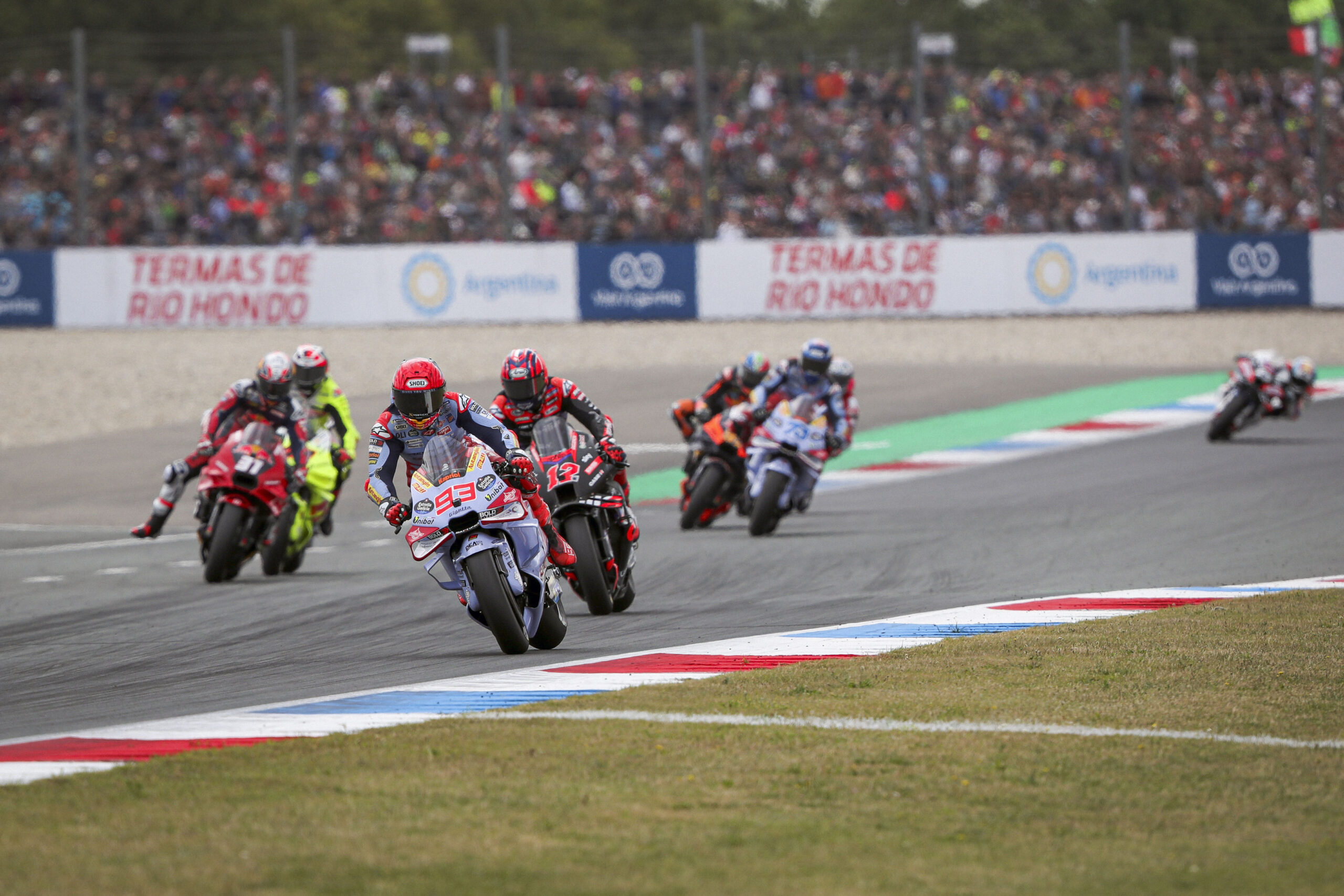
The last two rounds before the summer break raised the same feeling. Just what—when they made these rules that both spoiled the racing and, in one case, added rather than removed danger—were they thinking?
Nowadays, the “they” comprise not a happy band of amateurs but professional management, supposedly combining sporting and safety requirements with competence and commercial awareness.
It seems that a spell of clarity in rulemaking and enforcement that followed Dorna’s takeover from the FIM back in the early 1990s has been left far behind.
The events were at Assen and Sachsenring.
The rules were, respectively, those concerning front tire pressure and Moto3 misbehavior.
Tires first, for this is the one that has really spoiled things, leading to riders deliberately slowing down, as well as reshuffled results, so that, quite bizarrely, the order in which they cross the finishing line is not the last word.
Since before last year, MotoGP has been saddled with front tires that are not good enough. They can’t cope with the extra loading resulting from downforce aero and shape-shifting suspension, both of which allow harder braking. They tend to overheat, especially when following another bike. As a result, teams tend to underinflate them slightly.
But this risks dangerous collapse. Or so says Michelin, and they should know because they make the inadequate tires—although nobody can actually point to a single incident when this has happened.
What to do?
Demand better tires? Michelin is the sole supplier and should surely be expected to keep up with technical development.
Should we leave the teams and riders to make their own decisions and take responsibility for themselves? Taking risks is, after all, part of the job description. Or introduce a minimum-pressure rule and then find a Draconian way to enforce it?
MotoGP’s current management chose the last, including the threat of disqualification for transgressors.
Thankfully, after much protest, they saw some sense. Not a lot, but enough to ameliorate the punishment and marginally reduce the minimum pressure. Now, a rider below the pressure for a specified part of the race (30 percent for the Sprint, 60 on Sunday) merely suffers a time penalty (eight and 16 seconds, respectively). Enough to nullify all efforts and potentially ruin the results, sometime after they’ve been announced and celebrated.
All this enforced by complex and specialized onboard and remote monitoring equipment, feeding tailor-made algorithms—a sort of electronic game that feels like they’re doing it just because they can.
For teams, it means taking a tire-pressure gamble on whether your rider will be leading, front wheel in a cooling breeze (pressure up), or following (pressure down). Get it wrong, and you either risk over-inflation and a loss of grip or punishment, losing hard-won race positions.
As Assen came the unedifying spectacle of Marc Marquez deliberately slowing down and waving Di Giannantonio past so that he might follow him to heat up his front tire. His onboard system had warned him. Sadly, it was not enough. Later in the race, he was put off wide by Bastianini, lost his close following position, and the pressure went down again.
Shortly after celebrating a hard-won fourth place, he was dropped to 10th.
There was more of the same a week later in Germany.
It is manifestly absurd. Laughable. It makes a supposedly serious World Championship sport look ridiculous.
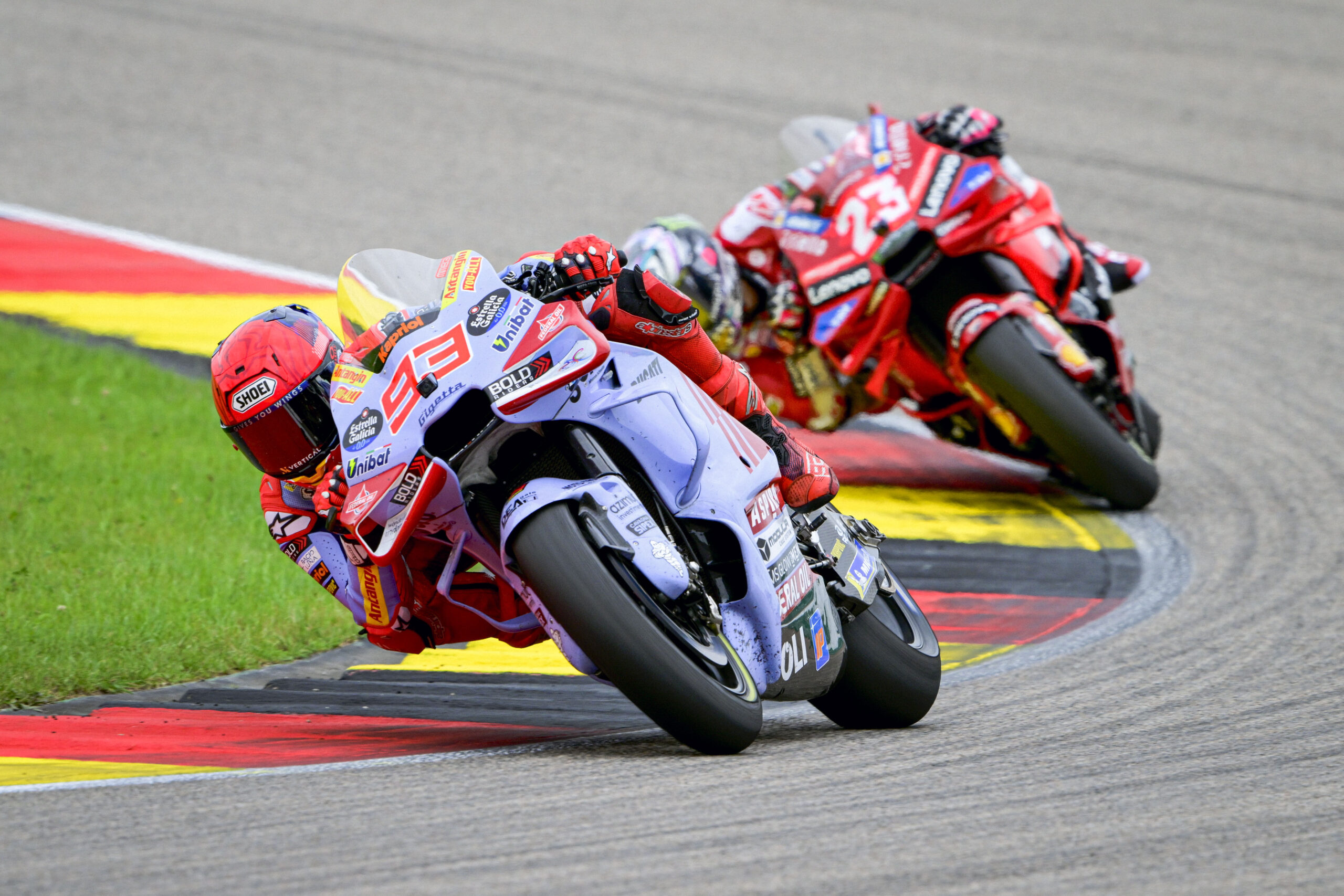
The other matter concerns Moto3 and the effort to prevent riders from cruising during qualifying, waiting for a tow that (at some tracks) is worth a second or better.
It’s clearly dangerous, but increasingly strict attempts to stop it have quite obviously failed. At the Sachsenring, no less than half the 26-strong field was sanctioned, with punishments ranging from a warning via single or double long-lap penalties to pit-lane starts. Next stop, disqualification.
What more evidence could there be that the system is not working? The riders—beginners and old hands alike—quite plainly don’t care.
And unless you are one of a small handful of actual title contenders, why would you? Rather, get a good lap time and hope you get away with it.
The icing on the cake: the stupidly small Sachsenring (not actually fit for grand prix racing) had a long-lap loop feeding directly back onto the racing line. There was at least one very, very close call.
Making the punishment more dangerous than the crime.
Time for a rethink. Maybe financial penalties. Maybe instant disqualification, no pussyfooting around. Maybe punish the teams, not the riders.
And stop making Grand Prix racing look ridiculous.CN
Click here to read the In The Paddock Column in the Cycle News Digital Edition Magazine.
Click here for all the latest MotoGP news.