Two hours isn’t much time to fully understand a motorcycle, especially one that’s as impressive as what the Triumph Trident 660’s spec sheet claims it is, but I’ll give it a go.
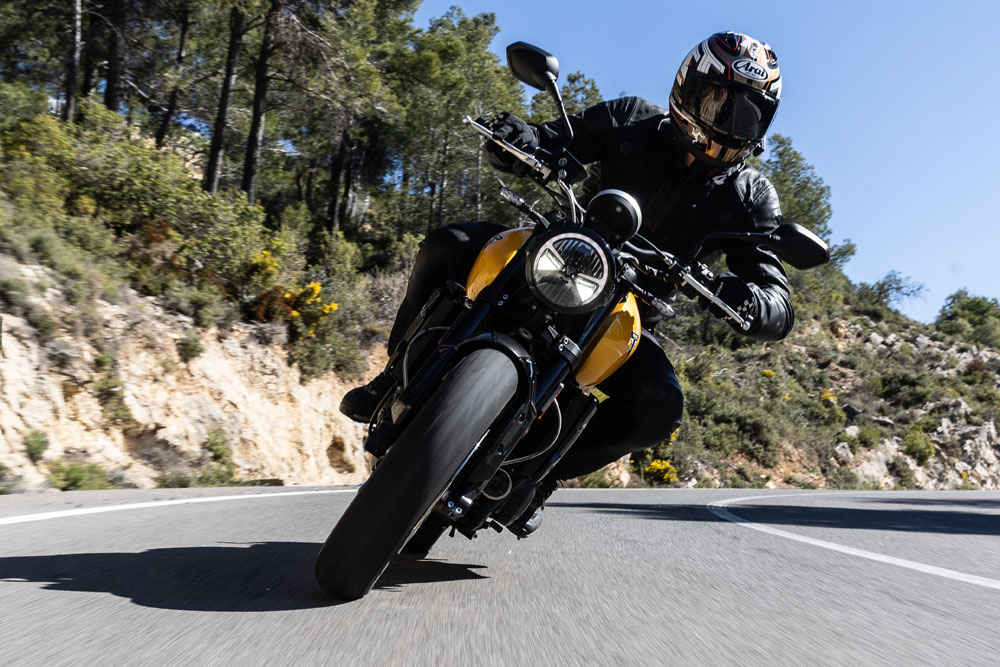
Even though the ride was brief as we sped through the hills surrounding Great Britain’s so-called redneck dumping ground of Benidorm on the southeast Spanish coast, I left feeling pretty enthusiastic about not just Triumph’s wide range of roadsters but also what you can buy for under $10K these days.
Triumph has engineered its bikes with a level of sophisticated fun over the past few years as the model lineup gradually develops. Although the Trident 660 is not a completely new model, it still delivers those performance vibes while maintaining a sense of carefree enjoyment that some other manufacturers haven’t yet mastered.
The Trident 660 has received a thorough going-over for the 2026 model year and comes to the party arm-in-arm with the larger Trident 800, which we tested in Cyprus a few months ago. The 660 version uses the same motor that powers the Daytona 660, albeit with an engine tune aimed at producing more low- to midrange torque than the Daytona’s penchant for screaming racetrack revs.
Power is claimed to be 94 horsepower at 11,250 rpm with a stout 50.2 lb-ft of torque at 8250 rpm, achieved through a revised intake and fuel-injection system that houses a new, larger airbox and three 44mm throttle bodies compared to the single unit used before.
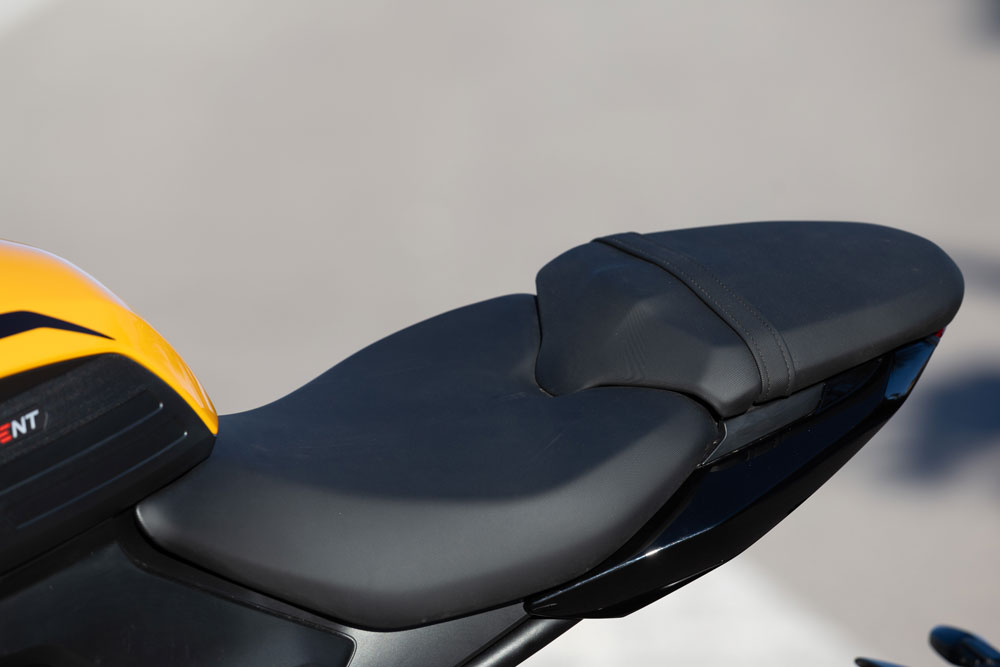
To house those triplets of throttles, the frame needed a slight hollowing around the top rails, which allowed the designers to keep the narrow gap between the seat and the tank. This, in turn, meant the engineers could retain the skinny midsection and the 31.6-inch seat height, making the 660 an appealing prospect for smaller and/or less experienced riders.
At first sit, the 660 felt a touch on the small side for 6-foot-1/32-inch-inseam me, although if one were to pick one up, Triumph does offer a range of taller (and shorter) seat heights in its aftermarket catalog.
Showa has graced the Trident with its nonadjustable 41mm SF-BPF (Separate Function Big Piston Fork) and its preload- and rebound-damping adjustable shock, and while that may not brighten the eyes of those hunting outright performance, given this is a pretty handy little roadster for under $9K, those specs act better in real life than they do on paper.
Nissin conventionally mounted twin-piston brake calipers clamp down on 310mm discs up front, and you’re equipped with cornering ABS and traction control, the latter’s performance linked to whatever ride mode you’re in, be it Sport, Road or Rain.
As you guessed, the 660 gains a six-axis IMU, and you can, if you so desire, switch off traction control if you want to have a little one-wheel fun. Triumph has done very well indeed by appointing the 660 with a plethora of electronics that many other manufacturers charge extra for after you buy the bike. Triumph’s Shift Assist quickshifter comes as standard, as do cruise control and self-canceling indicators. All this for under $9K!
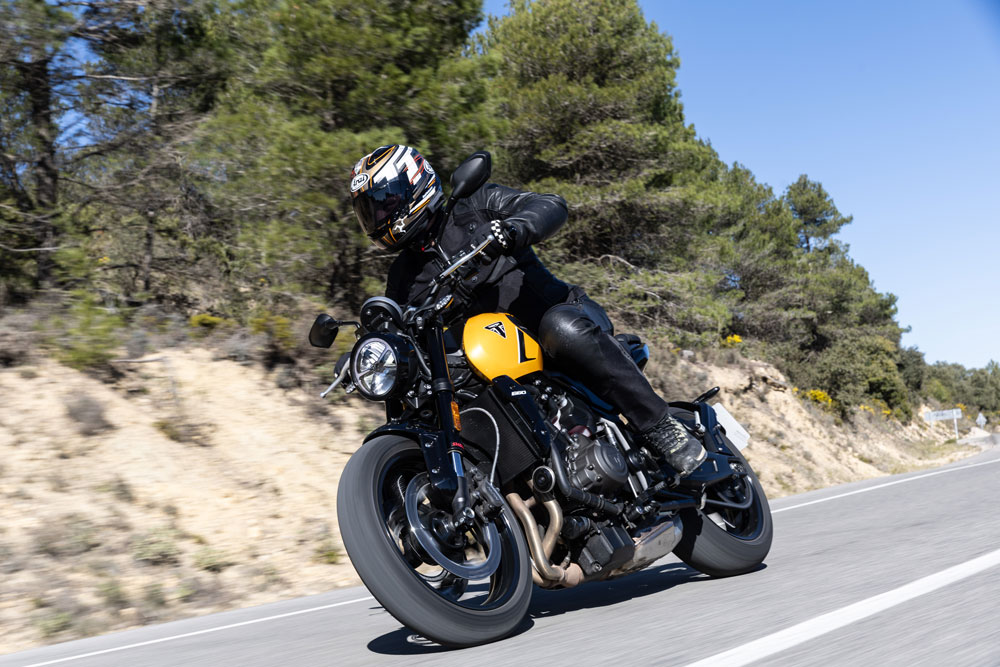
Fire up the Trident, and it’s got that wonderful Triumph three-cylinder bark to it. Snick it into gear and get underway, and things get even better.
Triumph claims the 660 will offer 80 percent of its torque across the whole rev range, which makes this engine a cinch to use in low-speed situations like avoiding pissed-up Brits leaving the Benidorm bars after a day-drinking session.
There’s a claimed 17 percent more power on offer than in 2025’s version, and you get an extra 1000 revs, so it’ll play the sportbike game if you want, but the 660 is more at home with midrange torquey riding, letting the motor do the work and pull you from corner to corner, rather than chasing that admittedly hard-cut rev limiter.
Having been graced with Triumph’s quickshifter, the Trident snicks through its gears with consummate ease. The ratios themselves have been altered, with sixth gear now more of an overdrive, so you’ll only see it if you’re on the freeway and heading north of 65 mph.
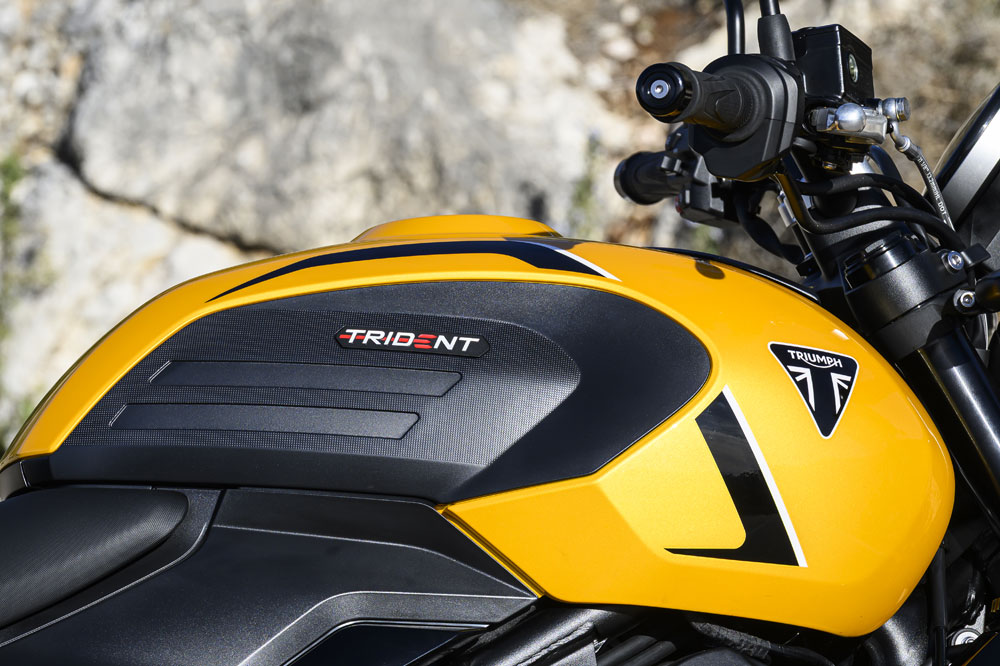
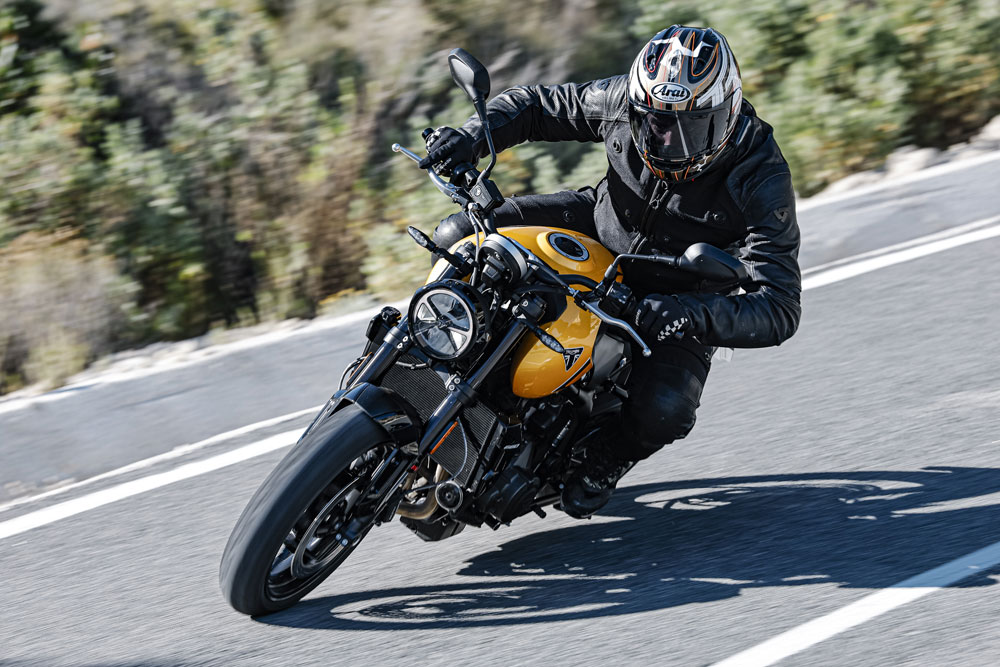
If you’re light with your steering inputs, you’ll be rewarded with a compliant chassis that doesn’t get too far out of shape when the road gets twisty. However, if you’re aggressive in your riding, the low-spec suspension will begin to show through, especially as the fork rebounds too quickly and the feeling from the Michelin Road 5 front tire starts to become diluted.
The 660 doesn’t like a rushed riding style. It’ll go plenty fast in the corners, but you’ve got to keep in mind its demographic and the abilities of the rider Triumph is chasing. Those with a bit more experience will likely hanker after the Street Triple 765, a bike that is more focused on slicing race lines than the Trident’s everyday persona.
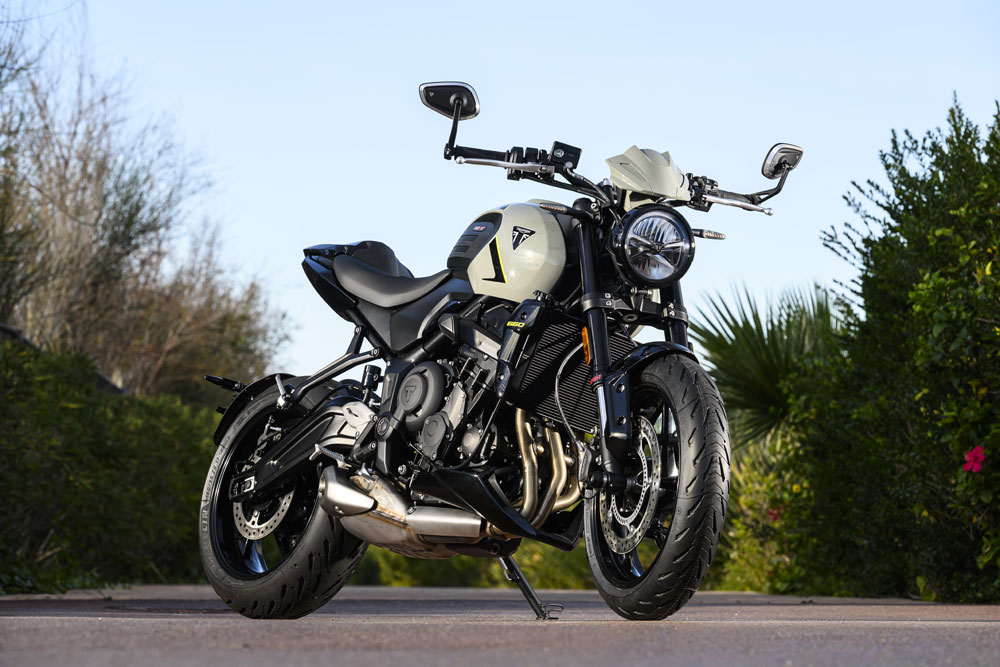
That said, the ride comfort is quite good, especially at more sedate road speeds. It’s softly sprung, which goes a long way to soaking up hard-edged potholes and providing good highway comfort, although some may lament the naked bike’s complete lack of wind protection. For that, you might want to look at the mile-munching Tiger 660.
The braking performance is up to the task, but it’s nothing to write home about. Triumph has included a span-adjustable brake lever, so you’ll be able to dial in the amount of feel you require, but don’t go expecting Speed Triple levels of feel and performance. However, having cornering ABS is a big bonus for a bike of this price point.
What will prove interesting to watch over the coming years is how many riders opt for the Trident 660 over the Trident 800. The larger 800 is only $1000 more and offers more performance than the 660, and I feel it will offer the buyer better longevity in ownership. That will be up to the dealers to convince less-experienced riders to opt for the 660 instead, but there is a chance Triumph has let the 800 eat the 660’s lunch.
Regardless of the pontificating, the 660 is a nicely built and appointed motorcycle. There’s so much in the market right now, and the potential buyer has never had such a choice, but if they’re after something like a little British style and one that will help them stand out from the pack, the Trident 660 might just be the ticket. CN
VIDEO | 2026 Triumph Trident 660 First Ride

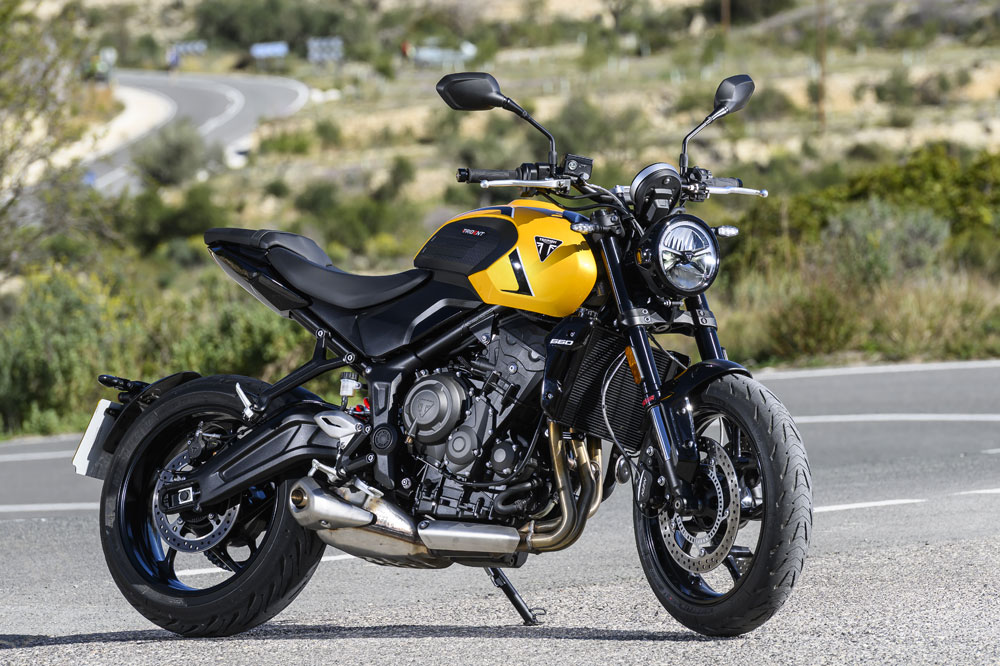
2026 Triumph Trident 660 Specifications
| MSRP | $8995 |
| Engine | Inline 3-cylinder, 240° Firing order |
| Valvetrain | 12 valve, DOHC |
| Displacement | 660cc |
| Bore x Stroke | 74 x 51.1mm |
| Compression | 12:1 |
| Cooling System | Liquid |
| Max Power EC (claimed) | 94 hp @ 11,250 rpm |
| Max Torque EC (claimed) | 50.2 lb-ft @ 8250 rpm |
| Fuel System | Multipoint sequential electronic fuel injection w/ electronic throttle control; 3 rider modes (Rain, Road, Sport) |
| Exhaust | Stainless-steel 3-into-1 header system w/ low single-sided stainless-steel silencer |
| Clutch | Wet, multi-plate, slip & assist |
| Gearbox | 6-speed |
| Frame | Tubular perimeter frame, steel |
| Swingarm | Twin-sided, fabricated pressed, steel |
| Front Wheel | Cast aluminum alloy, 5 spoke, 17 x 3.5 in. |
| Rear Wheel | Cast aluminum alloy, 5 spoke, 17 x 5.5 in. |
| Front Tire | 120/70 R 17 in. |
| Rear Tire | 180/55 R 17 in. |
| Front Suspension | Showa 41mm upside-down SFF-BP forks |
| Rear Suspension | Showa monoshock RSU, w/ preload & rebound adjustment |
| Front-Wheel Travel | 4.72 in. |
| Rear-Wheel Travel | 5.12 in. |
| Front Brakes | Twin 310mm fixed discs, two-piston sliding calipers, OCABS |
| Rear Brakes | Single 255mm fixed disc, single-piston sliding caliper, CABS |
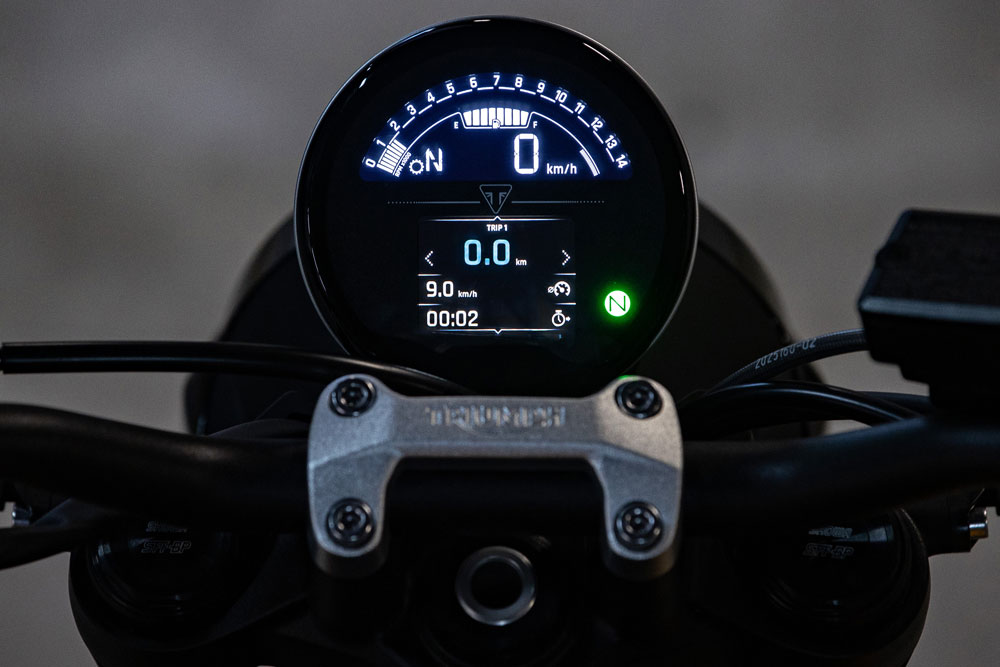
| Instrumentation | LCD Multifunction Instruments w/ integrated color TFT screen |
| Seat Height | 31.89 in. |
| Wheelbase | 55.20 in. |
| Rake | 24.5° |
| Trail | 4.25 in. |
| Weight (wet, claimed) | 429.9 lbs. |
| Fuel Capacity | 3.7 gal. |
| Service Interval | 10,000 miles/12 months (whichever comes first) |
| Fuel Consumption (claimed) | 57.6 mpg |
| Colors | Cosmic Yellow & Stone Grey |
Click here to read the 2026 Triumph Trident 660 Review in the Cycle News Digital Edition Magazine.