Sometimes, having too much of a good thing isn’t necessarily, you know, a good thing, as can be seen from Triumph’s midsize Street Triple lineup of recent years.
Photography by Chippy Wood & Gareth Hartford
Until the arrival of today’s test bike in the Trident 800, the Street Triple 765 had four bikes in the family—the base model 765 R, the sporty 765 RS, the sportier 765 RX and the limited-edition Moto2.
To make it a little more confusing, the RS doubles as Triumph’s supersport machine that you needed to modify into a race bike yourself. Now the Daytona (the real supersport Daytona, not the 660) is long gone, and the Moto2, which one would reasonably assume was a full-faired race replica, is still a naked bike.
Got all that?
Thankfully, Triumph has realized its folly somewhat and altered its lineup, dropping the 765 R from production and in its place bringing to market the new Trident 800, complete with its own dedicated chassis and all-new three-cylinder engine.
The Trident is aimed more at regular street riders than those chasing lap times. Triumph claims the Trident will tip the scales at 436 pounds, a fair bit heftier than the RS at a claimed 414 pounds ready to ride. You still get all the regular bells and whistles like cornering ABS and traction control, four-piston radial-mounted front brakes, Triumph’s sublime quickshifter, cruise control, optional heated grips, and a raucous 798cc inline three-cylinder motor that sounds like one-third of a NASCAR when being given the berries. In short, there’s very little the RS can do that the Trident can’t, up to rather illegal speeds or when aimed at a racetrack.
This new kid on the Triumph block comes in at a tasty sub-$10K ($9995, but hey, five bucks is still five bucks), meaning it’ll go head-to-head with bikes like the base model Yamaha MT-09 and the Kawasaki Z900 ABS.
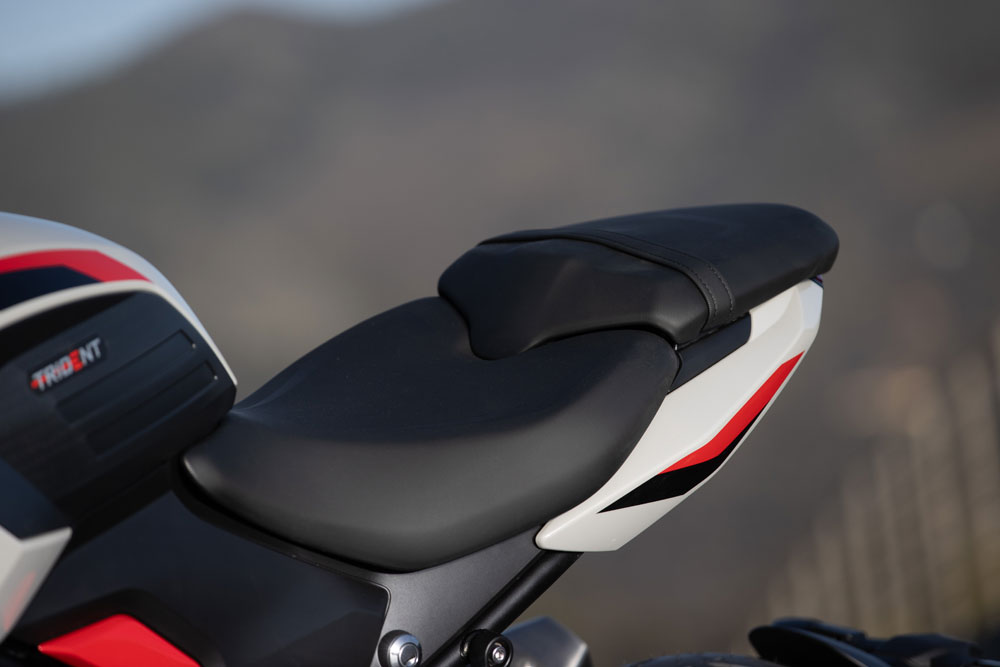
The Trident uses the same main chassis as the upcoming Trident 660, save for a slightly wider top section to accommodate three 42mm throttle bodies, replacing the single throttle-body system the up-to-2025 Trident 660 had. You also get a slightly revised subframe on the 800 that accommodates a wider seat pad for the rider and passenger.
Triumph has gained a deserved reputation over the years for a skinny midsection (wish I could say that about myself), and it’s the same with the Trident. It runs a 31.8-inch seat height, meaning it should be within most riders’ reach as long as you’re not too tiny in the inseam—for the record, I’ve got a 32-inch inseam. I’m almost too tall for the Trident. Almost.
Those used to the Street Triple’s sharper tank lines will notice the Trident’s almost pea-shaped tank gives a pretty different rider stance. The tank sides are wider and don’t allow as much tuck-in as the Street Triple’s, but it keeps you a little more upright and in not quite as aggressive a rider stance.
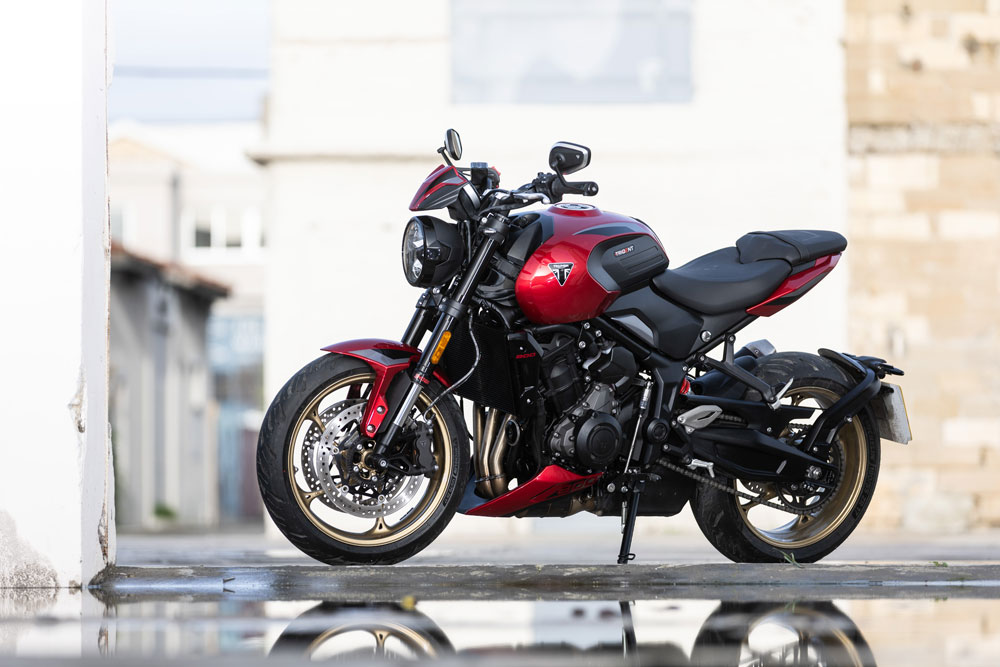
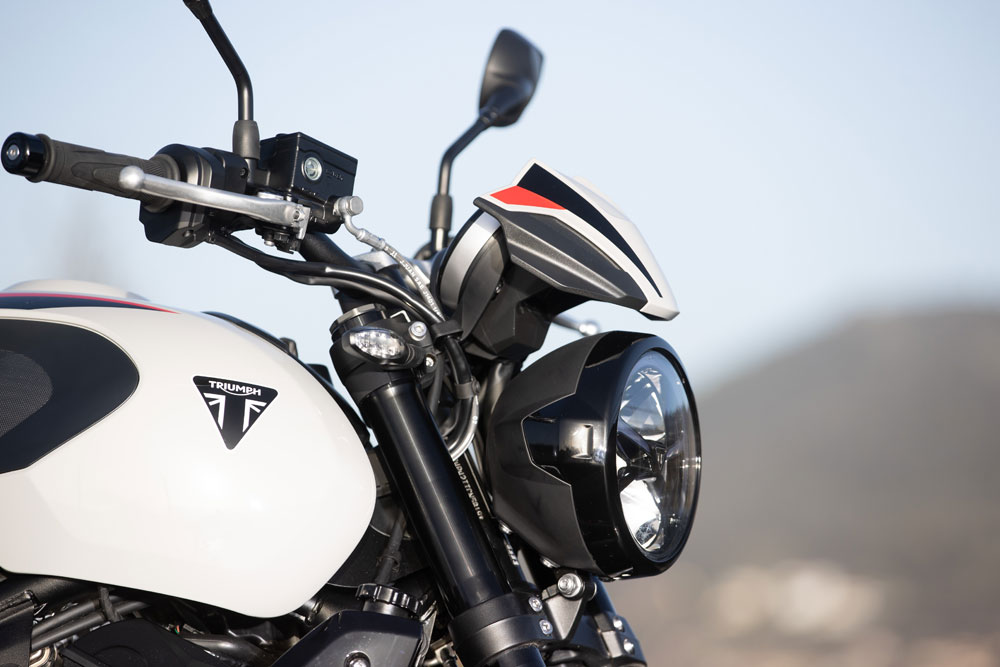
The Trident looks traditional without being old, thanks to the big, classic-looking single headlight and the back end, which has a few modern race-bike cues, meaning the designers have struck a pretty funky balance in how the Trident presents itself. Think bruiser streetfighter in the traditional sense, not a stripped-back supersport bike.
Once you’re underway, two things immediately stand out. The first being how soft the suspension is set as standard, the second is how much of a blast that 798cc inline three-cylinder engine is.
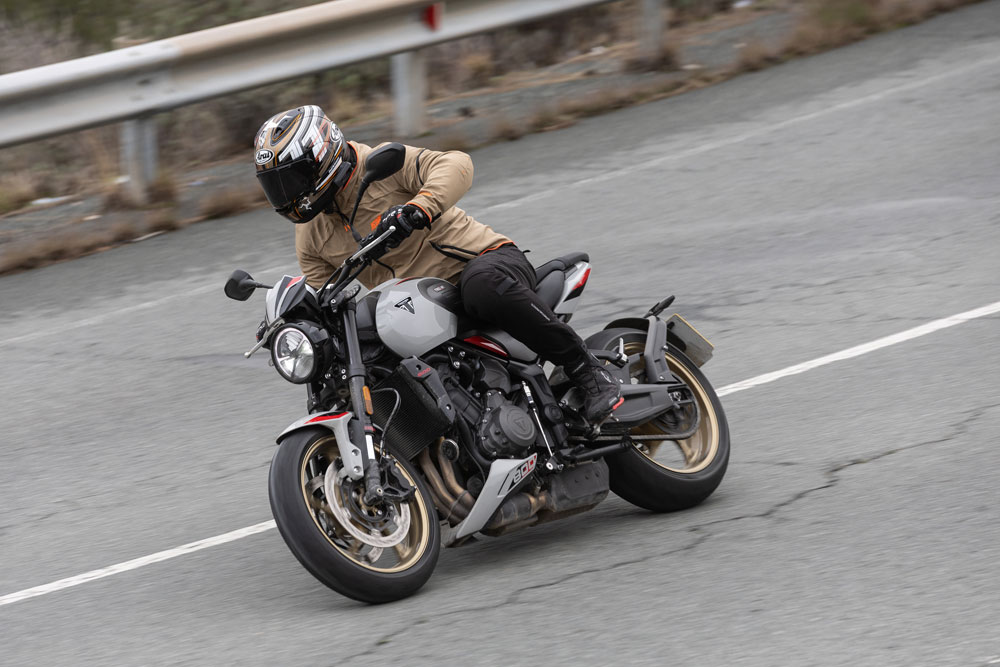
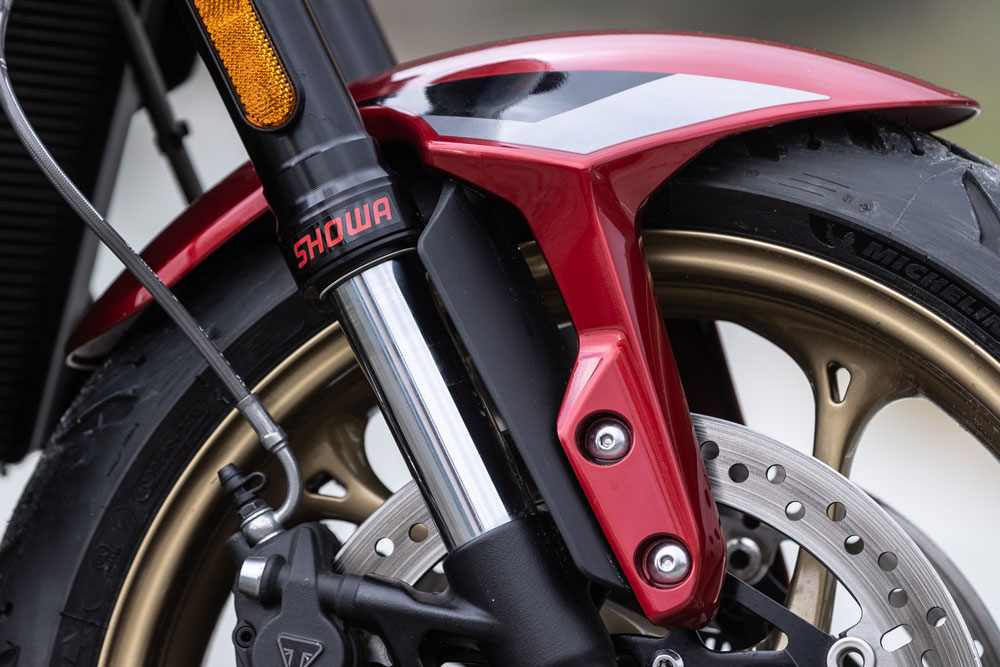
The 41mm Showa Big Piston Fork comes with full adjustability, but it’s the rear shock that will require some preload if you’re north of 160 pounds dripping wet, which I most certainly am. At conventional road speeds, like puttering around inner city streets, the settings are fine, but as soon as you want to wick the pace up, you’ll want to give the rear suspension a bit of preload for some extra support. Do that, and the Trident will hold its line beautifully, and its sub-440-pound wet weight means agility is never in question.
The Trident retains the beautiful agility that’s a genetic trait of the Street Triple lineup, but the slightly more relaxed riding position means it doesn’t feel quite as urgent. There’s a more chilled-out vibe to the Trident’s persona, which is added to by how comfortable that seat pad is over a long day (a small detail, but important).
An area the Trident is lacking is front braking feel. Power is reasonable, but the cheapie master cylinder doesn’t give the deft-feet-on-the-first-quarter-of-braking-pull want. It’s an easy fix; just throw a race-spec master cylinder at it (and maybe some higher-spec pads), and the braking will be transformed. You’ve got cornering ABS inside the electronics at any rate, so you’re halfway there already.
Ride quality is overall pretty good but will require a bit of fine-tuning to get perfect, something easily done with full adjustment on the fork, although you’re limited with preload and rebound on the shock.
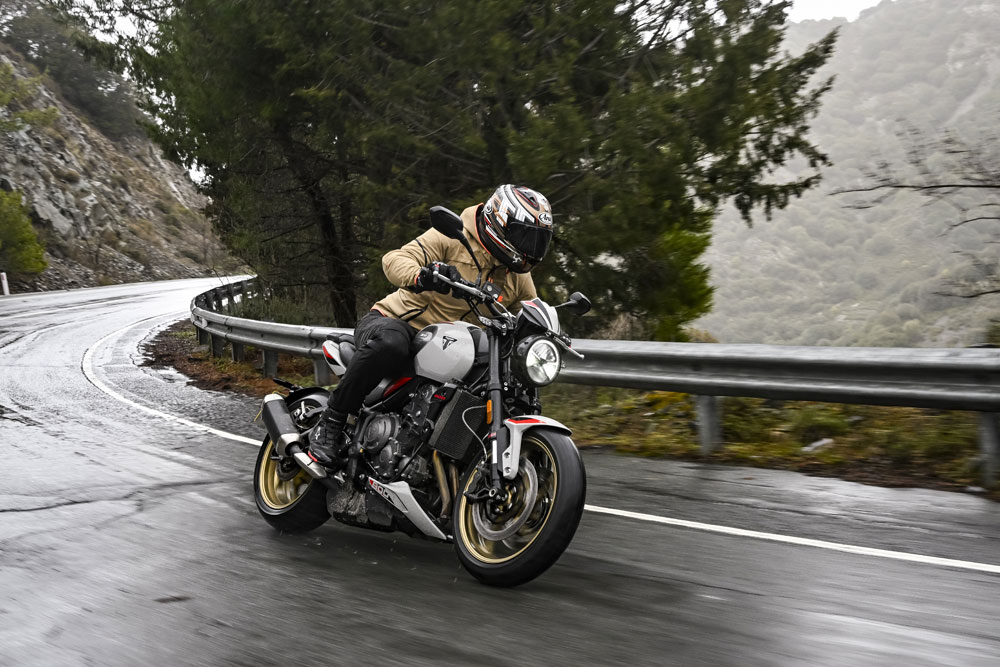
Our ride was accompanied by plenty of freezing sleet and rain in the mountains of Cyprus, which undoubtedly sucked some of the fun out of the experience but did give the chance for an unlikely hero to shine. Michelin’s Power Road 6 is standard fitment on the Trident, and having never ridden them before, I was pleasantly surprised more by their wet performance than anything they managed in the dry. Initial turn-in is a little slow, but the Michelins’ stability and braking performance are excellent, especially in the cold and wet.
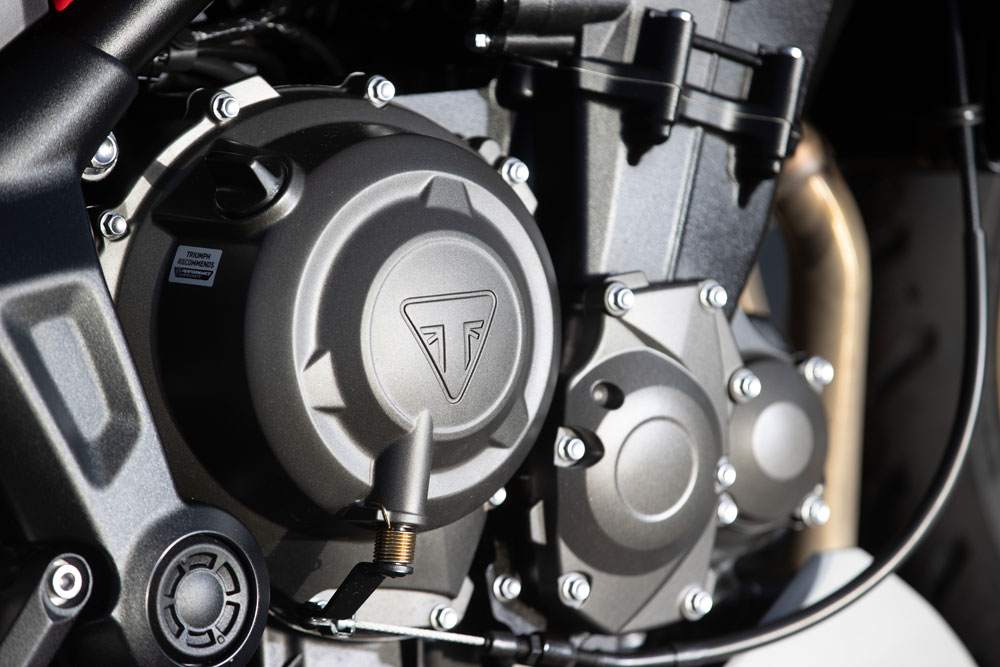
Now, turning our attention to the 113-horsepower, 798cc inline three-cylinder motor that powers the Trident, I wish I could say anything other than it’s an absolute gem of a thing. I’m really starting to believe the three-cylinder is the ideal streetbike motor for all the reasons the engineers have sprouted (good initial torque, strong midrange, plenty of top-end), but more than anything, the Trident’s motor is just straight-up fun to use.
Yes, there’s plenty of all the good stuff you’d expect from a triple, but it’s so smooth in its delivery, so effortless in how it plants a smile on your dial. Whereas the Speed Triple 1200 RS that I just rode is a bit of a boxing match, the Trident is a playful sparring partner, with more than enough performance for 90 percent of the riding you’re going to put it through.
Pair it with that beautiful quickshifter, and you’ve got a ride that’s extremely enjoyable as well as one that can more than hold its own in the performance stakes.
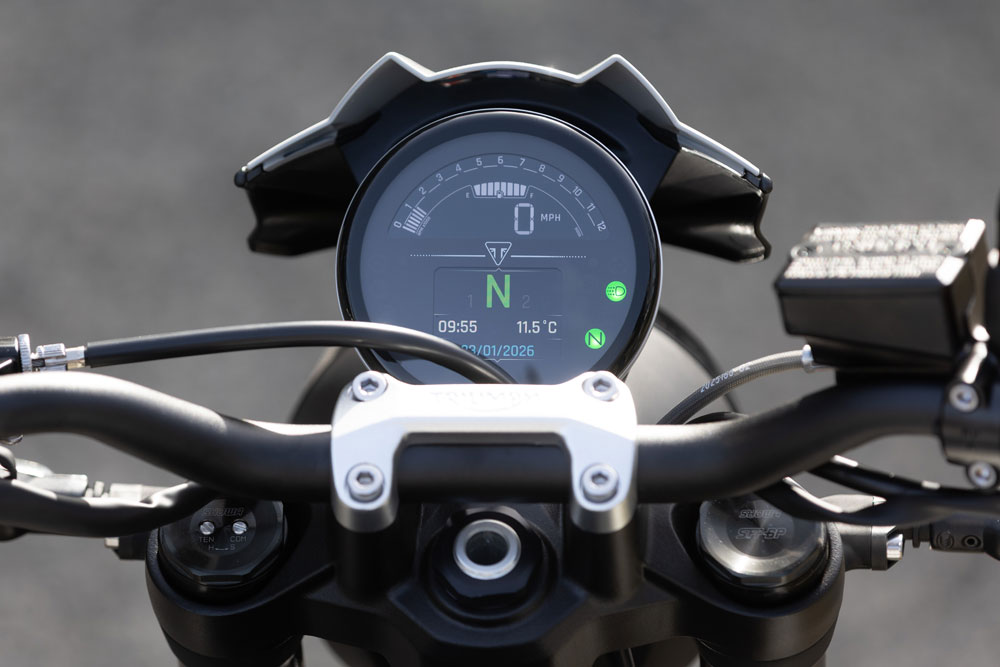
As expected, you’ve got three riding modes of Rain, Road and Sport, with traction control and wheelie control linked to each individual mode so no going and changing them separately.
On a bike like the Trident, that’s not such a big deal. If you’re keen for some extra-long wheelies, you can turn the TC off, but I didn’t tell you that.
Another creature comfort Triumph has included as standard is the one-touch cruise-control system. It’s a little confusing at first, as when you look at the left switch block, you can’t actually see it, but it’s there and helps Triumph give a quick left jab to a couple of its Euro rivals that insist on making add-ons like cruise control an optional extra, even when their bikes are more expensive and, well, not as good anyway.
On that note, heated grips are an optional extra, so that proves you can’t have it all. I was more than happy to have them fitted as we navigated some of the cold and wet potholes in the mountains of Cyprus.
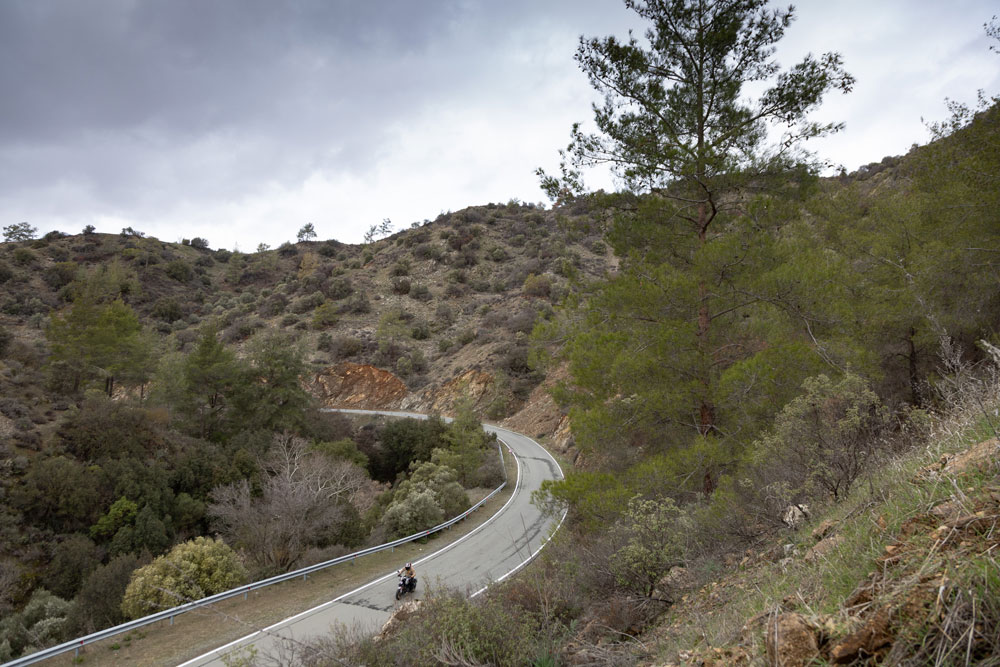
So, where does the Trident stack up against some of its rivals? Rather well, I must say. Given the MSRP is under $10K, it sits right next to the $9999 Kawasaki Z900 ABS and a little below the $10,899 Yamaha MT-09. You could even go hunting for a KTM 790 Duke (pre-2026 model, as the 2026 models are not being sold in the U.S. right now). Those 790s retailed for $9499 (we found a few on dealer sites for under $8K!). Don’t even bother about including the $13,995 2026 Ducati Monster, that’s getting up into Street Triple 765 RS territory.
Triumph’s latest offering breaches a small gap in its lineup that many didn’t know was there. The Trident’s funky styling, matched to that ripping little motor, means it should find favor with a wide variety of naked bikers quite easily. The performance is backed up by that tasty price, and the build quality is typically nice, even if that horrid clutch cable half ruins the look of the right side of the bike.
There’s a lot to choose from in this sector, and whether you like it or not, that choice just got a bit harder.CN
VIDEO | 2026 Triumph Trident 800 First Ride Review

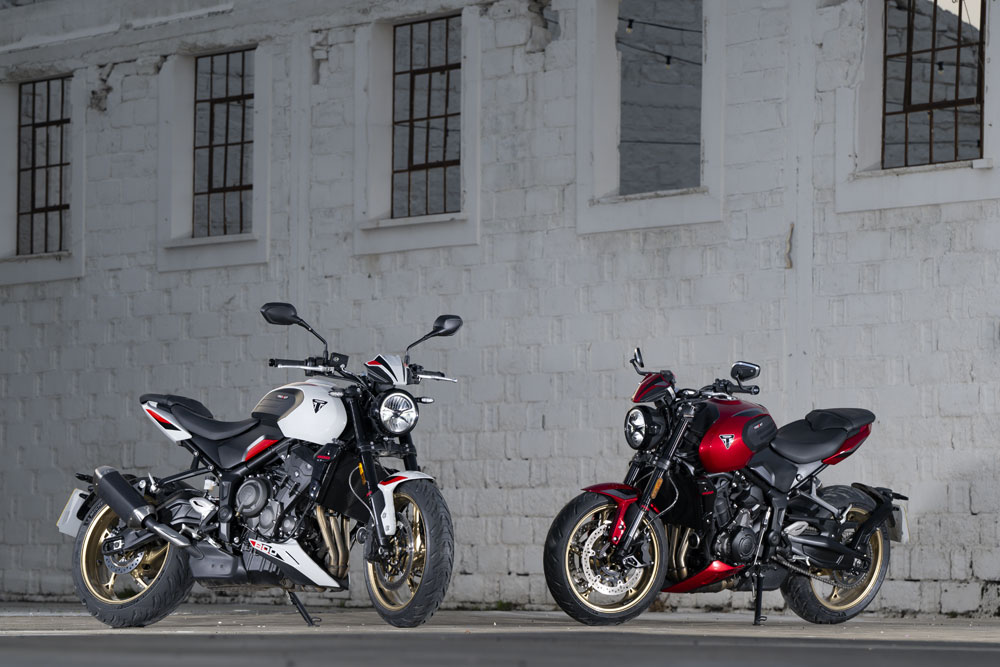
2026 Triumph Trident 800 Specifications
| MSRP | $9995 |
| Engine | Inline three-cylinder |
| Valvetrain | DOHC, 12-valve |
| Displacement | 798cc |
| Bore x Stroke | 78.0 x 61.9mm |
| Cooling System | Liquid |
| Fuel Injection | Ride-by-wire EFI |
| Compression Ratio | 12.3:1 |
| Exhaust | 3-into-1 |
| Transmission | 6-speed |
| Clutch | Wet, slip/assist with optional up/down quickshifter |
| Chassis | Tubular steel frame with aluminum swingarm |
| Front Suspension | Showa 41mm SFF-BP inverted fork, fully adjustable |
| Rear Suspension | Showa monoshock, preload, rebound adjustable |
| Front Brake | Dual 310mm discs, radial-mount 4-piston calipers, Cornering ABS |
| Rear Brake | Single 255mm disc, ABS |
| Front Tire | 120/70ZR-17 in. |
| Rear Tire | 180/55ZR-17 in. |
| Rake | 24.5° |
| Trail | 4.0 in. |
| Wheelbase | 55.5 in. |
| Seat Height | 31.8 in. |
| Fuel Capacity | 3.7 gal. |
| Weight (curb, claimed) | 436 lbs. |
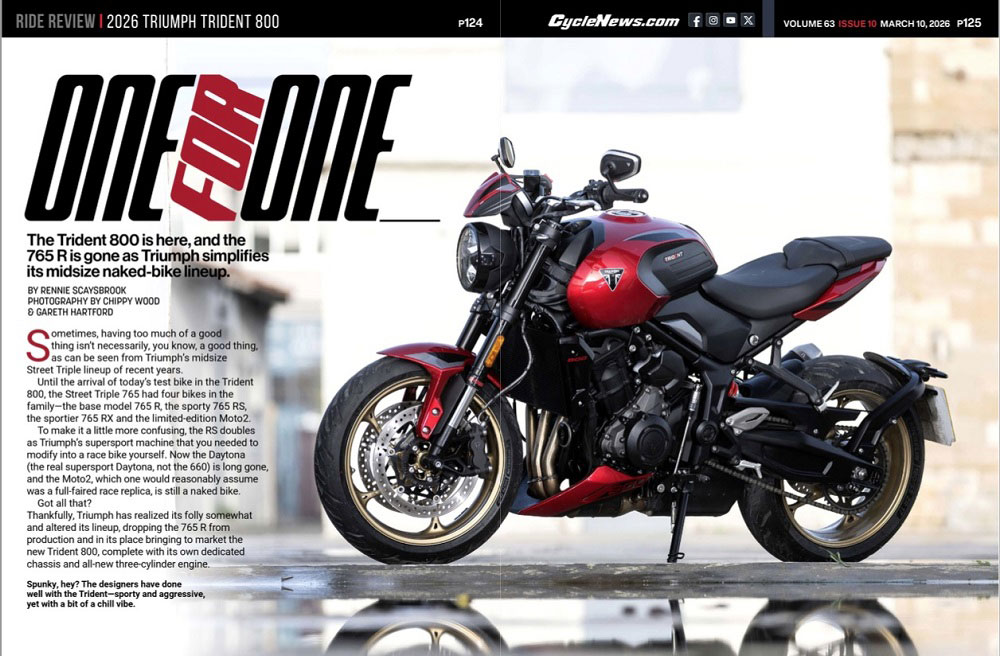
Click here to read the 2026 Triumph Trident 800 Review in the Cycle News Digital Edition Magazine.
Click here for more Triumph motorcycle reviews and news.