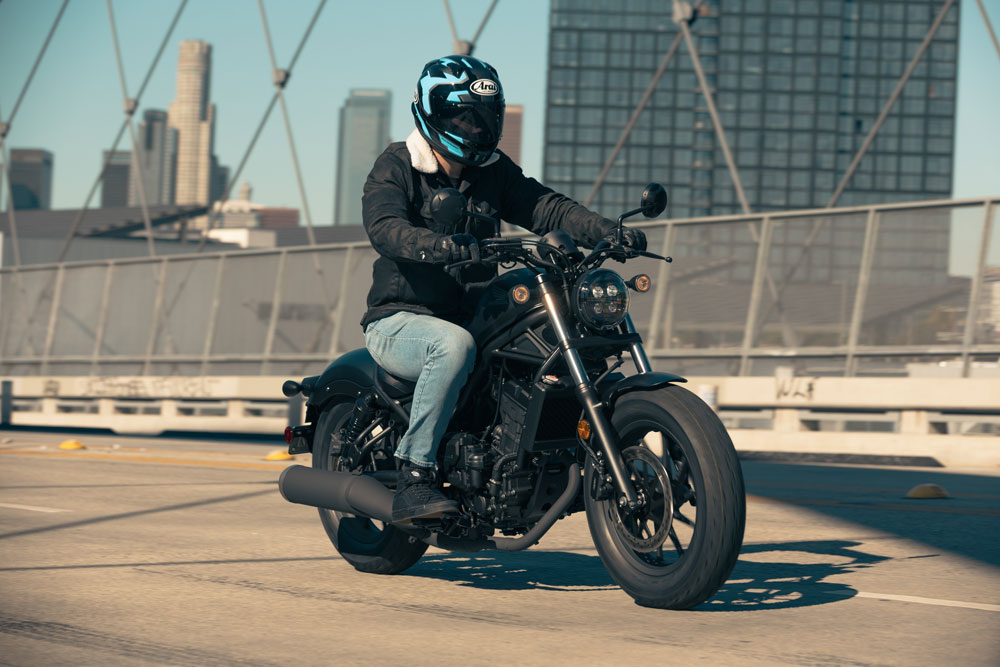
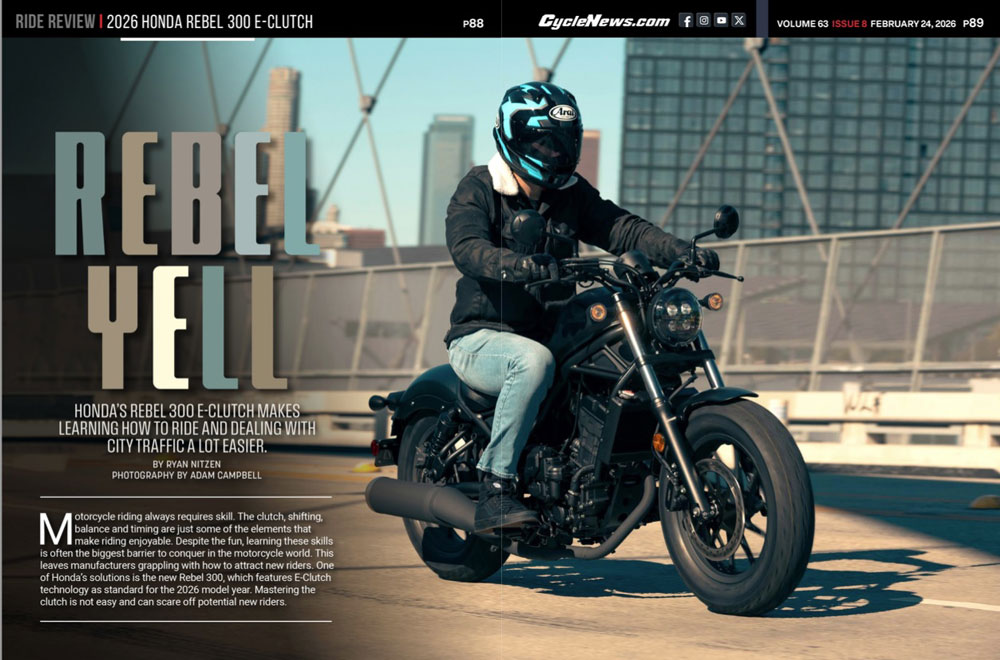
Honda’s Rebel 300 E-Clutch makes learning how to ride and dealing with city traffic a lot easier.
Photography by Adam Campbell
Motorcycle riding always requires skill. The clutch, shifting, balance and timing are just some of the elements that make riding enjoyable. Despite the fun, learning these skills is often the biggest barrier to conquer in the motorcycle world. This leaves manufacturers grappling with how to attract new riders. One of Honda’s solutions is the new Rebel 300, which features E-Clutch technology as standard for the 2026 model year. Mastering the clutch is not easy and can scare off potential new riders.
Honda introduced its E-Clutch last year on the sportier CB650R and CBR650R models. It’s almost surprising it wasn’t initially released on a more entry-level bike like the Rebel 300, since Honda says the technology is designed to “expand the potential for riders while maintaining the special fun of riding motorcycles.” The E-Clutch essentially eliminates the need for the clutch lever, automatically controlling its operation while ensuring smooth starting and gear shifting.
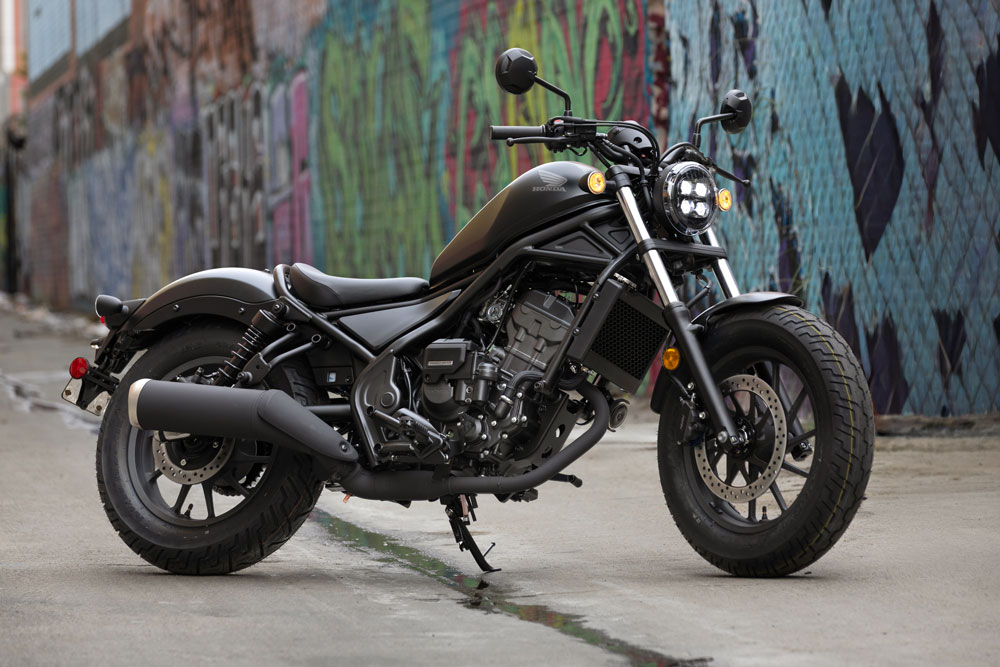
The system is powered by two small motors, the Motor Control Unit (MCU), and a three-part clutch lever shaft that moves the clutch lifter. The electronic control unit (ECU) works with the MCU and responds to data from various sensors, such as engine rpm, wheel speed, gear position and more. The rider is still responsible for shifting, but clutch actuation is handled by the bike. Technically, the E-Clutch system can be overridden if the user wants to use the clutch, but it’s not required if the system is on. A traditional cable clutch system is still installed on the Rebel 300, giving the rider the option to pull in the clutch lever and disable the E-Clutch system entirely.
While the E-Clutch system sounds complicated, the Rebel is an overall simple machine. It is powered by a 286cc liquid-cooled single-cylinder four-stroke engine with fuel injection and a six-speed transmission. Dual-disc brakes come standard, along with ABS at the front and rear.
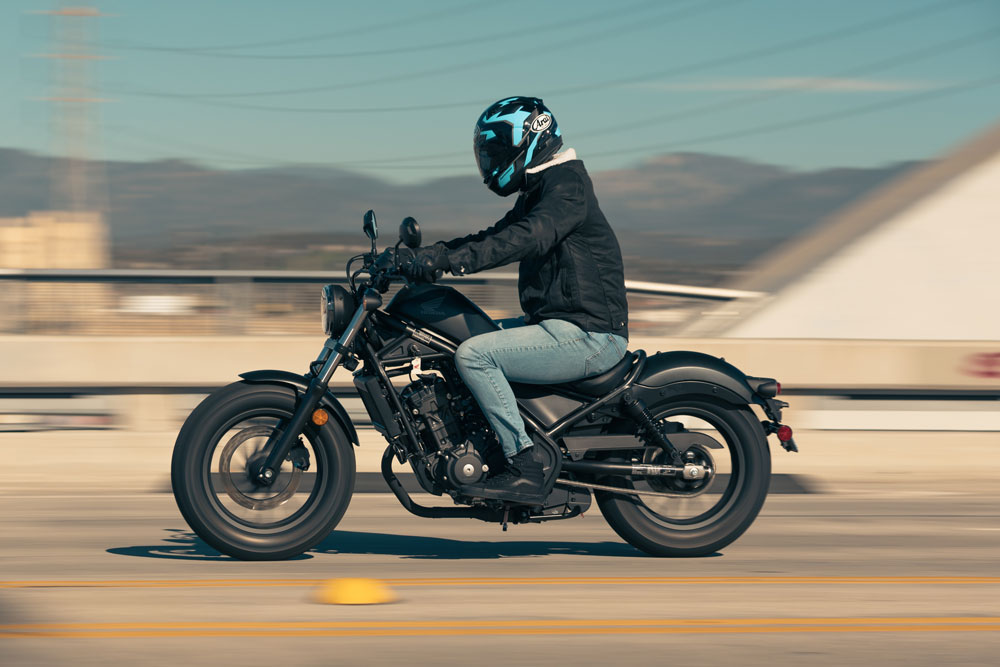
Suspension is basic, with nonadjustable front forks offering 5.5 inches of travel and the rear shock 3.7 inches. The only suspension adjustability is the preload on the rear shocks. Seat height is a reachable 27.2 inches with a ground clearance of just 5.9 inches. With a full three gallons of fuel, the Rebel weighs in at 379 pounds.
The Rebel 300 rides off the lot with an MSRP of $5349. Its small-displacement engine, E-Clutch, and affordable price point are all aimed at beginner riders. In fact, the Rebel 300 is the Motorcycle Safety Foundation’s motorcycle of choice for new riders seeking to earn their motorcycle license. For many newcomers to motorcycling, the Rebel is often their first encounter with riding.
What’s It Like | 2026 Honda Rebel 300 E-Clutch Review
When I tested the new Rebel, I tried to imagine what it would be like for someone searching for their first motorcycle and deciding which features to focus on.
This was my first experience with the E-Clutch, and Honda chose downtown Los Angeles to test the new Rebel 300 E-Clutch. We met at The Bike Shed on a weekday morning, where we faced rush-hour traffic and some of the worst roads in the country. It was the ideal environment to evaluate this small bike. With stops at the Griffith Observatory, Studio City and Mulholland Drive, we definitely put the bike through its paces.
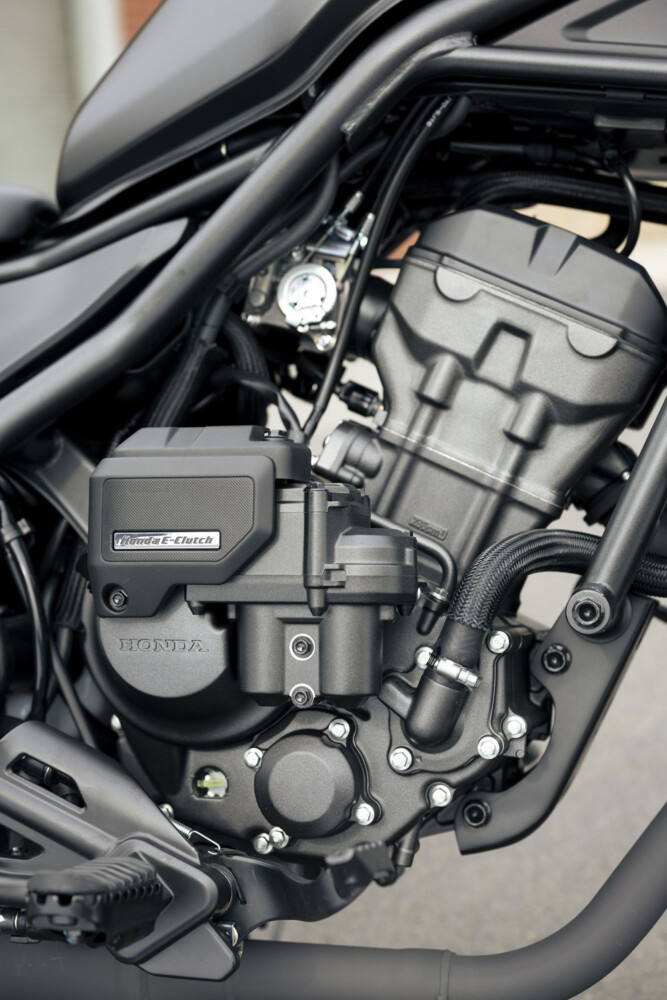
The E-Clutch works as described. You simply start the bike up, put it in gear, and roll. A small “A+” light on the dash indicates that the “Auto Clutch” system is engaged and lets the rider know there’s no need to use the lever. Like Honda’s CRF110F, you just put the bike in gear and go. Same here on the Rebel 300. There’s no lurching when at a stop, and the bike only begins to creep once the throttle is applied. The fuel-injection system creates a clean roll-on from the throttle, so there’s no lag or hesitation when taking off from a standstill.
Once riding, you still shift like normal, just without using the clutch. No need to release the throttle or pull the clutch in; just ride, shift and enjoy. The whole system shifts smoothly and seamlessly through the rpm range without dropping in revs. In some ways, riding with the E-Clutch system felt a lot like riding a bike with a quickshifter. Without the traditional clutch, you can bang through gears up and down in quick succession. This is a nice perk since a bike in this price range wouldn’t normally come standard with quickshifter technology.
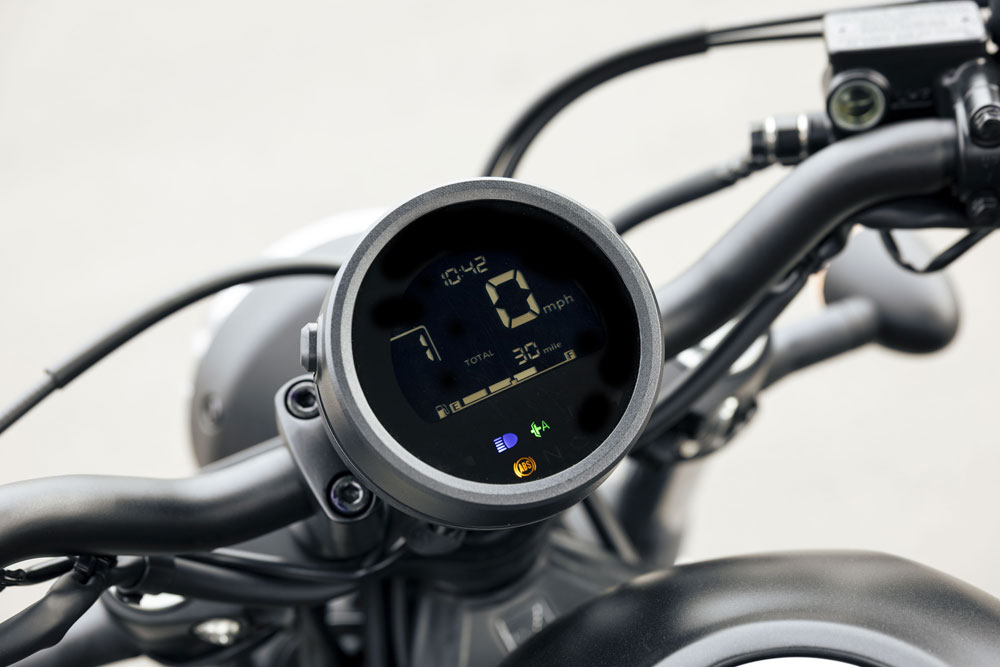
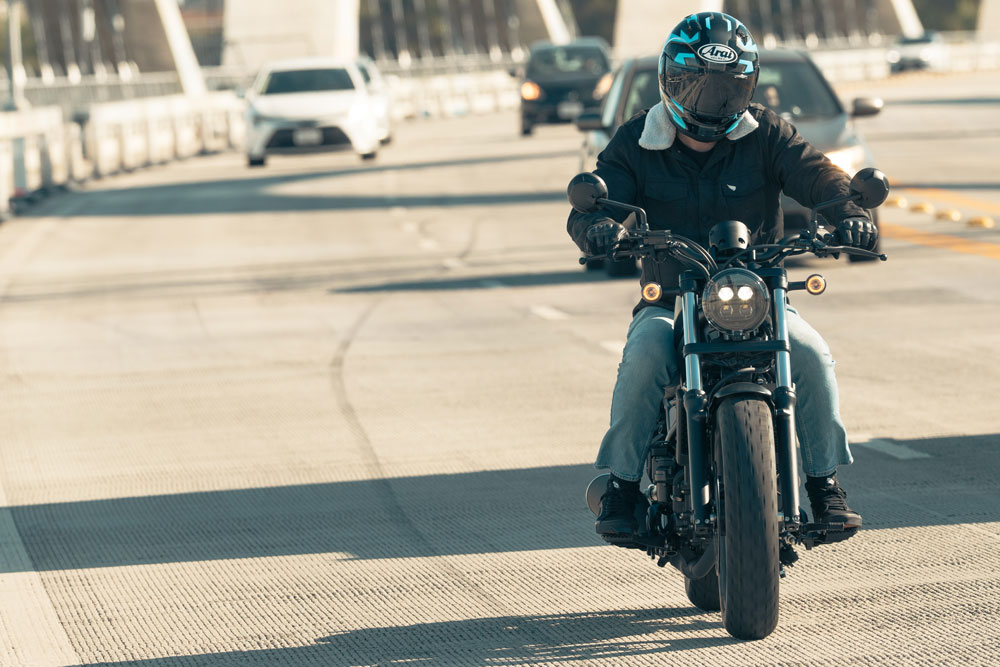
The system shone brightest as we made our way back home through LA’s rush hour traffic. Maneuvering the bike in tight spaces felt easier than usual because the clutch was one less thing to worry about. It also gave me a greater sense of ease and safety, as I could focus solely on my surroundings. If a car pulled out in front of me, I wouldn’t need to clutch, then brake, then dodge. I see this as a big selling point for beginner riders since they’ll use less brainpower in tricky situations. It also came in handy when stopping, especially in the city. When a light turned yellow and the group decided to stop, riders could simply apply the brakes and worry about downshifting later. The bike won’t stall as you approach the light, even if you’re still in sixth gear. You’ll want to shift down once you’re at the light, but, as mentioned, it’s just one less thing to worry about.
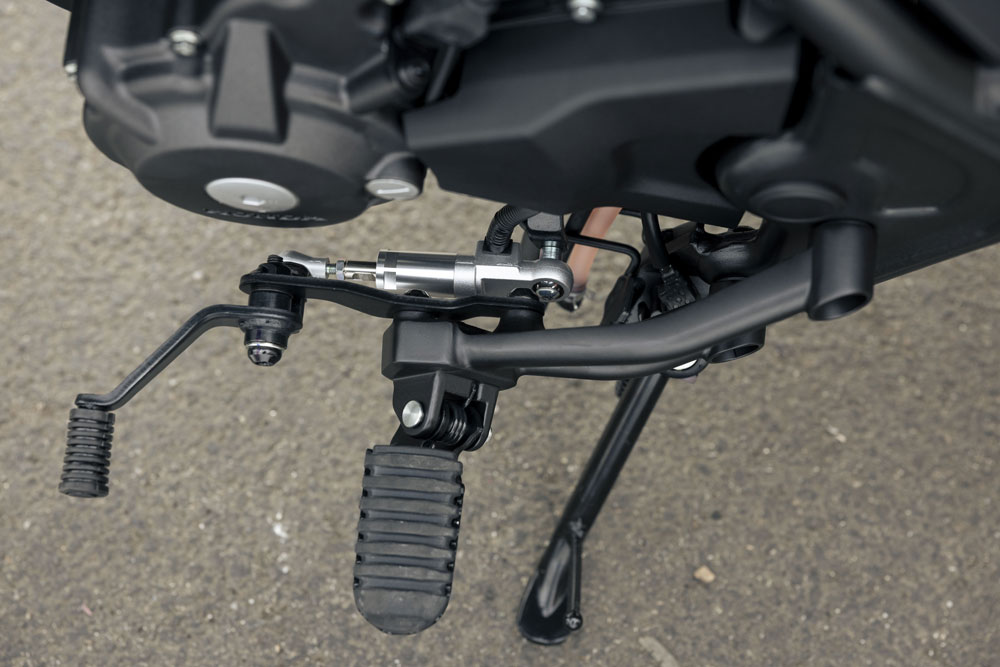
The only issue I had with the E-Clutch system was accidentally reaching for the lever out of habit. Pulling the lever manually overrides the E-Clutch and locks the rider into using it like a regular motorcycle. Once the lever is pulled in, the “A+” light turns off, signaling that the rider must operate the clutch. After riding at speed for about three seconds, the light comes back on, indicating it’s okay to switch back to “auto mode.” My rule of thumb was to keep my left hand firmly on the grip and avoid the temptation to use the clutch. Power isn’t intimidating. But the 286cc engine has enough to zip through town or even maintain highway speeds comfortably, with minimal vibration. There are no fancy add-ons, no ride modes, and no traction control either. It’s as straightforward as you can get. The fuel-injection system was a highlight in the engine department, as the bike ran very cleanly, with no bogging or lag. Throttle control felt very connected. I felt like it was a perfect fit for an approachable entry-level option.
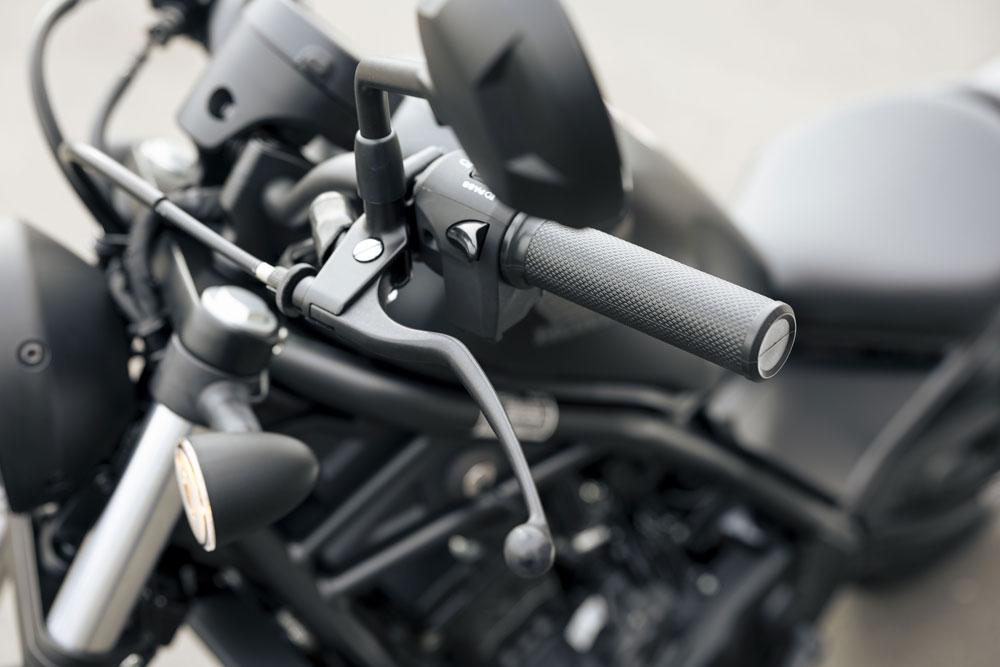
The rest of the bike is quite basic, as expected. The dash is a small, round unit with minimal data, displaying only a fuel gauge, gear indicator and speedometer. An rpm display would have been useful, especially for beginner riders who may not know exactly when to shift by feel. LED lights all around are a good upgrade for a bike at this price point. Front and rear disc brakes are excellent and performed well under all conditions during our test. The ABS provides an added layer of safety when riding on open roads.
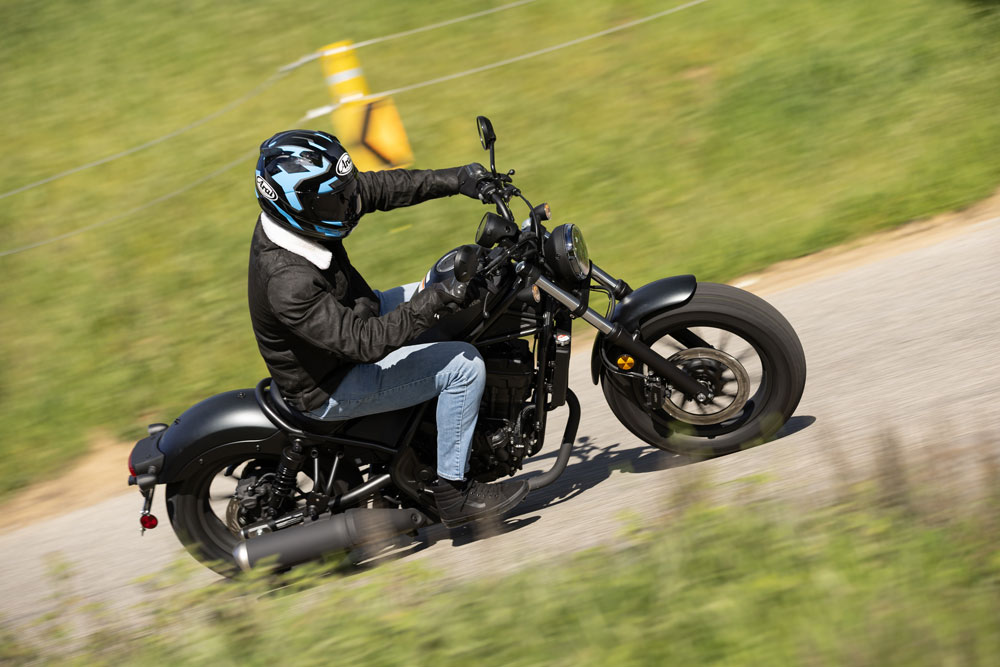
The fork performed surprisingly well in rough conditions and held up fine against potholes and uneven pavement. The rear shocks were a bit quick with rebound, but they handled LA roads without any major issues. The Rebel is a good-looking cruiser-style motorcycle, with the blacked-out look that doesn’t scream “total newbie.”
Even though motorcycling is a club that requires some basic skills to pass initiation, it’s good for everyone involved to have more bikes on the road. With a low seat height, sub-400-pound weight, and the option to not even use the clutch, the Rebel 300 is a bike aimed at new riders looking to join that club. CN
VIDEO | Honda Rebel 300 E Clutch First Ride

2026 Honda Rebel 300 E-Clutch Specifications
| MSRP | $5349 |
| Engine Type | Single-cylinder 4-stroke |
| Valvetrain | DOHC, 4-valve |
| Cooling System | Liquid |
| Displacement | 286cc |
| Bore x Stroke | 76mm x 63mm |
| Starting System | Electric |
| Compression | 10.7:1 |
| Fueling | Programmed electronic fuel injection (PGM-FI); 38mm throttle body |
| Transmission | 6-speed |
| Clutch | E-Clutch system, multiplate, wet, with lever |
| Front Suspension | 41mm conventional telescopic fork |
| Rear Suspension | Dual shocks |
| Front-Wheel Travel | 5.5 in. |
| Rear-Wheel Travel | 3.7 in. |
| Front Wheel | 130/90-16 in. |
| Rear Wheel | 150/80-16 in. |
| Front Brake | Single hydraulic caliper w/ 296mm disc; ABS |
| Rear Brake | Single hydraulic caliper w/ 240mm disc; ABS |
| Wheelbase | 58.7 in. |
| Seat Height | 27.2 in |
| Ground Clearance | 5.9 in. |
| Fuel Capacity | 3.0 gal. |
| Weight (wet, claimed) | 379 lbs. |
Click here for more Honda motorcycle reviews and news.