Cycle News In The Paddock
COLUMN
2025, And What It Might Mean for 2026
What a year. In terms of length, if nothing else. Twenty-two races, many of them back-to-back, left this writer reeling. And I was sitting down, never mind the riders and pit crews, on the outer edges of their physical and mental resources.
There were other reasons to make it exceptional. Especially two of them.
We all knew Marc Marquez could ride fast, though he needed to prove he could still do it to order after four years of being crocked. But brother Alex? Wasn’t he something of a lame duck by comparison, getting a factory ride with Honda in 2020 on his brother’s coattails, and struggling to justify it? Then being distinctly average on the LCR Honda?
Well, we were wrong. Marc can win on almost anything; Alex just needed the right bike to show just what he could do. And it really was impressive: the perfect P2 man while Marc hogged P1. And able to take over when Marc got hurt, with two Sprint and one Sunday win, guaranteeing second overall. 2025 belonged to the brothers, and they deserved it. But what about 2026?
A potential seismic shift tickled the Richter scale late on, threatening to undermine the superiority of Ducati. Continental drift in action.
First off, Ducati’s new GP25 was a backward step. Marc’s otherworldly talent hid the fact, but the flawed bike played havoc with the most unfortunate Pecco Bagnaia, whose occasional successes (two wins) were badly bollocked by shocking last places and embarrassing crashes. Poor Pecco deserved better. So did Fabio Di Giannantonio, “rewarded” with the other factory bike in the satellite Rossi team.
The cause seemed mysterious to Bagnaia and was kept so by Ducati’s lack of transparency, which allowed them to distract attention because of Marc’s sheer superiority on the same bike. But it was plain to see, from Alex’s results as well as rookie Aldeguer’s win and podiums, that the GP24 was a much better bike.
Speculation blamed a new power-up engine, apparently with different mounting points than the old one. And nasty habits in the braking phase, when engine-braking character makes all the difference on corner entry.
With the altered chassis configuration, Ducati couldn’t just drop in last year’s engine. So Pecco and Fabio suffered while Alex Marquez, Aldeguer and Morbidelli flourished on their hand-me-down GP24s.
It got worse. Even as Ducati technicians floundered around seeking a solution, Aprilia was going from strength to strength. Once, they could win occasionally on rhythm circuits with fast corners. By year’s end, it seemed they could win almost anywhere, from fast Phillip Island to swoopy Portimao and naggy Valencia. Bezzecchi won three races, satellite rider Raul Fernandez another. And this was all without expected lead rider Jorge Martin, who got hurt so often and so badly that he only started eight of 22 races.
It suggests a serious threat for 2026.
Bear in mind, however, that all but one of these wins happened when Marc was out. Ironically enough, because of Aprilia’s Bezzecchi, who knocked him flying in Indonesia, one week after Marc had secured his ninth title with five races to spare. The total ominously equaling Rossi. (And Hailwood, and Ubbiali, though not Nieto or Agostini).
The only person who actually beat Marc in a straight fight was his brother Alex.
And the rest? Much was expected of Pedro Acosta, but it seemed the KTM, emerging from a life-threatening financial meltdown, wasn’t up to it. The Austrian bike, with its exclusive carbon chassis and White Power suspension, doesn’t have the advantage of the knowledge shared by the rest on their Ӧhlins suspension. Pedro finished fourth overall, a good effort.
Honda made, well, perhaps not big strides, but definite progress from the bottom of the pile, with frequent crasher Mir taking two late-season dry-weather podiums. But it was Johann Zarco’s canny wet weather Le Mans win, the result of an inspired tire gamble, along with inspired riding, that really tipped the balance. They could boast about promotion from concession Category D, but it was only by a 10th of a point, and Johann’s 25 in France made all the difference.
For 2026, Honda no longer has unlimited testing and free engine development. According to the buoyed-up riders and technicians, bearing in mind the highest top-speed figures at the last race in Valencia, they won’t need it.
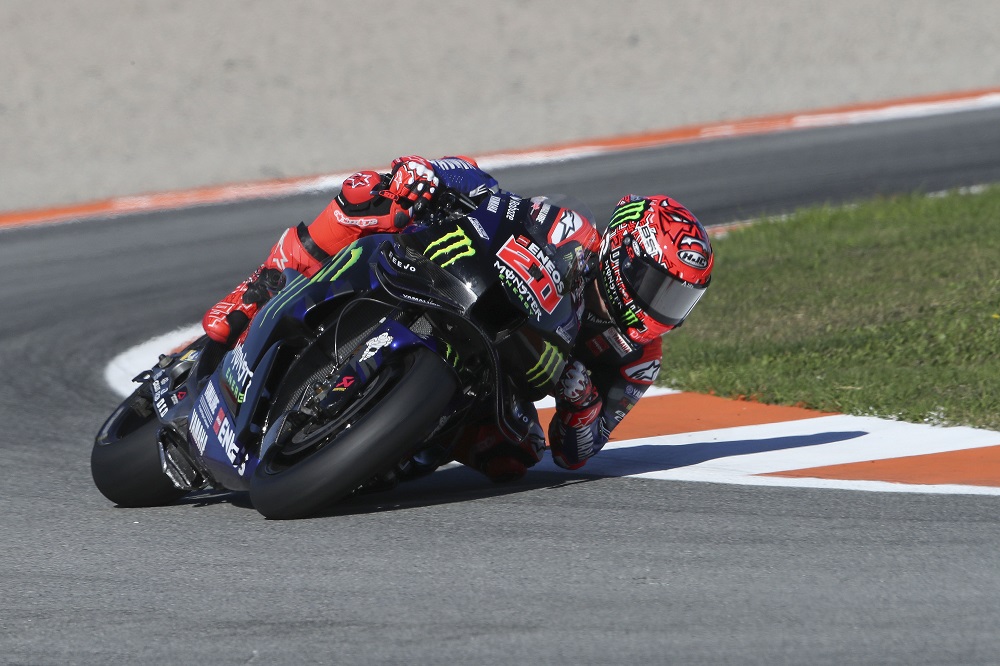
It only left Yamaha still down in the dumps, and star rider Quartararo fretting after superhuman efforts gave him five pole positions and five more front rows, but saw him suffer in races, with a best of one Sunday podium and ninth overall.
Never mind. They have a V4 coming. And though it proved dog slow in its few appearances, it can only get better.CN
Click here to read the In The Paddock Column in the Cycle News Digital Edition Magazine.
Click here for all the latest MotoGP news.

