The 2026 Honda CRF450R returns as it was in 2025. No changes for this model year, not even the graphics or the price tag. This is still the same base platform used by both Hunter and Jett Lawrence on the factory Honda HRC Progressive team, so it’s a safe argument to say the bike didn’t need changes anyway. We long-hauled our 2025 model after living with it for the year and were eager to throw a leg over a brand-new 2026.
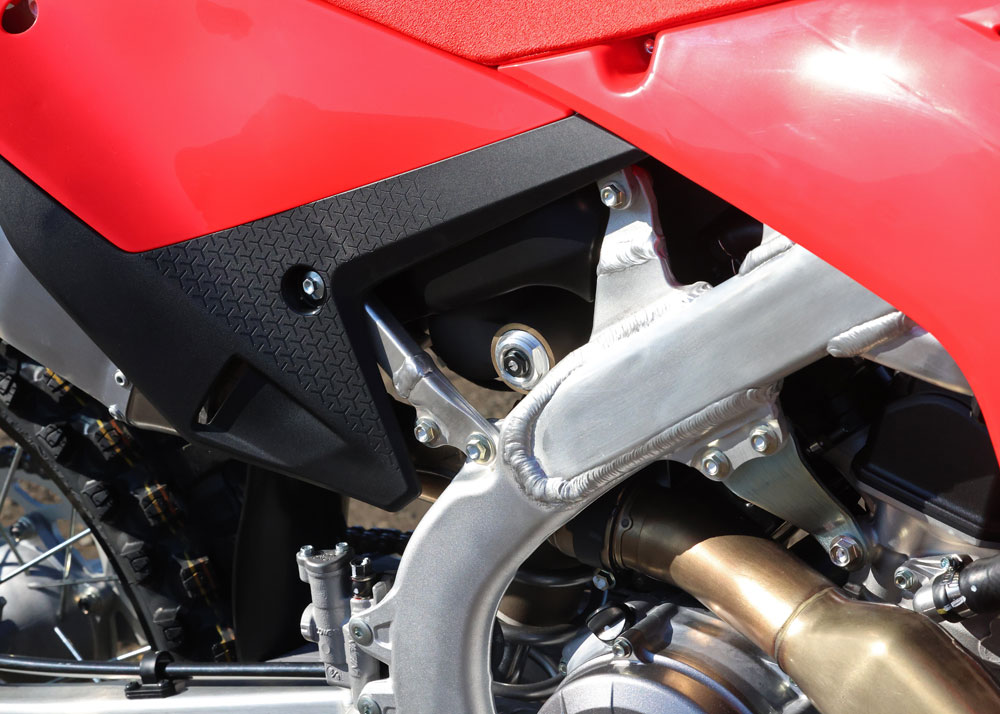
Honda went all-in in 2025 with a new CRF450R and a new CRF250R. Well, 70 percent new. The main changes came in the way of a reinforced frame near the steering stem and down tubes. This was a direct takeaway from the HRC race team, who spent most of the 2024 season gusseting their frames in the same manner. For 2025, the stiffer areas came standard. The bike also received new bodywork, a new air intake, a more convenient shock removal, a longer header pipe, and a new ECU, with the overall goal of smoothing out the power.
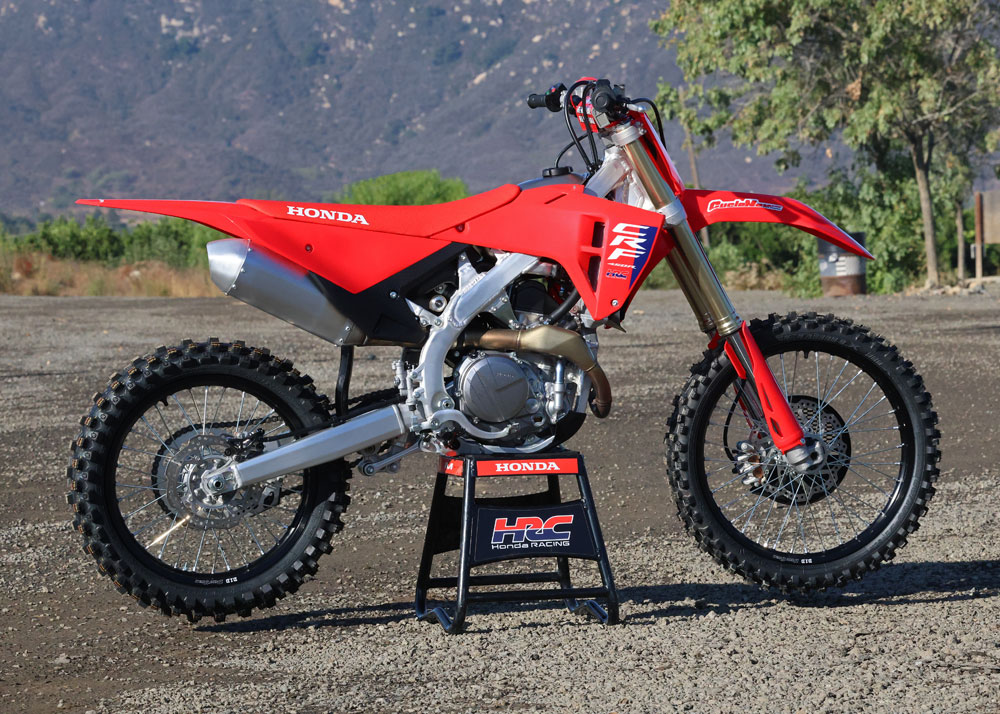
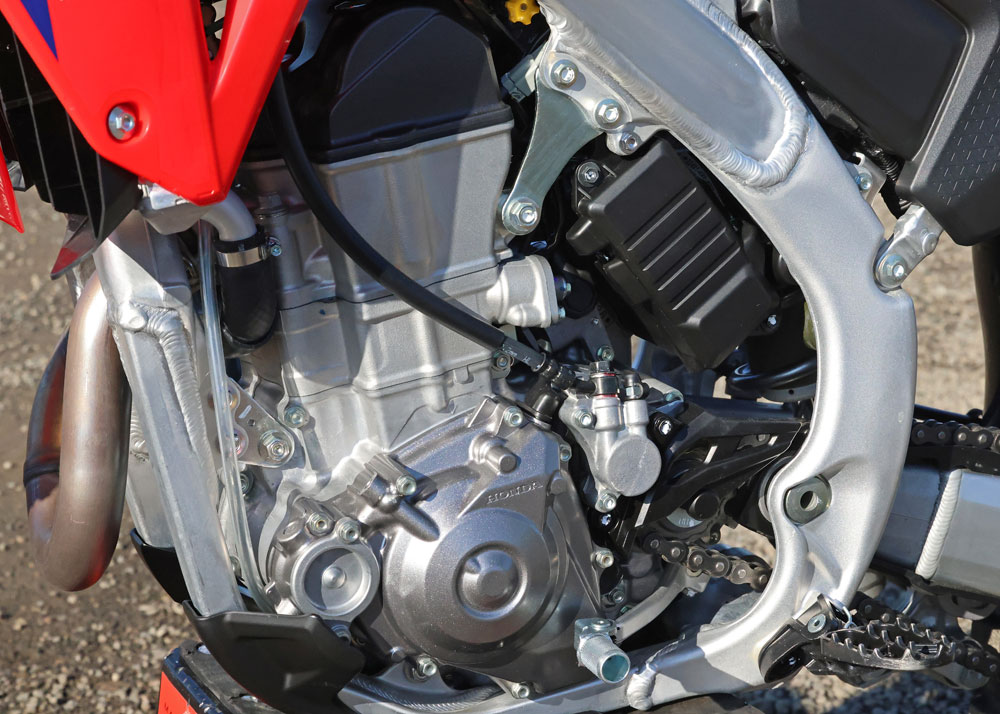
Most of the engine internals were untouched, a la the 70 percent change rather than the full 100. Showa still handles the suspension department, the bike still comes with a Nissin hydraulic clutch, and Dunlop’s MX33 tires continue to put the power to the ground.
Honda’s ECU offers nine power output levels. There are three different engine modes: standard, smooth and aggressive, along with three levels of intervening traction control.
The 2025 model made a huge step from the year prior. The previous-generation Honda (2021-24) was originally plagued with first-year bugs (anyone remember the ECU in 2021?) and later felt so overly stiff that it was nearly unenjoyable to ride. Honda’s engineers explained that the previous frame was actually too soft, and the “stiff” feeling came from the chassis twisting and binding up under load. This, in turn, hindered the suspension function and made the whole bike feel stiff and uncomfortable. By stiffening the frame in key areas like the head tube, down tube and rear shock tower, the bike was less reactive and actually smoother on the track.
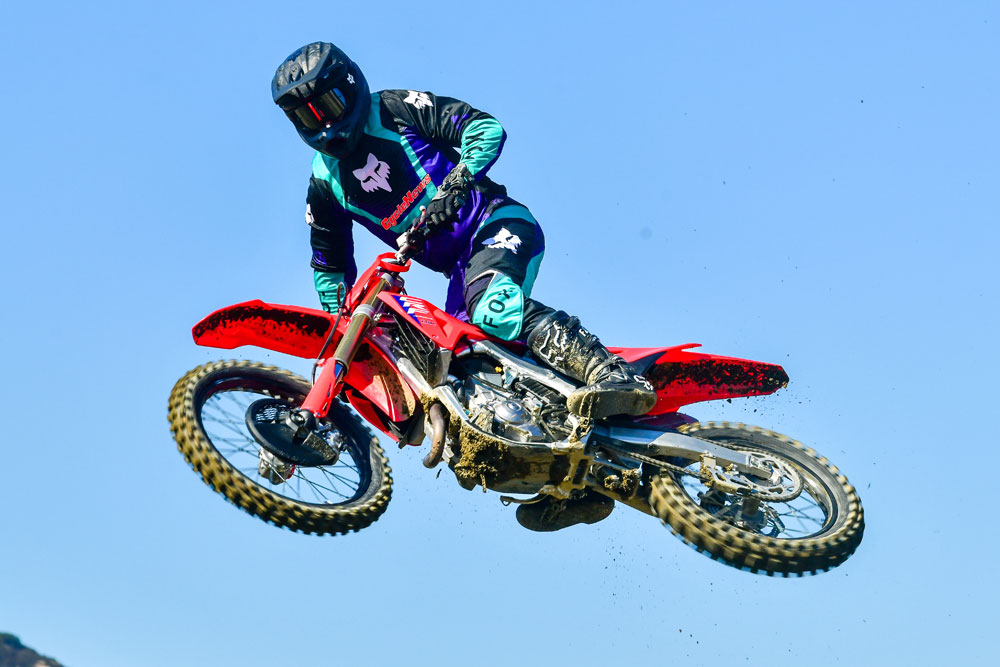
For 2026, the bike feels just like it did before. It stays planted to the ground and tracks straight in rough conditions. Trust in the CRF comes naturally, and you quickly feel like it goes exactly where you intended. This planted feeling allows riders to push the bike harder, which eventually reveals a too-soft feeling from the front fork. Stiffening the front end with clickers helps, but the real trick here is to bump up the spring rate.
The engine on the new Honda remains one of the best in class. It’s not totally different from years past; the delivery is much easier to ride while retaining a strong bottom-end feel. Torque from down low feels like a 450 should, and it allows you to carry a gear high if you so choose. Many newcomers to the 450 class feel more like a big-bore 350, and it’s always refreshing to ride the Honda for its punchy low end.
The power modes are also well differentiated with three unique feelings. The smooth map (two lights) is noticeably tamer than the aggressive mode (three lights), and the standard map (one light) splits the difference between the two. I personally bounce between aggressive when the track is deep and usually opt for the smooth map for longer motos or when the track is more hardpacked.
New bodywork on the CRF makes it easy to move around while piloting the red ride. Flared rear panels are symmetrical and feature a textured grip on both sides. This doesn’t seem like much, but I found it handy when squeezing the bike with my legs or sliding toward the rear end. The radiator shrouds are smooth without a multitude of bolts to catch your boots. Overall, the cockpit is classic Honda, and you’ll find yourself adapting within the first few laps.
My only real complaint with the CRF is that the front suspension is set up too soft from the factory, but that’s why it’s adjustable.
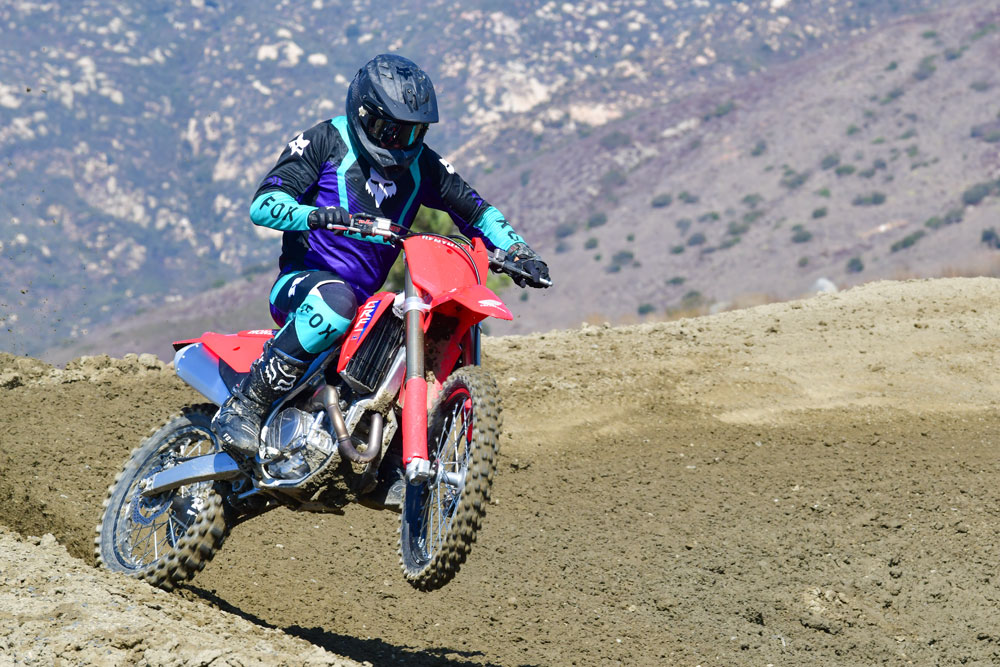
The stock grips are still atrocious and rock hard. Get your dealer to add a set of aftermarket grips to the sale. Also, the pull of the Nissin hydraulic clutch feels stiffer than the others in the class; the Nissin on the Yamaha is much easier to pull, and the Brembo on the Kawasaki is butter smooth.
The ’26 CRFs are completely unchanged, but I’m not sure what they would have done differently anyway. Like the 2025 model, the stiffer frame is more predictable, the engine is easier to manage, and the cockpit is comfortable right from the start. Suspension setup and grips are our only gripes, but they are easy fixes.
Overall, though, we don’t blame Honda for taking the year off.CN
2026 Honda CRF450R Specifications
| MSRP | $9699 |
| Engine Type | 4-stroke, single |
| Cooling system | Liquid |
| Displacement | 450cc |
| Valvetrain | 4-valve, Unicam SOHC |
| Bore x Stroke | 96.0mm x 62.1mm |
| Compression Ratio | 13.5:1 |
| Starting System | Electric |
| Fueling | Programmed Fuel Injection (PGM-FI), 44mm downdraft throttle body |
| Transmission | 5-speed, hydraulic clutch |
| Frame | Aluminum |
| Front Suspension | 49mm inverted Showa fork, fully adjustable |
| Rear Suspension | Pro-Link Showa single shock, fully adjustable |
| Front-Wheel Travel | 12.2 in. |
| Rear-Wheel Travel | 12.2 in. |
| Front Wheel | 21 in. |
| Rear Wheel | 19 in. |
| Front Tire | Dunlop MX33; 80/100-21 in. |
| Rear Tire | Dunlop MX33; 100/90-19 in. |
| Final Drive | 13T/49T |
| Front Brake | Single 260mm disc |
| Rear Brake | Single 240mm disc |
| Seat Height | 37.8 in. |
| Ground Clearance | 13.1 in. |
| Fuel Capacity | 1.7 gal. |
| Wheelbase | 58.4 in. |
| Weight (claimed) | 249 lbs. |
Click here to read the 2026 Honda CRF450R Review in the Cycle News Digital Edition Magazine.
Click here for the latest Cycle News Motocross bike reviews and news.
Click here for more Honda motorcycle reviews and news.