Cycle News Archives
COLUMN
The CZ 125, the little MXer that could but sometimes couldn’t.
By Kent Taylor
Across this country, American motorcyclists are in lockdown mode. Going outside is not an option during this time. They are inside, one with the couch, as cold and motionless as the package of beef tongue in the bottom of the freezer. Beverages and snacks are aplenty, and the screen is their best friend these days because a cold and vicious scourge has taken over most of the country. These riders will not move from the inside to the outside for one very good reason: it is Mecum Auction time.
Every year in late January our eyes turn to Las Vegas, where the mother of all motorcycle auctions takes place. The Mecum Auction is for neither the faint of heart nor thin of wallet, so unless you are an Olympic snowboarder (turned alleged drug kingpin), this auction is nothing more than a time to be reminded that regardless of how much fun we had riding our motorcycles, when it comes to investing in them, we just plain suck. The Honda CT-70 that you sold for $600 when you were a kid is worth 10 times that amount today. The Kawasaki 750 Triple that you could’ve had for $1800 in 1973 will cost you $25,000 in 2026. All day long, white-gloved stewards parade these dream machines across the stage, standing in repose for a couple of minutes so as to prolong the angst and exacerbate the humiliation. It’s like discovering that the girlfriend you dumped is now a supermodel, your old boyfriend is a Fortune 500 CEO, and here they are, gloating like the cocks of the walk. You? You’re thinking that you should’ve bought that Muskin El Gato, even if you don’t know where you would’ve found one or what it even is.
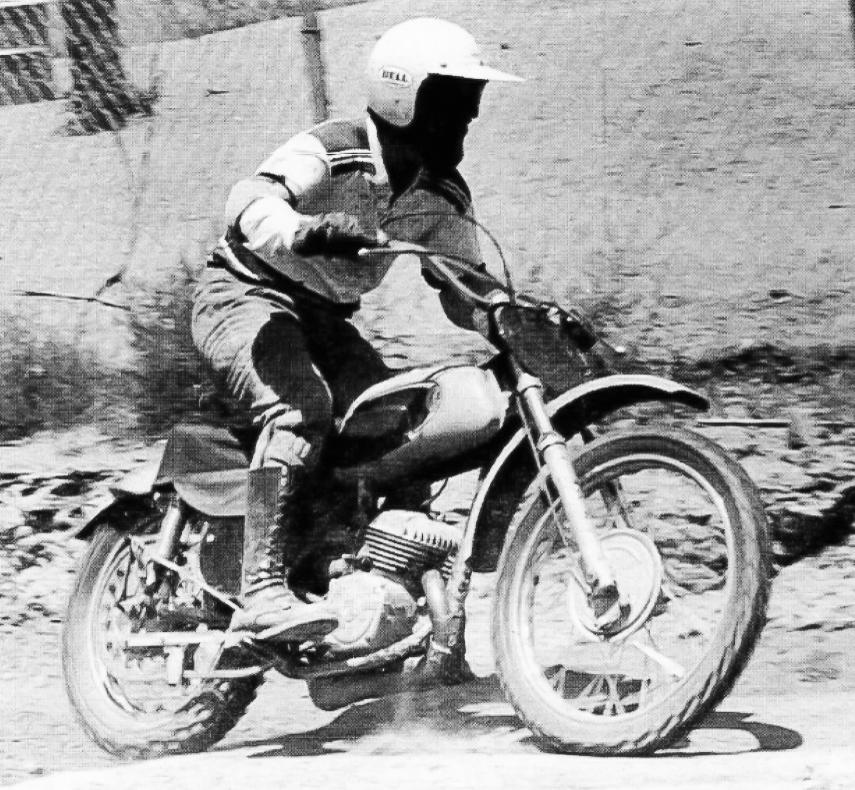
Self-flagellation aside, the Mecum is also a place to check out motorcycles that many riders have never seen before. This year, one of those machines was a 1973 CZ 125, a motocrosser as rare as the aforementioned beef tongue, but there it was, on the stage. A quick search of the Cycle News’ Archives found one being put to the test, back in the July 11th issue from 1972.
The Mecum machine sported the iconic coffin tank that both CZ and Maico incorporated into their designs. While this ’72 test model one-two-five was one of the “yellow tank” machines, they appear to be similar in every other way, which would make sense for the CZ factory. Resources were scarce inside the Communist country at that time, and prudent conservation of materials was the order of the day.
“The small “Che-Zed” is extravagantly overbuilt,” wrote the CN crew. “It has exactly the same frame, wheels and running gear as the 250. Even the lower end is the same. Only the barrel, head and piston are changed. The carb is a 28mm Jikov, which is also stock on the 250.”
Sharing components with other models was a European thing at that time. Costs were cut, but weight and girth were added. While the larger 250cc and 380cc models had the power to move that beefy chassis around the racetrack, the tiny 125 was like the little engine that could, except that sometimes, it couldn’t.
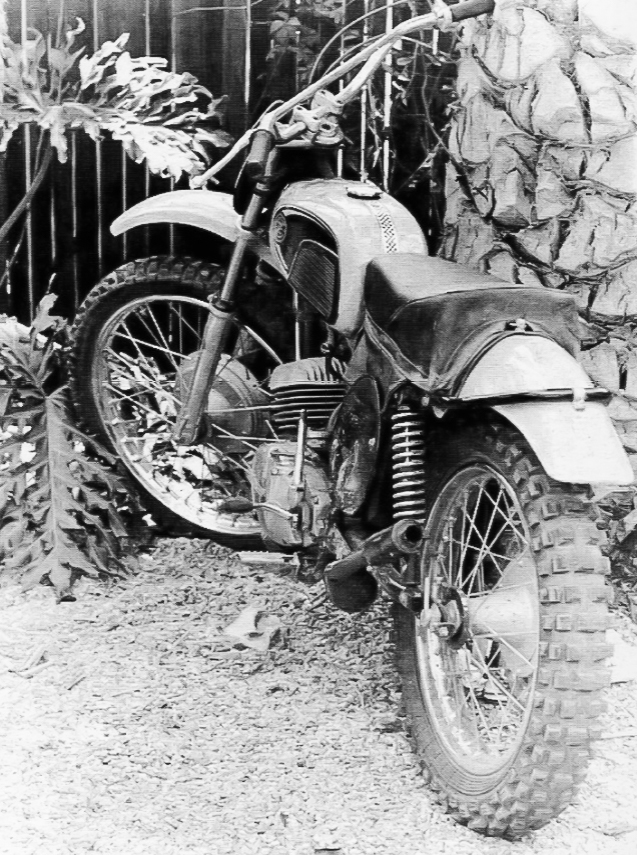
The big-bike build “means that the smaller piston has the same weight of crank, rod, flywheels, etc. to get moving as does the 250 every time you dump the pre-mix to it. It takes a lot of revs to get the CZ moving at a respectable speed, and you have to keep it wicked to continue that way, or that big [relatively] lower-end mass starts to drag the R’s back down.”
Once underway, the CZ delivered the goods in both power and handling characteristics. The crew said the little CZ had “a severe case of good handling.” No test labs, flow benches or CAD systems were needed, as CZ had spent the previous decade dominating Grand Prix motocross with champions like Joel Robert, Paul Friedrichs and Viktor Arbekov, and they had learned what worked and what needed to be reworked. The 125 had a low center of gravity, a long wheelbase, and a good rider could carve corners all day long. Like the rest of the CZ, the Barum tires were made in Czechoslovakia, and they worked just fine, helping the bike stay on track, any track.
The staff liked most of what they saw. The short list of dislikes included the steel rims, which were both heavy and soft, and easy to dent. Fifty-four years ago, some manufacturers were puzzlingly ignoring some pretty basic elements of the motorcycle, so this CZ doesn’t have a brake return. No spring thing, so riders were jury-rigging the system by taking a piece of inner tube to get the brake lever to pop back into position. While this may be an engineering oversight, it was easily remedied. The days of riders incorporating their own imagination into improving the functions of their motorcycles have passed; for some inexplicable reason, that is a depressingly sad statement.
For $975, a 1972 racer scored a pretty strong little motocross bike, complete with a 30-day factory warranty. It was competitive when matched against DKWs, Husqvarnas and Monarks of the day. A rising sun, however, foretold a Japanese invasion, and CZ 125 sightings became even rarer. Sitting on center stage in Las Vegas, the CZ 125 was flanked proudly by the ghosts of Robert, Friedrichs, Arbekov and other CZ champions of the past. Selling for just $2300, well below its inflation-adjusted 1972 value of $7500. Congratulations to the buyer. Once again, the rest of us sucked.CN
Click here to read the Archives Column in the Cycle News Digital Edition Magazine.
Subscribe to six decades of Cycle News Archive issues