The $12,499 Yamaha YZF-R9 was easily the most talked-about streetbike of 2025. As a replacement to the legendary R6 (it is a replacement. You can’t tell me it’s not), it had some incredibly big shoes to fill, and not everyone was convinced it could do it.
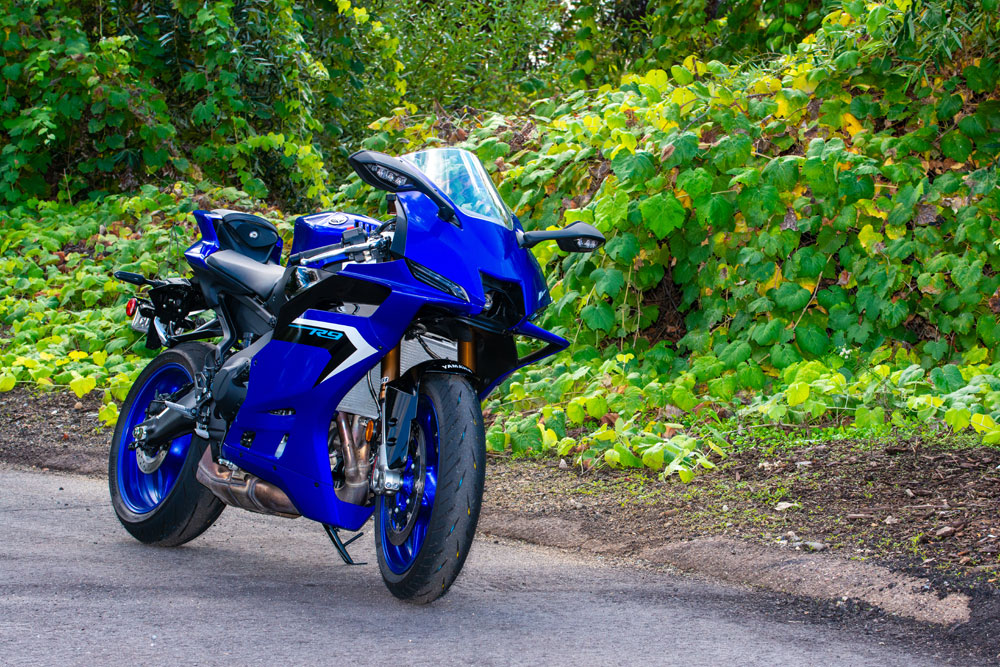
On the racetrack, the R9 has more than proven its worth. It won both the MotoAmerica Supersport and WorldSSP Championships, so the product clearly proved itself in the heat of competition, but what about between the traffic lights?
At first glance, the R9 appears to be an overweight supersport or a slightly small and much slower superbike. Its ergos are stretched out, and there’s more room than on the R6, but those early internet commenters who said this was no sportbike because it used the MT-09 as its base clearly didn’t know what they were talking about. I know this because my butt and my knees were shot after an hour on the R9 and through SoCal’s mountain roads.
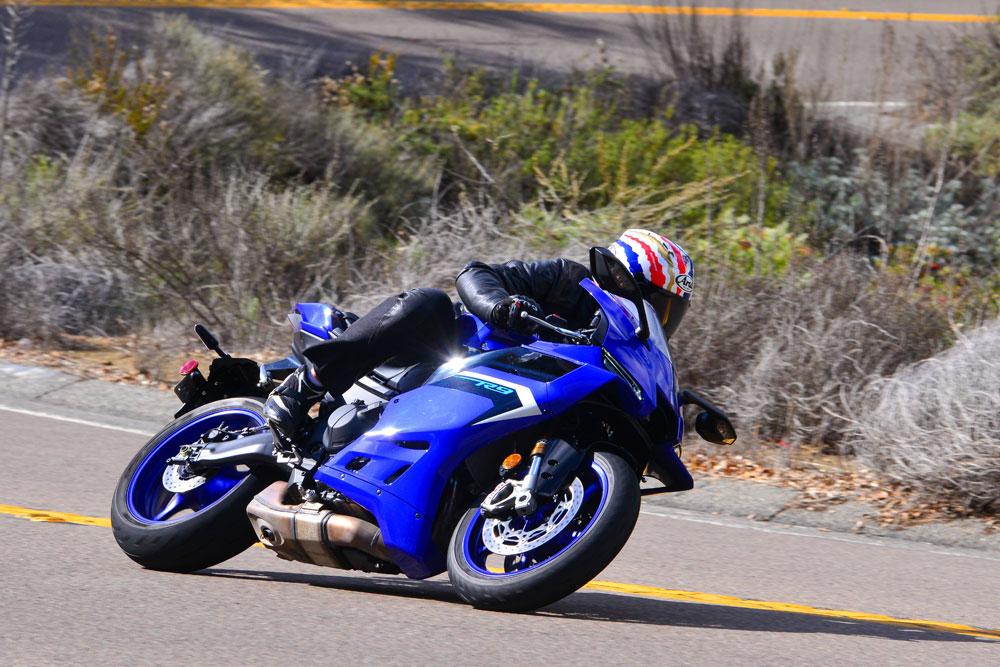
The R9 is very much a sportbike, but it feels confused. The MT-09-derived three-cylinder engine has oodles more torque than the R6 could ever dream of, making it easy to leave in third or fourth gear and zip from corner to corner. But it is significantly longer and heavier than the R6’s svelte race-bred frame.
The R9’s dedicated Deltabox frame sits with a three-degree increase in steering rake, which, combined with the 0.8-inch lower seat height, 1.8-inch longer wheelbase, and an extra claimed 22 pounds in weight, makes the R9 lazier and slower in the initial part of the turn than the R6 was. The R9 requires you to muscle it into the corner like a superbike; the agility of the R6’s chassis is a bit of a distant memory.
The riding position is pure sportbike. At the beginning of the year, when I tested this bike at Sonoma, I thought the ergos were a little more relaxed than some of the competition, but after a while of living with it, I’ve changed my mind. It’s a head-down, ass-up sportbike, and you’ll really feel it after an hour on board. The legroom is reasonable, but that lowered seat over the R6 can make for a cramped ride position. In a way, it has echoes of the Honda CBR1000RR-R SP, a bike that’s razor-sharp on track and makes next to no concessions to it. The R9 isn’t quite as bad as that, but it’s not much departed from the R6’s line of thinking.
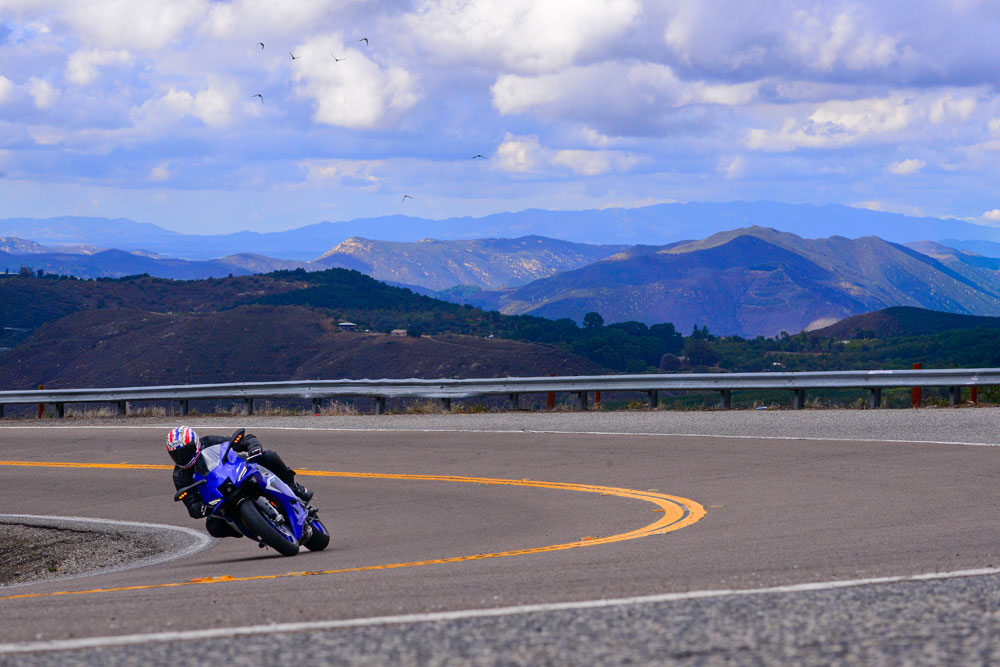
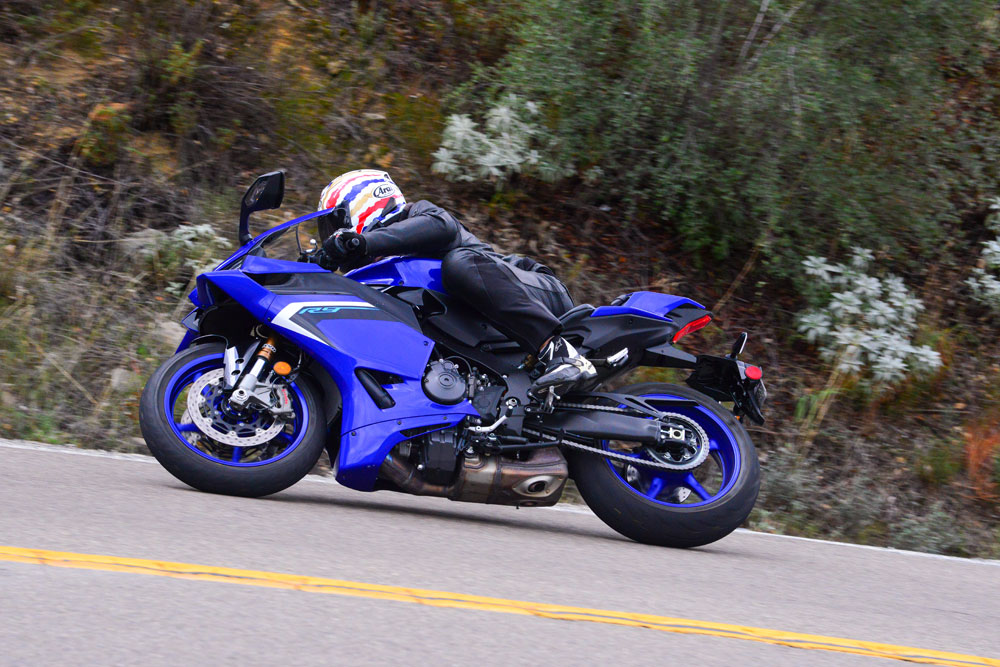
The R9 may have gained some girth over the R6, but that size advantage translates to a bike that’s uber-stable once it’s on the side of its Bridgestone S22 tire. In much the same style as the R1 superbike, the R9 will hold its line for as long as the corner continues. When it comes to fast direction changes, the R9 can’t hold a candle to its dearly departed brother, but having size and muscle has its advantages, too.
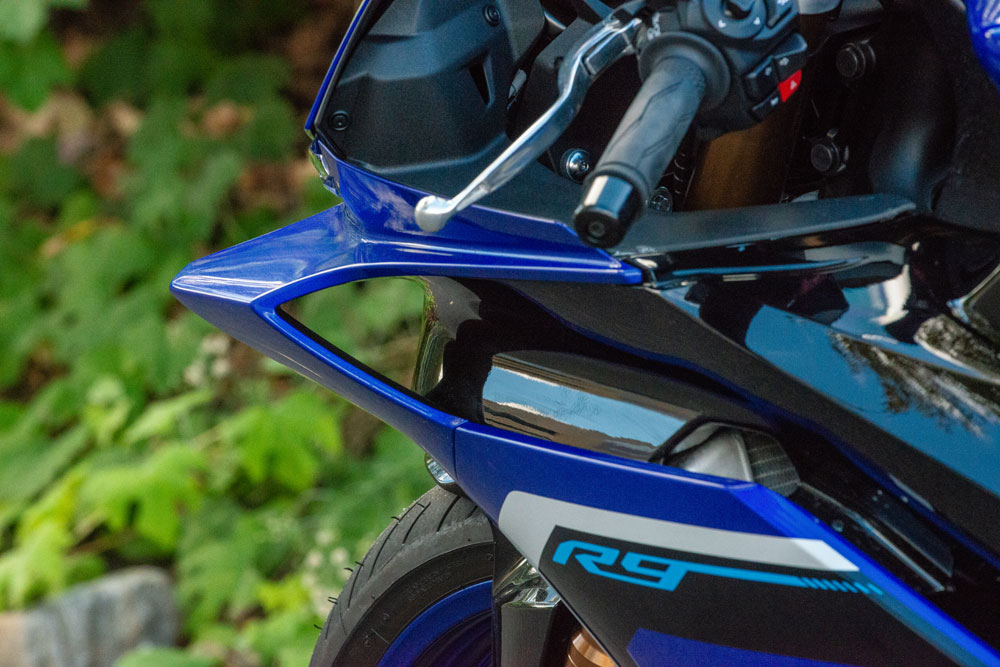
That enlarged three-cylinder motor and the soundtrack that follows it offer the R9 rider a completely different experience from that of the R6. There’s a claimed 20 lb-ft more torque on tap from the R9 motor, although it does suffer from a severe emissions-induced flat spot at 6000 rpm, right at the point where you want to be building solid corner exit drive. Clear that little hurdle at around 7000 rpm, and the R9 takes off with gusto, but you’ve only really got about 2500 rpm more to play with before torque completely falls off a cliff.
That’s not such a big deal on the road because you’re rarely doing those engine speeds unless you’re running from the cops while trying to be the next YouTube moron who makes his living out of giving the rest of us a bad name, but it is a little frustrating, nonetheless.
I know I pipe on about the emissions-induced flat spots from almost all the engines I test at Cycle News, but it is the number one internal combustion engine performance inhibitor these days. However, if you take your R9 to a good engine tuner and dyno operator, they should be able to clean up the erratic fueling pretty easily without too much pain in your hip pocket.
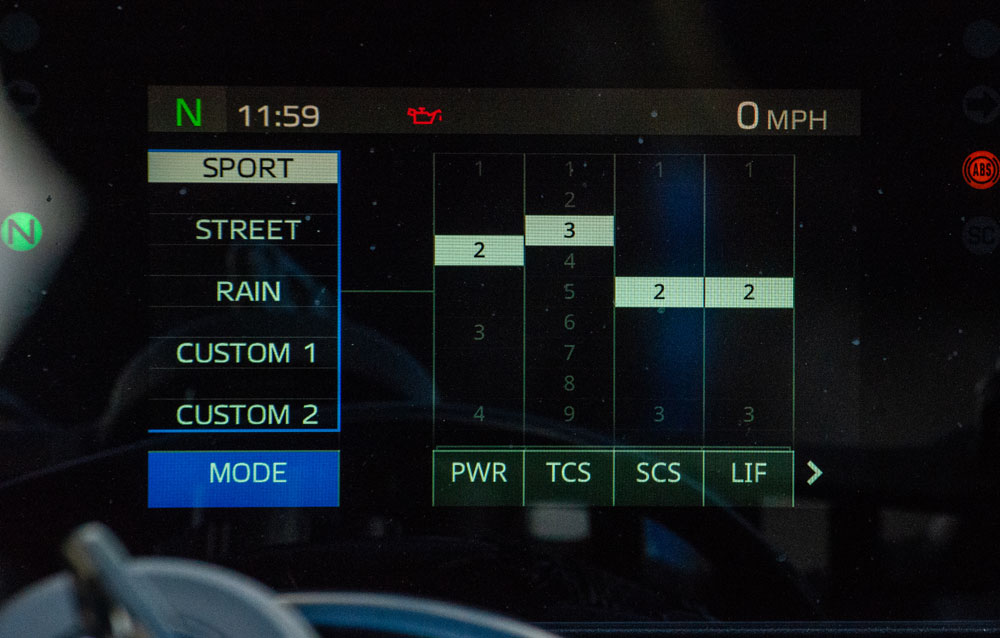
However, in terms of electrical hardware, the R9 really comes to the road-riding party. The performance is managed by Yamaha’s full electronics package, built around a Bosch six-axis IMU. Riders can choose from Sport, Street and Rain modes; two customizable rider maps; and four dedicated track settings. These provide control over power delivery, slide and traction intervention, launch and wheelie control, rear-ABS deactivation, and quickshifter behavior. And for those spending time on the street, cruise control comes standard.
That’s a heck of a lot of stuff for a bike costing under $13K (pre-dealer fees, taxes, etc.). I can think of a number of bikes in this class that cost more than this R9 that don’t have half the features it has, and one in particular that doesn’t come with any, bar riding modes.
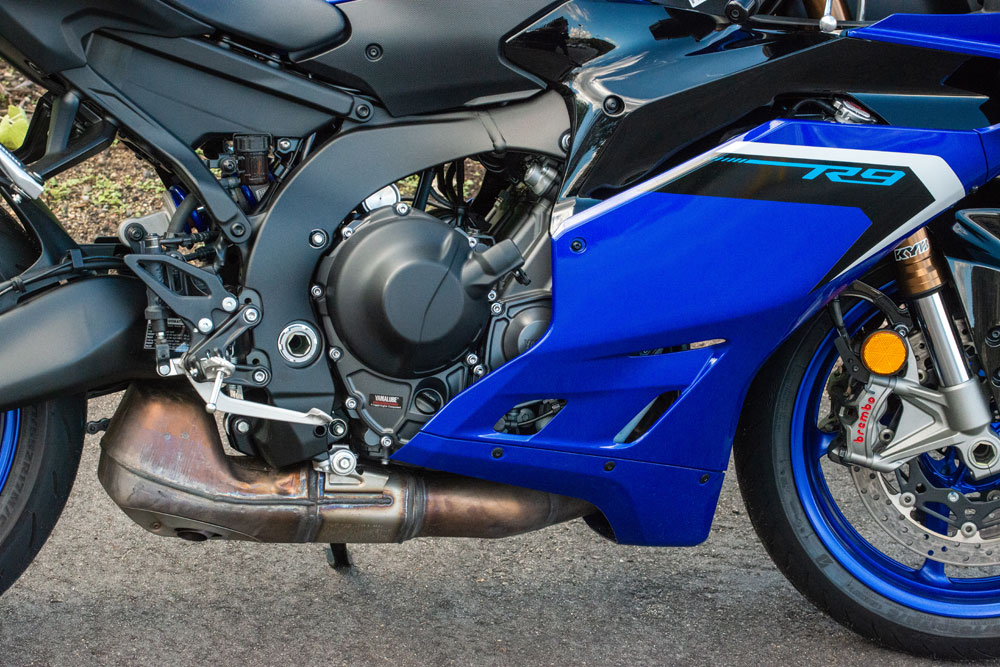
You also get chunky 43mm KYB forks and a KYB shock, both fully adjustable, and Brembo Stylema four-piston front brake calipers. Thankfully, Yamaha has ditched the ADVICS calipers that were found on the company’s sportbikes over the last 10 years or so, and the result is predictable and powerful brakes that don’t fade on track (as much) and certainly not on the road.
As for it being a streetbike-only partner, if you’re hard-core enough, go for it. But I’d be taking an MT-09 over the R9 if all I was doing was darting between traffic lights. Throw in a bit of track riding, and the pendulum swings firmly in favor of the R9.
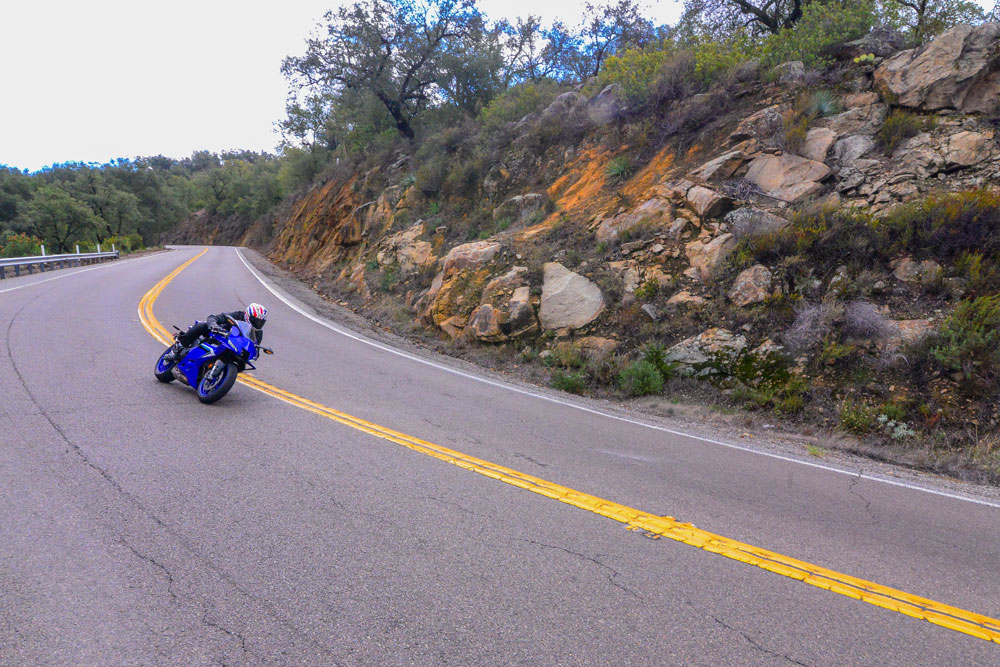
The R9 is a good bike, priced exceptionally well at under $12,500, especially given the number of electronic rider aids it comes with. It offers excellent value, but the overall package lacks the edginess and excitement the R6 had. Perhaps that is by design: this is a bike that is aimed to please a wider variety of riders, but given the racey ergos, I think it’s still going to be the hard-core sportbike set that the R9 appeals to.CN
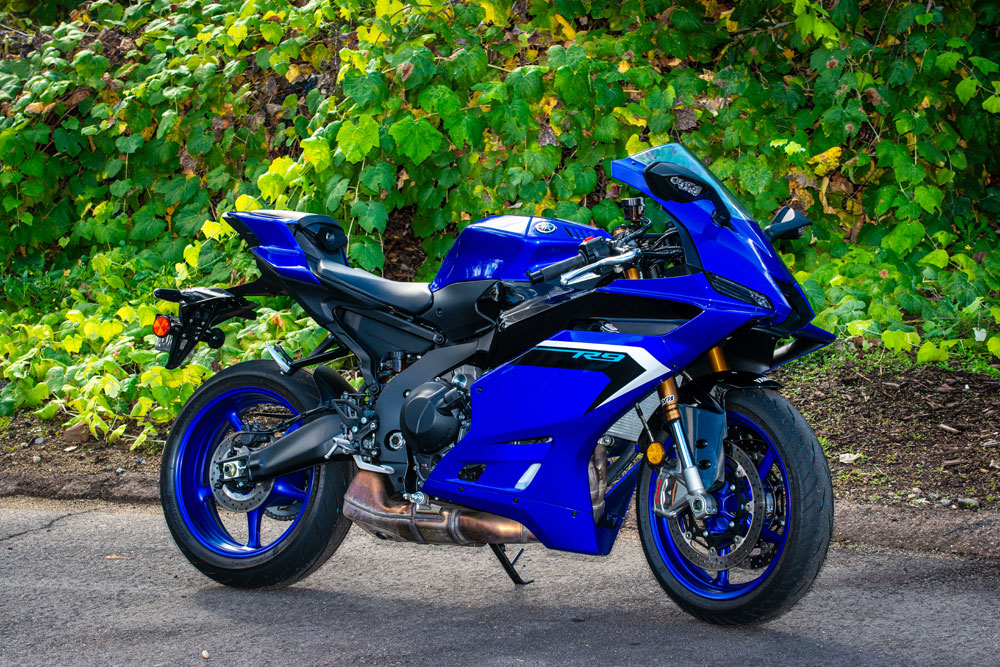
2025 Yamaha YZF-R9 Specifications
| MSRP | $12,499 |
| Engine | Inline 3-cylinder |
| Valvetrain | 12-valve, DOHC, 240° firing order |
| Cooling system | Liquid |
| Displacement | 890cc |
| Bore x stroke | 78 x 62.1mm |
| Compression ratio | 11.5:1 |
| Max power (claimed) | 117 hp @ 10,000 rpm |
| Max torque (claimed) | 68 lb-ft @ 7000 rpm |
| Fuel system | Electronic fuel-injection system YCC-T with ride-by-wire system |
| Exhaust | 3/2/2001 |
| Transmission | 6-speed |
| Chassis | Cast aluminum twin-spar |
| Front suspension | 43mm KYB fork, fully adjustable |
| Rear suspension | KYB shock, fully adjustable |
| Front-wheel travel | 4.7 in. |
| Rear-wheel travel | 2.6 in. |
| Front brake | Dual 4-piston Brembo Stylema monobloc calipers, 320mm discs, ABS |
| Rear brake | Single-piston caliper, 220mm disc, ABS |
| Front tire | 120/70 ZR17 Bridgestone Battlax Hypersport S22 |
| Rear tire | 180/55 ZR17 Bridgestone Battlax Hypersport S22 |
| Rake | 27° |
| Trail | 3.7 in. |
| Wheelbase | 55.9 in |
| Seat height | 32.7 in. |
| Fuel capacity | 3.7 gal |
| Weight (wet, claimed) | 430 lbs. |
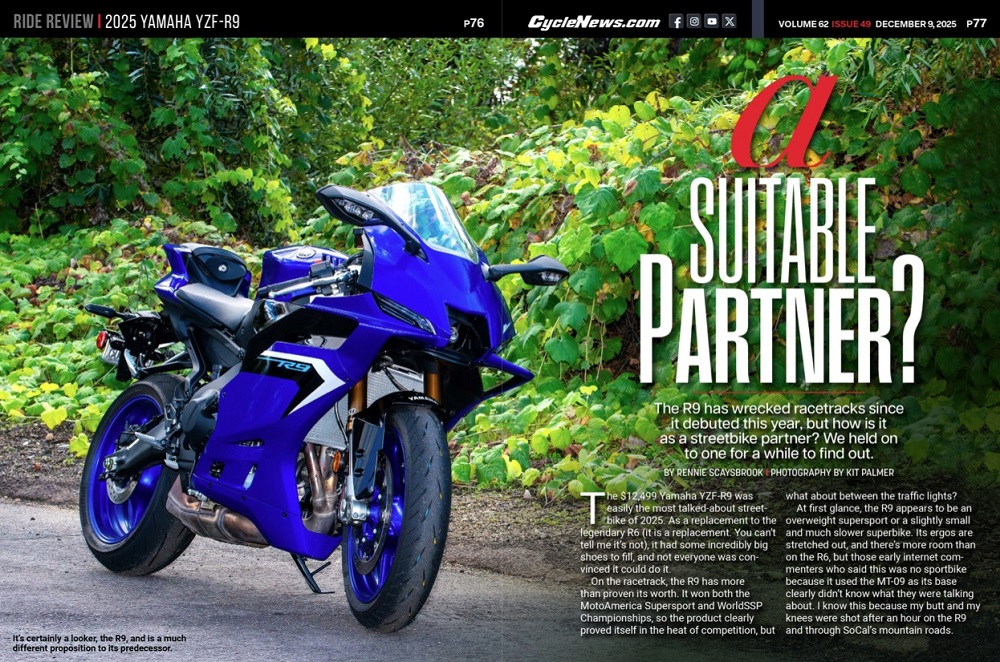
Click here to read the 2025 Yamaha YZF-R9 Review in the Cycle News Digital Edition Magazine.
Click here for the latest Cycle News Sportbike motorcycle reviews and news.
Click here for more Yamaha motorcycle reviews and news.