Cycle News Archives
COLUMN
Strong Enough
By Kent Taylor
Sheryl Suzanne Crow is a motorcyclist, which is a fact that won’t surprise fellow riders when they learn a little more about her. From a short career as a fresh-faced music teacher, she moved on to perform with local bands and eventually sang McDonald’s commercial jingles. When her skills were finally noticed, she rejected oily execs in the industry who were pressuring her to become another dance pop queen and instead became a treasured singer-songwriter. Along the way, she gave breast cancer a smackdown and even survived a relationship with Eric Clapton.
Though she seems to enjoy dirt biking, there is at least one pic on the interwebs of Ms. Crow aboard a Triumph street machine. When you listen to the lyrics from her song “Strong Enough,” she could have been writing in second person, speaking from the vantage point of a particular Triumph from the early 1970s, with the British beauty making it known that this relationship is going to be anything but easy. Metal vs. mettle.
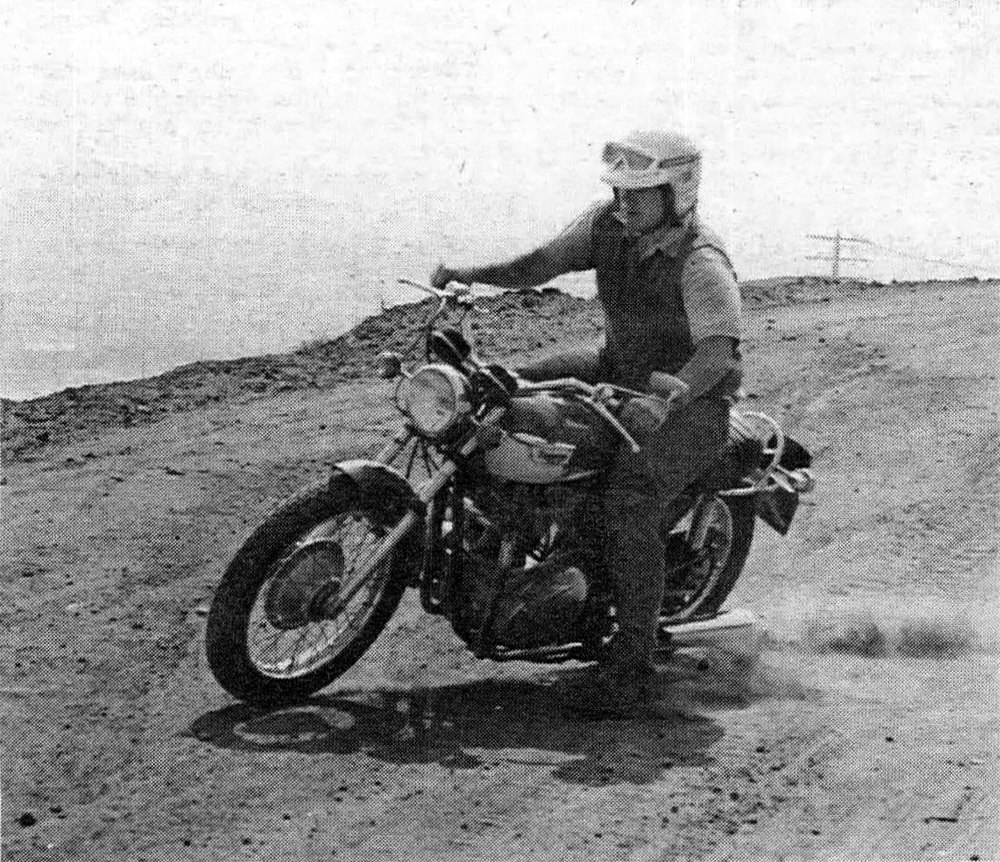
“If oil leakage bothers you,” she sings, “you haven’t enough soul to own a Triumph.” Okay, she didn’t say exactly that. Those words are from the May 16, 1972, issue of Cycle News, which featured a road test of the ’72 Bonneville T120R. This Triumph “wept like crazy…the right fork seal wept, then the left one joined in. Then a bit trickled down the oil reservoir in the frame…the gas cap leaked. Eventually all the seams on the cases became covered with dirt-collecting oil. Grease wept out of the wheel bearings.”
Indeed, fossil fluids on this motorcycle were like viscous ghosts, determined to return to the burial ground from whence they came.
What’s worse than a drippy motorcycle? A clunky gearbox. “The worst thing,” the staff wrote, “about this particular Bonneville, by far, was the transmission. This was the grumpiest transmission in the world. Pull in the clutch and drop it in first. Crunch. Shift into second. Grind. Try third. Grind, crunch. Now fourth. Varooooom! Oops, missed a shift.” Triumph technicians blamed the transmission woes on a couple of unnamed monthly magazine editors. Before arriving at Cycle News, the Bonneville had apparently been mercilessly flogged by these chaps, running it up and down the quarter-mile strip and taking it on to the road racing course for a day of pretend racing. By the end of the next 1800 miles, Cycle News’ staffers were “rudely” stamping the right-sided gear shift lever, making certain that the bike was meshing as it should. With just 3800 miles on the odometer, this beaten, bloody bloke was in need of a tranny rebuild.

More trouble. The ’72 lived up (down) to its reputation as a brand whose electrics were just downright unreliable. “The electrics went off like fireworks,” wrote CN. “The speedo light never worked, and the taillight sort of blinked at will.” The low beam on the headlight also ceased to function, and soon after, the high beam vanished—while the staff was on the freeway. A turn-indicator lamp blew, and the oil-pressure idiot light failed to do its only job, that of indicating that the oil in the crankcase was low.
What else? The clutch cable broke, which was “a common malady for Triumph.” In fact, when the staffer visited a local dealer for a replacement, another beleaguered Triumph owner was standing in line, waiting to purchase his own replacement cable for his bike.
With such a lengthy list of afflictions, one might expect the Cycle News crew to be eager to return this machine to the distributor and move on to the more reliable motorcycles of the ’70s (there were a few). But there was something about this Triumph that drew them in so closely that they could not leave.
“When I’m broken down, and I can’t stand…would you be man enough to be my man?”
Sure enough, the crew seemed to have something of a codependent relationship with this beautiful yet finicky motorcycle. They were enamored with its classic appearance. “Everything,” they wrote, “is well-appointed, comfortable and functional. The front end, the toughest part to design with a clean look, is well done.” The staff loved the mufflers, both for their form and their function, stating that they “look like custom jobs” and that they were “loud enough for all to hear but sweet enough to offend no one.”
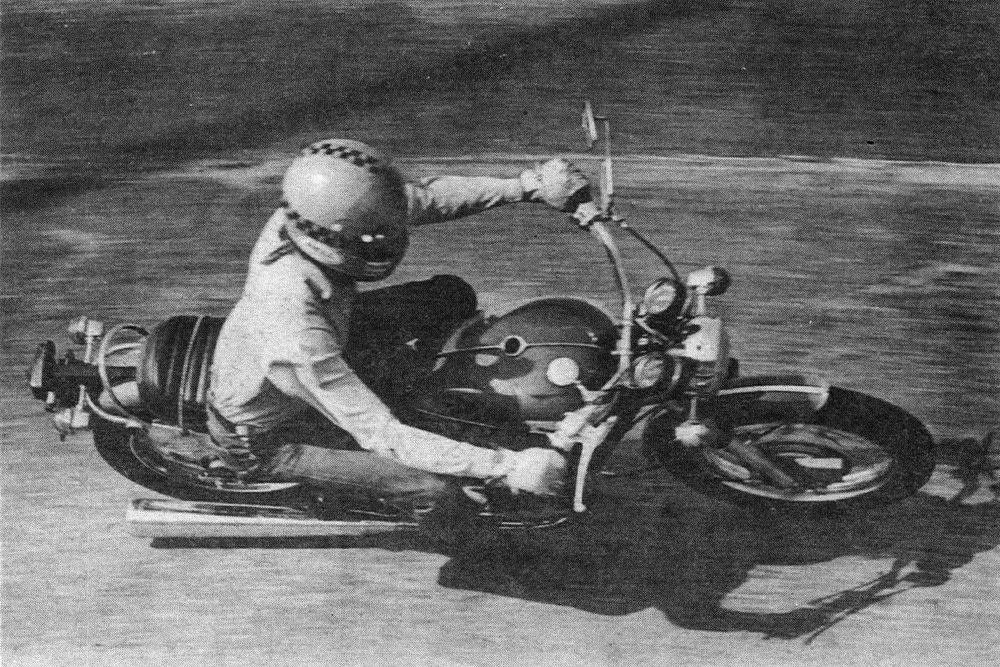
Gradually, most of the Bonneville’s warts begin to magically disappear throughout the write-up. The broken clutch cable was no big deal, as “the dealer had plenty in stock at a reasonable price. Changing the clutch cable is a 10-minute operation…that’s thoughtful engineering.” Most of the Triumph’s electrical issues could also be easily remedied, with the staff noting that “it cost less than a good breakfast to repair these items…”
In the end, the staff concluded that the Bonneville was “an outstanding, around-town middleweight cafe cruiser and mountain road racer.” It wasn’t the cheapest big street bike ($1500 plus tax), and it wasn’t the best—in any category. It was a beautiful classic, but also a temperamental, unpredictable lover, one that will “sing along with the pavement as you flick it through some esses on a twisty road.” An alluring, yet dangerous song.
“Are you strong enough to be my man?” CN
Click here to read the Archives Column in the Cycle News Digital Edition Magazine.
Subscribe to six decades of Cycle News Archive issues
Click here for more Triumph motorcycle reviews and news.

