Cycle News Archives
COLUMN
Worth The Money?
By Kent Taylor
The motorcycling company known as Pierer Mobility AG is the purveyor of KTM, Husqvarna, GasGas, and MV Agusta two-wheelers. They are indeed a Leviathan, but just a few yesterday’s ago, they were a wee little fishy in the very big pond of motorcycle manufacturers. They offered one brand, a motorcycle better known in the USA as “Penton” (a story for an Archives column all its own), and in early 1974, Cycle News put their 250cc two-stroke to the test.
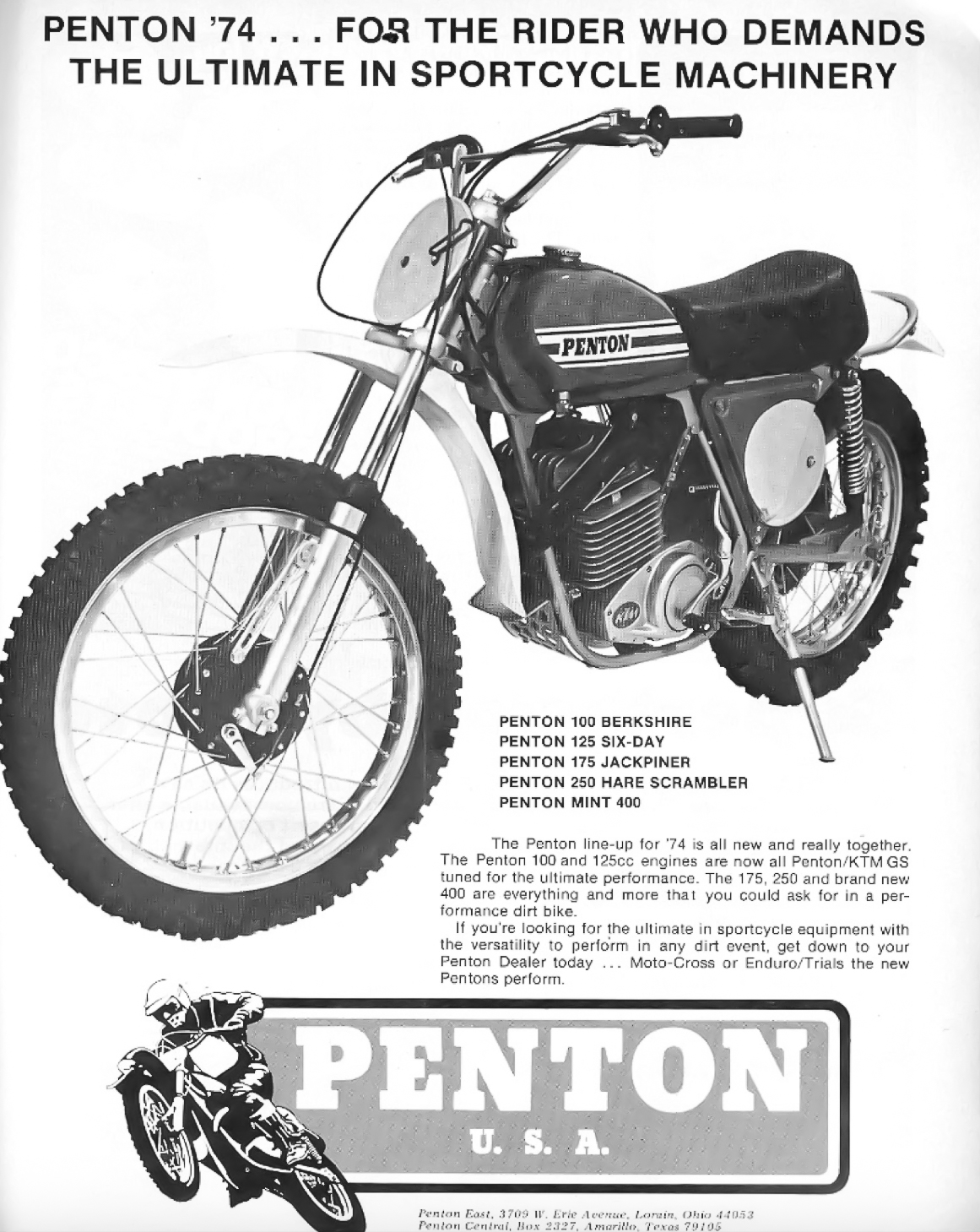
Attempting even to acquire a machine for the magazine proved to be something of a challenge. In 2024, companies fully realize the importance of marketing and promotion. Such was not the case in 1974, and the Cycle News staff had to barter like smugglers at the border just to get their mitts on a Penton/KTM for a test. They found a machine that had just been purchased by a local bank vice president, which neatly adds punctuation to CN’s assertion that the bike’s $1600 MSRP was an outlandish sum to pay for a dirt bike—at that time. The banker agreed to loan his steed to the staff; the agreed-upon interest rate is not mentioned.
The Penton 250 may have been an upstart in off-road racing, but it was quickly making a name for the company. A Soviet MX racer named Gennady Moiseev had recently won the Yugoslav 250cc motocross Grand Prix on a KTM, and U.S. rider Carl Cranke had earned a gold medal in the ISDT on one. American riders were learning about the unfettered joy of riding dirt bikes, and the companies were scrambling, so to speak, to provide them with purpose-built motorcycles.
Magazine testers of the 1970s often focused heavily on the frame of the motorcycle; geometry played an important role in how a motorcycle handled, and this write-up was no exception. “Two thin-looking downtubes,” CN said, “wrap under the engine, both originating and terminating in a set of heavy gussets, reinforcing tabs, and the like. The degrees of bend, the joining and angling of the frame tubes seems to be correct as the handling, in absolutely every respect, is superb insofar as the frame is concerned.”
Metallurgy was also important to testers; chrome-moly steel was inspiring and sounded tougher, especially when the alternative standard was referred to as “mild steel.” No off-roader could bear the milquetoasty shame of being mild. Chrome-moly it had to be, and chrome-moly it was on the Penton/KTM 250.
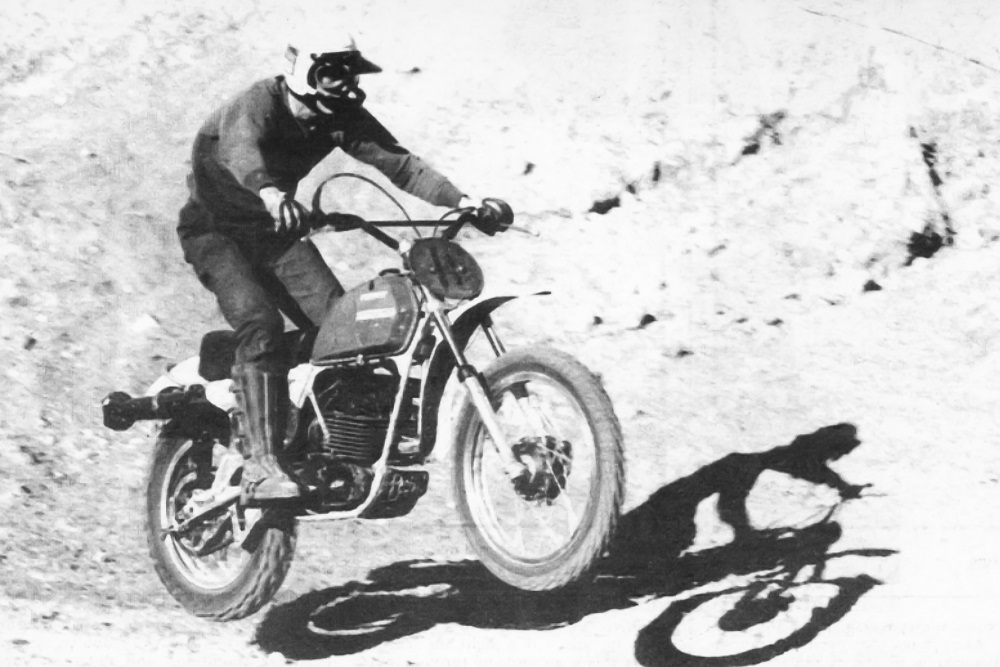
Other buzzwords of the day were the brands of components featured on the machine. Ceriani forks, Metzeler tires, and Magura controls were aftermarket brands that Japanese bike owners had to purchase and install on their motorcycles. These components were standard issue on the KTM, and they made the staffers smile and bray about the performance difference.
The KTM was fast. CN wrote, “Acceleration is unreal for a 250. Coming out of the corners in third gear, a twist of the right hand sends the front end a foot or two off the ground as the rear Metzeler hooks up.”
The Austrian machine had some old-world clunkiness, and it was mostly coming from the gearbox. Six speeds were crammed into the transmission, and even Carl Cranke admitted to having to stomp his machine through the gears. The banker who owned the CN test model also voiced his frustrations with having to bully his way from gear to gear, but CN felt “the box appears that it will hold up, and the ratios are well-matched to the powerband.
“The Motoplat electronic ignition,” the test continued, “gives a fierce, quick spark, and the revs climb quickly. The engine is a little more buzzy than some other 250 machines, but the combination of quick turn, easy-twist Magura throttle, and the handy six speeds don’t make it that noticeable.”
The writers went on to describe the handling as “rectilinear…(a) two-bit word (that) means you go fast confidently in a straight line, get on the brakes hard, place the front wheel where you want it to go next and gas it, continuing confidently in a straight line.”
Keep in mind that motocross bikes of the ’70s didn’t always brake so efficiently or steer so well. A motorcycle that did both with such aplomb was a jewel, and it seems as if the test crew appreciated the KTM for these characteristics. The suspension also responded nicely and kept the rear wheel pumping its 34 horses to the ground.
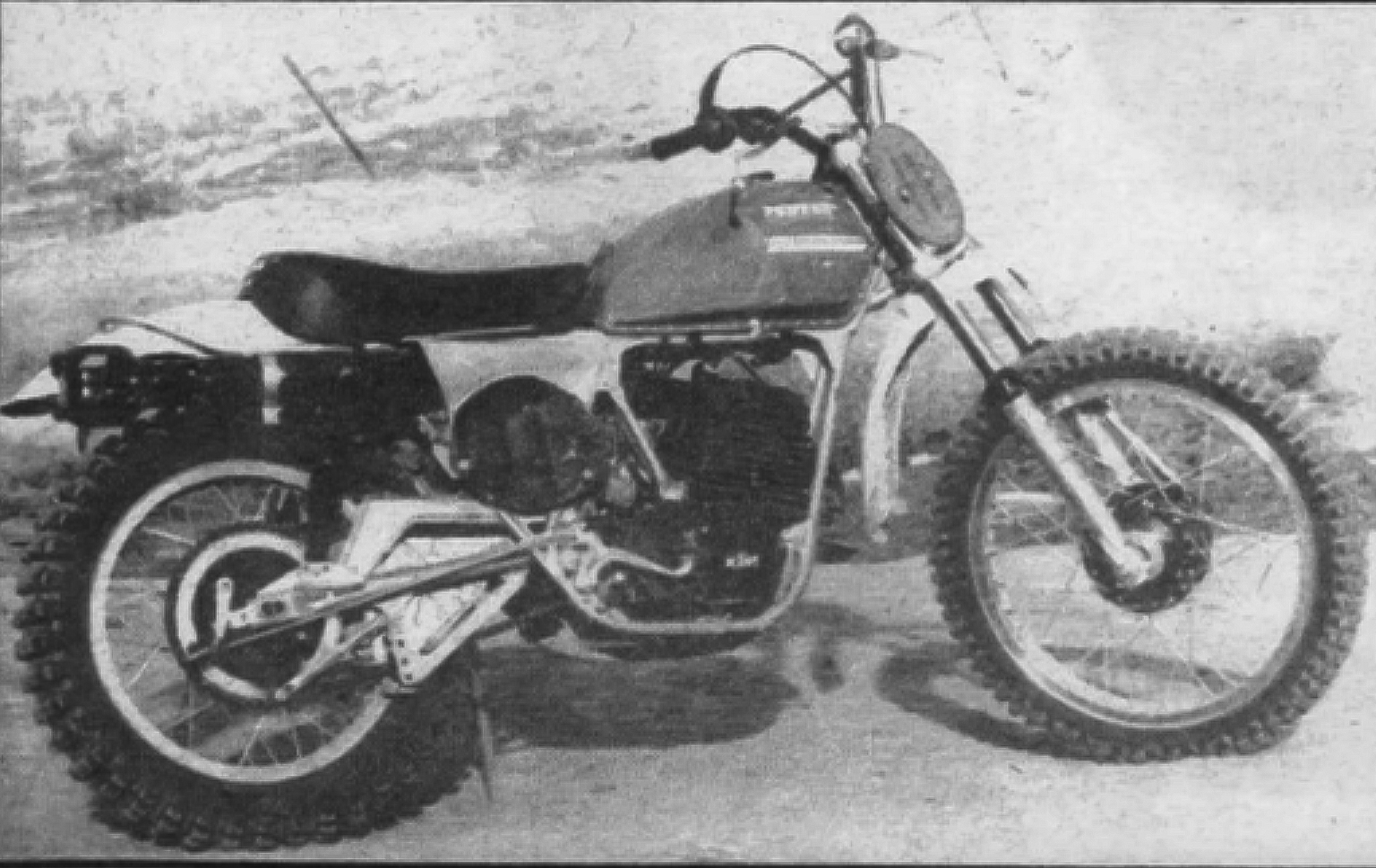
The motorcycle featured other niceties, like Nyloc nuts and drilled-out sprockets, just a few examples of the details that made the testers believe that it was designed and built by people who actually ride (and maintain) dirt bikes.
The headline posed the question, “Can any 250cc dual-purpose bike be worth $1600?” In today’s money, that would be approximately $10,600. Good handling, plenty of power, adorned with reputable components made the Penton shine in 1974. The staff seemed to agree at the end that it was indeed “worth the money.” CN
Click here to read the Archives Column in the Cycle News Digital Edition Magazine.
Subscribe to nearly 50 years of Cycle News Archive issues