Cycle News Archives
COLUMN
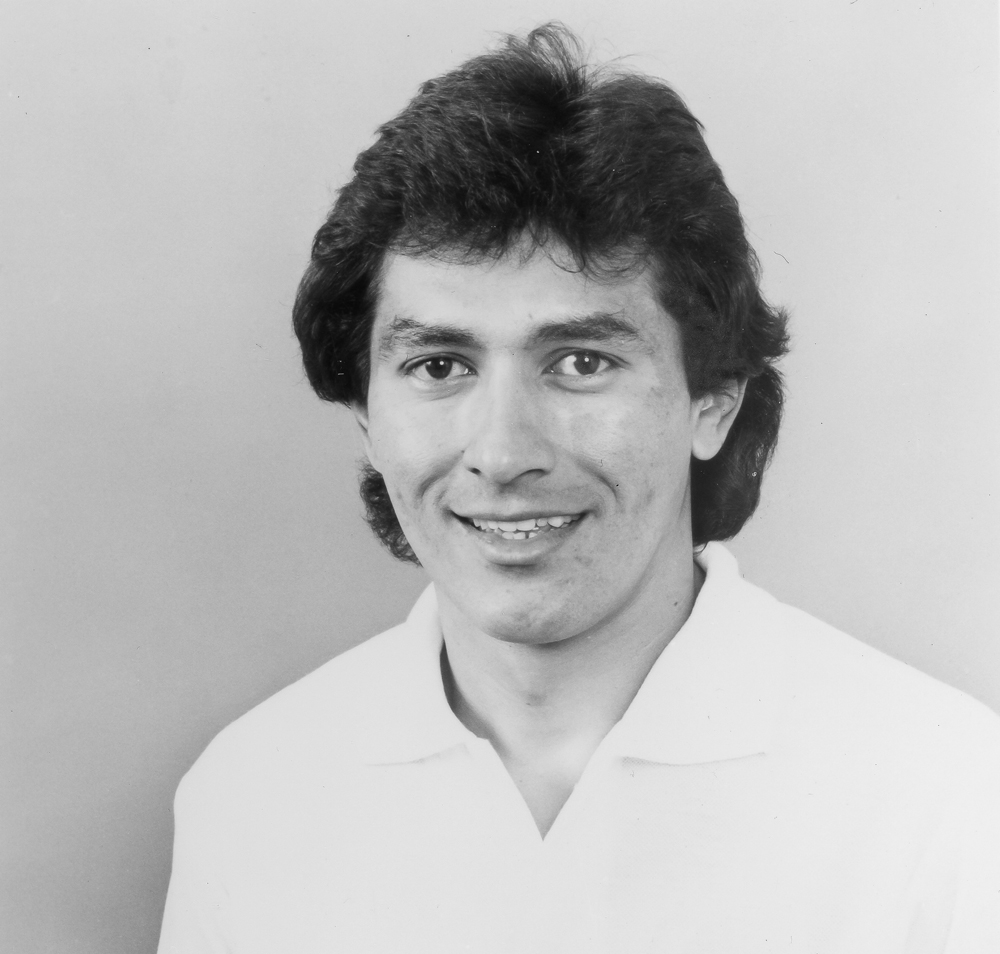
Dave Aldana went from a motorcycle-riding newbie to a National road race winner in just five years.
By Kent Taylor
Motorcycle racing has had its share of brash personalities. But long before Haiden Deegan and Bob Hannah were making it clear that they didn’t give a rodent’s heinie about the opinions of others, one of the most talented dirt tracker/road racers of the 1970s was letting everyone know that he, too, was going his own way—and you best not be standing there when he did.
“I guess I am cocky in certain respects,” said David Aldana. “That’s the way I’m going to be…if they don’t like me for it, screw ’em.” In 1970, this confident racer nearly put together a national championship season until an untimely crash kept him from the number one plate. One of his biggest wins that season took place at the inaugural Talladega 200 motorcycle road race.
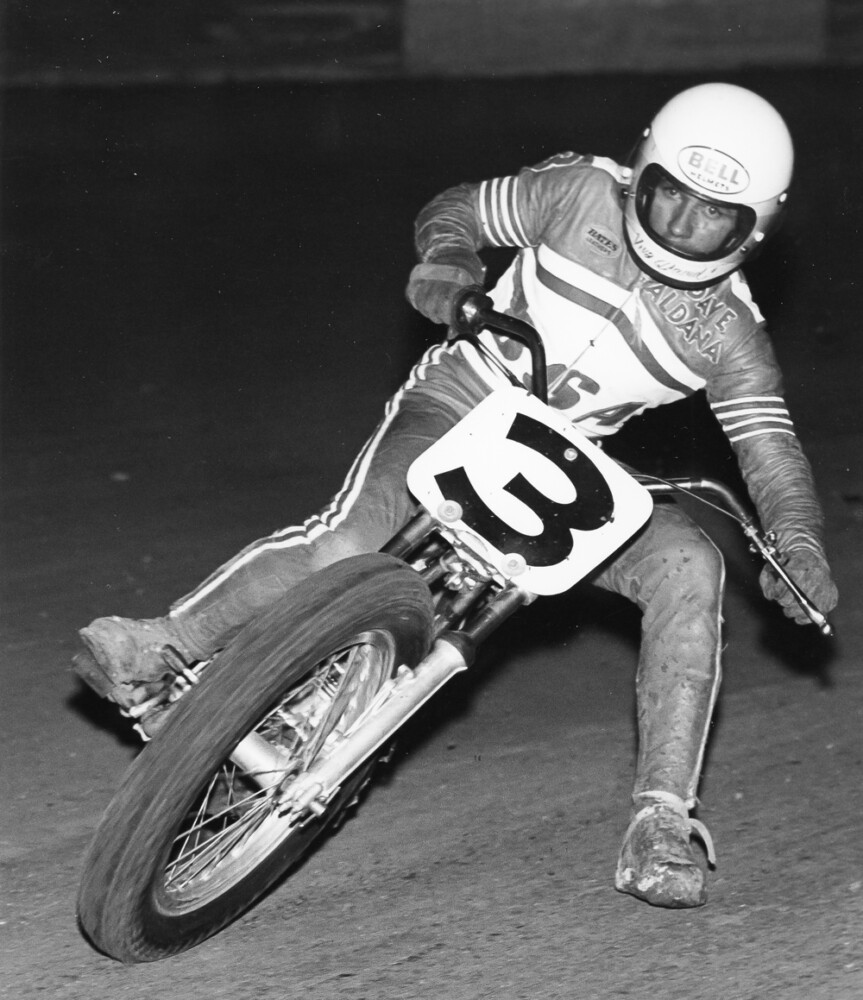
Hailing from Santa Ana, California, David Aldana didn’t even own a motorcycle until he was nearly 15 years old, when his father bought him a Suzuki 80. Before long, he was racing flat track at the famous Ascot Park. Success came quickly, and he was soon getting sponsorship from the Spanish factory Ossa to also race motocross and scrambles.
Former dirt track pro Dallas Baker had taken notice of the fast kid at Ascot and began sponsoring him on a BSA 250 dirt track bike. When an opportunity opened to ride a BSA 650, Aldana moved up fast and rode even faster, winning “the first time I’d ever jumped on a big bike in my life.”
That led to a factory-sponsored ride with the company, meaning that just five years after learning how to ride on his own Suzuki 80, Aldana, now 20, was a professional racer, with a real contract and soon to be winning races at the highest level in the sport.
Cycle News described the Talladega track as “fast and demanding,” and both adjectives were spot on. Fast indeed, as Triumph’s Gene Romero “took time trial honors with a speed of 156 mph-plus. The track was fast enough to set the average speed for the entire Expert field at better than 141 mph!” Demanding? Check. It appears that nearly half of the bikes that started on the grid would fail to finish.
This certainly was a field that earned the name “experts.” Besides Romero, other former and future champs like Gary Nixon, Dick Mann, Mert Lawwill and Mark Brelsford were there, along with road race aces like Cal Rayborn, Yvon Duhamel, Art Baumann and Jody Nicholas. The grid had four-strokes, two-strokes, Triumphs, Triumphs, Harley-Davidsons, Yamahas, Kawasakis and Suzukis, but the best motorcycle to ride this day was a BSA. And on this day, nobody rode one faster than Aldana.
When the green flag dropped for the Talladega 200 in May 1970, it was Triumph rider Gary Nixon with the lead, which he would hold for the next 22 laps until gearbox problems cropped up. Aldana had slipped past Nixon’s teammate Don Castro and was now closing the gap on the leader. The gremlins inside Nixon’s Triumph traveled from the transmission to the throttle and somehow forced it to stick wide open, and the two men collided on the track. Nixon went down, Aldana stayed upright and was off to his first-ever National win. Castro held on to second until his own Triumph began having clutch problems, turning over second place to Suzuki rider Jody Nicholas. Third was On Any Sunday hero Jim Rice, with Art Baumann and Dick Mann rounding out the top five. BSA, Suzuki, BSA, Suzuki and BSA.
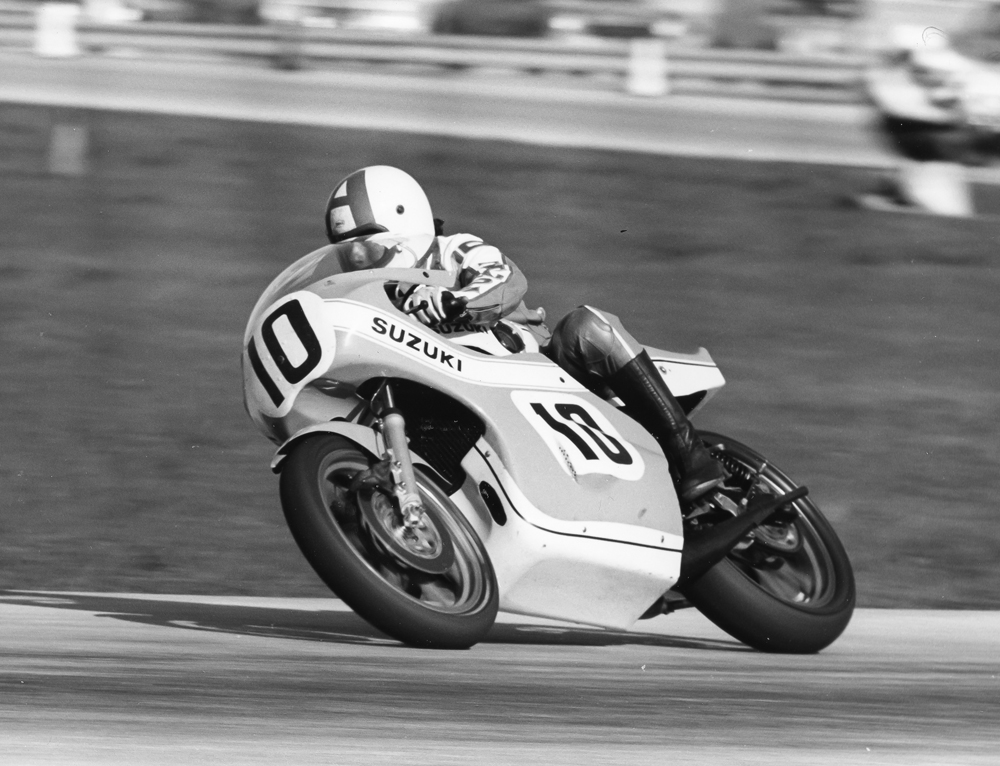
It would be another six years before Tom Petty and The Heartbreakers would release their hit single “Breakdown.” Perhaps he received his inspiration from AMA road racing, because mechanical failures were nearly always a factor in determining the outcome of 1970s road races. By race’s end, the broken Triumphs of Nixon and Castro were joined by the Harleys of Rayborn and Brelsford. Cycle News’ results section seems to indicate that there were at least 20 racers whose day ended with broken-down motorcycles.
Aldana picked up a cool $8000 in prize money and contingencies that day. He would go on to win two more AMA national events that season and finish third in the final points standings. His career continued on with rides from Norton, Suzuki and other manufacturers, before retiring from professional racing in the mid-’80s. Today, in his 70s, Aldana can still be seen sporting his famous skeleton leathers at vintage dirt track events around the country. CN
Click here to read the Archives Column in the Cycle News Digital Edition Magazine.
Subscribe to six decades of Cycle News Archive issues
Click here for all the latest Road Racing news.
Click here for all the latest Flat Track racing news.

