Cycle News Archives
COLUMN
The Puch motocrosser brand had a brief but victorious run, which included a 250cc MX World Championship.
By Kent Taylor
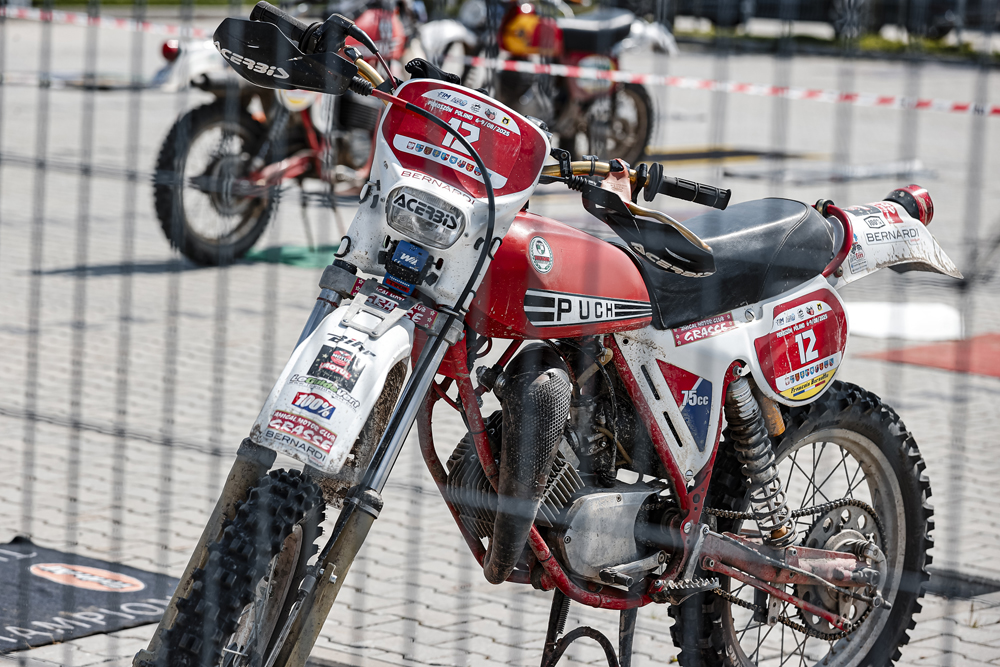
Puch motorcycles. Few will remember the brand, but as any moto historian will tell you, it was just a short half-century ago that Belgian motocross rider Harry Everts captured the 1975 250cc World Motocross Championship aboard the Austrian-made Puch 250, a very special motorcycle that featured twin carburetors feeding the powerful two-stroke engine. During that same era, Germany’s Herbert Schmitz was a strong competitor on a Puch in the 500cc class. Six-time World Champion Joel Robert finished his career on a Puch, and the bikes were solid mounts in enduros and the ISDT. A tiny brand that has been mostly forgotten, Puch once stood boot to boot with the largest motorcycle manufacturers in the world. As Dr. Eldon Tyrell told his replicant creation Roy Batty in the sci-fi classic The Blade Runner, “The light that burns twice as bright burns half as long. Like Roy, Puch motorcycles may not have enjoyed a very long run in the world, but this Austrian marque was once a shining star in the off-road world of the 1970s.
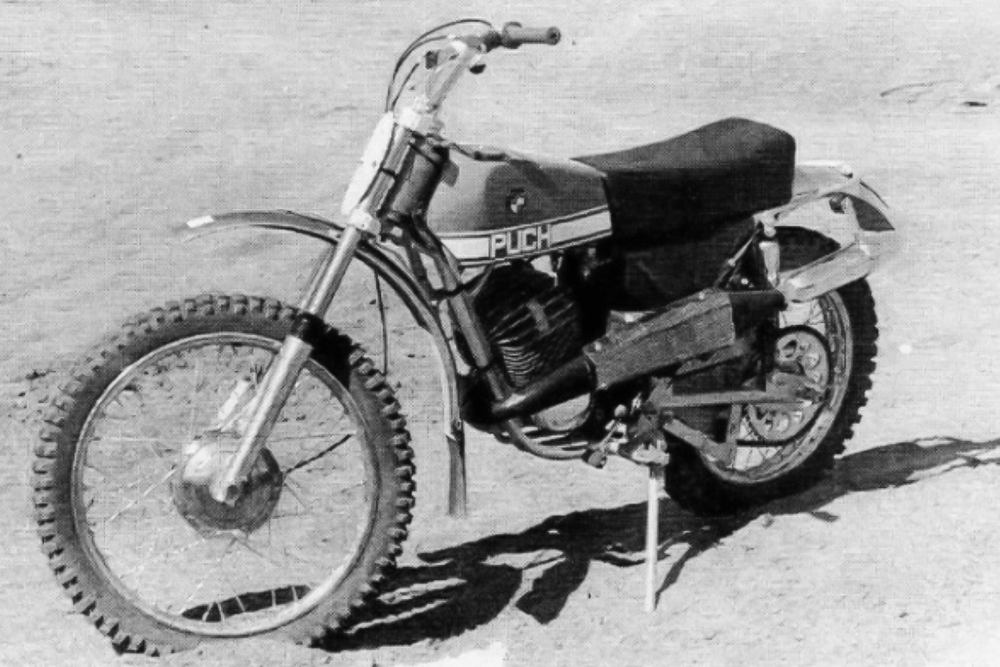
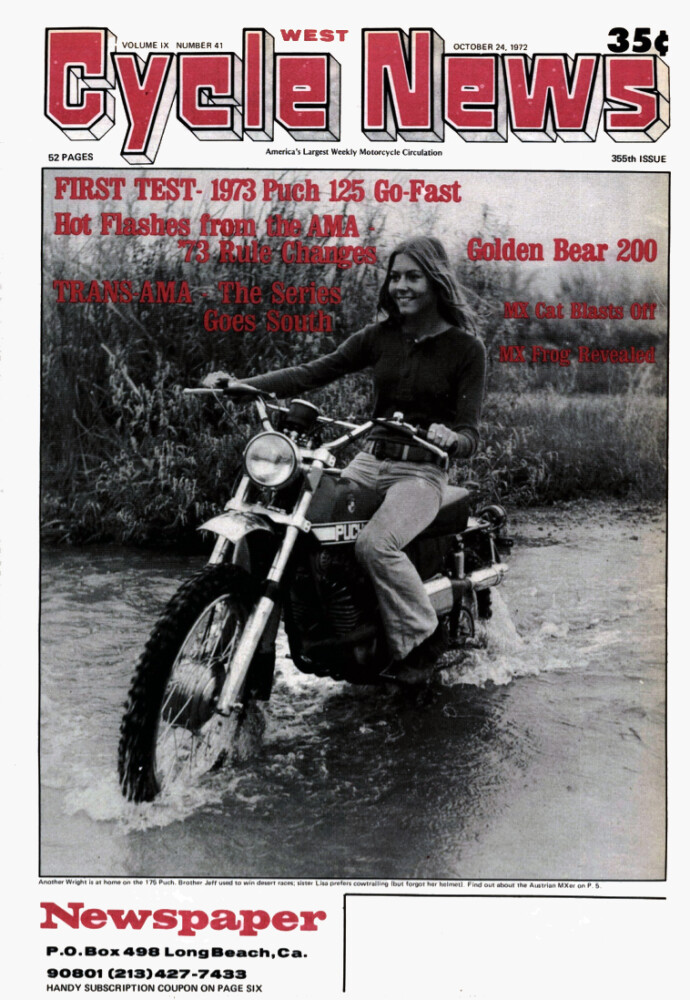
October 1972 was a good month for the company’s presence here in the USA. At the 22nd annual Check Chase in Parker, Arizona, a desert racer named Bill Friant rode a Puch to victory in the Lightweight Division. On the cover of the October 24th issue of Cycle News, a stylish and capable rider named Lisa Wright splashed her Puch enduro bike across the cover of Cycle News, while inside, the staff put the new 125cc motocrosser from Puch to the test.
During this time, the European companies like DKW, Monark, Husqvarna and CZ dominated the world of small MX bikes. Yamaha and Suzuki were coming soon, Honda’s 125 Elsinore would hit the U.S. shores shortly thereafter, and the 125cc was soon to become a class for the Gang of Four from Japan. But in 1972, the Europeans were the major players, and the Puch 125 was a worthy contender.
Cycle News tested the small racer in the October 24th issue. The sport was still relatively new in the USA and staffer Art Friedman epitomizes serious moto-geekdom, sporting a full-face street helmet and a T-shirt, which at least is adorned with the classic Puch logo. The testers also throw down their lack of MX know-how, lamenting the bike’s reluctance to “slide,” while praising the saddle. As today’s MX racers know, sliding is unnecessary and good motocross bikes of today are measured by their truly uncomfortable seats, which are about as plush as the hood of an AMC Gremlin (a top-selling automobile back in 1972).
The quality seat wasn’t the only feature that helped set the Puch apart from its competitors. Inside the fuel tank was a plastic liner, though the staff offered no explanation as to why that was needed. The frame was made more rigid with bolt-on gussets, and the airbox featured a shroud of some sort, which worked well, because the staff reported that at the end of the day “the filter isn’t too dirty.” Nothing came loose, and while the steel fenders were not in touch with the movement toward less unsprung weight, they were at least undercoated. Heavy, yes. Easily damaged in a crash, 10-4, but no way are they going to rust. An expansion chamber that was neither a downpipe nor of an upswept fashion, but instead lived in the midsection of the bike, did a fine job of keeping decibels well below the accepted (and expected) norm.
Strong frames, shiny fenders and a shushed exhaust note are worth nothing if the machine can’t perform its intended job on the track, and the Puch quickly showed the crew that it belonged on the racecourse—and that the pilot needs to know how to twist that grip.
“You have to really wick the engine,” CN wrote. “At a point when it seems most are about out of revs, the Puch comes on for a whole bunch more. Keep the throttle on, keep it in the right gear (which was usually third or fourth) and hooboy! It is some rapid motorcycle.”
In motocross, good braking is almost as important as good power, and like many of its European counterparts, the Puch didn’t have a good pair of stoppers. The rear brake was “weak and insensitive,” and the front unit was even less manly. Getting shut down for the corners was an issue for many drum-braked machines, and the Puch was in need of some work in this area.
Handling-wise, the staff was pleased with the motorcycle. “What it really does best is go very fast over relatively open terrain, like a desert. It’s no slouch at motocross, either, but it is more oriented to the works racer than the garden-variety novice. The Puch makes a surprisingly tractable trail bike…it climbs over and around obstacles with ease, attributable to the really excellent suspension and weight distribution.”
The Puch company is still in existence but has no connection to motorcycling. Though Harry Everts even won a Trans-AMA race in 1974, the company pulled out of motocross just one year after his world championship season. Mopeds and bicycles with the Puch name followed, but the motorcycle brand has since been retired. Lost in time, like tears in rain.CN
Click here to read the Archives Column in the Cycle News Digital Edition Magazine.
Subscribe to six decades of Cycle News Archive issues

