Cycle News Archives
COLUMN
Where the best road racers in America met the best in Europe
By Kent Taylor
“There are two road racers that I would pay to see,” chuffed the unnamed British motorsports journalist. “Jarno Saarinen and Cal Rayborn. For the rest, you pay me.” The race at hand was the 1973 Imola 200 and, considering the collection of other legendary racers competing that day, such pomposity could have been perceived as blasphemy. Yvon DuHamel, Art Baumann, Bruno Spaggiari, Ron Grant, Cliff Carr, Peter Williams, Gianfranco Bonera and others were just some of the great names in road racing that would be scratching their way around the fast and scenic (the infield is made up of farms, orchards and a public park) Ferrari Dino racetrack of Imola.
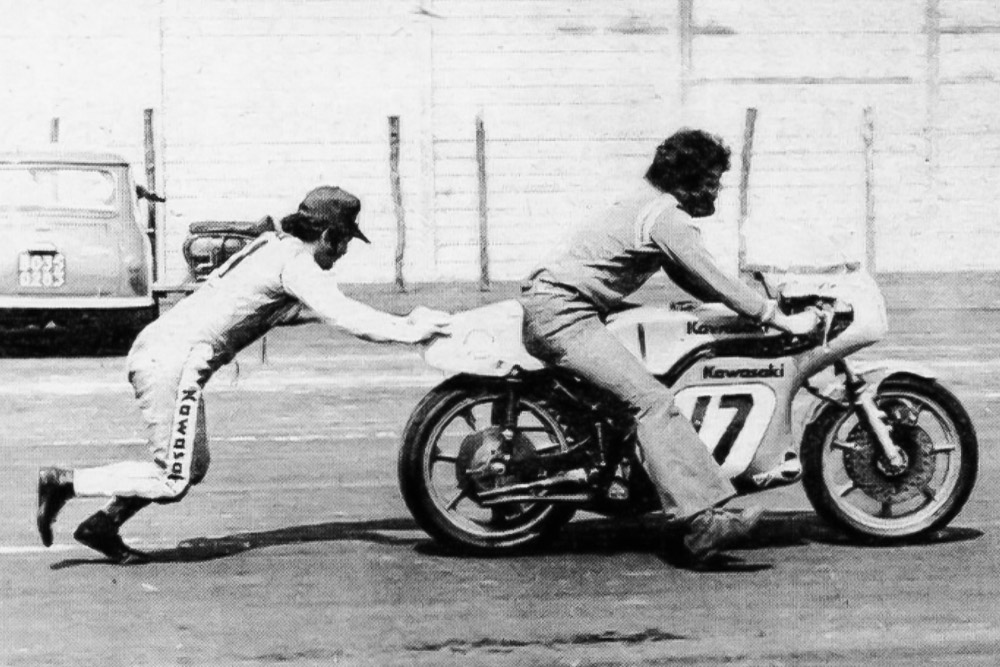
In the 1970s, success in American motorcycle racing apparently wasn’t worth much, at least not as much as a victory overseas. The USA’s best motocross racers had left the States to race in Europe, and, for at least a few years, the road-race teams were also putting forth a considerable effort to get across the pond for events like Imola and the old Transatlantic Trophy Match Races, which pitted America vs. England. Crating bikes, tools, supplies and people, all the while interrupting their own AMA Grand National championship efforts, doubtless made for a handful of Excedrin headaches. But that’s the way it was, and in April of 1973, even Cycle News bought in on the Euro craze, sending staffer Art Friedman to cover the Imola event.
Two hundred miles must’ve been the litmus test for motorcycle road racing in the 1970s, with Ontario, Daytona and Imola all holding similar events. Like Ontario, Imola would be run in two 100-mile legs, and when the flag fell for the first heat, it was North America challenging for the win. Kawasaki teamsters Yvon DuHamel and Art Baumann, much as they had done at Daytona just weeks earlier, were involved in a pitched battle with each other. But both men trailed Daytona-winner Saarinen, each taking turns at challenging the World Champion from Finland. Behind them was Paul Smart, who had ridden a Ducati to a surprising victory at Imola one year earlier. On a Suzuki for 1973, he now found himself being chased by Ducati teamsters Bruno Kneubuhler and Bruno Spaggiari.
The British writer is getting his pounds and pence worth as Saarinen begins to pull away. But deeper in the pack, Harley-Davidson rider Cal Rayborn is making a case for an extra service fee. Cycle News’ editor Friedman makes no bones about the fact that the Rayborn’s H-D is slow, giving up a staggering three seconds per lap to most of the other riders. As if the horsepower disadvantage isn’t enough to plague Rayborn, the big V-twin has now started leaking oil, causing him to skitter like a hog on ice—er, oil. Add insult to injury? Rayborn is still healing up from a Daytona crash, which resulted in a broken collarbone. “Now he begins to slip and slide around,” wrote CN, “and in the flailing around, his collarbone, which has just begun to knit from his Daytona crash, lets go. Somehow, Calvin continues…”
The comparison of athletes whose glory years were both separated by time and affected by other circumstances is a fool’s game. Rayborn versus Roberts versus Rainey is a race that won’t happen on these earthly shores. But when once asked if Cal Rayborn was indeed America’s greatest road racer, 1972 Grand National Champion Mark Brelsford responded, “Without a doubt.”
The Suzukis and Kawasakis are out of the picture, with DuHamel’s machine even making a flaming exit. Kneubuhler has crashed his Ducati. Rayborn courageously soldiers on to a fourth-place finish. A Herculean effort, though the best was yet to come.
When the riders left the grid for the second heat, it was Saarinen again out in front. In second (with his freshly re-broken collarbone), Rayborn is in pursuit. Giving up several seconds on Imola’s fast, long straightaways, he and his H-D are pushing hard in the course’s tighter sections. “I could feel,” Saarinen said afterward, “his breath on my neck.”
“Calvin was slipstreaming at the beginning of the straights and over-revving his motor,” wrote Friedman. “He was doing everything. You really should have seen it.”
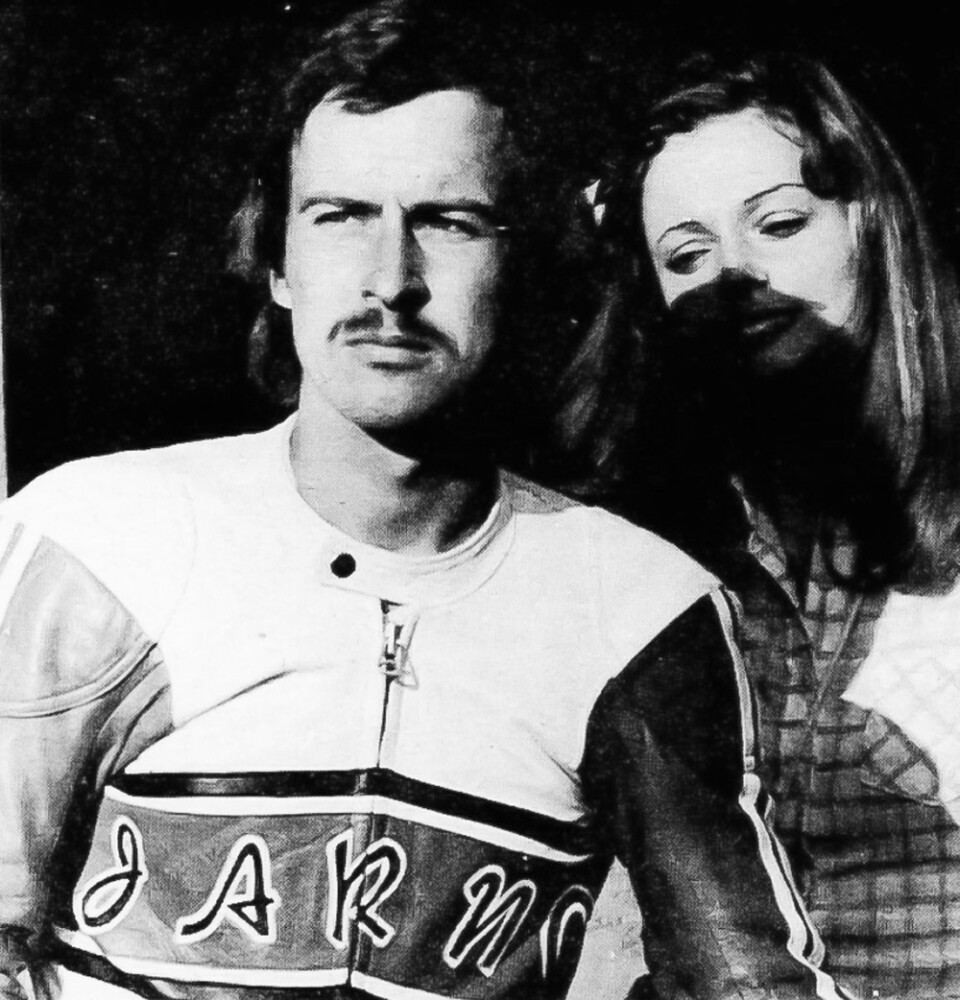
If life were a Hollywood movie, Rayborn’s gritty effort would’ve netted him the win this day. Even without a script, he still might’ve topped Saarinen in the race. We will never know, because while clinging to within one second of Saarinen, Rayborn’s Harley-Davidson sputters and finally stops. A faulty magneto is the culprit. Saarinen cruises on to an easy win. For the second year in a row, Bruno Spaggiari, a spry 41-year-old vet, takes runner-up honors for the day. Every American rider has either crashed or broken.
By the end of the year, both Cal Rayborn and Jarno Saarinen will have left this world behind, killed in separate crashes in which neither rider was at fault. Imola would be the last time the two Daytona champions would ever meet on the racetrack, and they put on one helluva show. Whatever our British sportswriter had to pay for this ticket, it wasn’t enough.CN
Click here to read the Archives Column in the Cycle News Digital Edition Magazine.
Subscribe to six decades of Cycle News Archive issues

