Cycle News In The Paddock
COLUMN
Here We Go Again
It begins again, first tests are under way for MotoGP. First out at Sepang to quicken the blood. And quicken the pace—with brand new all-time best lap times, set by some surprising people. On day one, Aleix Espargaro’s Aprilia, continuing its upward swing; on day two, sophomore Enea Bastianini, settling in to his new Gresini team.
And then on to the fast, sweeping new track at Mandalika in Indonesia, where from the start, riders were faced with dodgy weather and a very green surface.
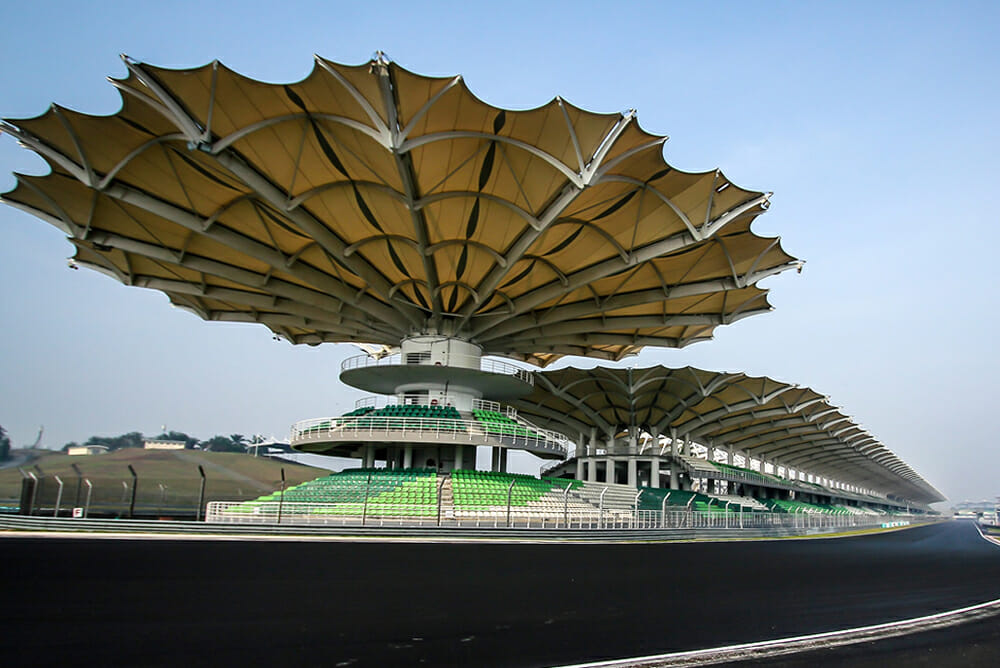
What do tests really mean? Well, everything… and nothing. They’re only tests, not conclusive events. For one thing, final lap times at Sepang were undermined by rain on day two. Riders planning a late-afternoon time attack were thwarted. This basically means all of them, not least defending champion Quartararo, left frustrated after having saved two soft tires for the final gallop.
Nor was the excitement over “fastest-ever Sepang laps” really justified. The best-ever time dates back to 2019; Covid-stricken Malaysia missed out 2020 and 2021. It is only to be expected that three years of technical progress, for engines, chassis and tires, should yield an improvement.
Even Bastianini’s leading role is hedged with ifs and buts. Sure, the 2020 Moto2 Champion has shown strong talent on a MotoGP bike, with two rookie podiums in 2021, on a low-grade privateer Ducati. This year he is still not in the top echelon for the Italian factory. In his new Gresini team, the squad having switched from Aprilias, he is still on last year’s bike. But this can be counted as an asset at the early tests. The GP21 is fully sorted and polished, up against 2022 prototypes still seeking the right settings. Riders on the latest factory Dukes, for example, were hard at work trying to find the right balance and throttle connection for the new power-up motor.

Similarly, with no previous reference at Mandalika, conclusions had to be hedged with reservations.
Lap times are important, though. Numbers do matter: the salient detail being just how close they all were. At Sepang, the top six were all inside the previous fastest lap, top 13 inside half a second—at a long 3.4-mile track with a lap taking almost two minutes.
Closeness has been a growing tendency in MotoGP, the natural consequence of increasingly restrictive regulations that limit not only tires and electronics, but even cylinder numbers and bore size. No wonder the bikes perform all the same. In important respects, they’re identical.
The gaps have closed up a little more for 2022, with significant progress from Aprilia (Aleix Espargaro and Maverick Vinales a close second and fifth overall), and a welcome improvement also from Honda, after a bad couple of years.
The bikes are closely matched. But why does the same apply to the riders?
That’s another issue, stemming from the same dumbing down.
Many observers think MotoGP bikes are much too easy to ride, thanks to limited technical variables and modern technology. Hence strong rookies, tickling the tails of seasoned campaigners.

“Too easy” comments come not least from a number of former riders who cut their teeth (and frequently also broke their arms and legs) aboard feisty 500cc two-strokes—light, agile, peaky and ultra-sensitive. They really sorted the wheat from the chaff in an often-painful process not too different from agricultural winnowing.
Well, such is progress. Perhaps we should be thankful that MotoGP bikes do not yet have lane-control software, and automatic braking to preserve a safe distance between them.
Paradoxically, however, while “easier” MotoGP bikes cut down on the vicious high sides of the past, the closer racing they generate imposes different dangers. As uncomfortably demonstrated in Moto3.
But it’s a feast for the fans.
Cream, as we know, rises. Even when lap times are whisker-close, the same riders tend to take over the top three.
By this measure, favorites for the forthcoming season are fairly obvious: Bagnaia, Quartararo, Marc Marquez and Joan Mir (with an outside chance for Martin and Miller).
Should they worry that they placed only sixth, seventh, eighth and 12th (and third and 14th), respectively, at Sepang?
Not at all. They were all within less than three-tenths of one another, and the worst of them (2021 champion Mir) less than four-tenths off the top.
They should worry about one another, of course, and the greatest cause for concern must be Marquez. Back on an all-new and far-from-sorted Honda after more than three months away, and still working back to full fitness after a second long lay-off from training, Marc was bang on the money. And only just getting started.
Whoever takes the 2022 title is going to have to beat Marquez first.CN
Click here to read the In The Paddock Column in the Cycle News Digital Edition Magazine.
Click here for all the latest MotoGP news.

