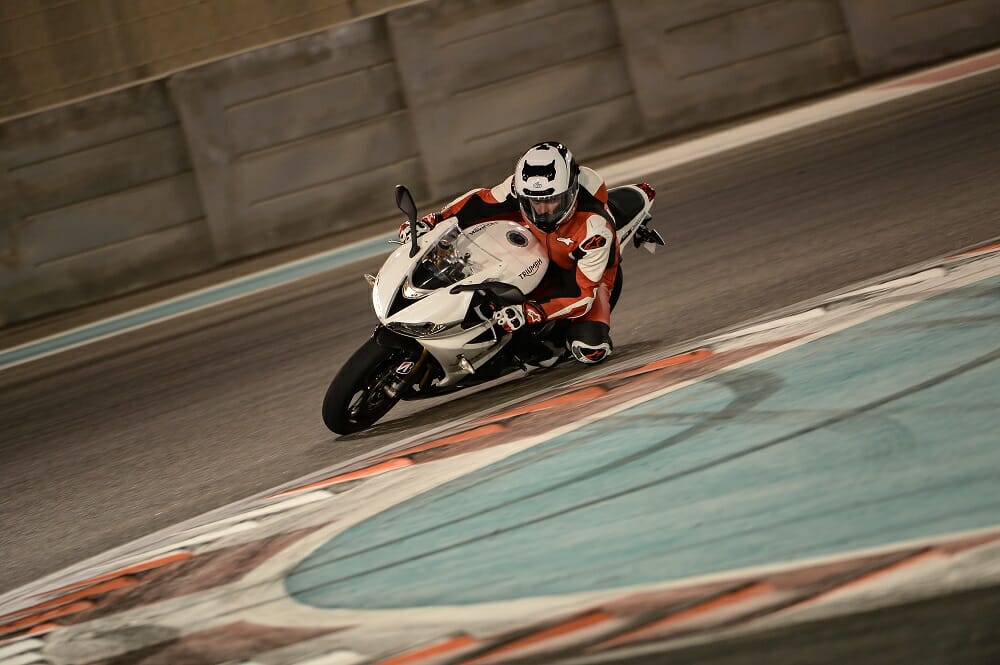
Photography Courtesy Bridgestone
Bridgestone and MotoGP are officially divorced. The Japanese rubber giant is moving on to newer, sticky pastures, and the first product of this newfound company direction is the S21 Hypersport tire.
The S21 replaces the four-year-old S20EVO, a tire designed to be the go-to hoop for road riders with a sporting bone or two in their bodies but who don’t spend every waking minute at the track. The S21 sits a step below the first of the real serious Bridgestone track tires in the RS10 and aims to give similar levels of dry-weather grip and acceleration performance but longer mileage, with the later claimed to be increased by a whopping 36 percent.
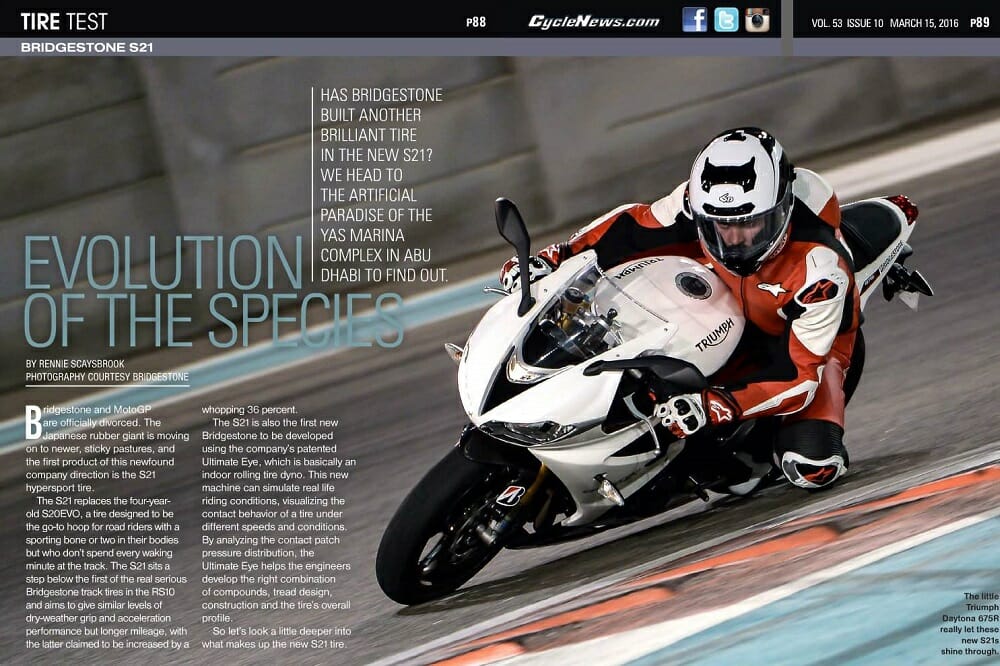
The S21 is also the first new Bridgestone to be developed using the company’s patented Ultimate Eye, which is basically an indoor rolling tire dyno. This new machine can simulate real-life-riding conditions, visualizing the contact behavior of a tire under different speeds and conditions. By analyzing the contact patch pressure distribution, the Ultimate Eye helps the engineers develop the right combination of compounds, tread design, construction and the tire’s overall profile.
So let’s look a little deeper into what makes up the new S21 tire.
Face Value
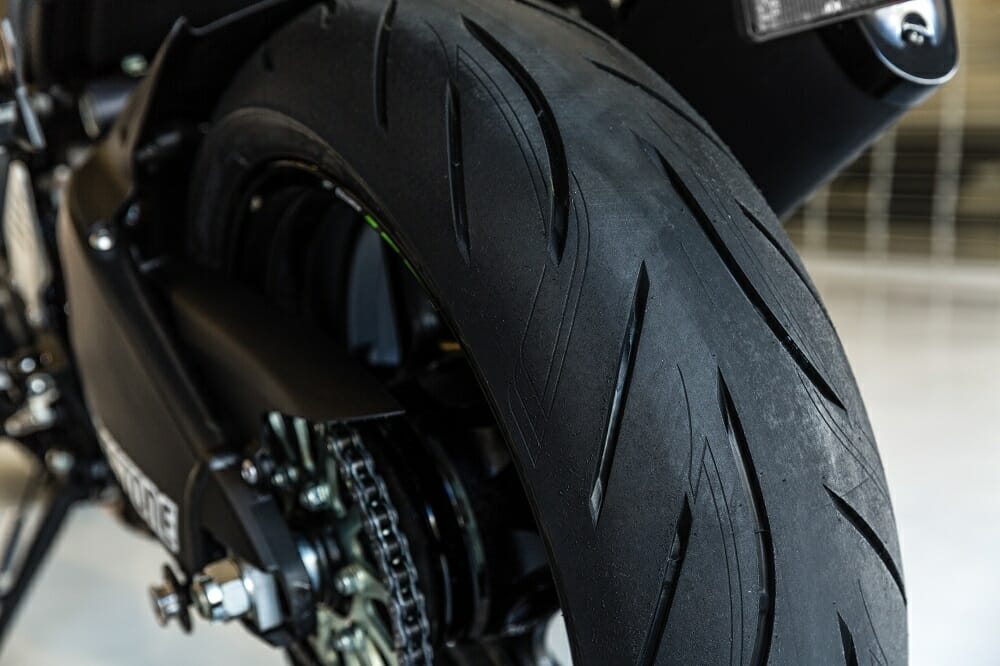
The S21 is primarily a road tire that can handle the odd wet-weather day so the Bridgestone engineers have created a tread pattern they claim offers greater stability over the outgoing S20 tire and a better seat-to-land ratio (in case you didn’t know, when tire companies talk about land to sea they are referring to the amount of rubber on the road versus the amount of tread). The tire’s grooves have been repositioned on the carcass so as to give more tire on the ground at maximum lean angle, thus aiding stability on braking and acceleration.
Bridgestone has attempted to maintain the wet-weather capabilities of the old S20EVO and doesn’t claim any major breakthrough in this area. The majority of concern regarding the tread design was based around improving the mileage and dry-weather performance.
Front And Rear Construction
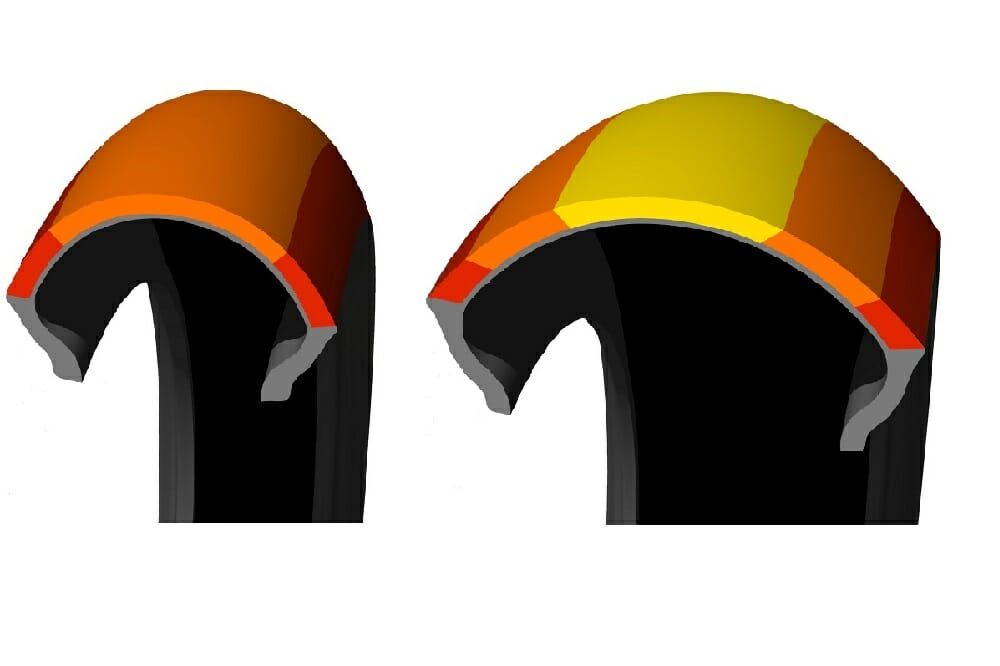
Bridgestone has used their standard three-layer compound (3LC) with high-stiffness bead fillers in the front S21, with a harder center construction to aid that massive claim of an extra 36-percent gain in mileage.
The front tire’s crown is slightly smaller compared to the S20EVO with the shoulders also a touch lower. This is aimed at increased turn rate and side-to-side agility, while still remaining stable when cranked over. Again, more tire on the ground equals more traction.
As for the rear tire, it’s the opposite of the front in that it now features a larger crown for increased stability under acceleration. Bridgestone is claiming the rear S21 tire has 30-percent less slip in the contact area than the old S20EVO, enabling the tire to lap two seconds faster than the S20EVO at the Sugo test facility in Japan (the same venue that hosted WorldSBK during the late ’90s and early 2000s).
The rear tire is made up of five separate compounds with the stiffer construction again in the center, but the softer compounds in the shoulders of both the front and rear tires are all-new, proving a larger micro-contact patch that aids turn-in speed and greater mid-corner stability.
Does It All Work?
For the answer to that, Bridgestone sent the assembled American press corps over to the extravagant paradise that is the Yas Marina Formula One complex in the desert of Abu Dhabi.
This place really is something else: designed purely with being the most spectacular facility of its kind anywhere in the world (which, for my money, it is), this 21-turn behemoth is a car-racing venue and there are a few little intricacies that aren’t easily seen at first glance.
There’s lots of heavy high-speed braking, and, in some corners, the track designers have raised the crown, with the aim of slowing the cars down. On a bike this means the corner essentially has two cambers (entry is on camber, exit is off camber), which can make for some interesting moments when it comes time to accelerate.
But enough of that. The standout feature for me is front-tire stability under brakes. It had been three years since I last rode on the S20 and although I don’t remember that tire being in anyway a bad tire, this S21 certainly feels a step forward.
Under braking the front has a really nice, progressive feel to it—there’s no sudden drop from upright to full lean that can come from a tire with too tall a crown—and full-lean grip and feel is also very impressive. There’s that nice tangible feel of when the carcass folds under braking, giving the rider the confidence to know exactly when the grip comes in. This is still a street tire, mind you, and isn’t going to give the racetrack performance of the RS10, so you have to bear that in mind when talking edge grip.
Those hairpin corners with rising and falling cambers caught me out a few times, and although the front would push a touch through turns 7, 14, 18 and occasionally 19, that progressive feel and good edge grip meant there weren’t too many scary moments.
During the fast-sweeping right of turn three, the track rises sharply before falling away downhill (almost like an elongated version of the hairpins), and with the gas on I
never had any movement from the front, which considering the extremely slippery nature of the desert racetrack was very impressive.
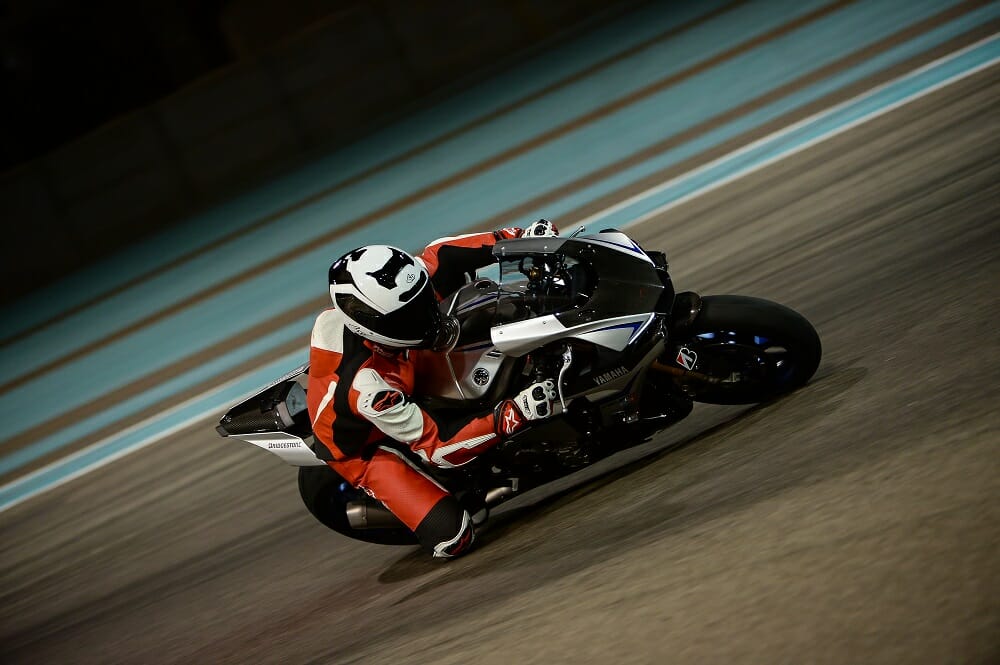
The rear tire was similarly impressive with great edge grip and feel while leaned over under acceleration. I did start to get a couple of slides from the rear, but thankfully the Bridgestone crew has engineered that same level of progressive feel that gave me so much confidence with the front.
I was lucky enough to get a slow-speed tutelage from a former 250GP and MotoGP rider, Spanish legend Jose Luis Cardoso, who’s now a Bridgestone tester. He seemed to have grip issues with the rear as well, although this was not the tire’s fault—more him lighting up the back end of whatever bike he was riding and laying massive black lines that just the utter dearth of skill between him and me.
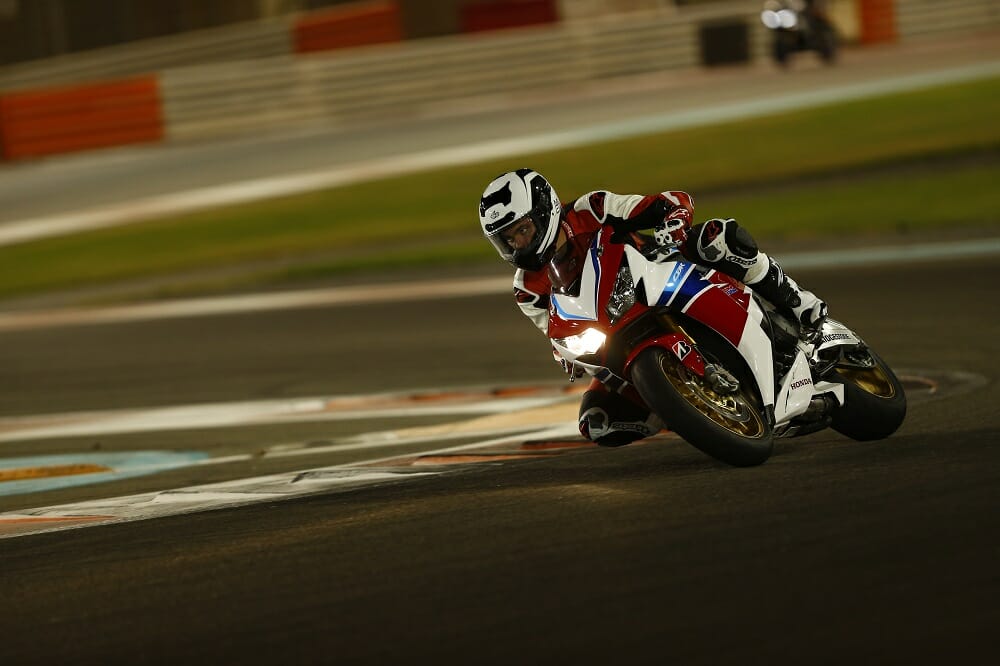
I’d ridden a bunch of different bikes over the night—Yamaha YZF-R1M, Honda CBR1000RR, Suzuki GSX-R1000 and BMW S1000RR, but the most fun I had and where the rear tire felt superb was on the Triumph Daytona 675R. The reduced horsepower of the supersport bike over the superbikes, even right at the end of the night, showed the tire in a very good light. Aside from the Triumph being utterly gorgeous to ride at any time, the rear S21 gave me all the grip I’d really need before I started playing around with suspension in an effort to try and go faster.
The big bikes gave the rear a pretty hard time but you can see by the end of the night, the front and rear of the R1M was still in great condition after 10 sessions of a track with extremely low grip levels, and lots of different riding styles, speeds and rider weights, proving this new S21 is indeed a very nice tire to have on your bike.
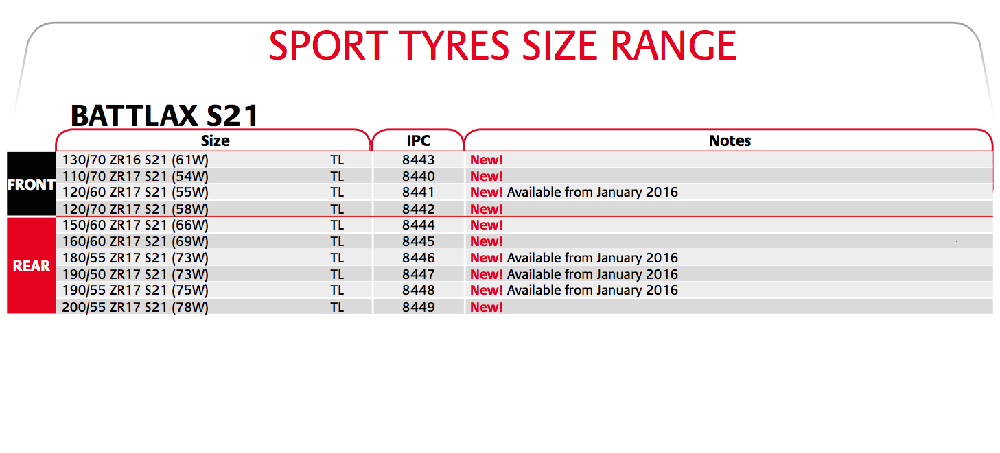
Tire Sizes
Here’s a chart of the available tire sizes, but please note, there are two tire sizes of S21 that Bridgestone will not be importing into the North American Market—the 110/70ZR17 and 150/60ZR17 sizes. These sizes will remain in the H-Rated Battlax S20EVO line (along with the 140/70R17).