Cycle News In The Paddock
COLUMN
Tired Out | How Rules Conspire to Make MotoGP Look Stupid
Pedro Acosta may not have broken Marc Marquez’s “youngest-ever” records, but a fourth podium in Indonesia cemented his position as top KTM rider.
For the first time, the rookie now outranked fellow KTM pilots Brad Binder and Jack Miller in the title race. The problems that have undermined these redoubtable former GP winners show it’s the bike rather than the rider that has stopped Acosta doing even more, and potentially saved Marquez’s legend.
His second at the Lombok Island circuit, enjoying a new chassis from KTM was a notably strong ride. He pressured winner Martin until the closing stages and was barely 1.5 seconds adrift at the flag. After several race crashes, it was a fine affirmation.
Yet in the post-race ceremonials, the 20-year-old Spaniard was notably glum. After his epic ride, Acosta was left in limbo for almost an hour under threat of being demoted 16 seconds from second to ninth. No wonder he looked downcast.
His sin? Falling foul of the widely derided minimum tire pressure regs.
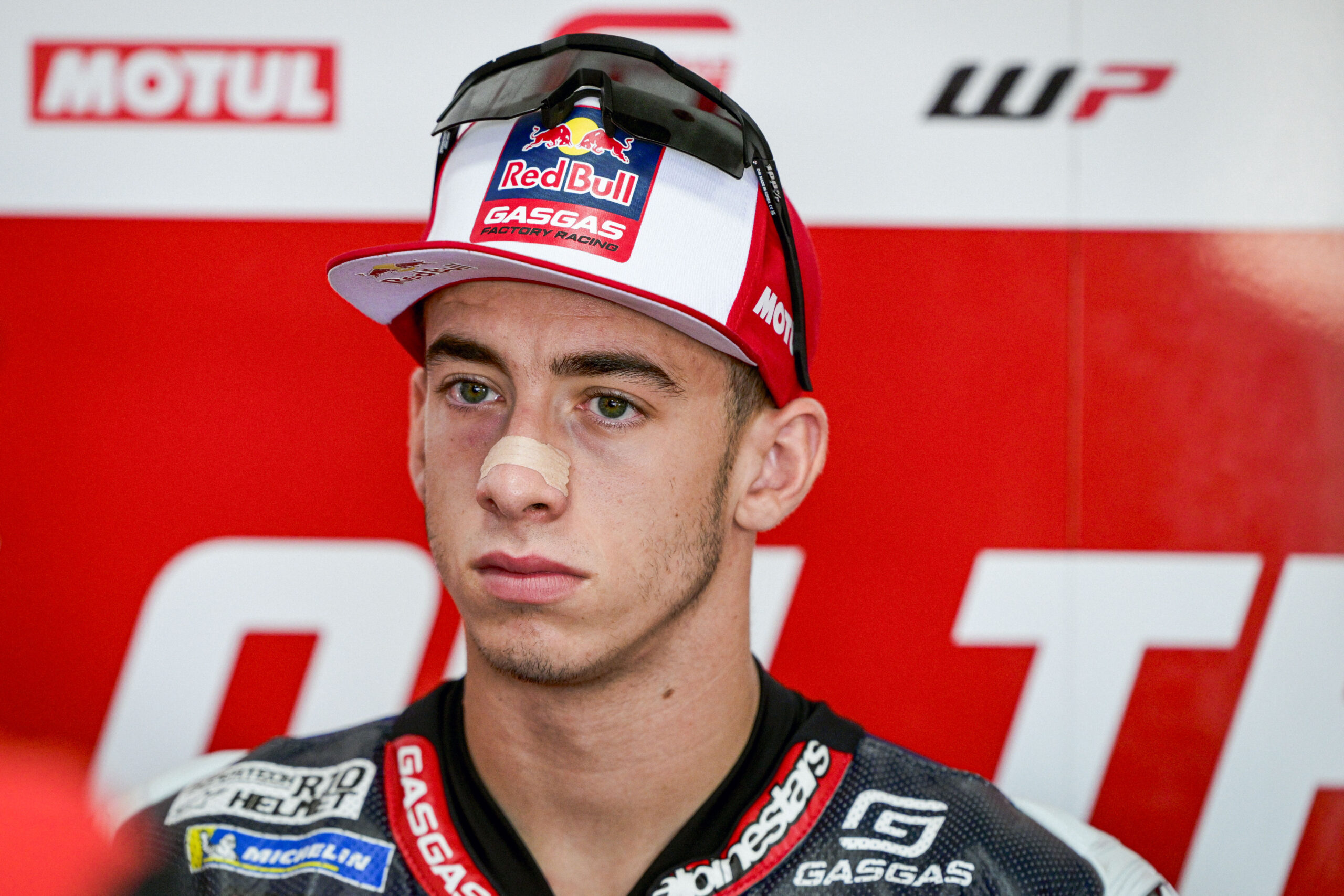
An hour later, he was absolved. The stewards ruled that though he had indeed broken the rule, running below the minimum 1.8 bar for more than 40 percent of race distance, it was neither his nor his Tech 3 team’s fault. A leaking rim was the culprit.
In other cases, lower tire pressures (always inadvertent) are considered serious enough to merit swingeing punishment. Not this time, however, since there had been no skullduggery.
Of course, it was the right decision. He rode a blinder and deserved the glory. But it made other punishments, when riders also failed to crash despite being below pressure, look like the wrong decision.
In fact, framing the rule in the first place was the wrong decision.
Adding to Sunday’s muddle, stewards announced that Binder and Nakagami were also under investigation but that due (presumably) to having to dash to the airport to fly to Japan, the decision would only be announced “at the next event.” Since this would drop Binder from fifth to 10th (Nakagami one place, to 12th) the delay was reprehensible. Then suddenly all change: they’d reached a decision after all. Binder—innocent; Nakagami—guilty.
Being stewards, no explanation was required. Off to the business class lounge, chaps.
This was just the latest nonsense in the tire-pressure saga, rules intended to reduce danger for riders tempted to run what Michelin deems dangerously under-inflated tires, although the riders and teams obviously disagree, feeling able to make their own decision concerning the risk.
They know pressure will inevitably rise with heat during the race, especially following another bike. This is one reason to start with the pressure on the low side; if it becomes too high, the grip disappears. Surely, this is as dangerous as being under-inflated?
Indeed, tires, and not only Michelins, offer riders so many other opportunities to fall off (just ask Bagnaia) that singling out this one seems perverse.
Pressure choice is pure guesswork. Nobody knows whether they will be alone, where cool air means the pressure remains more or less stable, or in a pack, in which case it will rapidly rise. This makes it very easy to fall foul of the rule.
This year, there have been 18 such penalties: at Assen, Marc Marquez was dropped from fourth to 10th, losing seven points, after the unedifying spectacle of seeing this multi-champion waving another rider (Di Giannantonio) past so as to follow to try to heat his tire. This is not real racing.
The framing of the rule is the consequence, say Michelin, of current aerodynamics, supplemented by ride-height devices. Greater downforce, increased braking and faster cornering overload the front tire.
Back in the day, Michelin made special event- and weather-specific “Rossi tires” during race weekends, to suit prevailing track conditions and shipped them to the star rider overnight. Much to Casey Stoner’s dismay. He didn’t get them.
Now, Michelin has failed for more than two years to make a front tire fit for purpose. There’s one on the way, tested at Misano and welcomed by riders, only for Michelin to say that instead of next season, it won’t be available until 2026. They want to make changes and need more testing, and the rules strictly limit the number of tests available.
The Rossi tires had more to do with compound; the new 2024 tire a different construction, and changing this is not an overnight affair.
But surely, it should be manageable within, say, a few months. Or a year.
This is the penalty of control tire supply. Michelin’s rapid-fire Rossi tires were produced when they were in competition with Bridgestone and Dunlop. Now it’s just Michelin. So why bother?
Just let the riders, the fans and the sport suffer.
It’s hard to see MotoGP’s commercially minded new owners Liberty tolerating this sort of nonsense. Fix it, please.CN
Click here to read the In The Paddock Column in the Cycle News Digital Edition Magazine.
Click here for all the latest MotoGP news.

